


Filtros Para Vapor
In industrial manufacturing, steam is a primary utility used for heating, sterilization, and power generation. However, steam is rarely pure. As it travels through carbon steel piping, it picks up contaminants such as pipe scale, rust, and sediment. Without effective filtration, these particles can damage sensitive equipment, contaminate end products, and reduce the thermal efficiency of heat exchangers. Selecting the correct filtros para vapor is a critical engineering decision that impacts the longevity of the entire steam system and the quality of the final output.
Industrial steam filtration requires a deep understanding of fluid dynamics, material science, and the specific requirements of the application. Whether the steam is used for heavy industrial heating or direct contact with food and pharmaceutical products, the filtration solution must withstand high temperatures, pressure fluctuations, and the corrosive nature of condensate.
The Role of Steam Filtration in Industrial Processes
Steam acts as a highly efficient carrier of thermal energy. In its journey from the boiler to the point of use, it undergoes phase changes and interacts with the internal surfaces of the distribution network. This interaction often leads to the entrainment of solid particulates. In many regions, procurement teams and engineers specify filtros para vapor to mitigate these risks.
There are three primary reasons to implement high-quality steam filtration:
1. Equipment Protection: Fine particles can cause abrasive wear on valve seats, pressure regulators, and flow meters. By removing these solids, filters prevent premature mechanical failure and reduce maintenance downtime.
2. Process Efficiency: Scale buildup on heat exchanger surfaces acts as an insulator, significantly reducing heat transfer rates. Clean steam ensures that thermal energy is transferred efficiently, lowering fuel consumption in the boiler.
3. Product Integrity: In industries such as food and beverage or pharmaceuticals, steam often comes into direct contact with the product. Any contamination in the steam can lead to batch rejection and regulatory non-compliance.
Classification of Steam Quality and Filter Requirements
Not all steam applications require the same level of purity. Engineers must categorize the steam quality based on the application to determine the necessary filtration efficiency.
Plant Steam
Plant steam is typically used for indirect heating in jackets or heat exchangers. The main goal here is to protect the piping and components. Filtration for plant steam usually focuses on removing larger particles (typically 25 to 50 microns) that could cause erosion or blockages.
Process Steam
Process steam may come into contact with the process equipment or the product itself, but perhaps not in a way that requires culinary-grade purity. For these applications, stainless steel filter elements with a rating of 5 to 20 microns are often employed to ensure that no visible debris enters the process zone.
Culinary and Sterile Steam
Culinary steam must meet strict standards, such as those set by 3-A Sanitary Standards. This requires the removal of 95% of all particles larger than 2 microns. For sterile steam applications in the pharmaceutical industry, the requirements are even more stringent, often necessitating the use of sintered stainless steel media that can be sterilized in place (SIP).
Materials of Construction for Filtros Para Vapor
The harsh environment of a steam line—characterized by high temperatures and the presence of corrosive condensate—dictates the use of robust materials. Stainless steel is the industry standard for steam filter elements due to its mechanical strength and chemical resistance.
Sintered Stainless Steel
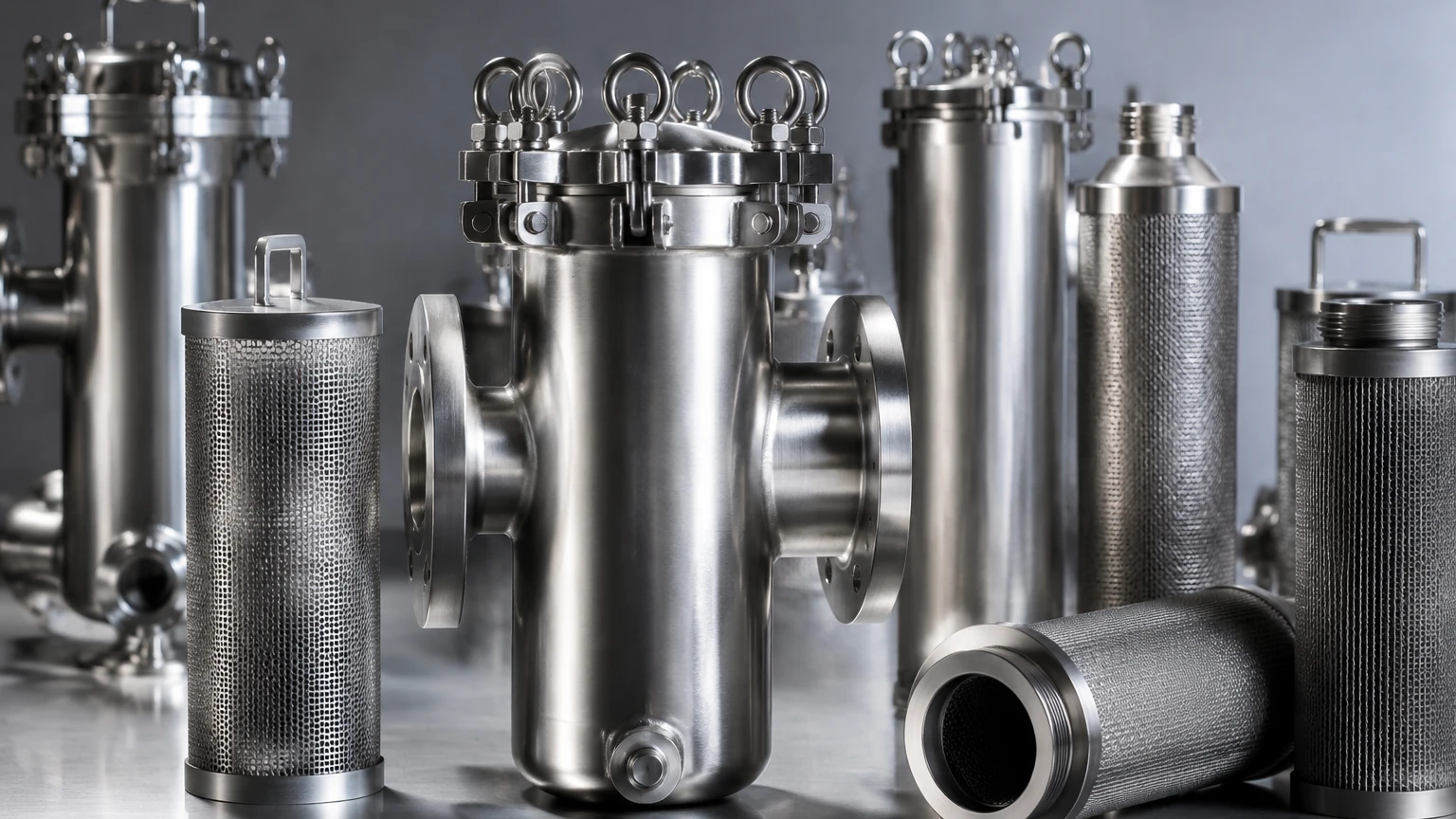
Sintered metal powder or fiber felt is a common choice for filtros para vapor. The sintering process bonds metal particles together at high temperatures, creating a porous structure that is incredibly strong. Sintered 316L stainless steel provides excellent resistance to the thermal shocks common in steam systems. Its fixed pore structure ensures consistent filtration performance even under high differential pressure.
Pleated Wire Mesh
For applications requiring high flow rates and low pressure drops, pleated stainless steel wire mesh elements are preferred. The pleating increases the surface area, allowing for a higher dirt-holding capacity and longer service life between cleanings. These are particularly effective as pre-filters for more sensitive downstream components.
Housing Considerations
The filter housing must also be constructed from high-grade materials, typically 304 or 316L stainless steel. It must be designed to handle the maximum operating pressure of the steam system and include features like a drain port for condensate removal. Proper condensate management is essential; if water is allowed to pool in the filter housing, it can lead to water hammer, which can catastrophic for the filter element.
Technical Specifications: Micron Ratings and Flow Dynamics
When selecting filtros para vapor, engineers must balance filtration efficiency with the system's flow requirements. A filter that is too fine for the application will clog rapidly, leading to excessive pressure drops and frequent maintenance. Conversely, a filter that is too coarse will fail to protect downstream equipment.
Understanding Micron Ratings
Micron ratings for steam filters can be "nominal" or "absolute." A nominal rating indicates the filter's ability to retain the majority of particles of a certain size, while an absolute rating guarantees that 99.9% or more of particles above that size are captured. For critical applications, absolute-rated sintered elements are the standard.
Pressure Drop (Delta P)
A clean filter will always impose some resistance to flow, resulting in a pressure drop. It is crucial to size the filter so that the initial pressure drop is minimal (typically less than 1-2 psi). As the filter accumulates debris, the pressure drop increases. Most industrial systems are designed to have the filter element cleaned or replaced when the differential pressure reaches a specific threshold, often around 10-15 psi.
Steam Velocity
High steam velocity can lead to the erosion of the filter media and the housing. Standard engineering practice suggests keeping steam velocities within the filter housing below 25-40 meters per second (m/s) to prevent damage and ensure the longevity of the stainless steel components.
Maintenance, Cleaning, and Sterilization Protocols
One of the primary advantages of using stainless steel filtros para vapor is their cleanability. Unlike disposable polymer filters, stainless steel elements can be regenerated multiple times, offering a lower total cost of ownership.
Cleaning Methods
* Backwashing: In some systems, the flow can be reversed to dislodge accumulated particles from the surface of the filter media.
* Ultrasonic Cleaning: This is the most effective method for sintered metal elements. High-frequency sound waves create cavitation bubbles that penetrate deep into the porous structure, removing fine particulates that backwashing cannot reach.
* Chemical Cleaning: For contaminants like oils or mineral scale, specialized chemical baths may be used, provided they are compatible with the 316L stainless steel.
Sterilization-in-Place (SIP)
In pharmaceutical and biotech applications, the filter must be sterilized regularly. Stainless steel elements are ideal for SIP because they can withstand the repeated thermal cycling of saturated steam at temperatures exceeding 121°C (250°F) without losing structural integrity or filtration efficiency.
Customization and OEM Solutions for Steam Systems
Every industrial steam system has unique constraints, from space limitations in the mechanical room to specific flow rate requirements. Standard off-the-shelf filters may not always provide the optimal solution. This is where customized filtration components become essential.
Working with a manufacturer that specializes in custom stainless steel filtration allows engineers to specify the exact dimensions, connection types (such as NPT, flanged, or tri-clamp), and micron ratings needed for their specific application. For original equipment manufacturers (OEMs), having a reliable partner to produce custom-branded or custom-engineered filter cartridges ensures that their equipment performs reliably in the field.
Customization also extends to the internal structure of the filter. For instance, in high-vibration environments, the internal support core of a pleated element can be reinforced to prevent collapse. Similarly, for highly corrosive environments, specialized alloys beyond standard 316L can be utilized.
Conclusion: Selecting the Right Partner for Steam Filtration
The selection of filtros para vapor is not merely a procurement task but a critical engineering requirement. The right filtration strategy protects capital equipment, ensures process efficiency, and maintains the highest standards of product quality. By focusing on high-grade stainless steel materials, precise micron ratings, and robust mechanical design, industrial facilities can significantly reduce their operational risks.
When evaluating filtration options, it is important to consider the manufacturer's expertise in handling stainless steel and their ability to provide technical support throughout the selection process. A deep understanding of how different filter media react to the unique stresses of steam—such as thermal expansion and condensate erosion—is what separates a standard filter from a high-performance industrial solution.
For engineers and purchasing teams looking to optimize their steam systems, reviewing detailed technical data and exploring customization options is the next logical step. To learn more about high-performance stainless steel filtration components and how they can be tailored to your specific industrial needs, you can visit the Main Page to review product options and application support. Ensuring the purity of your steam today is the best way to protect your industrial assets for the future.
