


3a Ssi
In the landscape of industrial manufacturing, particularly within the food, beverage, dairy, and pharmaceutical sectors, hygiene is not merely a preference but a regulatory and operational mandate. Central to these requirements is the role of 3a ssi (3-A Sanitary Standards, Inc.), a non-profit corporation dedicated to enhancing food safety through the development of sanitary equipment design standards. For engineers and procurement professionals sourcing filtration components, understanding the intersection of 3-A SSI standards and metal filtration technology is essential for ensuring process integrity, product safety, and regulatory compliance.
Industrial filtration systems, such as those manufactured by Kaifil, must often adhere to these rigorous design principles to prevent bacterial growth and ensure that equipment can be effectively cleaned. This guide explores the technical foundations of 3-A SSI standards, the material requirements for stainless steel filters, and the engineering considerations necessary for high-performance sanitary applications.
Understanding the Role of 3a Ssi in Industrial Filtration
3-A Sanitary Standards, Inc. (3a ssi) represents a collaborative effort between three distinct groups: the users (food and dairy processors), the equipment manufacturers, and the sanitarians (regulatory officials). The primary mission of the organization is to protect public health by ensuring that equipment used in the production of food and beverages is designed to be easily cleaned and inspected.
In the context of filtration, 3-A SSI standards provide a framework for the design of filter housings, cartridges, and wire mesh elements. Unlike general industrial filters, sanitary filters must be designed to eliminate "dead legs" or crevices where product can accumulate and spoil. The standards specify how joints should be welded, how surfaces should be finished, and which materials are permissible for contact with the product. By adhering to these standards, manufacturers like Kaifil ensure that their stainless steel filtration solutions meet the highest benchmarks for hygiene and durability.
Material Requirements for Sanitary Stainless Steel Filters
One of the fundamental pillars of 3-A SSI standards is the selection of materials. For filtration components, stainless steel is the preferred choice due to its corrosion resistance, mechanical strength, and ability to withstand high-temperature sterilization processes. However, not all stainless steel is suitable for sanitary applications.
AISI 300 Series Stainless Steel
3-A standards typically mandate the use of AISI 300 series stainless steel. The most common grades used are 304 and 316L.
* 304 Stainless Steel: Suitable for many general food and beverage applications where corrosion risks are moderate.
* 316L Stainless Steel: Often required for more demanding environments, such as those involving high acidity, salt content, or aggressive Clean-in-Place (CIP) chemicals. The "L" stands for low carbon, which is critical for preventing carbide precipitation during welding, thereby maintaining the corrosion resistance of the welded joints.
Non-Metallic Components
While the primary structure of a filter is metal, filters often include gaskets, seals, and O-rings. According to 3-A SSI guidelines, these non-metallic components must be made from materials that are non-toxic, non-absorbent, and resistant to the chemicals used in the process. Common materials include EPDM, PTFE, and Viton, all of which must comply with specific 3-A or FDA standards for food contact.
Surface Finish and Ra Values: The Technical Benchmark
A critical technical requirement for any 3-A compliant filter is the surface finish. In sanitary design, the smoothness of the surface is measured by the Roughness Average (Ra). A rough surface provides microscopic valleys where bacteria and biofilms can anchor themselves, making them resistant to standard cleaning cycles.
The 0.8 μm Ra Standard
The standard benchmark for most 3-A applications is a surface finish of 32 micro-inches (0.8 micrometers) Ra or better. Achieving this level of smoothness requires specialized manufacturing techniques, including:
1. Mechanical Polishing: Using progressively finer abrasives to remove surface irregularities.
2. Electropolishing: An electrochemical process that removes a thin layer of material from the surface of the stainless steel. This not only achieves a very low Ra value but also passivates the metal, enhancing its corrosion resistance and creating a "mirror-like" finish that is exceptionally easy to clean.
For custom wire mesh filters and cartridges, ensuring that every contact surface—including the internal pleats and support structures—meets these finish requirements is a primary engineering challenge that separates industrial-grade filters from sanitary-grade components.
Engineering Design: Eliminating Dead Legs and Ensuring Cleanability
Beyond materials and finishes, 3a ssi emphasizes the physical geometry of the equipment. A filter that is made of the correct material but designed with sharp internal corners or unreachable pockets will fail in a sanitary environment.
Radii and Transitions
3-A standards require that all internal corners have a minimum radius (often 1/8 inch or 3.2 mm) to ensure that cleaning fluids can reach every part of the surface. Sharp 90-degree angles are avoided because they are difficult to scrub and tend to trap debris.
Welding Quality
Welding is a critical focus area. All welds in the product zone must be continuous, smooth, and ground flush with the base metal. There can be no pits, cracks, or inclusions. In high-end sanitary filtration manufacturing, TIG (Tungsten Inert Gas) welding is standard, often followed by meticulous grinding and polishing to ensure the weld is indistinguishable from the surrounding surface in terms of hygiene.
Self-Draining Design
Sanitary filters must be designed to be self-draining. This means that when the system is shut down or during a CIP cycle, no liquid should remain trapped inside the housing or the filter element. Trapped liquid can become a breeding ground for bacteria between production runs.
The Importance of Third-Party Verification (TPV)
For a manufacturer to display the 3-A Symbol, they must undergo a rigorous Third-Party Verification (TPV) process. This involves an independent audit by a Certified Sanitary Design Professional (CSDP) who inspects the manufacturing facility and the specific equipment design to ensure it meets the published 3-A Sanitary Standards.
For engineers, specifying 3-A certified equipment simplifies the procurement process. It provides documented assurance that the equipment has been designed according to industry-vetted best practices. When evaluating a supplier for custom stainless steel filtration, asking for their TPV reports or confirming their standing with 3a ssi is a vital step in risk management.
Filtration Performance vs. Sanitary Compliance
In many industrial applications, there is a tension between filtration efficiency and cleanability. For example, a very fine, multi-layered depth filter may provide excellent particle retention but can be nearly impossible to clean to a sanitary standard once it becomes loaded with organic matter.
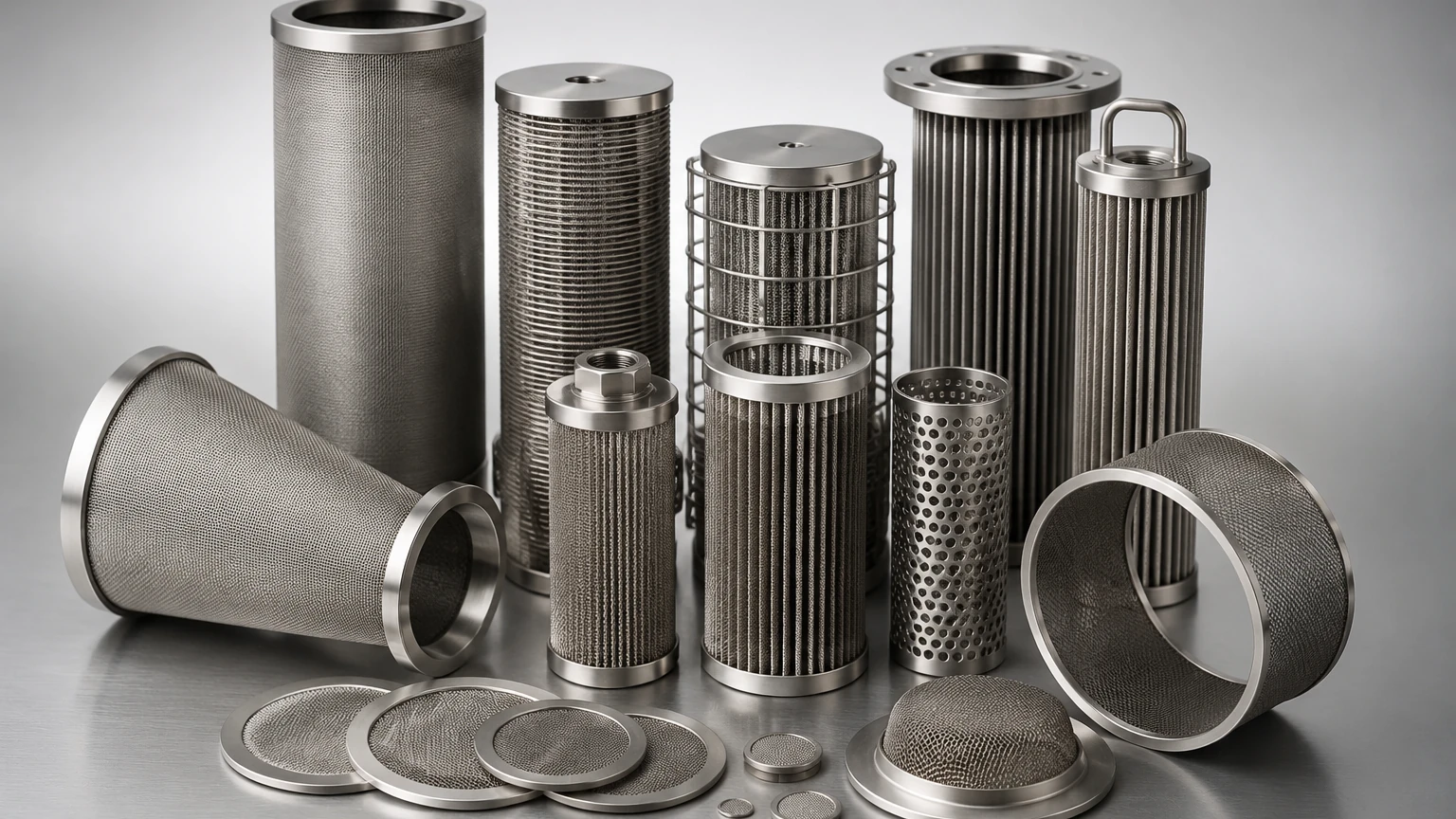
This is why stainless steel wire mesh and sintered metal filters are highly valued in sanitary processes. They offer:
* Surface Filtration: Most particles are trapped on the surface of the mesh, making them easier to remove during backwashing or CIP cycles.
* Durability: Unlike polymer filters, stainless steel elements can withstand the high pressures and temperatures of Steam-in-Place (SIP) sterilization.
* Customization: Manufacturers can engineer specific pore sizes and flow rates while maintaining the structural integrity required for 3-A compliance.
When selecting a filtration solution, it is important to balance the required micron rating with the practicalities of the cleaning protocol used in the facility.
Selecting Custom Filtration Solutions for Sanitary Applications
Choosing the right filtration partner involves more than just comparing spec sheets. For complex sanitary applications, engineers should seek manufacturers who understand the nuances of the 3a ssi framework and can provide customized engineering support.
Key considerations when selecting a partner include:
* OEM Capabilities: Can the manufacturer adapt their designs to fit existing sanitary piping and housing configurations?
* Material Traceability: Does the supplier provide Mill Test Reports (MTRs) to prove the grade and quality of the stainless steel used?
* Technical Expertise: Can they advise on the optimal Ra finish and welding techniques for your specific product (e.g., high-viscosity dairy vs. thin pharmaceutical liquids)?
Kaifil specializes in these types of precision metal filter components, providing the durability and hygiene required for demanding industrial environments. For more detailed technical specifications and to explore the range of available solutions, you can visit the Main Page to review product options and application support.
Total Cost of Ownership in Sanitary Filtration
While 3-A compliant filters often carry a higher initial purchase price than non-certified industrial filters, the total cost of ownership (TCO) is typically lower in the long run. The benefits include:
1. Reduced Downtime: Faster and more effective CIP cycles mean more time for actual production.
2. Extended Equipment Life: High-quality 316L stainless steel components resist corrosion and mechanical wear, lasting significantly longer than cheaper alternatives.
3. Risk Mitigation: The cost of a single product recall or a batch contaminated by bacterial growth far outweighs the investment in properly designed sanitary filtration.
4. Regulatory Ease: Using certified equipment streamlines inspections and audits by health and safety officials.
Conclusion
Navigating the requirements of 3a ssi is a fundamental task for any engineer working in sanitary processing. By focusing on material integrity, surface finish, and hygienic design geometry, manufacturers can produce filtration systems that not only protect the product but also optimize the efficiency of the entire production line. Stainless steel remains the gold standard for these applications, offering the necessary balance of strength and cleanability. When sourcing these critical components, prioritizing technical expertise and a commitment to sanitary standards ensures that your filtration system will perform reliably in the most demanding industrial environments.
