


How Often to Change Vacuum Filter
In industrial filtration, the question of how often to change vacuum filter components is central to maintaining system efficiency, protecting downstream equipment, and ensuring product purity. Unlike residential applications, industrial vacuum systems—ranging from vacuum pumps in chemical processing to large-scale dust collection in pharmaceutical manufacturing—operate under high-stress conditions where filter failure can lead to significant downtime and costly repairs. Determining the correct replacement or cleaning interval requires a technical understanding of filtration mechanics, material science, and the specific variables of the operating environment.
At Kaifil, we specialize in manufacturing high-performance stainless steel filtration solutions designed for demanding industrial applications. Understanding the lifecycle of these components is essential for engineers and procurement teams who must balance performance with the total cost of ownership.
Factors Influencing Industrial Filter Lifespan
There is no universal schedule for filter replacement because the longevity of a vacuum filter is dictated by the specific parameters of the application. Several key variables influence how quickly a filter reaches its terminal state.
Particle Loading and Concentration
The volume of contaminants entering the system is the primary driver of filter clogging. In high-load environments, such as bulk powder handling or heavy industrial metalworking, filters will accumulate a "dust cake" much faster than in clean-room or light-duty hydraulic applications. As the cake builds, it initially improves filtration efficiency by acting as a secondary filter medium, but it eventually restricts flow to an unsustainable level.
Flow Rate and Velocity
Industrial vacuum systems are designed to move specific volumes of air or liquid at calculated velocities. Higher flow rates increase the kinetic energy of particles impacting the filter media. This can lead to deeper particle penetration into the pores of the filter (depth filtration) or faster accumulation on the surface (surface filtration), both of which shorten the time between maintenance cycles.
Environmental Conditions
Temperature and chemical exposure play significant roles in material degradation. For instance, synthetic filters may brittle or melt in high-temperature vacuum exhausts, whereas stainless steel wire mesh filters maintain structural integrity. Similarly, exposure to corrosive gases or liquids in chemical processing requires specialized materials like AISI 316L stainless steel to prevent premature failure due to oxidation or chemical breakdown.
Technical Indicators for Filter Replacement
Rather than relying solely on a calendar-based schedule, engineers should monitor specific technical indicators to determine how often to change vacuum filter elements. Data-driven maintenance prevents both premature replacement (which wastes resources) and delayed replacement (which risks equipment damage).
Differential Pressure (ΔP)
The most reliable metric for filter health is differential pressure—the difference in pressure between the upstream and downstream sides of the filter. As the filter captures more contaminants, the resistance to flow increases, causing the ΔP to rise. Most industrial systems are equipped with manometers or pressure transducers to monitor this. A common engineering standard is to replace or clean the filter once the ΔP reaches a pre-defined "terminal pressure drop," typically specified by the equipment manufacturer or determined through process validation.
Flow Rate Reduction
In vacuum systems, a clogged filter directly impacts the system's ability to maintain the required vacuum level. If a pump is running at full capacity but the vacuum at the point of use is diminishing, it often indicates that the filter has reached its loading capacity. Monitoring the flow rate (CFM or m³/h) provides a secondary check on filter performance.
Downstream Purity and Breakthrough
In applications where the vacuum filter is used for product recovery or air purification, any sign of contaminant breakthrough is an immediate signal for replacement. Regular sampling of the downstream flow can detect if the filter media has been compromised or if "channeling" has occurred, where high pressure forces a path through the media, bypassing the filtration effect.
Comparing Disposable and Permanent Filtration Solutions
The frequency of replacement is heavily dependent on the type of filter media used. When evaluating how often to change vacuum filter components, it is important to distinguish between consumable media and cleanable, permanent media.
Disposable Media (Paper, Synthetic, Fiberglass)
Disposable filters are common in light-to-medium duty applications. They are designed for one-time use and must be discarded once they reach their terminal pressure drop. While they have a lower initial purchase price, the cumulative cost of frequent replacements and the environmental impact of waste disposal can be significant in high-load industrial settings.
Permanent Stainless Steel Media
Kaifil specializes in stainless steel filter cartridges and wire mesh filters that are designed for longevity and reusability. In many industrial vacuum applications, a stainless steel filter can last for years if properly maintained. Instead of discarding the filter, it is cleaned through backwashing, ultrasonic cleaning, or chemical baths. The "replacement" cycle for these filters is much longer, often aligning with major equipment overhauls rather than routine monthly maintenance.
Determining the Optimal Replacement Cycle
To establish a precise maintenance schedule, technical teams should follow a structured evaluation process:
1. Review OEM Guidelines: Start with the original equipment manufacturer’s recommendations, but treat them as a baseline rather than an absolute rule.
2. Conduct a Pilot Study: During the first few months of operation, monitor the ΔP daily. Record how long it takes to reach the terminal pressure drop under normal operating loads.
3. Account for Seasonality: In some industries, environmental factors like humidity or ambient temperature changes can affect the characteristics of the filtered media, necessitating different schedules for summer and winter.
4. Consult with Filtration Experts: For specialized applications, working with a manufacturer to analyze the particle size distribution and chemical compatibility can lead to a custom filter design that extends the maintenance interval.
For more information on selecting the right filtration components for your specific industrial needs, visit our Main Page to explore our range of customizable solutions.
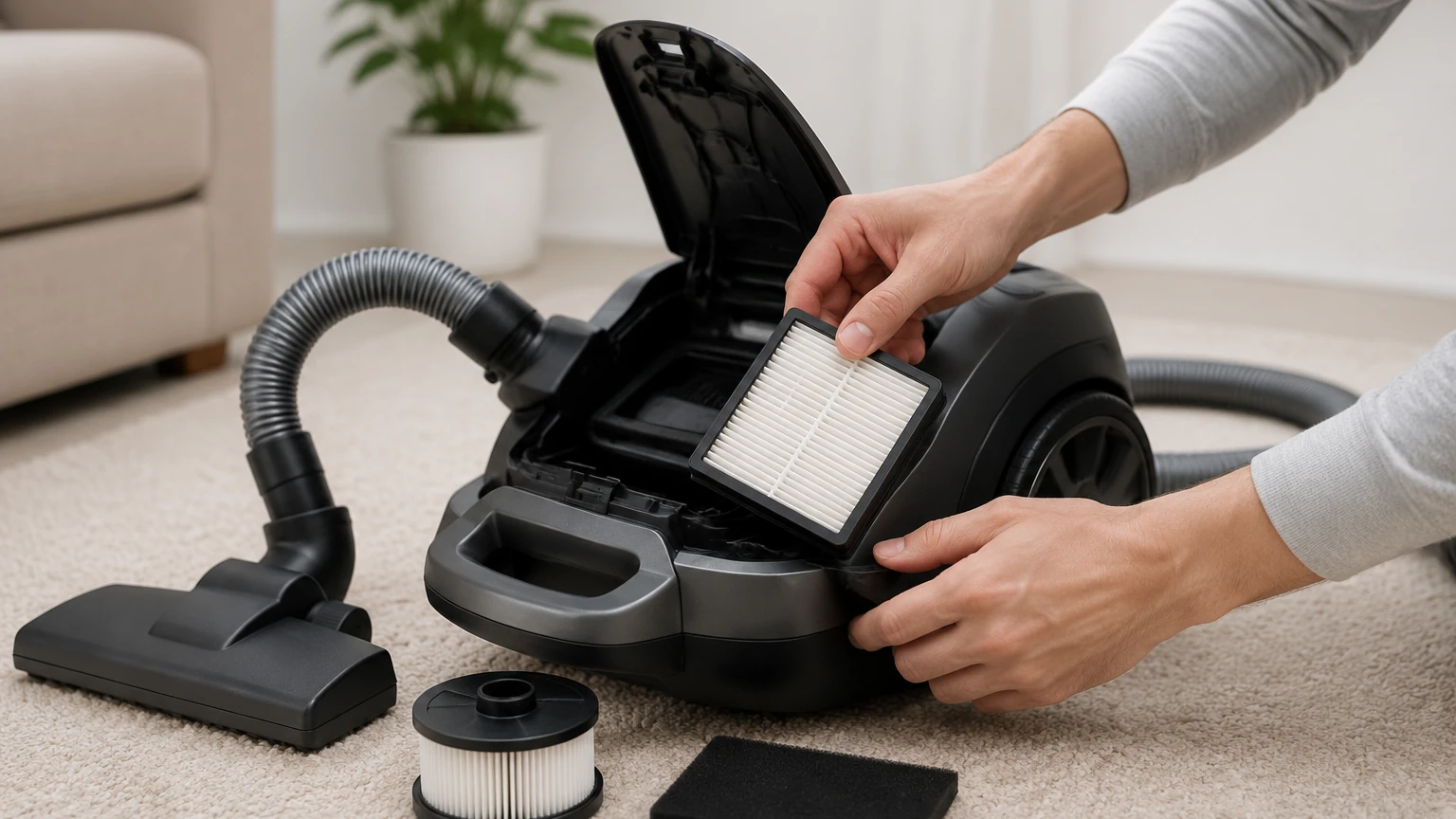
The Risks of Delayed Filter Maintenance
Neglecting to change or clean a vacuum filter when indicated can have cascading effects on the entire industrial process. Understanding these risks is vital for justifying the cost of a robust maintenance program.
* Vacuum Pump Strain: When a filter is clogged, the vacuum pump must work harder to pull air through the restricted media. This leads to increased energy consumption, overheating, and premature wear on bearings and seals.
* Product Contamination: A compromised filter can allow particulates to enter sensitive areas of the production line. In the pharmaceutical or food and beverage industries, this can lead to entire batches being rejected.
* System Downtime: Unexpected filter failure can shut down a production line. If a replacement filter is not in stock, the resulting downtime can cost thousands of dollars per hour.
* Safety Hazards: In systems handling combustible dust or hazardous vapors, a clogged filter can lead to pressure imbalances that increase the risk of fire, explosion, or exposure to toxic substances.
Maintenance Protocols for Reusable Stainless Steel Filters
For facilities using Kaifil’s stainless steel filtration solutions, the focus shifts from "how often to change" to "how often to clean." Proper cleaning protocols are essential to restore the filter to its original clean pressure drop without damaging the delicate wire mesh or sintered structure.
* Ultrasonic Cleaning: This is the most effective method for removing fine particulates lodged deep within the pores of a sintered metal filter. High-frequency sound waves create cavitation bubbles that dislodge contaminants.
* Backwashing: Many automated vacuum systems include a backpulse or backwash cycle that uses compressed air or fluid to blow contaminants off the surface of the filter while the system is still online.
* Chemical Cleaning: For filters used in chemical processing, soaking the element in a compatible solvent or acid can dissolve accumulated resins or organic matter.
Customization and Engineering Considerations
Often, the need for frequent filter changes is a symptom of an improperly specified filter. If a filter is reaching its terminal pressure drop too quickly, it may be undersized for the flow rate, or the micron rating may be unnecessarily fine for the application.
At Kaifil, we work closely with engineers to develop customized filtration components that optimize the balance between filtration accuracy and service life. By adjusting the surface area of the filter, selecting different weave patterns (such as Dutch weave or twilled weave), or utilizing multi-layer sintered mesh, we can significantly extend the time between maintenance cycles.
When purchasing industrial filters, technical buyers should confirm the following with their supplier:
* Material Certification: Ensure the stainless steel grade (e.g., 304, 316L) matches the chemical environment.
* Pressure Ratings: Verify that the filter structure can withstand the maximum vacuum pressure without collapsing.
* Cleaning Compatibility: Confirm that the filter media can withstand the intended cleaning methods (e.g., high-temperature steam or aggressive chemicals).
Conclusion
Determining how often to change vacuum filter elements is a critical component of industrial operational strategy. By moving away from arbitrary schedules and toward a data-driven approach based on differential pressure and flow performance, facilities can maximize the lifespan of their filtration components. For high-demand environments, transitioning to durable, cleanable stainless steel solutions from Kaifil offers a sustainable and cost-effective alternative to frequent disposable filter replacements. To review product options and application support, visit the Kaifil Main Page for detailed technical specifications and customized engineering support.
