


High Purity Gas Purifiers
In the landscape of modern industrial manufacturing, the requirement for ultra-clean environments has moved from a niche specialty to a standard operational necessity. High purity gas purifiers represent the frontline of defense in processes where even parts-per-billion (ppb) or parts-per-trillion (ppt) levels of contamination can lead to catastrophic yield loss or product failure. Whether in semiconductor fabrication, pharmaceutical synthesis, or advanced chemical processing, the integrity of the gas delivery system is paramount. This guide explores the engineering principles, material considerations, and selection criteria essential for technical professionals tasked with implementing robust gas purification solutions.
The Critical Role of Gas Purification in Modern Industry
High purity gas purifiers are designed to remove contaminants such as moisture, oxygen, carbon monoxide, carbon dioxide, and various hydrocarbons from process gases. In sectors like electronics manufacturing, the presence of trace impurities during thin-film deposition or etching can alter the electrical properties of a wafer, rendering it useless. Similarly, in the pharmaceutical industry, inert gases used for blanketing or as carriers must be free of microbial and chemical contaminants to ensure patient safety and regulatory compliance.
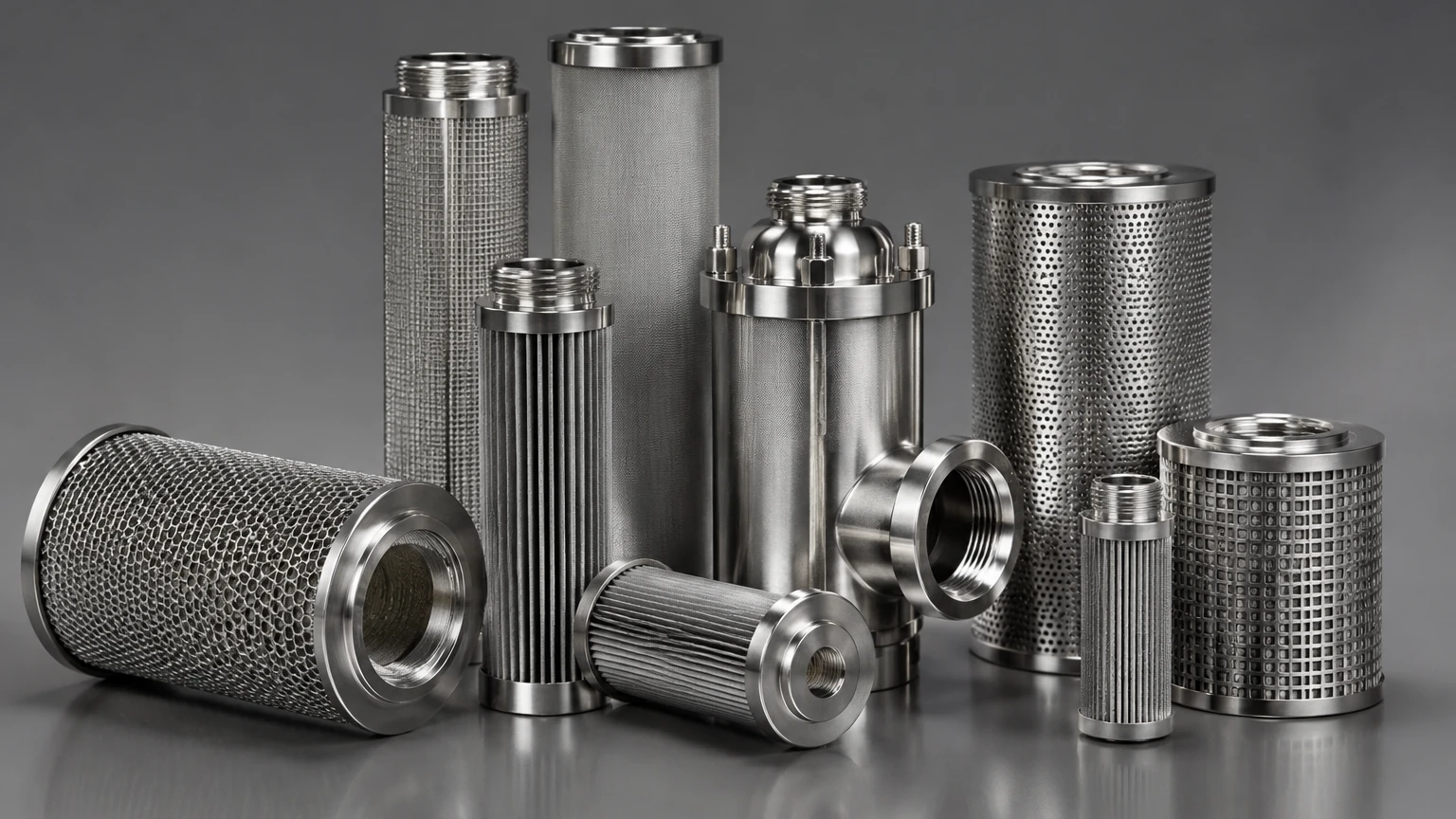
Industrial filtration specialists, such as Kaifil, focus on the hardware and media that facilitate this purification. While the chemical media within a purifier handles molecular contaminants, the mechanical structure—often comprised of stainless steel wire mesh or sintered metal—ensures that no particulate matter enters the downstream flow. The synergy between chemical adsorption and mechanical filtration is what defines a high-performance purification system.
Understanding the Mechanics of High Purity Gas Purifiers
To effectively select a purifier, engineers must understand the different mechanisms at play. Purification is generally achieved through three primary methods: adsorption, chemisorption, and mechanical filtration.
Adsorption and Chemisorption
Adsorption involves the physical sticking of gas molecules to the surface of a solid material (the adsorbent), such as molecular sieves or activated carbon. Chemisorption, on the other hand, involves a chemical reaction between the impurity and the purifier media, often using metallic getters or specialized catalysts. These processes are highly effective at removing gaseous impurities but require a stable housing to contain the media and prevent "dusting"—the release of media particles into the gas stream.
Mechanical Filtration and Particle Retention
This is where precision engineering becomes vital. High purity gas purifiers must incorporate high-efficiency particulate air (HEPA) or ultra-low penetration air (ULPA) grade filters at the outlet. Stainless steel wire mesh and sintered metal filters are preferred in these applications due to their ability to provide absolute filtration ratings. Unlike polymer-based filters, metal components do not outgas and can withstand the high temperatures often required for purifier regeneration or bake-out cycles.
Material Selection: Why Stainless Steel is the Standard
The choice of material for the purifier housing and internal filtration components is not merely a matter of structural integrity; it is a matter of purity. In the context of high purity gas purifiers, 316L stainless steel is the industry standard for several technical reasons.
Corrosion Resistance and Chemical Compatibility
Process gases can be highly reactive or corrosive. 316L stainless steel, particularly when electropolished, offers a passive oxide layer that resists chemical attack. This prevents the introduction of metallic ions into the gas stream, which is critical for maintaining the "high purity" status of the gas.
Surface Finish and Outgassing
In ultra-high purity (UHP) applications, the internal surface roughness (Ra) of the purifier is a key metric. A rough surface provides more area for moisture and gases to hide, leading to prolonged outgassing times. Precision-manufactured stainless steel components can be polished to an Ra of less than 10 micro-inches, significantly reducing the time required to reach base-level purity after a system is opened or a filter is changed.
Thermal and Pressure Stability
Industrial gas systems often operate under high pressure or require high-temperature sterilization. Stainless steel filter cartridges and housings maintain their pore structure and mechanical strength under these stresses, ensuring that the filtration efficiency does not degrade over time. For more information on specialized metal filtration components, you can visit the Main Page to review product options and application support.
Technical Evaluation Criteria for Engineers
When evaluating high purity gas purifiers for a specific facility, engineers should move beyond the marketing specifications and focus on the following technical parameters:
1. Filtration Rating (Absolute vs. Nominal): In gas purification, absolute ratings are mandatory. An absolute rating of 0.003 microns is often required for semiconductor applications to ensure that virtually all particles are captured.
2. Flow Rate and Pressure Drop (Delta P): Every filter introduces a resistance to flow. Engineers must calculate the maximum allowable pressure drop to ensure that the purifier does not starve the downstream equipment, especially as the filter begins to load with particulates.
3. Gas Compatibility: Not all purifiers are universal. A purifier designed for nitrogen may not be suitable for hydrogen or corrosive gases like hydrogen chloride. The internal seals and filter media must be verified against the specific gas chemistry.
4. Capacity and Breakthrough: For purifiers removing molecular impurities, the "capacity" refers to how much contaminant the media can hold before it becomes saturated. "Breakthrough" is the point at which impurities begin to appear at the outlet. Understanding the expected lifespan of the purifier based on the inlet gas quality is essential for maintenance planning.
Customization and OEM Integration for Specialized Applications
Standard off-the-shelf purifiers often fail to meet the unique constraints of specialized industrial equipment. This is where OEM (Original Equipment Manufacturer) capabilities become a strategic advantage. Customization allows for the optimization of the purifier’s form factor, connection types (such as VCR, flare, or NPT), and filtration media density.
For instance, a manufacturer of hydraulic systems may require a gas purifier for a nitrogen-over-oil reservoir that fits into a very tight spatial envelope. A custom-designed stainless steel filter cartridge can be engineered to provide the necessary flow rate while meeting the specific dimensions of the housing. This level of integration reduces the number of potential leak points and simplifies the overall system architecture.
Kaifil’s expertise in custom stainless steel filtration solutions allows for the development of high-performance components that meet these exacting demands. By working closely with global customers, manufacturers can produce filtration units that are not just components but integrated solutions for demanding industrial environments.
Maintenance, Lifecycle, and Operational Efficiency
The total cost of ownership (TCO) of high purity gas purifiers is heavily influenced by their maintenance requirements and lifecycle. While the initial purchase price is important, the cost of downtime and the frequency of replacement are often more significant factors.
Monitoring and End-of-Life Indicators
Advanced systems often include sensors to monitor pressure drop or outlet purity. A sudden increase in Delta P usually indicates particulate loading, while a decrease in purity suggests chemical media exhaustion. Establishing a baseline during the commissioning phase is vital for accurate trend analysis.
Replacement Cycles
Unlike liquid filters, which are often cleaned and reused, the internal media of many gas purifiers is consumable. However, the stainless steel housings and certain types of sintered metal pre-filters can be designed for longevity. Selecting a system with a replaceable cartridge, rather than a disposable welded unit, can significantly reduce long-term operational costs and environmental impact.
Handling and Installation
High purity components are typically cleaned and double-bagged in a cleanroom environment. During installation, it is critical to maintain this cleanliness. Any exposure to ambient air can introduce moisture that may take hours or days to purge from the system. Engineers should ensure that installation protocols include high-purity bypass loops and proper purging sequences.
Conclusion
Selecting the right high purity gas purifiers requires a deep understanding of both the chemical requirements of the process gas and the mechanical performance of the filtration hardware. By prioritizing high-grade materials like 316L stainless steel and focusing on absolute filtration ratings, engineers can protect sensitive downstream equipment and ensure product consistency.
As industrial processes continue to push the boundaries of precision, the role of specialized manufacturers in providing reliable, customized filtration solutions becomes even more critical. Whether you are designing a new chemical processing line or upgrading a pharmaceutical cleanroom, the integration of high-quality gas purification components is a fundamental step toward operational excellence. For those seeking to explore specific hardware configurations or customized filtration designs, visiting the Main Page provides access to a wealth of technical resources and product support tailored for the industrial sector.
