


Belt Press Filters
In the landscape of industrial solid-liquid separation, belt press filters represent a critical technology for dewatering sludge and slurries. These mechanical systems are engineered to extract liquid from solids through a combination of gravity drainage and mechanical compression. For engineers and procurement professionals in sectors such as municipal wastewater treatment, chemical processing, and food production, understanding the technical nuances of belt press filters is essential for optimizing operational efficiency and ensuring long-term equipment reliability.
As a manufacturer of precision filtration components, Kaifil recognizes that the performance of a belt press is fundamentally tied to the quality and specification of its filter media. This article provides a technical overview of belt press filter mechanics, engineering selection criteria, and the critical role of stainless steel components in demanding industrial environments.
Understanding the Mechanics of Belt Press Filtration
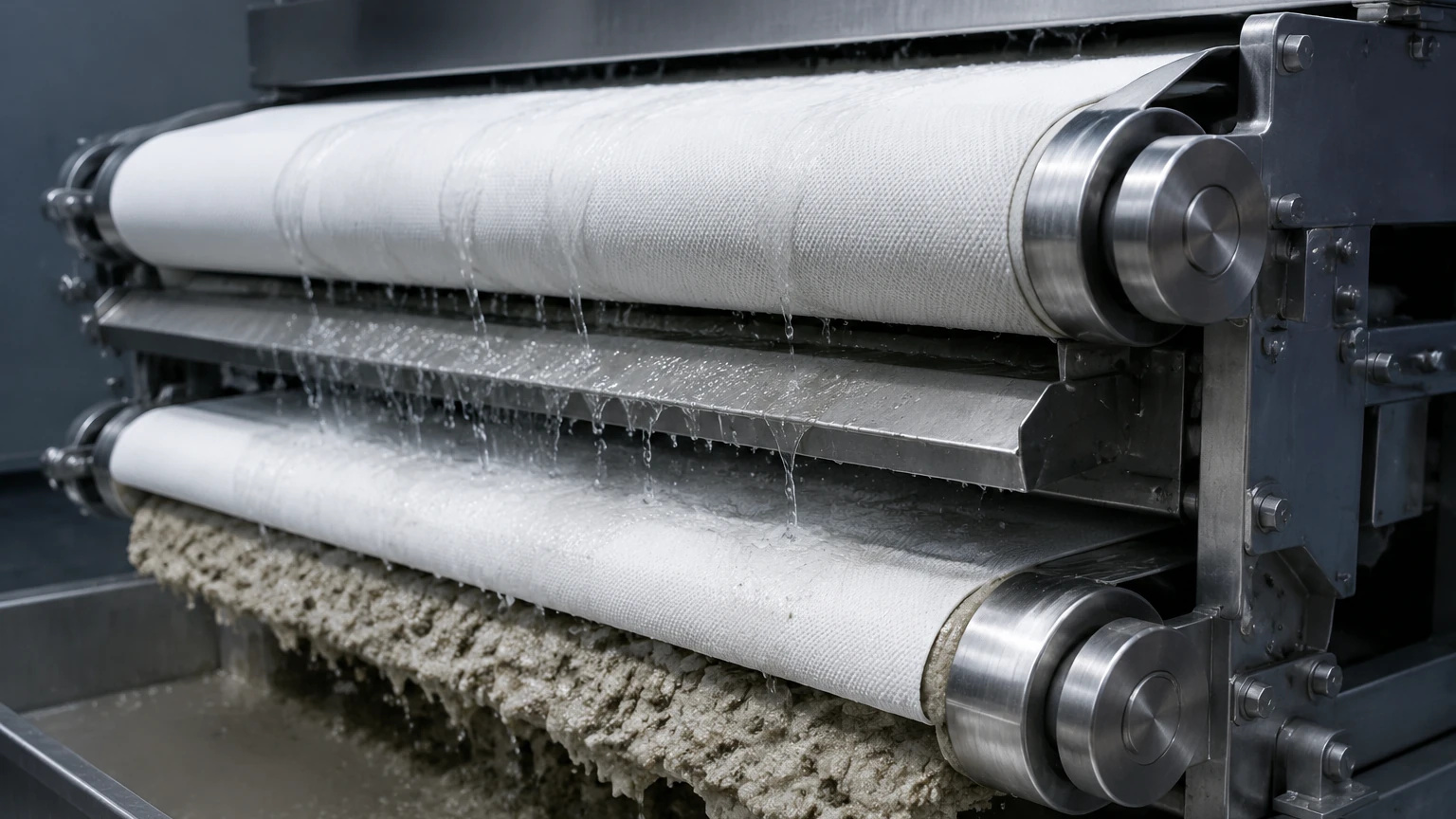
The operation of a belt press filter is a continuous process that relies on the interaction between the slurry and two tensioned, porous belts. The process is typically divided into three distinct functional zones, each requiring specific mechanical conditions to achieve optimal cake dryness.
1. The Conditioning and Flocculation Zone
Before the slurry enters the press, it must be chemically conditioned. This usually involves the addition of polymers (flocculants) to bind small particles into larger clusters, known as flocs. This stage is vital because it transforms the physical structure of the sludge, allowing water to be released more easily during the subsequent drainage phases.
2. The Gravity Drainage Zone
The conditioned sludge is first introduced onto a moving belt in the gravity zone. Here, the primary objective is the removal of "free water." The belt acts as a sieve, allowing water to pass through while retaining the flocculated solids. In many high-capacity systems, the efficiency of this zone determines the overall throughput of the machine. If the filter media—often a specialized wire mesh—is not correctly specified for the particle size, the mesh may blind (clog), leading to poor drainage and "washouts."
3. The Compression and Shear Zone
Following gravity drainage, the thickened sludge is sandwiched between two belts. These belts pass through a series of rollers of decreasing diameters. As the belts wrap around the rollers, they exert increasing pressure and shear forces on the sludge. This mechanical squeezing forces out the remaining interstitial water. The final product is a concentrated "filter cake" that is scraped off the belts by doctor blades at the discharge end.
The Critical Role of Filter Media and Wire Mesh Selection
While the frame and rollers provide the mechanical structure, the filter belts are the functional heart of the belt press. The selection of the belt material and weave pattern is a high-stakes engineering decision. While synthetic belts are common, many industrial applications require the durability and precision of stainless steel wire mesh or hybrid constructions.
Mesh Count and Aperture Size
The mesh count (the number of wires per inch) and the aperture (the size of the openings) must be balanced against the characteristics of the sludge. A mesh that is too fine will provide high solids recovery but may suffer from slow drainage and frequent blinding. Conversely, a mesh that is too coarse will allow high drainage rates but may let too many solids pass through, increasing the turbidity of the filtrate.
Weave Patterns
Different weave patterns offer varying degrees of mechanical strength and filtration accuracy:
- Plain Weave: Suitable for general-purpose filtration with high flow rates.
- Twill Weave: Provides a smoother surface and higher durability, often used for finer filtration requirements.
- Dutch Weave: Offers superior strength and the ability to handle higher pressure loads in the compression zone.
For technical teams evaluating these components, the Main Page of a specialized manufacturer like Kaifil offers insights into how custom wire mesh configurations can be engineered to meet these specific industrial demands.
Engineering Considerations for Industrial Dewatering
Selecting a belt press filter or upgrading the filtration components requires a deep dive into the application’s specific parameters. Engineers must move beyond generic specifications to consider the total cost of ownership and process stability.
Throughput and Loading Rates
Throughput is typically measured in terms of dry solids per hour per meter of belt width. Factors influencing this include the feed solids concentration and the sludge’s dewaterability. Engineers must ensure the belt press is sized to handle peak loads without compromising the dryness of the filter cake.
Cake Solids Concentration
The primary goal of most belt press applications is to achieve a specific percentage of dry solids in the cake. This is critical for downstream processes, such as incineration or landfill disposal, where higher water content leads to significantly higher costs. The tensioning system of the belts and the configuration of the rollers play a major role in achieving these targets.
Chemical Compatibility
In chemical processing and pharmaceutical applications, the slurry may be highly acidic, alkaline, or contain abrasive particles. This necessitates the use of high-grade materials. Stainless steel 304 and 316L are the industry standards due to their corrosion resistance and ability to withstand the rigorous cleaning cycles (CIP) often required in food and beverage applications.
Material Selection and Corrosion Resistance in Filtration
The longevity of a belt press filter is often limited by the environmental conditions it operates in. In municipal wastewater, hydrogen sulfide gas and moisture create a highly corrosive atmosphere. In industrial settings, the presence of chlorides or high temperatures can rapidly degrade standard materials.
Stainless Steel vs. Synthetic Belts
While synthetic belts (such as polyester or polypropylene) are cost-effective for many applications, they lack the mechanical stability and heat resistance of metal. Stainless steel wire mesh belts are preferred in applications where:
- The operating temperature exceeds the limits of polymers.
- The sludge contains sharp or abrasive materials that would tear synthetic fibers.
- High-pressure cleaning is required to maintain hygiene and prevent bacterial growth.
Precision Metal Components
Beyond the belts themselves, precision metal components—such as support grids, drainage plates, and spray nozzles—must be manufactured to tight tolerances. Kaifil specializes in these custom stainless steel filtration solutions, ensuring that every part of the filtration path is optimized for the specific chemical and physical stresses of the application.
Operational Optimization and Maintenance Strategies
A belt press filter is a dynamic system that requires proactive maintenance to prevent downtime. Failure to maintain the system correctly can lead to belt misalignment, premature wear, and poor filtration performance.
Belt Tracking and Tensioning
Automatic tracking systems are essential to keep the belts centered on the rollers. If a belt shifts too far to one side, it can be damaged by the frame or cause the sludge to leak from the edges. Similarly, maintaining consistent tension is vital for effective compression. Hydraulic or pneumatic tensioning systems must be regularly calibrated to ensure they are providing the necessary force without overstressing the belt material.
Cleaning and Washdown Cycles
As the belts pass the discharge point, they must be thoroughly cleaned before returning to the gravity drainage zone. High-pressure washwater headers are used to remove residual solids from the mesh. If the cleaning system is inefficient, the mesh will eventually blind, reducing the capacity of the press. Engineers should specify washwater systems that provide adequate pressure and coverage while minimizing water consumption.
Replacement Cycles and Wear Monitoring
Filter belts are considered consumables, but their lifespan can vary significantly based on the material and application. Monitoring the wear on the edges of the belt and the integrity of the seams (for synthetic belts) or the weave (for metal belts) is a key part of a preventative maintenance program. Using high-quality, precision-manufactured belts from a reliable source can extend replacement cycles and reduce the total cost of ownership.
Customization and OEM Integration for Specialized Applications
No two industrial slurries are exactly alike. A system designed for paper mill sludge may fail when applied to mining tailings or food processing waste. This is where customization becomes a competitive advantage.
Tailored Filtration Solutions
Customization involves more than just changing the belt size. It includes engineering the filtration media to match the specific rheology of the fluid. This might involve adjusting the wire diameter to increase the open area for faster drainage or using specialized alloys to resist specific chemical attacks.
Supporting OEM Manufacturers
For manufacturers of belt press equipment, partnering with a specialized filtration component supplier is essential. OEM-quality components ensure that the machine performs as advertised in the field. By integrating advanced wire mesh filters and precision metal components, OEMs can offer their customers higher reliability and better dewatering performance.
For those looking to explore specialized filtration media or custom-engineered components, the Main Page serves as a gateway to technical expertise and manufacturing capabilities that support the most demanding industrial filtration challenges.
Conclusion
Belt press filters remain a cornerstone of industrial dewatering due to their continuous operation, relatively low energy consumption compared to thermal drying, and ability to handle high volumes of sludge. However, the efficiency of these systems is not a given; it is the result of careful engineering, precise material selection, and rigorous maintenance.
By focusing on the technical details of the filtration media—specifically the role of stainless steel wire mesh and precision components—engineers can significantly improve the performance of their dewatering operations. Whether you are designing a new system or optimizing an existing one, understanding the interplay between mechanical pressure, gravity drainage, and material durability is the key to achieving superior filtration results.
