


Depth Filter
In industrial filtration, the selection of a separation medium is a critical engineering decision that directly impacts process efficiency, product purity, and operational costs. Among the various technologies available, the depth filter stands out as a primary solution for applications requiring high dirt-holding capacity and the removal of a broad spectrum of particle sizes. Unlike surface filters, which capture contaminants on a single plane, depth filtration utilizes the entire volume of the filter medium to trap solids within a complex, three-dimensional structure.
For engineers and procurement professionals, understanding the mechanics, material science, and performance variables of depth filtration is essential for optimizing system design. This guide explores the technical foundations of depth filters, with a specific focus on stainless steel and metal fiber media used in demanding industrial environments.
The Fundamental Principles of Depth Filtration
The primary distinction of a depth filter lies in its "tortuous path." As a fluid passes through the medium, it encounters a dense matrix of fibers or granules. This structure creates a labyrinthine route that forces particles to change direction multiple times. Separation occurs through several distinct physical mechanisms:
1. Mechanical Entrapment (Sieving): Particles larger than the pore openings are caught within the matrix. Because the pores are distributed throughout the depth of the material, the filter can capture a significantly higher volume of solids than a thin surface membrane before becoming blinded.
2. Adsorption: Due to molecular forces (such as Van der Waals forces) or electrostatic charges, smaller particles that might otherwise pass through the pores can adhere to the surface of the filter fibers.
3. Inertial Impaction: Heavier particles, unable to follow the rapid changes in fluid direction within the tortuous path, strike the fibers and become embedded.
4. Brownian Diffusion: For extremely fine particles, random molecular motion increases the likelihood of contact with the filter media, leading to capture.
Because of these combined mechanisms, a depth filter is often more effective at handling fluids with a wide distribution of particle sizes or deformable contaminants (such as gels) that might extrude through a simple surface mesh.
Material Science: Sintered Metal Fiber vs. Traditional Media
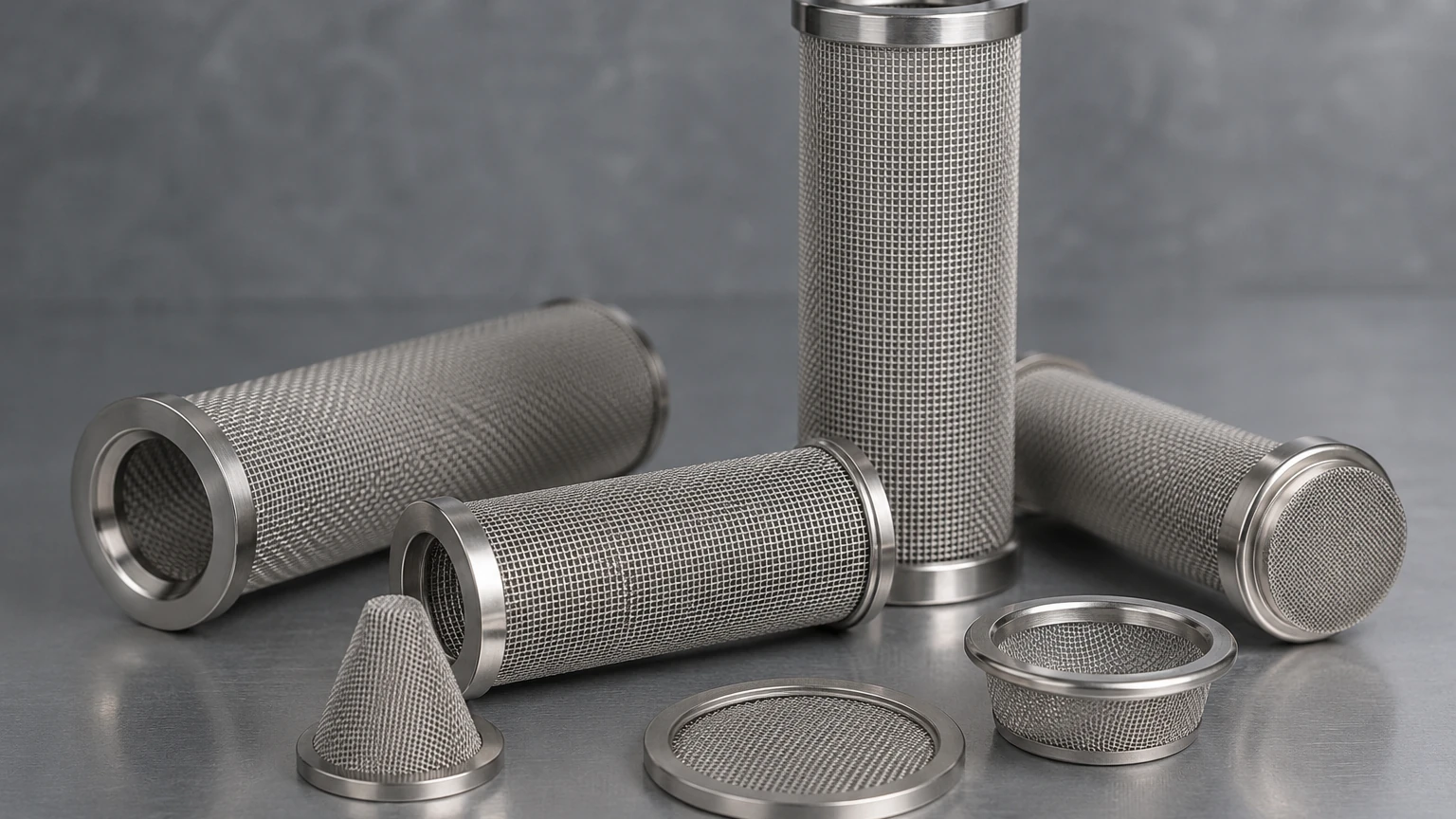
While depth filters can be constructed from various materials, including polymers, ceramics, and cellulose, industrial applications involving high temperatures, high pressures, or aggressive chemicals often require metallic solutions. Kaifil specializes in advanced stainless steel filtration components, where the depth filtration effect is achieved through the use of sintered metal fibers.
Sintered Metal Fiber Media
Sintered metal fiber is produced by felting extremely fine stainless steel filaments and then bonding them through a high-temperature vacuum sintering process. This results in a uniform, porous structure with a very high void volume (often up to 80% or more). This high porosity translates to a low initial pressure drop and an exceptional capacity for contaminant loading.
Multi-Layer Wire Mesh
In some designs, multiple layers of stainless steel wire mesh are sintered together. While individual mesh layers act as surface filters, the combination of varying mesh counts creates a graduated pore structure that functions as a depth medium. This configuration offers superior mechanical strength and can be pleated to increase the available filtration area within a standard cartridge footprint.
Key Performance Metrics for Engineering Evaluation
When specifying a depth filter for an industrial system, engineers must look beyond the nominal micron rating. Several technical parameters define the real-world performance of the filter:
Dirt-Holding Capacity (DHC)
This is perhaps the most significant advantage of depth filtration. DHC refers to the total mass of a specific contaminant the filter can retain before the differential pressure reaches a predefined terminal limit. A higher DHC means longer intervals between filter changes or cleaning cycles, reducing downtime and labor costs.
Filtration Efficiency and Beta Ratio
Depth filters are often characterized by their Beta Ratio (β), which compares the number of particles of a given size in the upstream fluid to the number in the downstream fluid. For example, a βx = 1000 rating indicates 99.9% efficiency for particles of size 'x'. It is important to distinguish between absolute and nominal ratings; depth filters are frequently used for fine polishing where absolute retention is required.
Permeability and Clean Pressure Drop
The permeability of the medium determines how easily the fluid flows through the filter. A well-designed depth filter provides high permeability, ensuring that the initial pressure drop (ΔP) is minimized. This reduces the energy requirements for pumps and provides a larger "operating window" for the filter to accumulate dirt before reaching the terminal ΔP.
Strategic Applications in Industrial Processes
Depth filters are the preferred choice in sectors where process reliability is non-negotiable. Their ability to withstand harsh conditions makes stainless steel depth media particularly valuable in the following areas:
* Chemical and Petrochemical Processing: Depth filters are used to protect downstream catalysts, remove carbon fines, and clarify aggressive solvents. The chemical compatibility of 316L stainless steel ensures that the filter does not degrade or leach contaminants into the process stream.
* Hydraulic and Lubrication Systems: High-pressure hydraulic circuits are sensitive to fine particulate wear. Depth filters provide the high-efficiency silt control necessary to prevent component failure while handling the high flow rates and viscosity of hydraulic oils.
* Food and Beverage Production: In applications such as steam filtration or the clarification of edible oils and syrups, depth filters remove impurities without stripping essential flavors or colors. Stainless steel variants are favored for their ability to withstand Clean-in-Place (CIP) and Sterilize-in-Place (SIP) procedures.
* Pharmaceutical Manufacturing: For the pre-filtration of active pharmaceutical ingredients (APIs) or the protection of expensive final membrane filters, depth media provide a cost-effective way to remove the bulk of the contaminant load.
Selection Criteria: Choosing the Right Depth Filter
Selecting the optimal filter requires a comprehensive analysis of the operating environment. Engineers should confirm the following details before finalizing a specification:
1. Fluid Compatibility: Beyond the base fluid, consider trace chemicals, cleaning agents, and potential pH fluctuations. Stainless steel (304, 316L, or specialized alloys like Hastelloy) is selected based on these factors.
2. Temperature and Pressure: Depth filters must maintain structural integrity under maximum operating temperatures and surge pressures. Sintered metal components are ideal for temperatures exceeding 300°C, where polymer filters would fail.
3. Contaminant Characteristics: Is the contaminant hard and abrasive, or soft and gelatinous? Is the particle size distribution narrow or broad? This determines the required pore structure and depth of the medium.
4. Flow Rate and Velocity: High fluid velocities can sometimes cause "breakthrough," where captured particles are pushed through the medium. Sizing the filter housing correctly to maintain appropriate flux rates is essential.
5. Cleaning and Regeneration: One of the primary benefits of stainless steel depth filters is that they are often cleanable. Methods such as ultrasonic cleaning, backflushing, or chemical cleaning can restore the filter's performance, significantly lowering the total cost of ownership compared to disposable cartridges.
Total Cost of Ownership (TCO) Considerations
While the initial purchase price of a high-quality stainless steel depth filter may be higher than that of a disposable polymer or paper filter, the TCO is often much lower in industrial settings. Factors contributing to TCO include:
* Replacement Frequency: The high dirt-holding capacity of depth media extends service life.
* Disposal Costs: Metal filters are permanent or semi-permanent, eliminating the waste stream associated with frequent filter changes.
* Process Protection: By providing consistent filtration efficiency, depth filters protect expensive downstream equipment (like high-pressure pumps or chromatography columns) from damage and fouling.
* Downtime: Longer service intervals mean fewer process interruptions.
For organizations looking to optimize their filtration stages, reviewing technical specifications and customization options is the first step. You can explore a wide range of industrial filtration components and engineering support on the Kaifil Main Page.
Engineering Customization and OEM Solutions
No two industrial processes are identical, and standard off-the-shelf filters may not always provide the optimal balance of efficiency and service life. Customization is a key aspect of depth filter implementation. This includes:
* Custom Micron Ratings: Engineering the fiber diameter and sintering density to achieve specific retention levels.
* Specialized End Fittings: Ensuring the filter cartridge integrates seamlessly into existing housings (e.g., DOE, 222, 226, or threaded connections).
* Reinforced Structures: Adding internal support cores or external cages for applications involving high differential pressures or mechanical vibration.
By collaborating with a manufacturer that understands both the material science and the application requirements, engineering teams can develop filtration solutions that are precisely tuned to their operational needs. Whether it is a single high-precision component or a large-scale OEM supply, the focus remains on durability, precision, and reliable performance in the most demanding environments.
Conclusion
The depth filter remains a cornerstone of industrial separation technology due to its versatility and high capacity for contaminant removal. By leveraging the three-dimensional matrix of the medium, these filters provide a level of protection and efficiency that surface filters cannot match in high-load applications. When constructed from high-grade materials like sintered stainless steel, they offer a robust, cleanable, and cost-effective solution for modern manufacturing and processing challenges. Understanding the technical nuances of depth filtration allows engineers to make informed decisions that enhance system longevity and process integrity.
