


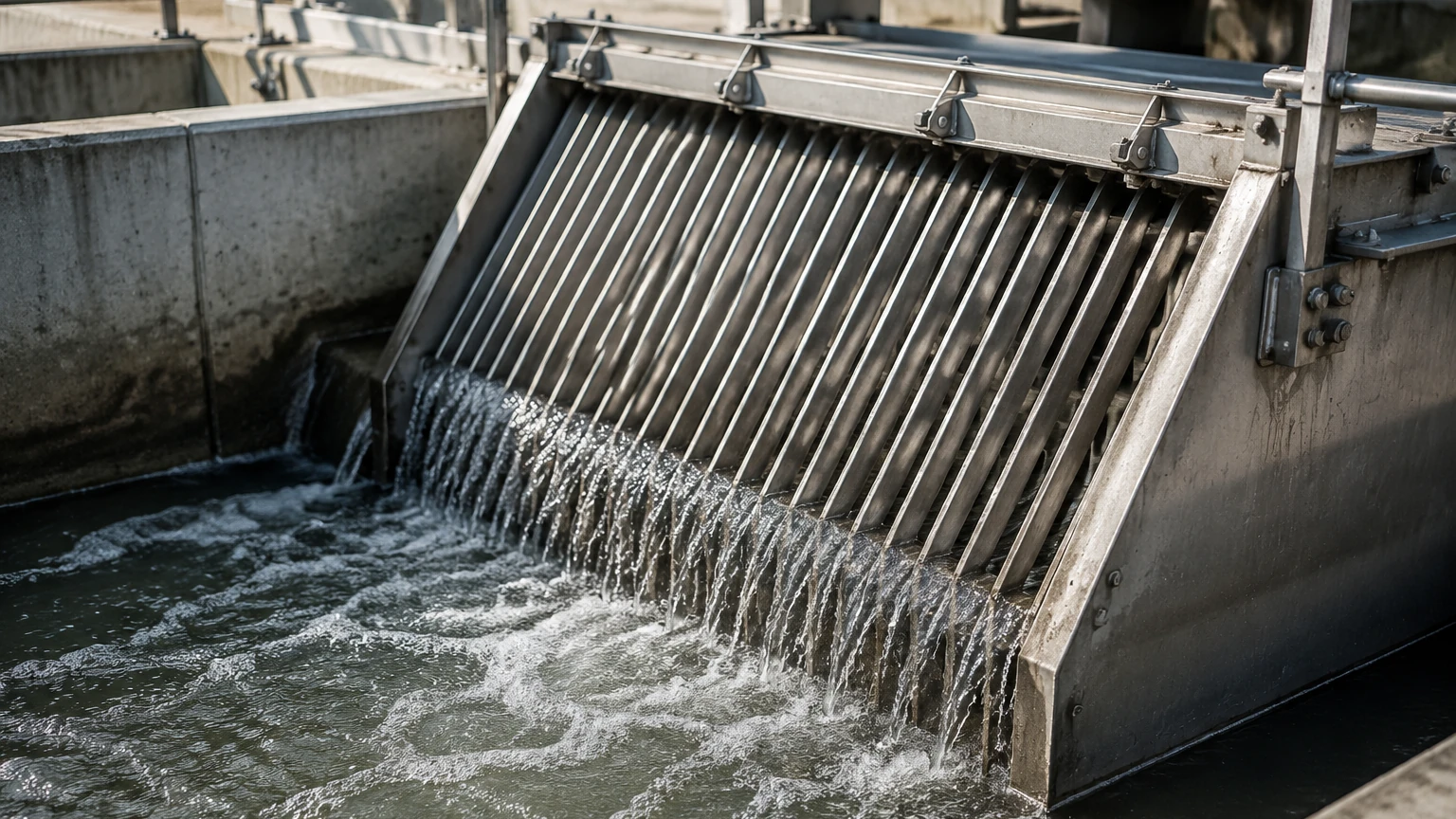
Wastewater Screens
In industrial water treatment and process engineering, the initial stage of filtration serves as the most critical defense for downstream equipment. Wastewater screens are the primary mechanical components designed to remove solids from liquid streams, preventing damage to pumps, valves, and sensitive filtration membranes. For engineers and facility managers, selecting the appropriate screening technology is not merely a matter of sizing; it involves a complex evaluation of material science, fluid dynamics, and long-term operational costs.
Industrial wastewater often contains a diverse array of contaminants, ranging from large debris to fine suspended solids and corrosive chemicals. Effective screening ensures that subsequent treatment phases—such as biological processing, chemical dosing, or fine membrane filtration—can operate at peak efficiency without the risk of mechanical interference or premature fouling. As a specialist in stainless steel filtration, Kaifil provides precision-engineered components that address these demanding requirements through customized designs and high-grade materials.
The Role of Wastewater Screens in Industrial Processes
Wastewater screens act as the "gatekeeper" of a treatment system. Their primary function is to intercept physical objects and suspended particles that exceed a specific size threshold. In a B2B context, the application of these screens extends beyond municipal sewage; they are vital in food and beverage processing, chemical manufacturing, pharmaceutical production, and hydraulic systems.
In food processing, for instance, screens are used to recover valuable by-products or remove organic waste that could otherwise lead to high Biological Oxygen Demand (BOD) levels. In chemical plants, screens must withstand aggressive pH levels while maintaining structural integrity. The failure of a screening component can lead to catastrophic system downtime, making the reliability of the screen’s design a top priority for maintenance and engineering teams.
Technical Classification: Coarse vs. Fine Screening
Industrial screening is generally categorized into two main stages: coarse screening and fine screening. Each stage requires different mechanical properties and filtration accuracies.
Coarse Screening
Coarse screens typically feature openings larger than 6mm. These are designed to capture large debris such as rags, plastics, and large organic matter. In many industrial settings, these are implemented as bar screens or heavy-duty perforated plates. The engineering focus here is on mechanical strength and impact resistance, as these components must withstand significant physical loads without deforming.
Fine Screening
Fine screens utilize openings between 0.5mm and 6mm. These are often constructed from stainless steel wire mesh or wedge wire. Fine screening is essential for protecting high-pressure pumps and fine-pore membranes. At this level, the precision of the opening size becomes paramount. Even a slight deviation in the manufacturing of the mesh can allow bypass, leading to the gradual degradation of downstream assets. For technical professionals, reviewing Main Page specifications for filtration accuracy is a necessary step in ensuring system compatibility.
Material Engineering for Corrosive and High-Temperature Environments
The environment in which wastewater screens operate is often hostile. Factors such as chemical exposure, temperature fluctuations, and abrasive particles can rapidly degrade inferior materials. Stainless steel is the industry standard for these applications due to its superior durability and resistance to oxidation.
Stainless Steel 304 vs. 316L
While Type 304 stainless steel is suitable for many general-purpose applications, industrial wastewater often requires the enhanced corrosion resistance of Type 316 or 316L. The addition of molybdenum in 316L provides better resistance to pitting and crevice corrosion, particularly in environments with high chloride content or acidic cleaning agents. For pharmaceutical and food-grade applications, the surface finish of the stainless steel is also a critical factor to prevent bacterial growth and ensure ease of cleaning.
Mechanical Durability
Beyond chemical resistance, the material must possess the tensile strength to handle the pressure drop (differential pressure) across the screen. As solids accumulate on the surface, the pressure increases. A well-engineered screen must maintain its shape and slot precision under these stresses to avoid "blow-by" or structural collapse.
Key Performance Indicators and Selection Criteria
When specifying wastewater screens, engineers must look beyond the initial purchase price and focus on Total Cost of Ownership (TCO). Several technical parameters define the efficiency of a screening solution:
1. Open Area Percentage: This is the ratio of the total area of the openings to the total area of the screen. A higher open area reduces the approach velocity and pressure drop, which in turn lowers energy consumption and reduces the risk of particle impingement.
2. Flow Rate Capacity: The screen must be sized to handle peak flow conditions without causing overflow or excessive turbulence. This requires careful calculation of the liquid's viscosity and the expected solids loading.
3. Filtration Accuracy (Micron Rating): This defines the smallest particle the screen is guaranteed to intercept. In precision metal filtration, achieving a consistent micron rating across the entire surface area is a hallmark of quality manufacturing.
4. Cleaning Mechanism Compatibility: Whether the system uses manual cleaning, mechanical rakes, or automated backwashing, the screen design must facilitate the easy release of captured solids.
Addressing Operational Risks: Blinding and Abrasion
Two of the most common challenges in wastewater screening are blinding and abrasion. Blinding occurs when particles become lodged in the screen openings or when a layer of sticky material (such as fats, oils, or greases) coats the surface. This leads to a rapid increase in pressure drop and a decrease in throughput.
To mitigate blinding, engineers often turn to wedge wire technology. The V-shaped profile of wedge wire creates a widening gap that allows particles to pass through more easily once they have cleared the initial opening, significantly reducing the risk of clogging. Additionally, smooth surface finishes and specialized coatings can help prevent the adhesion of organic matter.
Abrasion is caused by high-velocity particles, such as sand or grit, wearing down the screen material. This is particularly prevalent in mining and heavy industrial applications. Selecting hardened stainless steel alloys or increasing the wire diameter can extend the service life of the component in these high-wear environments.
Maintenance and Replacement Cycles
No filtration component lasts indefinitely, but the lifespan of wastewater screens can be maximized through proper maintenance. Regular inspections should focus on:
* Structural Integrity: Checking for signs of fatigue, broken wires, or deformed frames.
* Seal Condition: Ensuring that the gaskets or seals around the screen housing are intact to prevent bypass.
* Cleaning Efficiency: Verifying that backwash cycles or mechanical scrapers are effectively removing the solids cake.
Replacement cycles vary significantly based on the application. In stable, low-load environments, a high-quality stainless steel screen may last several years. However, in abrasive or highly corrosive processes, a proactive replacement strategy is necessary to prevent unplanned downtime. Engineers should work with manufacturers to establish a baseline for expected wear and maintain a stock of critical spares.
Customization and OEM Integration
Standard off-the-shelf screens rarely meet the specific needs of complex industrial systems. Customization is often required to fit existing housing dimensions, accommodate unique flow patterns, or meet specific regulatory standards.
Kaifil specializes in providing OEM filtration solutions that are tailored to the exact requirements of the project. This includes custom-designed wire mesh filters, stainless steel filter cartridges, and precision metal components. By collaborating during the design phase, engineers can ensure that the filtration media is optimized for the specific particle morphology and chemical composition of their wastewater stream. Customization options also include various fitting types, reinforced support structures, and specialized welding techniques to ensure the longevity of the filter under high-pressure conditions.
Procurement and Technical Confirmation
Before finalizing a purchase for wastewater screens, purchasing teams and engineers should confirm several key pieces of information with the manufacturer:
* Material Certification: Request documentation verifying the grade of stainless steel used (e.g., Mill Test Reports).
* Dimensional Accuracy: Confirm that the tolerances of the screen openings meet the required filtration standards.
* Pressure Ratings: Ensure the component is rated for the maximum expected differential pressure of the system.
* Compatibility: Verify that the screen material is compatible with all chemicals used in the process, including cleaning agents.
By focusing on these technical details, organizations can invest in filtration solutions that provide reliable performance and contribute to the overall efficiency of the industrial water treatment process. For more information on custom filtration components and engineering support, professionals are encouraged to explore the Main Page for a comprehensive overview of available solutions.
