


Turbine Oil Purification
Turbine systems represent some of the most critical and expensive assets in power generation, chemical processing, and marine propulsion. The reliability of these systems is inextricably linked to the quality of the lubricating and control oil circulating through them. Turbine oil serves multiple roles: it lubricates high-speed bearings, cools internal components, provides the hydraulic medium for governor control systems, and protects metal surfaces from corrosion. However, the demanding environment of a turbine—characterized by high temperatures, high speeds, and potential exposure to steam and water—inevitably leads to oil degradation.
Effective turbine oil purification is the process of removing contaminants such as solid particulates, water, and oxidation by-products to maintain the oil’s physical and chemical properties. For engineers and maintenance professionals, understanding the technical nuances of purification systems and the filtration components within them is essential for extending equipment life and preventing catastrophic failure.
The Impact of Contamination on Turbine Performance
Contamination in turbine oil is generally categorized into three types: solid particulates, moisture, and chemical degradation products. Each poses a unique threat to the system's integrity.
Solid Particulate Contamination
Solid particles, ranging from metallic wear debris and atmospheric dust to construction debris left over from maintenance, act as abrasives. In high-speed turbine bearings, where the oil film thickness may be only a few microns, even microscopic particles can cause scoring, pitting, and surface fatigue. Furthermore, particulates can clog the fine tolerances of hydraulic control valves, leading to governor instability or failure to trip during an overspeed event. The industry standard for measuring this is ISO 4406, which provides a code representing the number of particles at 4µm, 6µm, and 14µm per milliliter of fluid.
Moisture Contamination
Water is perhaps the most common and damaging contaminant in turbine systems, often entering via gland seal leaks or atmospheric condensation. Water exists in oil in three states: dissolved, emulsified, and free. Dissolved water is chemically bonded to the oil molecules, while emulsified water creates a cloudy appearance and significantly reduces the oil’s lubricating film strength. Free water settles at the bottom of reservoirs. Moisture promotes rust and corrosion, accelerates oil oxidation, and can lead to the depletion of essential additives.
Oxidation and Varnish
As turbine oil is exposed to heat and oxygen, it undergoes chemical changes. This process, known as oxidation, leads to the formation of polar compounds that eventually precipitate out of the oil as varnish or sludge. Varnish is a thin, insoluble film that coats internal surfaces, increasing friction in bearings and causing "sticky" valves. Standard mechanical filtration is often insufficient to remove these sub-micron soft contaminants, requiring specialized purification technologies.
Core Technologies in Turbine Oil Purification
To address the diverse range of contaminants, industrial purification systems employ a combination of mechanical and physical-chemical processes. Selecting the right technology depends on the specific contamination profile of the turbine system.
Mechanical Filtration with Stainless Steel Media
Mechanical filtration remains the primary line of defense against solid particulates. In turbine applications, the choice of filter media is critical. While cellulose or synthetic glass fiber elements are common, stainless steel wire mesh filters offer distinct advantages in demanding industrial environments.
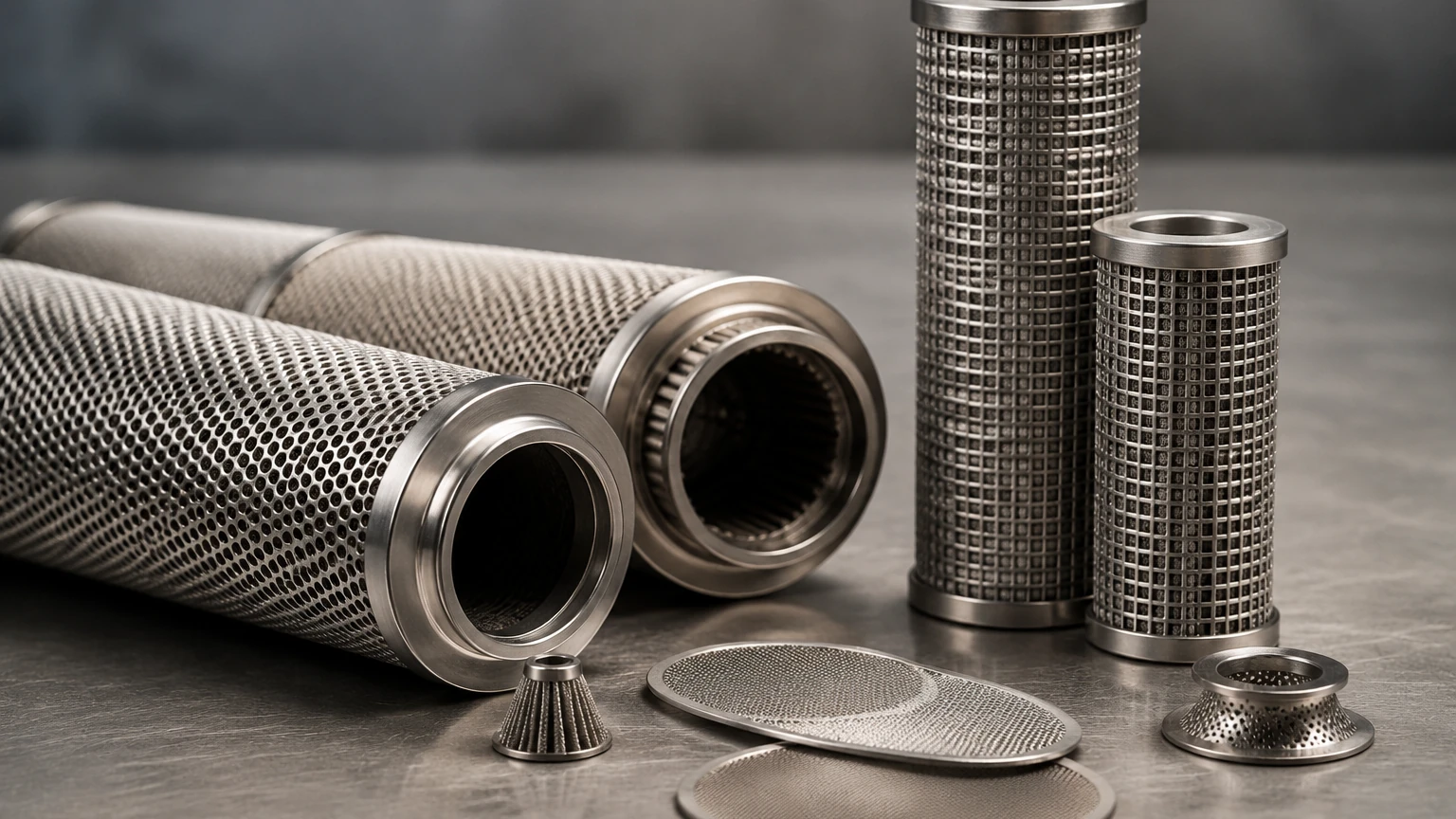
Stainless steel filter cartridges, manufactured by specialists like Kaifil, provide exceptional structural integrity and resistance to high differential pressures. Unlike disposable media, precision-engineered stainless steel mesh can be designed for specific micron ratings while maintaining high flow rates and low pressure drops. These components are particularly valued in high-temperature zones or where chemical compatibility with specialized synthetic turbine oils is a concern. For more detailed information on specific filter configurations, engineers can consult the Main Page of the manufacturer’s technical catalog.
Vacuum Dehydration
Vacuum dehydration is the most effective method for removing all three states of water (dissolved, emulsified, and free) as well as entrained gases. The process involves heating the oil to a moderate temperature (typically 50°C to 60°C) and exposing it to a vacuum. This lowers the boiling point of water, allowing it to flash into vapor without damaging the oil’s chemical structure. This technology is essential for maintaining water levels below the oil’s saturation point, which is typically 100-200 ppm for most turbine oils.
Centrifugal Separation
Centrifuges use high-speed rotation to separate contaminants based on density. Since water and solid particulates are denser than oil, centrifugal force drives them to the outer periphery of the bowl. While highly effective at removing large volumes of free water and heavy solids, centrifuges are less effective at removing dissolved water or very fine particulates compared to vacuum dehydration and high-efficiency mechanical filters.
Coalescence Technology
Coalescer systems use specialized media to gather small droplets of emulsified water into larger droplets that can then settle out of the oil by gravity. This is a continuous, low-energy process effective for removing free and emulsified water, though it cannot address dissolved moisture.
Engineering Considerations for Filter Selection
When specifying filtration components for a turbine oil purification system, several engineering parameters must be evaluated to ensure performance and cost-effectiveness.
Micron Rating and Beta Ratio
The micron rating indicates the size of particles the filter can trap. However, a nominal rating is often misleading. Engineers should look for the absolute rating, defined by the Beta Ratio (β). The Beta Ratio is the number of particles upstream of the filter divided by the number of particles downstream of a specific size. For example, a βx = 1000 means the filter is 99.9% efficient at removing particles of size 'x'. In turbine systems, maintaining an ISO cleanliness code of 16/14/11 or better often requires high-beta filtration at the 3µm to 6µm level.
Material Compatibility and Durability
Turbine oils, especially fire-resistant fluids like phosphate esters used in control systems, can be chemically aggressive toward certain polymers and adhesives. Stainless steel (304 or 316L) is the preferred material for filter housings and internal mesh components due to its inert nature. Furthermore, in systems subject to flow surges or cold starts, the high collapse strength of metal mesh prevents media migration—a failure mode where the filter material itself breaks off and enters the downstream flow.
Cleanability vs. Disposal
One of the primary engineering decisions in turbine oil purification is the choice between disposable and cleanable filter elements. While disposable glass fiber elements offer high dirt-holding capacity, stainless steel wire mesh filters are cleanable and reusable. This reduces the total cost of ownership and the environmental impact of hazardous waste disposal. In heavy-duty industrial applications, the durability of metal filters ensures they can withstand repeated cleaning cycles without losing their precision filtration characteristics.
Implementing a Purification Strategy
A robust purification strategy involves more than just installing hardware; it requires a systematic approach to fluid management.
1. Baseline Oil Analysis: Before selecting a purification method, perform a comprehensive oil analysis, including particle count (ISO 4406), water content (Karl Fischer titration), and Membrane Patch Colorimetry (MPC) for varnish potential.
2. Side-Stream (Kidney Loop) Purification: Most turbine systems benefit from a dedicated side-stream purification loop. This allows the oil to be polished continuously without affecting the main lubrication flow or pressure, ensuring that the oil in the reservoir remains at peak quality.
3. Differential Pressure Monitoring: Filters should be equipped with differential pressure (ΔP) gauges or transmitters. A sudden rise in ΔP indicates a high contaminant load, while a sudden drop could indicate a ruptured element or bypass valve failure.
4. Temperature Control: Effective purification often requires maintaining the oil within a specific temperature window. If the oil is too cold, viscosity increases, raising the pressure drop across filters; if too hot, oxidation is accelerated.
Customization in Industrial Filtration
Every industrial facility has unique constraints, from physical space limitations to specific flow requirements. Standard off-the-shelf filtration units may not always meet the needs of a specialized turbine installation. This is where custom manufacturing becomes vital. Precision metal filter components can be tailored in terms of dimensions, end-cap configurations, and mesh layers to fit existing housings or to meet the specific Reynolds numbers of a system's flow profile.
By working with manufacturers that specialize in custom stainless steel solutions, engineering teams can ensure that their turbine oil purification hardware is optimized for the specific viscosity and flow characteristics of their lubricants. This level of customization is particularly important when retrofitting older turbine sets with modern, high-efficiency filtration systems.
Conclusion
Turbine oil purification is a fundamental requirement for the operational continuity of power and industrial plants. By effectively managing particulates, moisture, and oxidation products, facilities can avoid the high costs associated with bearing replacement, valve failure, and unplanned downtime. The integration of high-quality mechanical filtration, such as stainless steel wire mesh and precision cartridges, alongside technologies like vacuum dehydration, provides a multi-layered defense against fluid degradation. When selecting filtration components, focusing on technical specifications—such as absolute micron ratings, material compatibility, and structural durability—allows engineers to build a reliable and cost-effective purification infrastructure that protects their most valuable assets.
