


200 Mesh Filter
In industrial filtration, the precision of a filter medium is often the determining factor in process efficiency, equipment longevity, and final product quality. A 200 mesh filter represents a critical threshold in fine filtration, widely utilized across chemical, pharmaceutical, and food processing industries. Understanding the technical specifications, material properties, and engineering considerations of this specific mesh size is essential for procurement teams and engineers tasked with optimizing filtration systems.
As a specialized manufacturer, Kaifil provides high-performance stainless steel filtration components designed to meet the rigorous demands of industrial environments. By visiting our Main Page, technical professionals can explore a comprehensive range of custom wire mesh solutions tailored to specific flow rates and chemical compatibility requirements.
Understanding 200 Mesh Specifications and Micron Ratings
The term "mesh" refers to the number of openings per linear inch of the wire cloth. A 200 mesh filter contains 200 wires in one direction and 200 wires in the perpendicular direction within a single square inch. This density creates a fine grid capable of capturing small particulates while maintaining a specific level of permeability.
Aperture and Micron Size
To determine the actual filtration capability, engineers must consider both the mesh count and the wire diameter. For a standard 200 mesh stainless steel wire cloth, the wire diameter is typically around 0.053 mm (0.0021 inches). This results in an aperture (opening size) of approximately 0.074 mm, which is equivalent to 74 microns.
In practical terms, a 200 mesh filter is designed to retain particles larger than 74 microns. This makes it an ideal choice for "fine" filtration stages where larger contaminants have already been removed by coarser pre-filters, but where the fluid still requires further refinement before reaching sensitive downstream components or final packaging.
Open Area Percentage
The "open area" is the percentage of the total surface area that consists of openings. For a standard 200 mesh filter, the open area typically falls between 34% and 36%. This balance is crucial; a higher open area allows for higher flow rates and lower initial pressure drops, but it must be balanced against the mechanical strength of the wire and the required filtration efficiency.
Material Selection for Industrial Durability
The performance of a 200 mesh filter is heavily influenced by the alloy used in its construction. Stainless steel is the industry standard due to its mechanical strength, thermal stability, and corrosion resistance.
Stainless Steel 304 vs. 316L
* Grade 304: This is the most common stainless steel for general industrial use. It offers excellent durability and is suitable for most water treatment and basic chemical applications. However, it may be susceptible to pitting in high-chloride environments.
* Grade 316L: For more demanding applications, such as pharmaceutical processing or marine environments, Grade 316L is preferred. The addition of molybdenum enhances its resistance to corrosion and chemical attack, while the "L" (low carbon) designation ensures better weldability and prevents intergranular corrosion in the heat-affected zones of the filter assembly.
Specialized Alloys
In extreme cases involving high temperatures or highly aggressive acids, manufacturers like Kaifil can utilize specialized alloys such as Monel, Inconel, or Hastelloy. These materials ensure that the 200 mesh filter maintains its structural integrity and filtration accuracy even under conditions that would cause standard stainless steels to fail.
Structural Configurations of 200 Mesh Filters
A 200 mesh filter is rarely used as a standalone piece of thin wire cloth in industrial settings. Instead, it is integrated into various structural designs to handle operational pressures and mechanical stresses.
Pleated Filter Cartridges
To maximize the filtration surface area within a limited footprint, the 200 mesh wire cloth is often pleated. Pleating significantly increases the dirt-holding capacity of the filter, extending the time between cleaning cycles. These cartridges are typically supported by an inner core and an outer cage made of perforated metal to prevent the mesh from collapsing under high differential pressure.
Sintered Multi-Layer Mesh
For high-pressure applications, a single layer of 200 mesh may lack the necessary mechanical strength. In these instances, 200 mesh is vacuum-sintered with several other layers of coarser mesh. This process bonds the wires at every contact point, creating a robust, porous plate that retains the 74-micron filtration rating of the 200 mesh layer while gaining the structural rigidity of the thicker support layers.
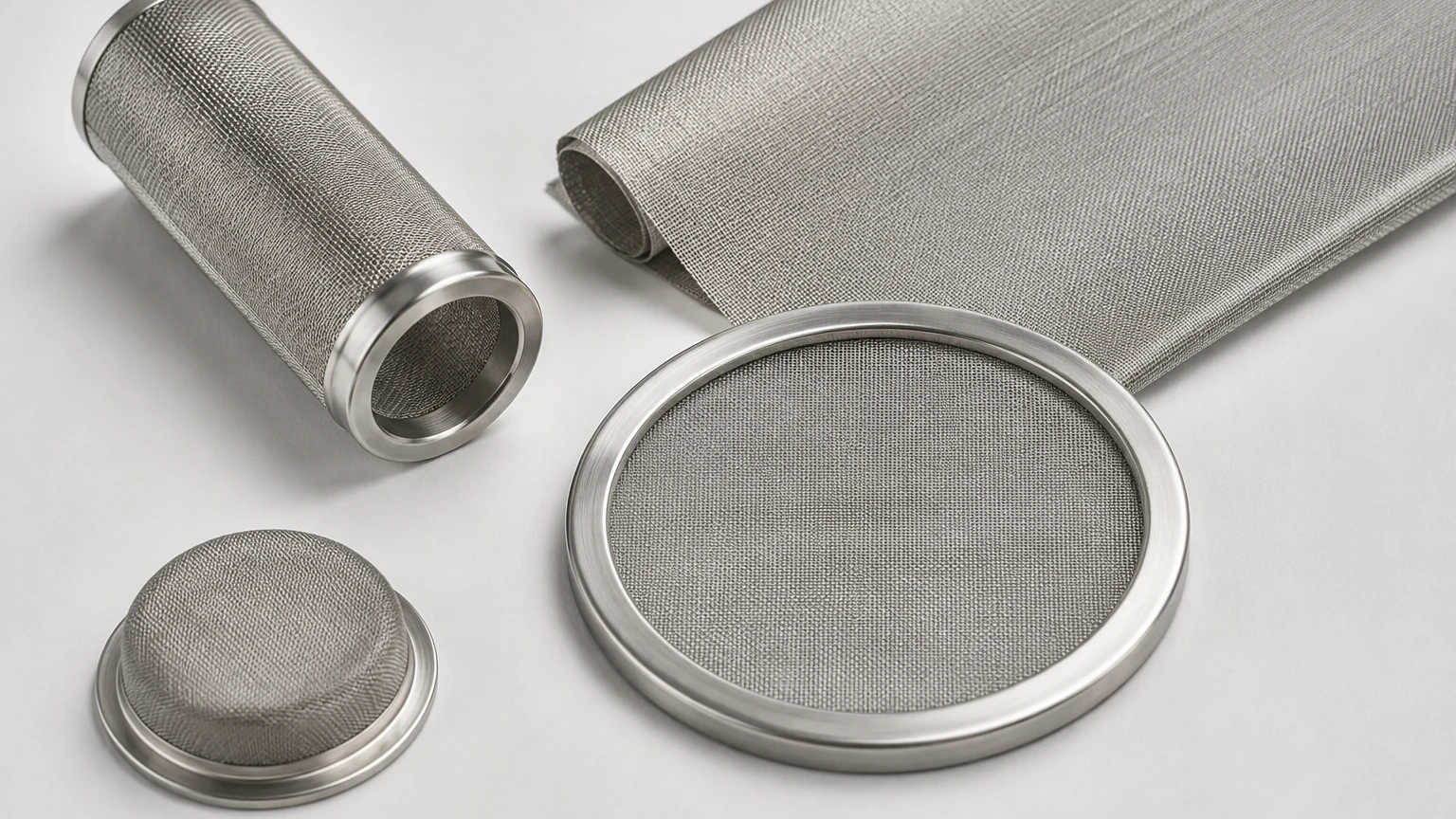
Custom Discs and Cylinders
Many OEM applications require specific shapes, such as circular discs for extruder screens or cylindrical strainers for inline pipe filtration. Kaifil specializes in precision-cutting and welding these components to ensure a perfect fit within the housing, preventing "bypass"—a common failure mode where fluid flows around the filter rather than through it.
Key Application Sectors for 200 Mesh Filtration
The 74-micron rating of a 200 mesh filter makes it a versatile tool across several critical industries:
1. Chemical Processing: Used to remove fine catalysts from liquid streams or to protect high-pressure pumps from particulate wear. The chemical resistance of stainless steel ensures that the filter does not leach contaminants into the process fluid.
2. Food and Beverage: In the production of syrups, oils, and beverages, 200 mesh filters are used for final polishing to ensure clarity and remove any remaining fine sediment. Compliance with FDA standards for food-contact materials is a primary requirement here.
3. Pharmaceuticals: 200 mesh components are integrated into fluid bed dryers and granulation equipment. The smooth surface of stainless steel wire cloth facilitates easy cleaning and sterilization, meeting stringent sanitary requirements.
4. Hydraulic Systems: High-precision hydraulic circuits require clean oil to prevent valve sticking and pump cavitation. A 200 mesh filter serves as an effective barrier against fine metallic wear particles.
5. Water Treatment: In advanced filtration stages, 200 mesh is used to protect reverse osmosis (RO) membranes by removing fine suspended solids that could cause premature fouling.
Engineering Considerations for System Integration
When specifying a 200 mesh filter, engineers must look beyond the mesh count and consider how the component will interact with the entire system.
Pressure Drop (Delta P)
Every filter introduces a resistance to flow. The initial pressure drop across a clean 200 mesh filter depends on the fluid's viscosity, flow velocity, and the filter's open area. As the filter captures contaminants, the pressure drop increases. Systems should be designed with pressure gauges to monitor this "Delta P," allowing operators to identify when cleaning or replacement is necessary.
Flow Velocity
High flow velocities can cause "particle migration," where captured contaminants are forced through the mesh openings due to high kinetic energy. It can also lead to premature erosion of the wire mesh. Designing the filter housing to maintain a laminar flow and a conservative face velocity is essential for maintaining 74-micron filtration accuracy.
Dirt Holding Capacity
Because 200 mesh is a surface filtration medium, its dirt-holding capacity is lower than depth-type filters (like felt or wound cartridges). If the fluid has a high concentration of solids, a 200 mesh filter may clog rapidly. In such cases, a multi-stage approach—using a coarser mesh (e.g., 60 or 100 mesh) as a pre-filter—is the most cost-effective strategy to protect the finer 200 mesh stage.
Maintenance, Cleaning, and Longevity
One of the primary advantages of a stainless steel 200 mesh filter over disposable synthetic filters is its reusability. With proper maintenance, these components can last for years, significantly reducing the total cost of ownership.
Cleaning Methods
* Backwashing: Reversing the flow of fluid through the filter to dislodge particles from the surface. This is often automated in continuous process systems.
* Ultrasonic Cleaning: For stubborn or microscopic contaminants, placing the filter in an ultrasonic bath uses high-frequency sound waves to create cavitation bubbles that strip away debris without damaging the delicate wire structure.
* Chemical Cleaning: Soaking the filter in compatible solvents or acids to dissolve organic or mineral buildup. This is particularly effective in food and chemical applications.
Inspection for Damage
During cleaning cycles, the mesh should be inspected for signs of mechanical fatigue, such as "wire shifting" or broken weaves. Even a single broken wire in a 200 mesh filter can create a bypass path much larger than 74 microns, compromising the entire filtration process.
Selecting the Right Partner for Custom Filtration
Choosing a 200 mesh filter involves more than just selecting a part number from a catalog. It requires a deep understanding of the interplay between material science, fluid dynamics, and manufacturing precision. Engineers should verify that their supplier can provide material certifications (MTRs) and clear data on filtration efficiency and pressure limits.
Kaifil works closely with global industrial clients to develop customized filtration solutions that address specific operational challenges. Whether you require a standard 200 mesh pleated cartridge or a unique sintered metal component for a high-temperature reactor, our engineering team provides the technical support necessary to ensure optimal performance. For detailed product specifications and application guidance, please refer to the resources available on our Main Page.
By focusing on high-quality materials and precise manufacturing tolerances, Kaifil ensures that every 200 mesh filter provides reliable, repeatable performance in the most demanding industrial environments. Proper selection and integration of these components not only protect downstream equipment but also enhance the overall efficiency and sustainability of industrial processes.
