


Reverse Air Baghouse
In the landscape of industrial air pollution control, the reverse air baghouse stands as one of the most established and reliable technologies for managing high-volume gas streams and fine particulate matter. Unlike high-pressure pulse jet systems, the reverse air baghouse utilizes a gentler cleaning mechanism that is particularly suited for applications involving fragile filter media or extremely high temperatures. For engineers and facility managers in industries such as cement production, steel manufacturing, and power generation, understanding the technical nuances of these systems is essential for optimizing filtration efficiency and extending equipment service life.
At its core, a reverse air baghouse is a multi-compartment dust collector designed to operate continuously. By isolating individual compartments for cleaning while the rest of the system remains operational, these units provide a steady pressure drop and consistent airflow, which are critical for maintaining process stability in heavy industrial environments.
Engineering Principles of the Reverse Air Baghouse
The fundamental operation of a reverse air baghouse relies on the separation of the filtration and cleaning cycles. During the filtration phase, dust-laden gas enters the baghouse and passes through the filter bags, typically from the inside out. The bags are suspended from a tube sheet at the top and fastened to a floor plate at the bottom. As the gas passes through the fabric, particulate matter is trapped on the interior surface of the bag, forming a dust cake.
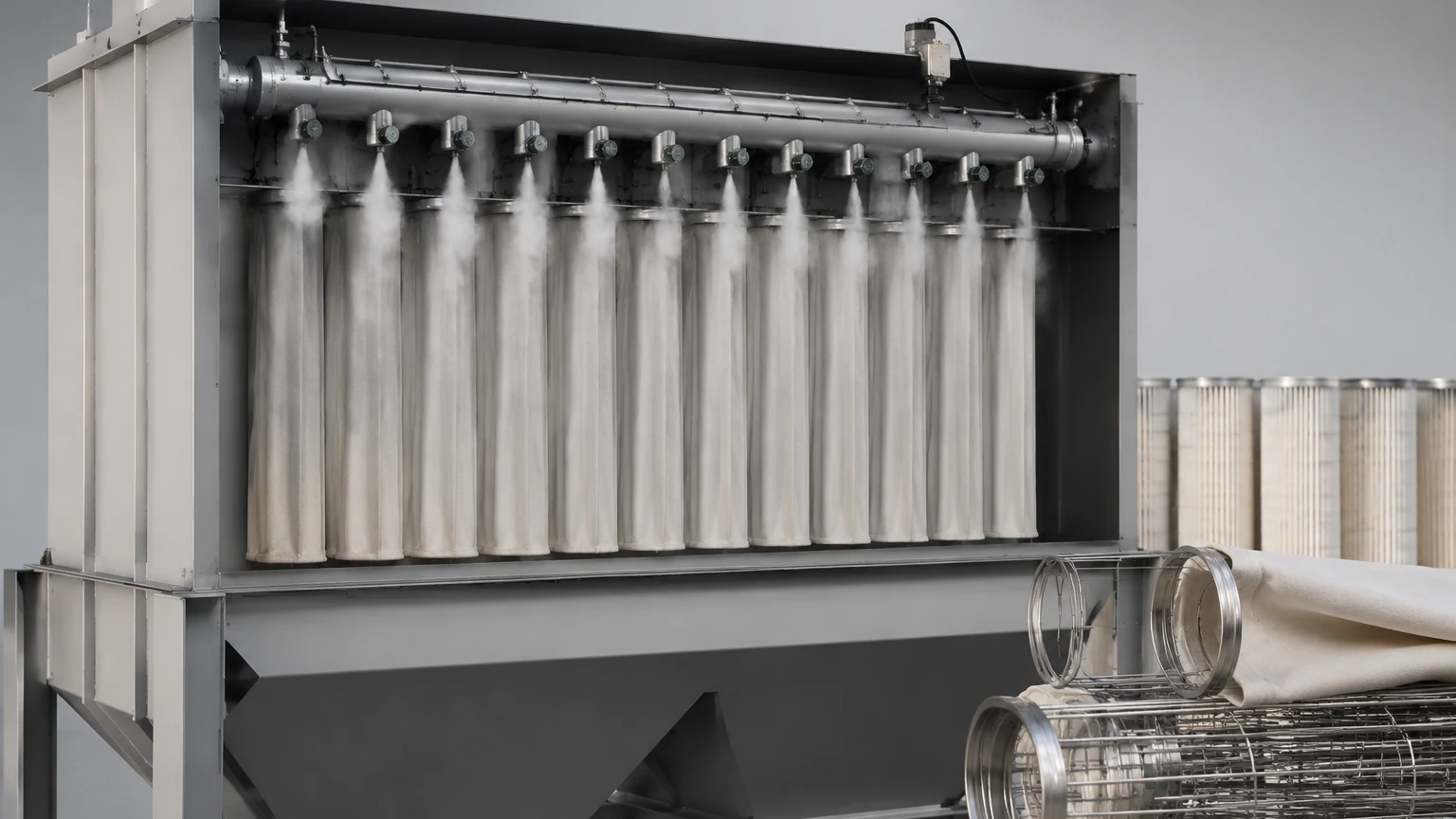
Cleaning is initiated when the pressure drop across the bags reaches a predetermined setpoint. The system isolates a single compartment by closing the outlet damper and opening a reverse air damper. A secondary fan then blows clean, low-pressure air in the opposite direction of the normal filtration flow. This reverse airflow causes the filter bags to partially collapse inward. To prevent the bags from collapsing completely—which would trap the dust—internal support rings (anti-collapse rings) are sewn into the bags at regular intervals. The gentle flexing of the fabric during this collapse causes the accumulated dust cake to crack and fall into the hopper below.
This low-pressure approach is significantly less aggressive than the compressed air pulses used in other systems. Consequently, the mechanical stress on the filter media is minimized, which is a primary reason why reverse air systems are preferred when using fiberglass or other high-temperature, brittle fabrics.
Comparison with Pulse Jet Filtration Systems
When selecting a dust collection strategy, engineers often weigh the benefits of a reverse air baghouse against pulse jet alternatives. The choice usually depends on the specific requirements of the application, including gas temperature, dust characteristics, and available space.
1. Cleaning Intensity: Pulse jet systems use high-pressure (60–100 psi) compressed air to create a shockwave that dislodges dust. While effective, this can be abrasive to the filter media. The reverse air baghouse uses a gentle, low-pressure flow, which significantly extends the life of the filter bags, often reaching five to eight years in stable environments.
2. Air-to-Cloth Ratio: Reverse air systems typically operate at much lower air-to-cloth (A/C) ratios, generally between 1.5:1 and 2.5:1. In contrast, pulse jet systems can handle ratios of 3:1 to 6:1. This means a reverse air baghouse requires a larger physical footprint and more filter media to handle the same volume of air, but it operates with less internal resistance and lower energy consumption per cubic foot of air moved.
3. Maintenance Access: Because reverse air baghouses are compartmentalized, maintenance teams can enter an isolated compartment to inspect or replace bags while the rest of the system is still online. This eliminates the need for total plant shutdowns during routine filtration maintenance.
Material Selection and the Role of Stainless Steel Components
While the filter bags themselves are often made of specialized fabrics, the structural integrity of the internal components is what ensures the longevity of the reverse air baghouse. In demanding environments—such as chemical processing or waste-to-energy plants—corrosion and thermal degradation are constant threats to the internal hardware.
This is where high-performance metal components become indispensable. The tensioning assemblies, bag cups, and support structures must withstand both the mechanical tension required to keep the bags taut and the chemical environment of the flue gas. Utilizing stainless steel for these precision components prevents rust-induced bag failures and ensures that the dampers and valves operate smoothly over decades of service.
For organizations looking to upgrade their existing systems or design new filtration units, selecting the right materials for internal components is a critical step. You can review product options and application support on our Main Page to see how precision-engineered stainless steel solutions can enhance the durability of industrial filtration systems.
Operational Efficiency and Pressure Drop Management
The efficiency of a reverse air baghouse is largely measured by its ability to maintain a stable differential pressure (DP). A high DP indicates that the bags are blinded or that the cleaning cycle is ineffective, which increases the load on the main process fan and raises energy costs.
Several factors influence DP management in these systems:
* Tensioning: Proper bag tension is vital. If bags are too loose, they will rub against each other or the support rings during the reverse air cycle, leading to premature wear. If they are too tight, the fabric may tear at the attachment points.
* Reverse Air Volume: The volume of cleaning air must be carefully calibrated. Too little air will fail to dislodge the dust cake, while too much air can cause excessive bag movement and mechanical fatigue.
* Dust Cake Retention: Unlike some systems that aim for total cleaning, reverse air systems often benefit from leaving a thin residual layer of dust on the bags. This "primary cake" acts as an additional filtration layer, improving the collection efficiency of sub-micron particles.
Customization and Selection Criteria for Industrial Applications
Every industrial process has unique requirements that dictate the configuration of a reverse air baghouse. Engineers must confirm several technical parameters before finalizing a system design:
Gas Stream Chemistry
If the gas stream contains acidic components (such as SOx or HCl), the dew point must be carefully monitored. Operating below the dew point can lead to moisture condensation, which turns dust into a sticky slurry that cannot be removed by reverse air. In these scenarios, heated housings and stainless steel internal components are essential to prevent catastrophic corrosion.
Temperature Extremes
Reverse air systems are frequently used in high-temperature applications (up to 500°F or 260°C). The selection of filter media (such as PTFE-membrane fiberglass) must be matched with structural components that have compatible thermal expansion coefficients to avoid mechanical binding or structural failure.
Particle Morphology
Sticky, hygroscopic, or oily dusts may not be suitable for the gentle cleaning action of a reverse air baghouse. These applications might require pre-coating the bags or opting for a different cleaning technology. However, for dry, abrasive dusts like those found in cement kilns, the reverse air method is often the superior choice due to the reduced wear on the bags.
Total Cost of Ownership (TCO) Considerations
While the initial capital expenditure (CAPEX) for a reverse air baghouse is often higher than that of a pulse jet system—due to the larger size and the need for a reverse air fan—the total cost of ownership over 20 years can be significantly lower. The primary cost drivers in TCO include:
1. Bag Replacement Costs: Longer bag life in reverse air systems reduces both the cost of the media and the labor required for change-outs.
2. Compressed Air Costs: Pulse jet systems require a constant supply of high-pressure compressed air, which is one of the most expensive utilities in a plant. Reverse air systems use low-pressure fans, which are much more energy-efficient.
3. Downtime: The ability to perform online maintenance in compartmentalized reverse air units ensures that production remains uninterrupted, providing a substantial economic advantage in 24/7 manufacturing operations.
Conclusion
The reverse air baghouse remains a cornerstone of industrial filtration due to its gentle cleaning action, ability to handle high-temperature gas streams, and exceptional reliability. By focusing on robust engineering principles and selecting high-quality internal components—particularly those made from corrosion-resistant stainless steel—engineers can ensure their dust collection systems provide peak performance for decades. As environmental regulations become increasingly stringent, the precision and durability offered by these systems will continue to be vital for sustainable industrial operations.
