


Bag House Dust Collector
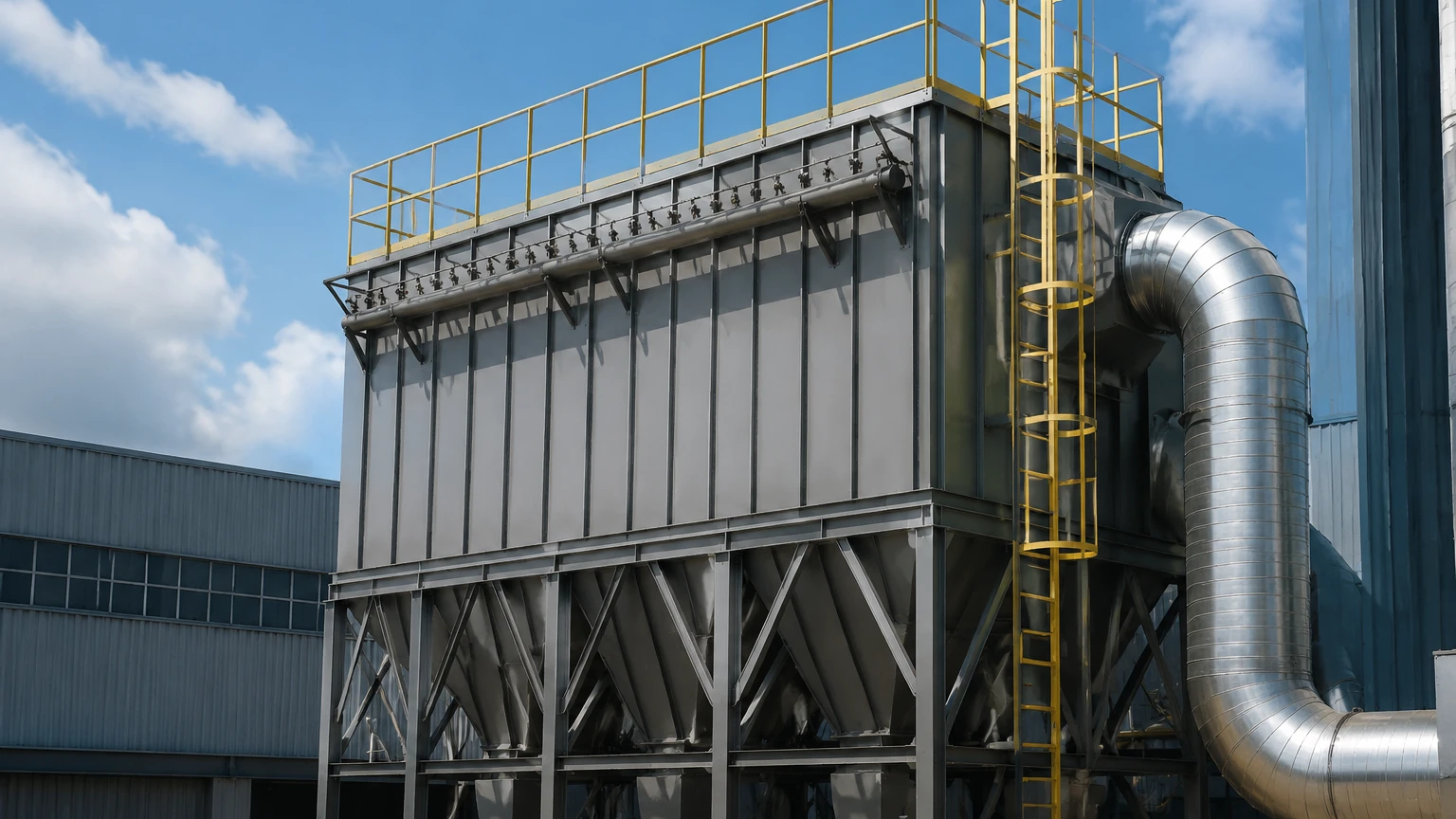
In industrial environments, the management of airborne particulates is not merely a matter of compliance but a fundamental requirement for operational efficiency, equipment longevity, and workplace safety. A bag house dust collector, also known as a fabric filter, is one of the most efficient and versatile systems used across industries such as chemical processing, food and beverage, and pharmaceutical manufacturing to remove granular solids and powders from process air or flue gases. While the basic concept involves passing air through a filter medium, the engineering complexity lies in the selection of materials, the design of the cleaning mechanism, and the integration of precision components to ensure continuous operation under demanding conditions.
For engineers and procurement teams, understanding the technical nuances of these systems is essential. This guide explores the operational principles, material considerations, and critical performance metrics of bag house systems, highlighting the role of high-quality filtration components in optimizing these industrial assets.
Fundamentals of Bag House Dust Collector Operation
The primary function of a bag house dust collector is to separate dust particles from a gas stream. This is achieved through several mechanisms, including inertial impaction, interception, and diffusion. As the dust-laden air enters the collector, it passes through a series of long, cylindrical bags (or cartridges) made of woven or felted fabric. The dust is trapped on the surface of the filter media, forming a "dust cake" that eventually becomes the primary filtration layer.
Bag house systems are typically categorized by their cleaning method, which is critical for maintaining a manageable pressure drop across the system:
1. Pulse-Jet Cleaning: This is the most common configuration in modern industrial applications. It utilizes short bursts of high-pressure compressed air (typically 70–100 psi) injected into the top of the filter bags. This creates a shockwave that travels down the bag, flexing the fabric and dislodging the dust cake into a hopper below. Pulse-jet systems allow for continuous operation because individual rows of bags can be cleaned while the rest of the system remains online.
2. Shaker Systems: In these collectors, the tops of the bags are attached to a motorized shaking mechanism. Periodically, the airflow is stopped, and the bags are mechanically shaken to remove the dust. While simpler in design, shaker systems require the unit to be offline during cleaning, which may necessitate a multi-compartment design for continuous processes.
3. Reverse Air Systems: These systems use a low-pressure fan to blow air in the opposite direction of the normal flow. The bags are typically supported by internal rings to prevent total collapse, and the gentle backflow of air causes the dust cake to fall. This method is often preferred for fragile filter media or high-temperature applications where aggressive mechanical cleaning could damage the fibers.
Engineering Considerations for Filter Media and Component Selection
The choice of filter media and supporting components is perhaps the most critical decision in the design of a bag house dust collector. While traditional fabric bags are suitable for many applications, demanding environments—such as those involving high temperatures, corrosive chemicals, or abrasive materials—require more robust solutions.
Material Compatibility
In industries like chemical processing or pharmaceutical manufacturing, the filter media must withstand aggressive chemical exposure. Stainless steel filtration components, such as those produced by Kaifil, offer superior resistance to corrosion compared to synthetic polymers. For instance, 316L stainless steel provides excellent resistance to pitting and crevice corrosion in chloride-rich environments. When high-temperature gases (exceeding 500°F) are present, traditional polyester or aramid bags may fail, necessitating the use of specialized metal fiber felts or stainless steel wire mesh filters.
Structural Support and Cages
In pulse-jet systems, the filter bags are supported by internal wire cages. These cages must be precisely engineered to prevent the bag from collapsing during the filtration cycle and to ensure even distribution of the cleaning pulse. Burrs or misaligned wires on a cage can lead to premature bag wear and mechanical failure. High-quality stainless steel cages provide the rigidity and corrosion resistance needed to maintain the integrity of the filter bag over thousands of cleaning cycles.
Filtration Accuracy and Permeability
The micron rating of the filter media determines the size of the particles that can be captured. However, engineers must balance filtration efficiency with permeability. A media with very low permeability will result in a high initial pressure drop, increasing the energy consumption of the system's fan. Precision-engineered stainless steel mesh allows for tight control over pore size distribution, ensuring consistent performance in critical applications.
Critical Performance Metrics for Industrial Dust Collection
To evaluate the effectiveness of a bag house dust collector, engineers must monitor several key performance indicators (KPIs). These metrics provide insight into the system's health and help identify when maintenance or component replacement is necessary.
Air-to-Cloth Ratio (G/C Ratio)
The air-to-cloth ratio is the volume of air passing through the collector divided by the total surface area of the filter media, expressed in feet per minute (fpm) or meters per minute (m/min). A ratio that is too high can lead to "blinding" (where dust becomes deeply embedded in the media) and excessive pressure drop. Conversely, a ratio that is too low indicates an oversized, inefficient system. Typical ratios for pulse-jet systems range from 3:1 to 6:1, depending on the dust characteristics.
Differential Pressure (ΔP)
Differential pressure is the difference in air pressure between the dirty side and the clean side of the filter media. It is the most direct indicator of filter condition. A steady increase in ΔP suggests that the cleaning system is not effectively removing the dust cake or that the bags are reaching the end of their service life. Most systems are designed to operate within a ΔP range of 2 to 6 inches of water column.
Interstitial Velocity
Interstitial velocity refers to the speed of the air as it moves between the filter bags. If this velocity is too high, it can prevent dislodged dust from falling into the hopper, causing it to be re-entrained onto the bags. This leads to inefficient cleaning and increased wear on the lower portion of the bags.
Maintenance and Optimization of Bag House Systems
A proactive maintenance strategy is essential to avoid unplanned downtime and ensure compliance with environmental regulations. The total cost of ownership for a bag house dust collector is heavily influenced by the frequency of bag replacements and the energy required to operate the system.
1. Leak Detection: Even a small hole in a single bag can significantly increase emissions. Automated leak detection systems, often utilizing triboelectric probes, can identify a failure in real-time. Replacing damaged bags promptly prevents the "sandblasting" effect, where dust escaping from one bag abrades neighboring bags.
2. Cleaning Cycle Optimization: Over-cleaning bags can be just as detrimental as under-cleaning. Excessive pulsing can lead to premature mechanical failure of the fabric and can strip away the essential dust cake that aids in fine particle capture. Utilizing a "clean-on-demand" controller that triggers pulses based on differential pressure rather than a fixed timer can significantly extend bag life.
3. Hopper Management: The hopper should never be used for long-term dust storage. It is designed to funnel dust to the discharge valve. If dust levels rise too high, it can bridge across the hopper or be re-entrained into the bag area, causing severe operational issues.
Customization and OEM Solutions for Demanding Applications
Standard off-the-shelf dust collection components often fall short in specialized industrial processes. For example, in food processing, components must meet strict sanitary standards, requiring smooth finishes and specific grades of stainless steel to prevent bacterial growth. In hydraulic or high-pressure gas systems, the filtration components must be able to withstand significant mechanical stress without deforming.
Customization options often include:
* Customized Flange and Connection Designs: Ensuring a leak-proof fit within existing ductwork.
* Specialized Coatings: Such as PTFE membranes for better dust release or anti-static treatments for explosive dusts.
* Precision Metal Components: Utilizing high-grade stainless steel for cages, venturis, and specialized filter elements that require high durability and precise filtration accuracy.
By working with a manufacturer that understands the complexities of material science and fluid dynamics, engineers can develop tailored solutions that address specific challenges like high moisture content, sticky dust, or extreme chemical volatility. For more information on how custom filtration components can enhance your system's performance, you may review product options and application support on our Main Page.
Conclusion: Selecting the Right Filtration Partner
The effectiveness of a bag house dust collector is a product of its design, the quality of its components, and the diligence of its maintenance. When selecting a partner for filtration solutions, it is vital to confirm their technical capabilities in material selection, manufacturing precision, and application-specific engineering.
Before proceeding with a purchase or system upgrade, technical teams should confirm:
* The chemical and thermal compatibility of the filter media with the process gas.
* The expected service life of the components under specific operational loads.
* The availability of custom OEM designs to fit unique equipment configurations.
By focusing on these technical boundaries and prioritizing high-quality stainless steel and metal filtration components, industrial facilities can achieve reliable, long-term dust control that protects both their personnel and their bottom line.
