


Reboilers
In the landscape of industrial process engineering, reboilers serve as critical components within distillation systems. These heat exchangers are designed to provide the necessary thermal energy to the bottom of a distillation column, generating the vapor required to drive the separation of chemical components based on their boiling points. For engineers and technical professionals managing chemical processing, pharmaceutical manufacturing, or petrochemical refining, understanding the operational nuances of reboilers—and the factors that lead to their degradation—is essential for maintaining plant efficiency.
While the primary function of a reboiler is heat transfer, its performance is inextricably linked to the quality of the fluid it processes. Contaminants, suspended solids, and chemical byproducts can significantly impair heat transfer coefficients and lead to mechanical failure. This article examines the various types of reboilers, the engineering challenges associated with fouling, and how precision filtration solutions from manufacturers like Kaifil support the longevity and reliability of these systems.
Understanding Reboiler Types and Applications
Reboilers are categorized based on their configuration and the method by which fluid circulates through the heat exchanger. The selection of a specific reboiler type depends on the process fluid's viscosity, the required heat load, and the tendency of the fluid to foul the heat exchange surfaces.
Kettle Reboilers
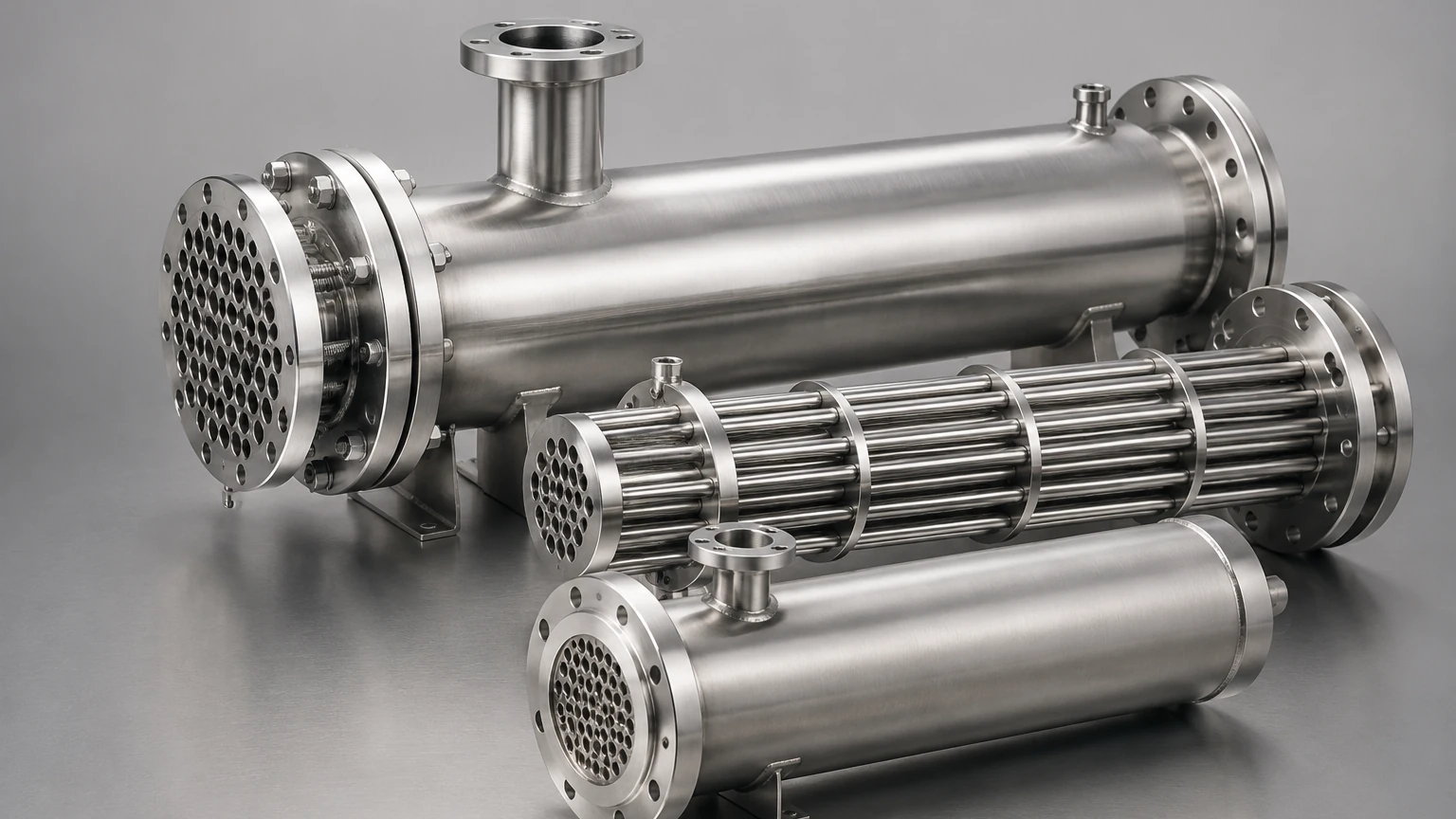
Kettle reboilers are among the most common types used in industrial applications. They consist of a large horizontal shell containing a tube bundle. The liquid from the bottom of the distillation column enters the shell, where it is heated by a medium (such as steam or hot oil) flowing through the tubes. The large shell volume provides a disengagement space for vapor to separate from the liquid. Kettle reboilers are favored for their high reliability and ability to handle high vaporization rates, though they are susceptible to the accumulation of solids at the bottom of the shell.
Thermosyphon Reboilers
Thermosyphon reboilers rely on natural circulation driven by the density difference between the liquid in the column and the two-phase (vapor-liquid) mixture in the reboiler. They can be oriented vertically or horizontally. Vertical thermosyphon reboilers are often integrated directly into the column piping, offering a compact footprint. Because they operate at high velocities, they generally experience lower fouling rates than kettle reboilers. However, they require precise hydraulic balancing to ensure stable operation.
Forced Circulation Reboilers
In applications where the process fluid is highly viscous or prone to extreme fouling, forced circulation reboilers are employed. A pump is used to drive the fluid through the heat exchanger at high velocities. This increased turbulence helps to keep heat exchange surfaces clean, though it adds to the system's complexity and energy consumption. This type is frequently seen in wastewater treatment and heavy chemical processing where particulate loads are high.
The Impact of Fouling on Reboiler Performance
Fouling is the accumulation of unwanted material on the heat transfer surfaces of a reboiler. In the context of industrial distillation, this material often consists of corrosion products, polymers, coke, or inorganic scales. Fouling introduces a layer of thermal resistance, which forces the system to increase the temperature of the heating medium to maintain the same vaporization rate. This leads to several technical and economic consequences:
1. Reduced Thermal Efficiency: As the fouling layer thickens, the heat transfer coefficient drops, leading to higher energy costs.
2. Increased Pressure Drop: Accumulation in the tubes or shell increases resistance to flow, which can disrupt the hydraulic balance of thermosyphon systems.
3. Accelerated Corrosion: Under-deposit corrosion can occur beneath the fouling layer, leading to premature tube failure.
4. Unscheduled Downtime: Severe fouling requires the reboiler to be taken offline for mechanical or chemical cleaning, resulting in lost production.
To mitigate these risks, engineers must implement robust filtration strategies. By removing suspended solids before they reach the reboiler, the rate of fouling can be drastically reduced. For more information on the types of filtration components available for these systems, you can visit the Main Page of the Kaifil website.
Engineering Considerations for Filtration in Reboiler Systems
When selecting filtration solutions to protect reboilers, engineering teams must evaluate several technical parameters. Standard disposable filters are often insufficient for the high-temperature and high-pressure environments typical of reboiler loops. Instead, stainless steel filtration components are preferred for their durability and chemical compatibility.
Material Selection and Compatibility
In chemical and petrochemical environments, the filter media must withstand aggressive solvents and high temperatures. Stainless steel 304 and 316L are the industry standards due to their resistance to oxidation and corrosion. For specialized applications involving highly acidic or alkaline fluids, advanced alloys may be required. Kaifil specializes in manufacturing stainless steel wire mesh filters that maintain structural integrity under thermal cycling, a common occurrence in reboiler operations.
Filtration Accuracy and Micron Ratings
The micron rating of the filter must be balanced against the allowable pressure drop. If the filtration is too fine, the filter will clog rapidly, requiring frequent maintenance. If it is too coarse, smaller particles will pass through and eventually bake onto the reboiler tubes. Engineers typically conduct a particle size distribution (PSD) analysis of the process fluid to determine the optimal filtration threshold. Precision-engineered metal mesh allows for exact control over pore size, ensuring consistent performance.
Structural Integrity and Pressure Differential
Reboiler feed lines can experience significant pressure surges. Filtration components must be designed to withstand high differential pressures without collapsing or bypassing. Welded stainless steel cartridges and reinforced mesh structures provide the mechanical strength necessary for these demanding industrial environments.
Maintenance and Total Cost of Ownership (TCO)
Choosing the right filtration system for a reboiler is not just about the initial purchase price; it is about the total cost of ownership over the equipment's lifecycle. While stainless steel filters have a higher upfront cost than polymer-based alternatives, they offer significant long-term savings.
Cleanability and Reusability
Unlike disposable cartridges, stainless steel wire mesh filters can be cleaned and reused. Depending on the nature of the contaminants, cleaning can be achieved through backwashing, ultrasonic cleaning, or chemical soaking. This reduces the waste stream and eliminates the recurring cost of replacement filters. In large-scale industrial operations, the ability to clean filters in-place (CIP) is a major operational advantage.
Extending Reboiler Run Times
The primary economic driver for high-quality filtration is the extension of the reboiler’s run time. If an effective filtration system can extend the interval between reboiler cleanings from six months to two years, the savings in labor, cleaning chemicals, and avoided production losses can reach hundreds of thousands of dollars. Engineers should confirm the expected solids loading and the nature of the contaminants to design a filtration system that matches the desired maintenance cycle of the overall plant.
Custom Filtration Solutions for Industrial Reboilers
Every industrial process has unique requirements based on the chemistry, temperature, and flow dynamics of the system. Off-the-shelf filtration products often fail to meet the specific needs of complex reboiler configurations. This is where OEM and customized filtration solutions become vital.
Kaifil works closely with engineering teams to develop custom stainless steel filter cartridges and precision metal components tailored to specific reboiler applications. Whether the requirement is for a high-flow horizontal kettle reboiler or a high-velocity vertical thermosyphon, custom-designed filters ensure that the filtration surface area is maximized while the pressure drop is minimized.
Key customization options include:
* Custom End Fittings: Ensuring a perfect seal within existing housing units to prevent bypass.
* Layered Mesh Designs: Combining multiple layers of wire mesh to provide both fine filtration and high mechanical strength.
* Pleated Configurations: Increasing the effective surface area within a compact footprint to handle higher solids loading.
Conclusion: Optimizing Reboiler Reliability
Reboilers are the heart of the distillation process, and their reliability is a cornerstone of industrial productivity. By understanding the mechanical types of reboilers and the technical challenges posed by fouling, engineers can make informed decisions about system protection. The integration of high-performance stainless steel filtration is a proven method for maintaining heat transfer efficiency, reducing maintenance costs, and preventing unscheduled shutdowns.
For technical professionals seeking to optimize their filtration processes, focusing on material durability and precision engineering is paramount. Reliable filtration components not only protect the reboiler but also contribute to the overall stability and safety of the industrial facility. To explore specific product capabilities and engineering support for your filtration needs, visit the Main Page for a comprehensive overview of available solutions.
