


What Is a Sediment Filter
In industrial fluid processing, the integrity of downstream equipment and the purity of final products depend heavily on the removal of suspended solids. A sediment filter is a mechanical barrier designed to capture and remove physical particulate matter—such as sand, silt, scale, rust, and organic debris—from a liquid stream. Unlike chemical filtration, which relies on adsorption or ion exchange, sediment filtration is a purely physical process that acts as the first line of defense in any complex filtration system.
For engineers and procurement professionals, understanding what is a sediment filter involves more than just recognizing its basic function. It requires a deep dive into the mechanics of particle retention, material compatibility, and the structural design of the filter media. In heavy-duty industrial applications, where high temperatures, corrosive fluids, and high-pressure differentials are common, the choice of sediment filter can significantly impact the total cost of ownership (TCO) and operational efficiency.
The Fundamental Principles of Sediment Filtration
Sediment filtration operates on the principle of mechanical straining. As fluid passes through the filter media, particles larger than the pore size of the media are trapped, while the clean fluid continues through the system. This process is generally categorized into two distinct mechanisms: surface filtration and depth filtration.
Surface Filtration
Surface filters, such as stainless steel wire mesh or thin membranes, trap particles on the upstream surface of the filter medium. These filters are typically characterized by a uniform pore size and are highly effective for removing particles of a specific, narrow size range. The primary advantage of surface filtration is its cleanability; because the contaminants do not penetrate deep into the media, they can often be removed via backwashing or ultrasonic cleaning, making these filters ideal for reusable industrial applications.
Depth Filtration
Depth filters utilize a thick media—such as pleated fabric, wound fiber, or sintered metal—to trap particles throughout the entire cross-section of the material. As fluid winds through the tortuous path of the media, particles are captured by impingement and adsorption. Depth filters generally have a higher dirt-holding capacity than surface filters but are more difficult to clean and are often treated as semi-disposable or requiring intensive specialized cleaning processes.
Classification by Filter Media and Structure
When evaluating what is a sediment filter for an industrial project, the material of construction is the most critical factor. While residential systems often use polypropylene or cellulose, industrial environments demand more robust materials.
Stainless Steel Wire Mesh Filters
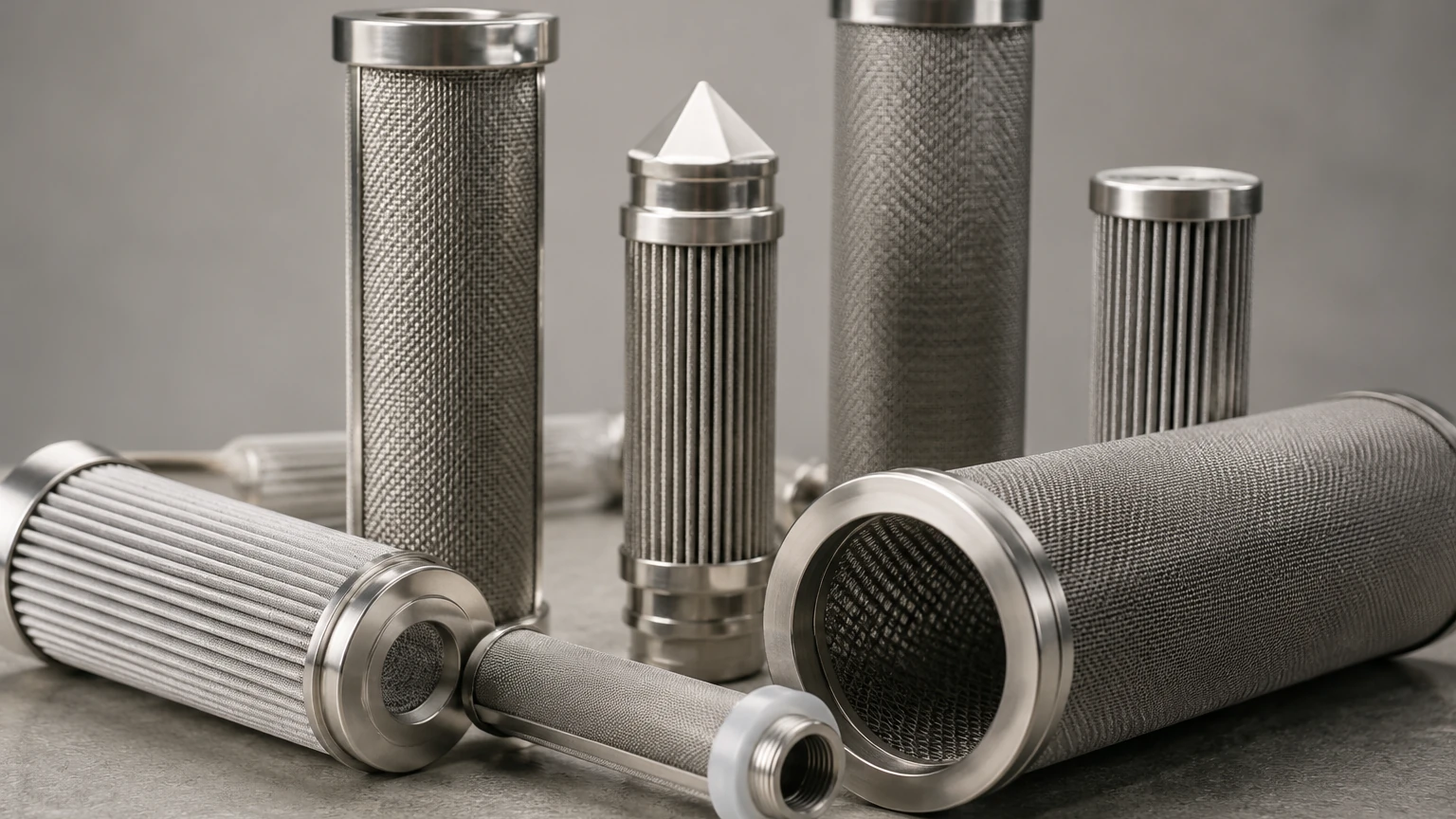
Stainless steel wire mesh is a hallmark of high-performance sediment filtration. Available in various weaves (such as plain, twill, or dutch weave), these filters provide precise filtration ratings and exceptional structural integrity. They are particularly favored in the chemical and food processing industries due to their resistance to corrosion and ability to withstand high sterilization temperatures.
Sintered Metal Filters
Sintered metal filters are created by fusing metal powders or multiple layers of wire mesh under high heat and pressure without melting the material. This results in a porous structure that is incredibly strong and resistant to high pressure. These are often used as sediment filters in hydraulic systems and high-pressure gas filtration where traditional media would collapse.
Pleated Filter Cartridges
To increase the effective filtration area within a standard housing size, media is often pleated. Pleated stainless steel cartridges offer a significantly larger surface area compared to cylindrical filters, which translates to lower initial pressure drops and longer service intervals before cleaning is required.
Critical Engineering Specifications
To specify the correct sediment filter, engineers must evaluate several technical parameters that define performance and reliability.
Micron Rating: Absolute vs. Nominal
The micron rating indicates the size of particles the filter is capable of removing. However, the distinction between "nominal" and "absolute" is vital:
- Nominal Rating: An approximate value indicating that the filter will trap a high percentage (e.g., 60% to 90%) of particles at that size.
- Absolute Rating: A guaranteed value indicating that 99.9% or more of particles at that specific micron size will be retained. In critical industrial processes, absolute-rated stainless steel filters are often required to ensure consistent output quality.
Differential Pressure (ΔP)
Differential pressure is the difference between the fluid pressure at the inlet and the outlet of the filter. A high initial ΔP suggests that the filter may be undersized for the flow rate, while a rapidly increasing ΔP during operation indicates that the filter is reaching its dirt-holding capacity. Monitoring ΔP is the standard method for determining when a sediment filter needs to be cleaned or replaced.
Flow Capacity and Velocity
The filter must be sized to handle the maximum flow rate of the system without exceeding the recommended face velocity. Excessive velocity can force flexible contaminants through the pores (a phenomenon known as "breakthrough") or cause premature erosion of the filter media.
Material Selection for Demanding Environments
In many B2B sectors, the fluid being filtered is not simple water. It may be a caustic chemical, a high-viscosity oil, or a food-grade liquid. This makes material selection a primary engineering consideration.
Stainless steel (specifically grades 304 and 316L) is the industry standard for durable sediment filtration. 316L stainless steel contains molybdenum, which provides superior resistance to chlorides and pitting, making it essential for marine or chemical applications. Beyond chemical compatibility, metal filters can operate in temperature ranges from cryogenic levels up to 500°C (932°F) and beyond, far exceeding the capabilities of synthetic polymers.
For those seeking comprehensive specifications and customized engineering support, visiting the Main Page of a professional manufacturer like Kaifil provides access to detailed technical data sheets and material compatibility charts.
Evaluating Total Cost of Ownership (TCO)
A common mistake in procurement is focusing solely on the initial purchase price of the filter element. For a true understanding of what is a sediment filter's value, one must consider the TCO, which includes:
1. Replacement Frequency: Disposable filters may be cheap to buy but expensive to replace monthly.
2. Labor Costs: The time required for maintenance staff to change out filters and restart systems.
3. Disposal Costs: In many regions, disposing of contaminated synthetic filters is regulated and expensive.
4. Product Loss: High pressure drops can lead to pump inefficiency and increased energy consumption.
Reusable stainless steel sediment filters often have a higher upfront cost but provide a lower TCO over 2–5 years because they can be cleaned and returned to service hundreds of times, eliminating the waste stream and reducing long-term procurement needs.
Industrial Applications and Case Scenarios
Sediment filtration is utilized across nearly every sector of modern industry. Here are a few examples of how these components are integrated into complex systems:
Chemical and Petrochemical Processing
In these industries, sediment filters protect expensive catalysts and prevent the clogging of spray nozzles. The filters must withstand aggressive solvents and high-pressure surges. Sintered metal elements are frequently used here due to their robust mechanical strength.
Food and Beverage Production
Sediment filters are used to ensure clarity in beverages and to remove any potential metal fragments or scale from processing lines. Compliance with food safety standards (such as FDA or 3A) is mandatory, making polished stainless steel the preferred material for its hygienic properties.
Hydraulic and Lubrication Systems
Particulate contamination is the leading cause of hydraulic component failure. High-pressure sediment filters remove wear particles (metal shavings) and external dust that could otherwise damage pumps and valves. These filters often incorporate magnetic inserts to capture ferrous particles more efficiently.
Water Treatment and Desalination
Before water reaches a reverse osmosis (RO) membrane, it must pass through a series of sediment filters. If the sediment is not removed, the expensive membranes will foul almost immediately. In large-scale desalination, multi-stage stainless steel mesh systems are used to handle high volumes of seawater while resisting salt-induced corrosion.
Customization and OEM Considerations
Rarely is a standard "off-the-shelf" filter perfect for every industrial application. Engineering teams often require customized solutions that fit specific housing dimensions, flow patterns, or filtration accuracies. When partnering with a manufacturer, it is important to confirm their ability to provide:
- Custom End Fittings: Ensuring the filter integrates seamlessly with existing piping (e.g., NPT, Flange, or DOE configurations).
- Structural Reinforcement: Adding internal perforated cores or external shrouds for filters operating under extreme pressure differentials.
- Material Certification: Providing mill test reports (MTRs) to verify the grade and quality of the metal used.
Conclusion: Selecting the Right Solution
Defining what is a sediment filter is the first step in optimizing an industrial filtration process. By focusing on mechanical principles, material durability, and long-term operational costs, engineers can move beyond simple particulate removal to achieve true system reliability. Whether you are protecting a high-pressure pump in a chemical plant or ensuring the purity of a pharmaceutical batch, the quality of the sediment filter is the foundation of your success.
For professional-grade filtration components, including custom wire mesh and stainless steel cartridges, technical teams can Review product options and application support to find the precise balance of performance and durability required for their specific industrial challenges.
