


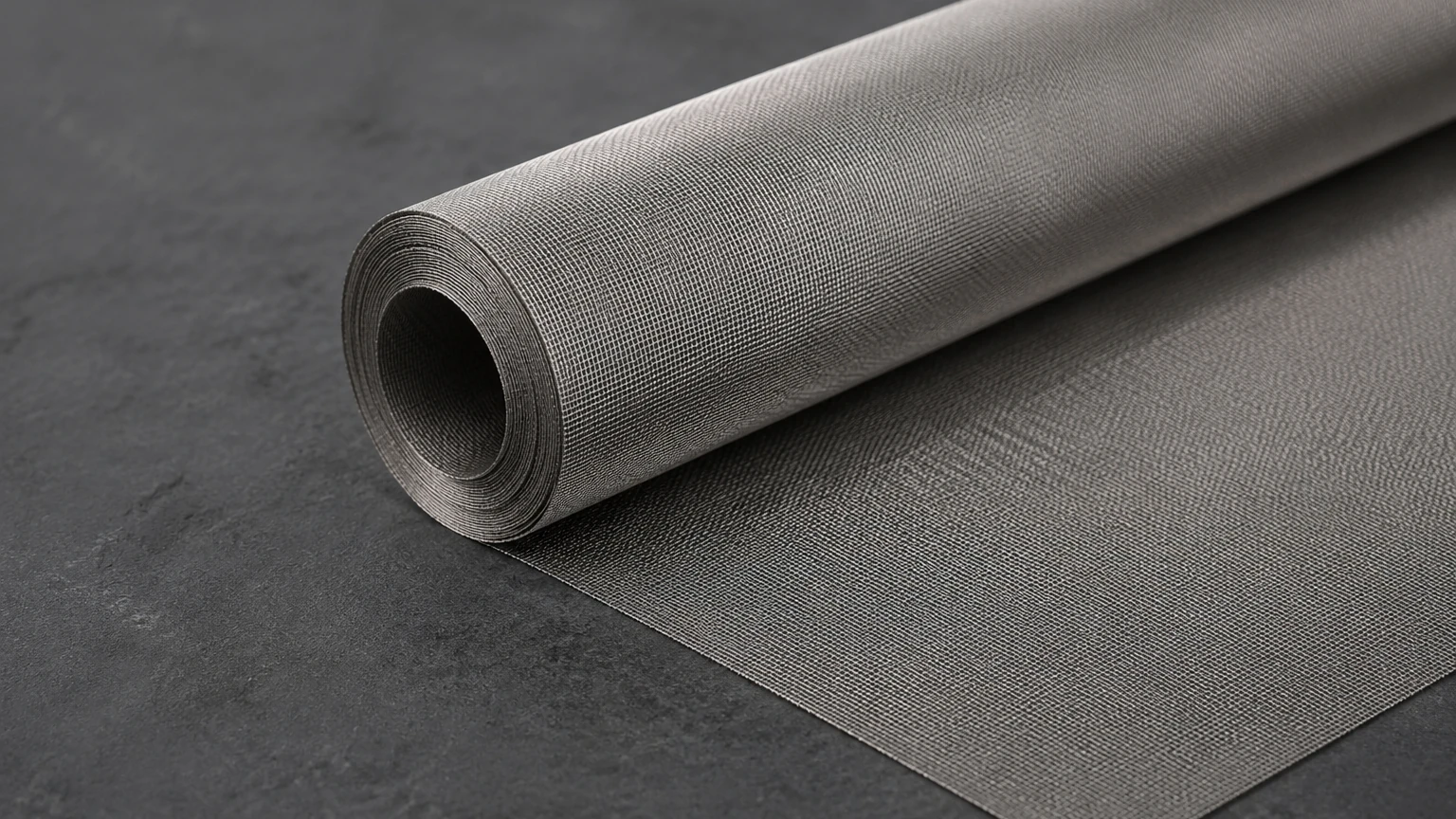
100 Mesh Screen
In the landscape of industrial filtration and separation, the 100 mesh screen represents a critical threshold between coarse straining and fine filtration. Defined by having 100 openings per linear inch, this specification is a staple in industries ranging from chemical processing and pharmaceuticals to food production and hydraulic systems. For engineers and procurement specialists, selecting the right 100 mesh screen involves more than just identifying the mesh count; it requires a deep understanding of wire diameters, aperture sizes, material compatibility, and structural integrity.
At Kaifil, we specialize in transforming standard wire cloth into high-performance filtration components. Whether utilized as a standalone flat screen or integrated into complex multi-layer filter cartridges, the 100 mesh screen serves as a versatile solution for capturing particulates while maintaining efficient flow rates. To explore our full range of custom capabilities, you may visit our Main Page.
Technical Specifications and Geometry of 100 Mesh Screen
The term "100 mesh" is a nominal designation that indicates the number of apertures within one linear inch of the wire cloth. However, the performance of the screen is dictated by the specific geometry of the weave, which includes the aperture size and the wire diameter.
Aperture Size and Micron Rating
For a standard stainless steel 100 mesh screen, the nominal aperture size is typically 0.0059 inches, which converts to approximately 149 to 150 microns. This makes it an ideal choice for applications requiring the removal of fine sand, scale, and larger organic particulates. It is important to note that the "micron rating" of a mesh screen is generally considered absolute for spherical particles larger than the aperture, though needle-like or irregular particles may occasionally pass through depending on their orientation.
Wire Diameter and Open Area
The wire diameter chosen for a 100 mesh screen significantly impacts both its durability and its "open area" percentage. A common wire diameter for this mesh count is 0.0040 inches (0.10 mm) or 0.0045 inches (0.11 mm).
* Open Area Calculation: The percentage of open area determines the screen's flow capacity and pressure drop. It is calculated using the formula: `(Aperture / (Aperture + Wire Diameter))² x 100`.
* Standard Performance: A typical 100 mesh screen with a 0.0045-inch wire diameter offers an open area of approximately 30% to 35%. Increasing the wire diameter improves the screen's resistance to mechanical stress and abrasion but reduces the open area, leading to higher initial pressure drops.
Material Selection for Industrial Environments
The longevity of a 100 mesh screen is heavily dependent on the alloy from which it is manufactured. In industrial B2B contexts, stainless steel is the gold standard due to its mechanical strength and resistance to environmental degradation.
Stainless Steel 304
Grade 304 is the most common material for 100 mesh screens used in general industrial applications. It provides excellent corrosion resistance to most oxidizing acids and is suitable for use in water treatment, sifting, and general filtration where extreme chemical exposure is not a factor. It is cost-effective and maintains its structural integrity at temperatures up to 800°F (427°C).
Stainless Steel 316 and 316L
For more demanding environments, such as marine applications, chemical processing plants, or pharmaceutical manufacturing, Grade 316 is preferred. The addition of molybdenum enhances its resistance to chlorides and pitting. Grade 316L (low carbon) is specifically utilized when the screen must be welded into a filter housing or cartridge, as it prevents carbide precipitation that can lead to intergranular corrosion at weld points.
Specialty Alloys
In highly specialized cases, such as those involving high-concentration acids or extreme temperatures, materials like Monel, Inconel, or Hastelloy may be used. These alloys ensure that the 100 mesh screen does not suffer from premature fatigue or chemical breakdown, which could lead to downstream contamination.
Engineering Considerations: Flow Rate and Pressure Drop
When integrating a 100 mesh screen into a system, engineers must account for the fluid dynamics involved. The screen acts as a resistance point in the flow path, creating a differential pressure (ΔP).
Initial vs. Operating Pressure Drop
The initial pressure drop is the resistance offered by a clean screen. As the 100 mesh screen captures contaminants, the effective open area decreases, and the differential pressure increases. In high-flow hydraulic or fuel systems, monitoring this ΔP is vital to prevent pump cavitation or system failure. Design engineers often specify a maximum allowable ΔP before the filter element must be cleaned or replaced.
Flow Velocity
The velocity of the fluid passing through the 100 mesh screen affects the capture efficiency. High velocities can force deformable particles through the mesh or cause "impingement erosion" on the wires themselves. For liquid filtration, maintaining a face velocity that balances throughput with mesh longevity is a key design goal.
Structural Configurations and Customization
A 100 mesh screen is rarely used as a flimsy, unsupported piece of cloth in industrial settings. Its performance is often enhanced through various structural configurations.
Multi-Layer Sintered Mesh
To combine the fine filtration of a 100 mesh screen with high mechanical strength, the mesh can be sintered (heat-bonded) to coarser support layers. This creates a robust, multi-layer plate that can withstand high-pressure backwashing and significant mechanical loads without the mesh shifting or deforming.
Pleated Filter Cartridges
In applications requiring a large filtration surface area within a compact footprint, the 100 mesh screen is pleated. Pleating increases the available surface area by 3 to 10 times compared to a cylindrical screen, significantly extending the time between cleaning cycles and reducing the frequency of system downtime.
Edge Treatments and Framing
For flat screens used in vibratory separators or sifting equipment, the edge treatment is critical. Options include hooked edges for tensioning, U-binders for safety and handling, or welded frames to ensure the screen remains taut and effective during high-frequency vibration.
Critical Application Scenarios
The 100 mesh screen is a versatile component found in numerous sectors. Understanding its role in these specific contexts helps in making informed procurement decisions.
Chemical and Petrochemical Processing
In these industries, the 100 mesh screen is often used as a secondary filter to protect sensitive instrumentation and valves from pipe scale and catalyst fines. Its ability to be manufactured in corrosion-resistant alloys makes it indispensable for handling aggressive process fluids.
Food and Beverage Production
Filtration in food processing requires materials that are non-toxic and easy to sanitize. 100 mesh screens are used to strain juices, clarify oils, and sift dry ingredients. Stainless steel 316L is typically mandated here to meet stringent hygiene standards and withstand Clean-In-Place (CIP) procedures.
Hydraulic and Lubrication Systems
Protecting precision hydraulic components from wear-inducing particles is a primary function of the 100 mesh screen. It is frequently used in suction strainers to prevent large debris from entering pumps, ensuring the longevity of the entire hydraulic circuit.
Procurement and Quality Verification Checklist
Before finalizing a purchase order for 100 mesh screens or components, engineering and purchasing teams should confirm several technical details to ensure the product meets the application's rigorous demands.
1. Wire Gauge Verification: Confirm if the standard 0.0045" wire is sufficient or if a heavier wire is needed for high-pressure environments.
2. Weave Type: Most 100 mesh screens are "Plain Weave" (one over, one under). However, for specific flow characteristics or thicknesses, a "Twill Weave" might be required.
3. Dimensional Tolerances: Specify the allowable variance in mesh count and aperture size. For precision filtration, tighter tolerances are necessary to ensure consistent performance.
4. Certification: Request material test reports (MTRs) to verify the alloy composition, especially for 316L stainless steel used in corrosive or regulated environments.
5. Cleaning Compatibility: Determine if the screen will be cleaned via ultrasonic baths, chemical solvents, or high-pressure steam, and ensure the construction (including adhesives or gaskets) can withstand these methods.
Optimizing Total Cost of Ownership (TCO)
While the initial cost of a 100 mesh screen is a factor, the total cost of ownership is driven by durability and maintenance efficiency. A cheaper, low-quality mesh may suffer from "wire migration" or premature corrosion, leading to frequent replacements and costly production halts.
By selecting high-quality stainless steel mesh and employing proper structural supports—such as those designed by Kaifil—industrial users can achieve a longer service life and more predictable filtration performance. Our engineering team works closely with clients to develop customized solutions that optimize these variables. To learn more about our manufacturing standards and product range, please visit our Main Page.
In conclusion, the 100 mesh screen is a foundational element in industrial separation technology. By focusing on the technical nuances of aperture, wire diameter, and material grade, engineers can ensure their systems operate with maximum efficiency and minimal risk of contamination. Whether you are designing a new filtration system or seeking a more reliable replacement component, the 100 mesh screen offers a proven balance of precision and permeability.
