


Plate and Fin Heat Exchanger
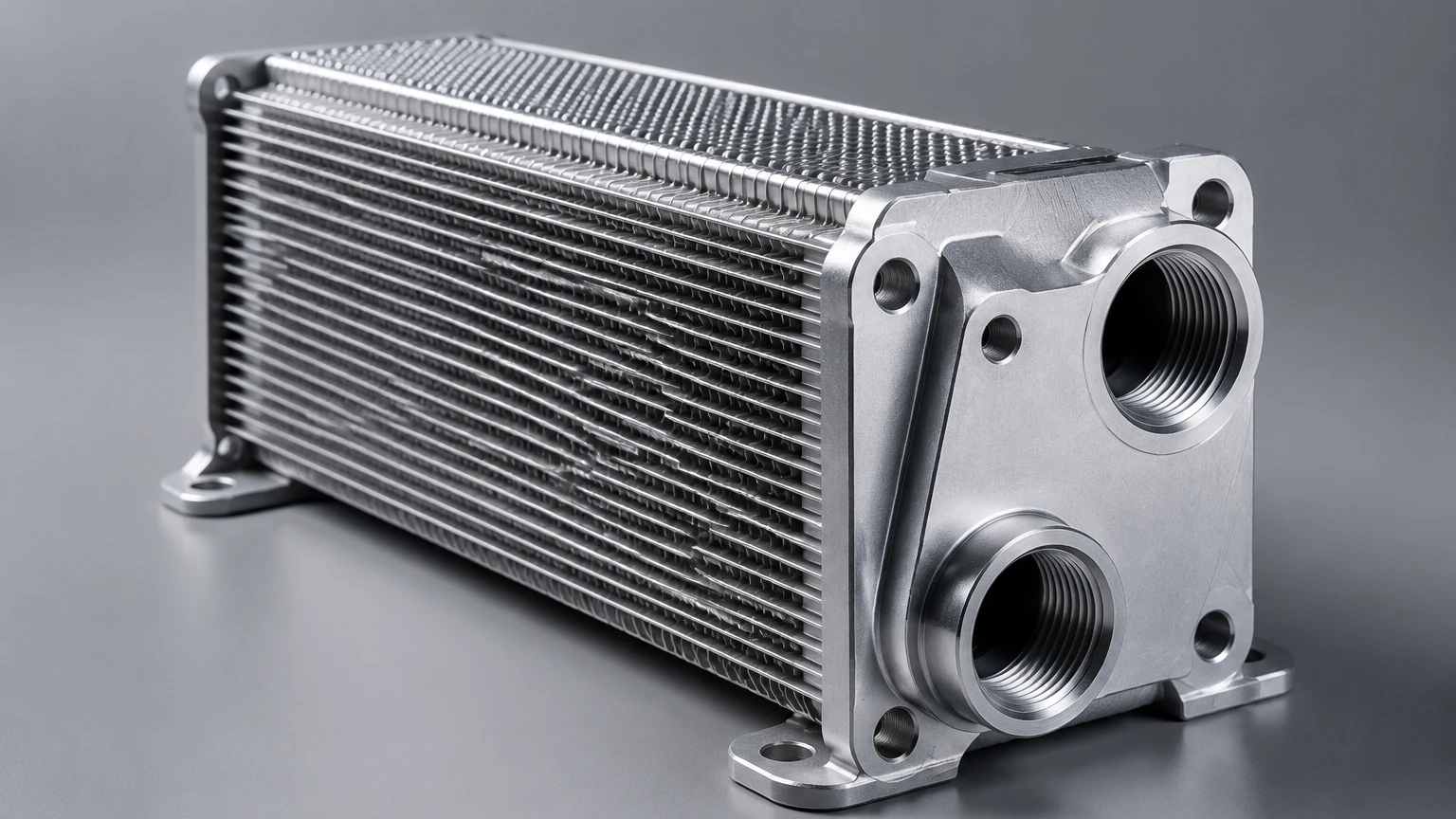
In the landscape of industrial thermal management, the plate and fin heat exchanger stands as a pinnacle of compact design and high-efficiency heat transfer. Often referred to as a brazed aluminum heat exchanger (BAHX) in cryogenic contexts, or simply a matrix exchanger in aerospace, this technology is defined by its ability to facilitate heat exchange between multiple fluid streams within a remarkably small footprint. For engineers and procurement specialists in the chemical processing, aerospace, and energy sectors, understanding the structural nuances and operational requirements of these units is essential for maintaining system integrity and process efficiency.
Because plate and fin heat exchangers utilize intricate, narrow flow passages to maximize surface area, they are inherently sensitive to fluid purity. The integration of high-performance filtration solutions is not merely an accessory but a fundamental requirement for the protection of these complex thermal components. As a manufacturer specializing in precision stainless steel filtration, Kaifil provides the technical support and hardware necessary to ensure these heat exchangers operate without the risk of premature fouling or clogging.
Structural Design and Engineering Fundamentals
The fundamental architecture of a plate and fin heat exchanger consists of a series of "sandwiched" layers. Each layer is composed of three primary elements: the parting sheets, the fins, and the side bars. These components are typically joined through a vacuum brazing process, creating a monolithic block capable of withstanding high internal pressures.
Parting Sheets and Side Bars
The parting sheets serve as the primary heat transfer surface and the barrier between different fluid streams. They must be perfectly flat and compatible with the brazing alloy to ensure a leak-proof seal. The side bars enclose the fins within the layer, directing the fluid flow and providing structural rigidity to the stack. In multi-stream applications, the arrangement of these sheets and bars allows for complex flow patterns, including cross-flow, counter-flow, and parallel-flow configurations.
Fin Geometry and Function
The fins are the most critical component for enhancing heat transfer. By significantly increasing the surface area available for thermal exchange, they allow the unit to achieve a high surface area-to-volume ratio, often exceeding 1,000 m²/m³. Beyond surface area, fins serve as structural supports that enable the parting sheets to resist internal pressure.
Common fin types include:
* Plain Fins: Straight, continuous triangular or rectangular profiles used for low-pressure drop applications.
* Serrated (Lanced) Fins: These fins are cut and offset at regular intervals, which breaks the boundary layer of the fluid and promotes turbulence, significantly increasing the heat transfer coefficient at the cost of a higher pressure drop.
* Perforated Fins: Featuring small holes along the fin surface, these are used to improve flow distribution and reduce the risk of stagnant zones.
* Wavy Fins: These create a zig-zag flow path, providing a balance between the high performance of serrated fins and the lower pressure drop of plain fins.
Materials and Manufacturing Considerations
Material selection for a plate and fin heat exchanger is dictated by the operating temperature, pressure, and the chemical composition of the fluids involved.
Aluminum Alloys
Aluminum is the most common material for plate and fin heat exchangers, particularly in cryogenic applications like Air Separation Units (ASU) and Liquefied Natural Gas (LNG) processing. Aluminum offers excellent thermal conductivity and remains ductile at extremely low temperatures. However, its use is generally limited to temperatures below 150°C and environments where corrosion is not a primary concern.
Stainless Steel and Nickel Alloys
For high-temperature applications or processes involving corrosive media—such as chemical synthesis or exhaust gas heat recovery—stainless steel or nickel-based alloys are required. These materials offer superior oxidation resistance and mechanical strength at elevated temperatures. Because these units are often used in more aggressive industrial environments, the demand for precision-engineered filtration becomes even more acute to prevent chemical deposits and particulate accumulation within the narrow fin gaps.
The Critical Role of Filtration in System Longevity
The very feature that makes a plate and fin heat exchanger efficient—its narrow flow channels—also makes it highly susceptible to particulate contamination. The gap between fins can be as small as 1.0 mm to 2.0 mm. If solid particles enter these passages, they can bridge the gap, leading to localized blockages.
Preventing Channel Clogging
When a channel becomes blocked, the fluid is diverted to adjacent channels, causing an uneven flow distribution. This leads to thermal stresses across the exchanger block, which can eventually result in mechanical failure or "inter-stream" leaking. To mitigate this, engineers must specify upstream filtration with a micron rating significantly finer than the smallest fin gap.
Kaifil specializes in the design and production of custom stainless steel wire mesh filters and filter cartridges that serve as the first line of defense for these systems. By utilizing high-strength Main Page solutions, operators can ensure that only clean fluid reaches the heat exchanger, preserving the design's thermal efficiency and extending the interval between maintenance cycles.
Filtration Selection for Heat Exchangers
When selecting a filter for a plate and fin heat exchanger, engineers should consider the following:
1. Micron Rating: Typically, the filter should be rated at 1/5th to 1/10th of the minimum fin spacing to prevent particle bridging.
2. Pressure Drop (ΔP): The filter must provide the required cleanliness without imposing a parasitic pressure loss that undermines the overall system efficiency.
3. Material Compatibility: The filter media must match the corrosion resistance of the heat exchanger and the process fluid.
4. Cleanability: In many industrial processes, permanent, cleanable stainless steel mesh filters are preferred over disposable elements to reduce the total cost of ownership and environmental impact.
Fouling Mechanisms and Performance Degradation
Fouling is the accumulation of unwanted material on the heat transfer surfaces, and in a plate and fin heat exchanger, it can be catastrophic. There are several types of fouling that technical teams must monitor:
* Particulate Fouling: The accumulation of suspended solids, such as sand, rust, or scale, within the fin matrix. This is the most common form of fouling and is directly preventable through proper filtration.
* Chemical Fouling (Scaling): The precipitation of minerals from the fluid onto the hot or cold surfaces. This is often managed through fluid treatment and temperature control.
* Biological Fouling: The growth of algae or bacteria, common in cooling water applications. This requires chemical dosing and fine filtration to remove organic precursors.
* Corrosion Fouling: The accumulation of corrosion products (like iron oxide) generated within the piping system itself. Even if the heat exchanger is made of corrosion-resistant material, upstream piping may contribute particles that clog the unit.
Engineering Evaluation and Selection Criteria
When evaluating a plate and fin heat exchanger for a new project, engineers must move beyond basic thermal duties and consider the long-term operational reality.
Thermal Duty and Approach Temperature
The primary specification is the heat load (kW or BTU/hr) and the required approach temperature (the difference between the exit temperature of one stream and the inlet temperature of the other). Plate and fin designs are capable of extremely close approach temperatures, often less than 2°C, which is vital for energy-intensive processes like cryogenic separation.
Pressure Drop Constraints
Because these exchangers are compact, they often have higher pressure drops than traditional shell and tube designs. Engineers must balance the desire for high heat transfer coefficients (which require higher velocities and more turbulent fin types) with the pumping power available in the system.
Customization and OEM Integration
Most plate and fin heat exchangers are custom-designed for a specific application. This includes the number of layers, the fin density (fins per inch), and the nozzle configurations. At this stage of design, it is also critical to specify the filtration housing and element requirements. Working with a manufacturer like Kaifil during the design phase allows for the integration of custom-sized filter components that fit the specific spatial and flow requirements of the heat exchanger skid.
Maintenance and Cleaning Protocols
Unlike shell and tube heat exchangers, which can often be mechanically cleaned with brushes or rods, brazed plate and fin heat exchangers are virtually impossible to clean mechanically due to their internal complexity.
Chemical Cleaning (CIP)
Cleaning in Place (CIP) using chemical solvents or weak acids is the standard method for removing scale or organic fouling. However, this process is only effective if the chemicals can reach the fouled surfaces. If a channel is completely blocked by solid debris, the cleaning solution will simply bypass that channel, leaving the blockage intact.
The Importance of Prevention
Given the difficulty of cleaning, the industry consensus is that prevention is the only viable strategy. This reinforces the necessity of high-quality, reliable filtration. A robust filtration system reduces the frequency of CIP cycles, protects the integrity of the brazed joints from corrosive deposits, and ensures that the heat exchanger maintains its rated performance for its entire service life.
Conclusion: Making Informed Purchasing Decisions
For B2B procurement and engineering teams, the plate and fin heat exchanger represents a high-value asset that requires a holistic approach to system design. Selecting the right unit involves more than just matching thermal specifications; it requires a deep understanding of material limits, fluid dynamics, and the critical role of protective hardware.
When specifying these systems, ensure that the following steps are taken:
* Confirm the minimum fin gap and match it with a corresponding filtration micron rating.
* Evaluate the potential for particulate generation within the upstream process and select filter media (such as stainless steel wire mesh) that can handle the expected solids load.
* Consider the total cost of ownership, including the costs associated with downtime and cleaning, when deciding between high-efficiency filtration and lower-cost alternatives.
By prioritizing fluid cleanliness and working with experienced component manufacturers, industrial operators can leverage the full efficiency of plate and fin technology while minimizing the risks of operational failure. For technical support regarding the filtration requirements of your thermal systems, or to explore custom metal filter components, please visit our Main Page to review our engineering capabilities and product options.
