


Well Pump Screen
In industrial water extraction and treatment, the well pump screen serves as the primary defense mechanism for the entire pumping system. Its function extends beyond simple debris exclusion; it is a precision-engineered component designed to manage flow dynamics, prevent mechanical wear, and ensure the longevity of high-value submersible equipment. For engineers and procurement teams in sectors such as chemical processing, food and beverage, and large-scale water treatment, selecting the correct well pump screen is a critical decision that impacts total cost of ownership and operational uptime.
Industrial wells often operate in environments where the geological formation contains varying degrees of sand, silt, and corrosive minerals. Without a robust and correctly sized filtration interface, these particles can enter the pump intake, leading to abrasive wear on impellers, clogged valves, and eventual motor failure. This article examines the technical specifications, material considerations, and engineering principles required to select an effective well pump screen for demanding industrial applications.
The Role of the Well Pump Screen in Industrial Systems
The primary objective of a well pump screen is to provide a stable interface between the aquifer and the pump. In a properly designed well, the screen allows water to enter the pump intake at a controlled velocity while retaining the surrounding formation material. This process is essential for maintaining the structural integrity of the well and protecting the mechanical components of the pump.
From an engineering perspective, the screen must balance two competing requirements: maximum open area for efficient flow and sufficient structural strength to withstand the hydrostatic and lithostatic pressures at depth. If the screen is too restrictive, it causes a significant pressure drop (drawdown), which increases energy consumption and can lead to cavitation. Conversely, if the screen openings are too large, the resulting sediment intake will rapidly degrade the pump’s internal components.
Material Selection: Durability in Subsurface Environments
Material choice is perhaps the most significant factor in determining the service life of a well pump screen. While PVC or galvanized steel may suffice for shallow, low-demand applications, industrial water extraction requires high-performance alloys. Stainless steel is the industry standard due to its superior mechanical strength and resistance to various forms of corrosion.
Stainless Steel 304 vs. 316
Most industrial filtration components, including those produced by specialists like Kaifil, utilize either Grade 304 or Grade 316 stainless steel.
* Grade 304: This is suitable for most freshwater applications where the water chemistry is relatively neutral. It provides excellent structural integrity and is cost-effective for large-scale installations.
* Grade 316: For wells located in coastal areas or those drawing from aquifers with high chloride content or acidic pH levels, Grade 316 is the preferred choice. The addition of molybdenum enhances its resistance to pitting and crevice corrosion, which is vital for long-term subsurface deployment.
In highly aggressive chemical environments or specialized industrial processes, exotic alloys may be required, but for the vast majority of B2B water treatment and extraction projects, high-grade stainless steel provides the optimal balance of performance and cost. For more information on material compatibility and custom alloy options, technical teams can visit the Main Page to review specific product capabilities.
Engineering Design and Screen Types
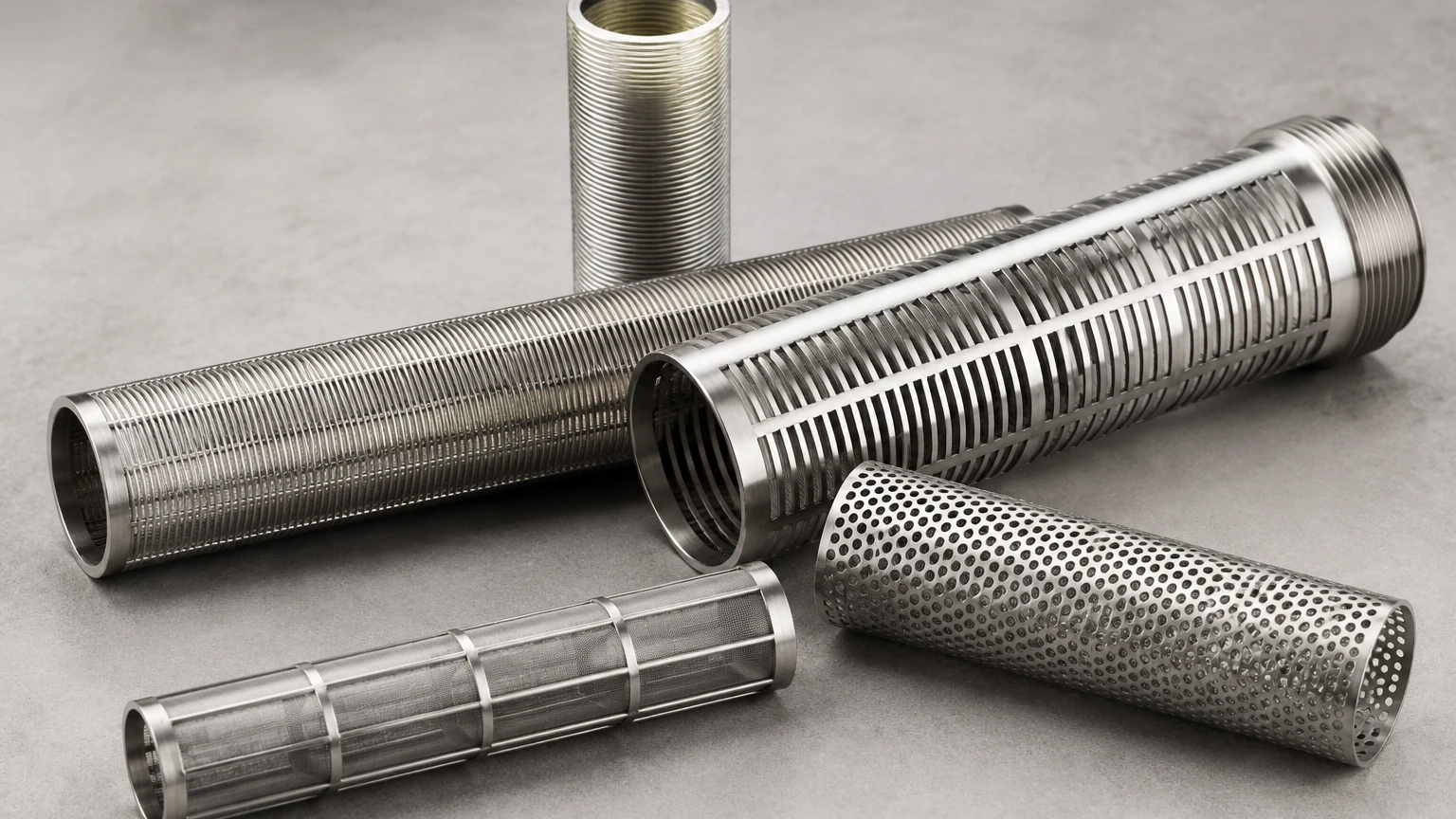
The geometry of the well pump screen determines its efficiency and cleaning characteristics. There are three primary designs used in industrial settings: wedge wire (V-wire), perforated metal, and wire mesh.
Wedge Wire Screens
Wedge wire is often considered the gold standard for industrial well screens. It consists of V-shaped profile wires wrapped around longitudinal support rods. This design creates a continuous slot that widens inwardly.
* Non-Clogging Geometry: Because the slot narrows at the outer surface and widens toward the inside, any particle that manages to pass through the outer opening will continue through without getting wedged in the screen.
* High Open Area: The continuous slot design allows for a significantly higher percentage of open area compared to perforated pipes, reducing entrance velocity and minimizing encrustation.
Perforated Metal Screens
Perforated screens are typically used as a support structure or for coarse filtration. They are manufactured by punching holes into a stainless steel sheet or pipe. While they offer high structural strength, their open area is generally lower than wedge wire, making them more prone to clogging in fine-sand formations.
Wire Mesh Filters
For applications requiring extremely fine filtration, stainless steel wire mesh is integrated into the screen assembly. This is common in the pharmaceutical and food and beverage industries where water must meet stringent purity standards before entering the processing line. Multi-layered sintered mesh provides the necessary filtration accuracy while maintaining the mechanical strength required to withstand pump suction.
Calculating Filtration Accuracy and Open Area
When specifying a well pump screen, engineers must perform a sieve analysis of the aquifer's formation material. The "slot size" or "micron rating" of the screen is then selected based on the grain size distribution of the sand and gravel.
Entrance Velocity Considerations
A critical design parameter is the entrance velocity—the speed at which water passes through the screen slots. To minimize friction loss and prevent the transport of fine sediments, the entrance velocity should generally be kept below 0.1 feet per second (0.03 meters per second).
High entrance velocities lead to several problems:
1. Accelerated Corrosion: Increased turbulence can strip protective oxide layers from the metal.
2. Encrustation: Pressure drops at the screen can cause dissolved minerals (like calcium carbonate) to precipitate, clogging the screen.
3. Sand Pumping: High-velocity water can pull fine particles through the filter media that would otherwise remain stationary.
By maximizing the open area through precision manufacturing, operators can maintain high flow rates while keeping entrance velocities within safe limits.
Installation and Integration with Industrial Pumps
The well pump screen is typically installed at the bottom of the well casing or directly attached to the pump intake. In deep-well applications, the screen must be able to support the weight of the pump column and withstand the torque generated during motor startup.
Connection Methods
Industrial screens are usually supplied with threaded ends (NPT or BSP) or weld rings for secure attachment to the casing. For submersible pumps, the screen may be designed as a "suction strainer" that wraps around the pump's intake ports. This configuration is common in hydraulic systems and cooling water intakes where the pump is suspended in a large sump or open well.
Maintenance and Troubleshooting
Even the best-designed well pump screen will eventually require maintenance. In industrial environments, performance monitoring is essential to detect the early stages of screen fouling.
Indicators of Screen Failure or Clogging
* Increased Drawdown: If the water level inside the well drops significantly more than usual during pumping, it indicates that the screen is becoming restricted.
* Reduced Discharge Flow: A noticeable drop in the volume of water delivered to the facility suggests either pump wear or screen blockage.
* Presence of Sediment: If sand or silt begins to appear in the discharged water, the screen may have suffered mechanical damage or corrosion-induced bypass.
Cleaning Techniques
Stainless steel screens allow for various rehabilitation methods. Chemical treatment (using acids to dissolve mineral scale) and mechanical surging (using high-pressure water jets or air) are common practices. Because stainless steel is resistant to these aggressive cleaning agents, it allows the well to be restored to near-original capacity, extending the life of the infrastructure.
Customization and OEM Solutions
No two aquifers are identical, and standard off-the-shelf screens often fail to meet the specific requirements of complex industrial projects. Customization is often necessary to account for unique chemical compositions, extreme depths, or specific flow requirements.
Working with a manufacturer that offers OEM capabilities allows engineers to specify exact slot widths, diameter tolerances, and reinforcement structures. Whether the application involves a high-pressure hydraulic system or a sanitary food processing line, a tailored filtration solution ensures that the pump is protected without compromising system efficiency. For technical consultation on custom designs, professionals can explore the resources available on the Main Page.
Total Cost of Ownership (TCO)
While a high-quality stainless steel well pump screen represents a higher initial investment than lower-grade alternatives, the impact on the Total Cost of Ownership is substantial. By preventing sand entry and reducing entrance velocity, a precision-engineered screen:
* Extends the interval between pump overhauls.
* Reduces energy costs by minimizing drawdown.
* Eliminates the need for frequent well rehabilitation.
* Prevents downstream damage to valves, heat exchangers, and sensitive processing equipment.
In the context of B2B operations, where downtime can cost thousands of dollars per hour, the reliability of the filtration interface is a vital component of risk management.
Conclusion
The well pump screen is a fundamental component in industrial water management. By understanding the relationship between material science, fluid dynamics, and geological conditions, engineers can specify filtration solutions that protect equipment and ensure a consistent supply of clean water. For those seeking high-performance stainless steel filtration components, Kaifil provides the technical expertise and manufacturing precision required for the most demanding industrial environments. To learn more about our full range of custom wire mesh and filter cartridge solutions, please visit our Main Page.
