


Plate Evaporators
In the landscape of industrial thermal processing, plate evaporators represent a highly efficient solution for concentrating liquids, recovering solvents, and managing wastewater. These systems are integral to sectors such as chemical processing, food and beverage production, and pharmaceutical manufacturing. Unlike traditional shell-and-tube designs, plate-based systems leverage a compact geometry to maximize heat transfer coefficients while minimizing the physical footprint of the equipment. However, the efficiency of these units is heavily dependent on the quality of the fluid entering the system. For engineers and procurement teams, understanding the mechanical nuances of plate evaporators—and the critical role of precision filtration in protecting them—is essential for maintaining operational uptime and product integrity.
Understanding Plate Evaporator Technology and Design
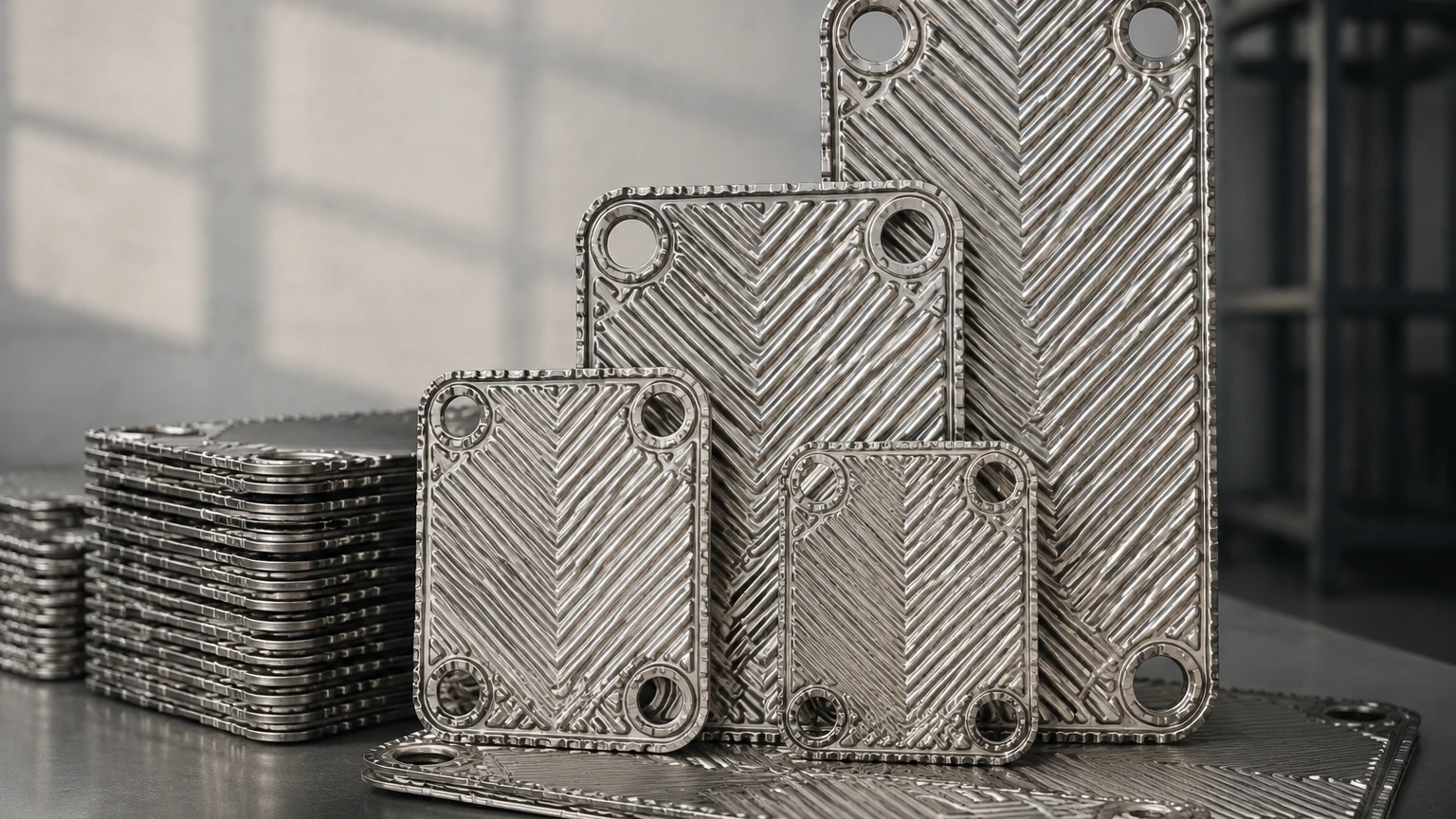
Plate evaporators operate on the principle of thin-film evaporation. The core of the system consists of a series of corrugated metal plates clamped together within a frame. These plates create narrow channels through which the product and the heating medium (usually steam or hot water) flow in counter-current or co-current directions. The corrugations serve a dual purpose: they increase the surface area available for heat transfer and induce turbulence even at low flow velocities. This turbulence is a key engineering advantage, as it enhances the heat transfer coefficient and helps to reduce the rate of fouling on the plate surfaces.
There are several configurations of plate evaporators commonly used in industrial settings:
1. Rising Film Plate Evaporators: These are typically used for liquids with low to medium viscosity. The feed enters at the bottom of the plate pack and boils as it rises, with the vapor bubbles lifting the liquid film up the surface of the plate.
2. Falling Film Plate Evaporators: In this design, the liquid is distributed at the top of the plates and flows downward as a thin film. This is often preferred for heat-sensitive products because it allows for lower temperature differences and shorter residence times.
3. Forced Circulation Plate Evaporators: Used for highly viscous fluids or products prone to crystallization, these systems use a pump to maintain high velocities across the plates, preventing solids from settling.
Regardless of the specific configuration, the narrow gaps between plates—often only a few millimeters wide—make these systems susceptible to blockages if the process fluid contains suspended solids or particulates. This is where high-performance filtration components become a vital part of the system architecture.
The Critical Role of Filtration in Evaporator Protection
For any engineer managing a system involving plate evaporators, the primary operational threat is fouling. Fouling occurs when unwanted materials accumulate on the heat transfer surfaces, creating a thermal resistance layer that forces the system to consume more energy to achieve the same evaporation rate. In severe cases, fouling can completely plug the narrow channels between the plates, leading to unplanned shutdowns and costly manual cleaning cycles.
Effective pre-filtration is the most reliable method for mitigating these risks. By installing stainless steel wire mesh filters or precision cartridges upstream of the evaporator, facilities can ensure that only clarified fluids enter the plate pack. This protection is particularly important in applications such as:
* Food and Beverage: Removing pulp, seeds, or organic fibers that could carbonize on hot plate surfaces.
* Chemical Processing: Capturing catalyst fines or undissolved reactants that might cause abrasion or scaling.
* Water Treatment: Filtering out suspended solids in brine concentration or zero-liquid discharge (ZLD) systems.
Kaifil specializes in manufacturing the types of durable, high-precision filtration components required to protect these high-value thermal assets. For more information on custom filtration components, you can visit the Main Page.
Key Evaluation Criteria for Industrial Plate Evaporators
When selecting or auditing a plate evaporator system, engineers must look beyond the initial capital expenditure (CAPEX). A technical evaluation should focus on the following parameters:
Heat Transfer Efficiency
The primary metric for evaporator performance is the overall heat transfer coefficient (U-value). Plate evaporators generally offer U-values significantly higher than shell-and-tube heat exchangers due to the high turbulence induced by plate patterns (such as herringbone or washboard designs). Engineers should confirm that the plate material and thickness are optimized for the specific thermal conductivity required by the process.
Material Compatibility
Given that evaporation often involves concentrating corrosive chemicals or handling sensitive food products, material selection is paramount. While 304 and 316L stainless steel are industry standards, highly aggressive environments may require titanium, Hastelloy, or specialized alloys. The filtration system protecting the evaporator must also be constructed from compatible materials to prevent galvanic corrosion or fluid contamination.
Pressure Drop and Flow Distribution
Plate evaporators must be designed to handle the pressure drop associated with the phase change of the liquid into vapor. A well-designed plate pack ensures even distribution across all channels. If the upstream filter is improperly sized, it can cause a significant pressure drop before the fluid even reaches the evaporator, leading to cavitation in feed pumps or insufficient flow for film formation.
Common Risks and Maintenance Challenges
Operating plate evaporators without adequate technical oversight can lead to several common failure modes. Understanding these risks allows purchasing teams to specify the right auxiliary equipment, such as spare filter elements and automated cleaning systems.
1. Scaling and Crystallization: As the liquid concentrates, the solubility limits of certain salts may be exceeded, leading to scale formation. While chemical dosing can help, maintaining a high-velocity flow is the best mechanical defense. If the plates are already partially blocked by particulates, the localized flow velocity drops, accelerating scale buildup.
2. Gasket Failure: Most plate evaporators use elastomers to seal the plates. These gaskets are subject to thermal cycling and chemical attack. If particulates become trapped in the gasket grooves during assembly or operation, it can compromise the seal, leading to external leaks or cross-contamination between the product and the heating medium.
3. Erosion-Corrosion: High-velocity vapors carrying entrained droplets or solids can erode the metal plates over time. Fine filtration reduces the solid load, thereby extending the mechanical life of the plates.
Customizing Filtration for Evaporator Systems
Standard off-the-shelf filters are rarely sufficient for the demanding requirements of industrial evaporation. Customization is often necessary to balance filtration accuracy with the flow demands of the system. Engineers should consider the following customization options when sourcing filtration components:
* Micron Rating and Mesh Weave: The filtration accuracy must be significantly finer than the narrowest gap in the plate evaporator. For example, if the plate gap is 3mm, a filter with a 500-micron (0.5mm) rating provides a necessary safety margin. The choice of weave (plain, twill, or dutch weave) affects the dirt-holding capacity and the ease of backwashing.
* Structural Reinforcement: In high-pressure hydraulic or steam-heated systems, filter elements must withstand significant differential pressures without collapsing. Perforated metal supports or sintered multi-layer mesh designs provide the necessary structural integrity.
* Connection Standards: To ensure seamless integration into existing piping, filters should be available with standard industrial flanges (ANSI, DIN, JIS) or sanitary couplings (Tri-Clamp) for food and pharmaceutical applications.
Kaifil’s manufacturing capabilities allow for the production of OEM filtration components that meet these specific technical requirements, ensuring that the plate evaporator operates at peak efficiency for longer durations.
Technical Considerations for Engineers and Purchasing Teams
Before finalizing a purchase or a system upgrade, technical professionals should confirm several data points to ensure the total cost of ownership (TCO) remains low.
Replacement Cycles and Cleanability
How often will the filter elements need to be cleaned or replaced? In continuous evaporation processes, downtime is extremely expensive. Selecting stainless steel wire mesh filters that are compatible with Clean-In-Place (CIP) systems allows for automated maintenance without dismantling the equipment. Engineers should evaluate the "cleanability" of the filter media—sintered mesh, for example, is often easier to clean than fiber-based media because it lacks depth-loading characteristics that trap particles permanently.
Total Cost Considerations
While a high-quality stainless steel filter has a higher initial cost than disposable plastic or paper cartridges, the long-term savings are substantial. Permanent metal filters eliminate the recurring cost of consumables, reduce waste disposal fees, and provide better protection against bypass—a common failure in disposable filters where the media can tear under pressure.
Performance Expectations
Define the expected clarified fluid quality. If the evaporator is part of a multi-stage effect system, the clarity of the first-stage feed is critical for the success of all subsequent stages. Any particulate carryover will be magnified as the concentration increases in later effects.
Conclusion
Plate evaporators are sophisticated engineering assets that offer unparalleled efficiency in liquid concentration and separation. However, their performance is inextricably linked to the purity of the process stream. By implementing robust, customized filtration solutions, industrial operators can protect their plates from fouling, reduce maintenance costs, and ensure consistent product quality. For engineers seeking reliable, high-precision filtration components tailored to industrial applications, reviewing product options and application support is a critical next step. To explore technical specifications and custom manufacturing capabilities, visit the Main Page to learn how precision metal filtration can optimize your thermal processing systems.
