


Cip System Maintenance
In industrial processing environments—ranging from food and beverage production to pharmaceutical manufacturing—hygiene and operational efficiency are inseparable. Clean-In-Place (CIP) systems are the primary mechanism for ensuring that internal surfaces of pipes, vessels, and equipment are decontaminated without disassembly. However, the reliability of these systems depends entirely on a rigorous approach to cip system maintenance. Without a structured maintenance program, systems can suffer from chemical imbalances, mechanical failures, and, most critically, filtration bypass that leads to clogged spray balls and compromised product safety.
For engineering and maintenance teams, understanding the intersection of mechanical integrity and chemical efficacy is essential. This guide examines the technical requirements of maintaining a CIP system, with a specific focus on the role of high-performance filtration components in ensuring long-term system reliability.
Understanding the Fundamentals of Clean-In-Place (CIP) Technology
A CIP system is designed to circulate cleaning solutions through a process circuit at specific velocities, temperatures, and chemical concentrations. The effectiveness of this process is generally governed by the T.A.C.T. principle: Time, Action (mechanical force/turbulence), Chemical (concentration), and Temperature.
Maintenance ensures that each of these four pillars remains within specified tolerances. For instance, if a pump fails to deliver the required flow rate, the mechanical action (turbulence) within the piping will be insufficient to dislodge biofilms or mineral scales. Similarly, if the filtration system within the CIP loop is not properly maintained, particulate matter can recirculate, potentially damaging sensitive valves or blocking the small orifices of spray devices. For technical professionals looking to optimize these parameters, reviewing the Main Page of a specialized manufacturer can provide insights into the hardware necessary for high-integrity filtration.
Key Components Requiring Regular Maintenance
A comprehensive cip system maintenance strategy must address several critical hardware categories. Each component plays a role in either the delivery of cleaning agents or the removal of soils.
1. Pumps and Drive Systems
Centrifugal pumps are the workhorses of the CIP system. Maintenance should focus on mechanical seals, which are prone to wear from aggressive cleaning chemicals and high temperatures. Vibration analysis and periodic lubrication of motor bearings are necessary to prevent unplanned downtime.
2. Heat Exchangers
CIP solutions must be heated to specific temperatures (often between 60°C and 90°C) to be effective. Plate or tubular heat exchangers can develop scale or organic fouling over time, reducing thermal transfer efficiency. Regular inspection and descaling are required to ensure the system reaches target temperatures within the allocated cycle time.
3. Spray Balls and Distribution Devices
These components convert fluid pressure into mechanical energy to scrub the internal surfaces of tanks. Fixed or rotary spray balls have small apertures that are easily blocked by scale or debris. Maintenance involves visual inspection and ensuring that the upstream filtration is capturing any solids before they reach these devices.
4. Instrumentation and Sensors
Conductivity sensors, flow meters, and temperature probes provide the data necessary for automated CIP control. If a conductivity sensor is fouled by mineral deposits, it may misread chemical concentrations, leading to either insufficient cleaning or excessive chemical waste.
The Impact of Filtration on CIP Efficiency
Filtration is often the most overlooked aspect of cip system maintenance, yet it is vital for protecting the system's mechanical components. In a typical CIP cycle, the "return" line carries cleaning solution back to the balance tank. This solution often contains suspended solids, such as fruit pulp, grain husks, or mineral precipitates.
If these solids are not removed via a robust stainless steel wire mesh filter or cartridge, they recirculate through the system. This leads to several failure modes:
- Erosion of Pump Impellers: Abrasive particles can wear down pump components, leading to a loss of pressure.
- Clogging of Spray Orifices: Even small amounts of debris can block spray balls, creating "shadow zones" in the tank that remain uncleaned.
- Cross-Contamination: Particulate matter from one production batch can be trapped in the CIP loop and introduced into a subsequent batch.
Using durable, custom-engineered stainless steel filters allows for high-flow rates with minimal pressure drop, which is essential for maintaining the "Action" component of the T.A.C.T. principle.
Establishing a Comprehensive CIP System Maintenance Schedule
To ensure consistent performance, maintenance tasks should be categorized by frequency. A proactive approach reduces the risk of "failed washes" that require costly re-cleaning and production delays.
Daily Maintenance Tasks
* Visual Inspection: Check for leaks at gaskets, seals, and union joints.
* Pressure Monitoring: Record the pressure differential across filters. A sudden increase indicates a high soil load or a clogged filter element.
* Chemical Levels: Verify that bulk chemical tanks are sufficiently stocked and that dosing pumps are primed.
Weekly Maintenance Tasks
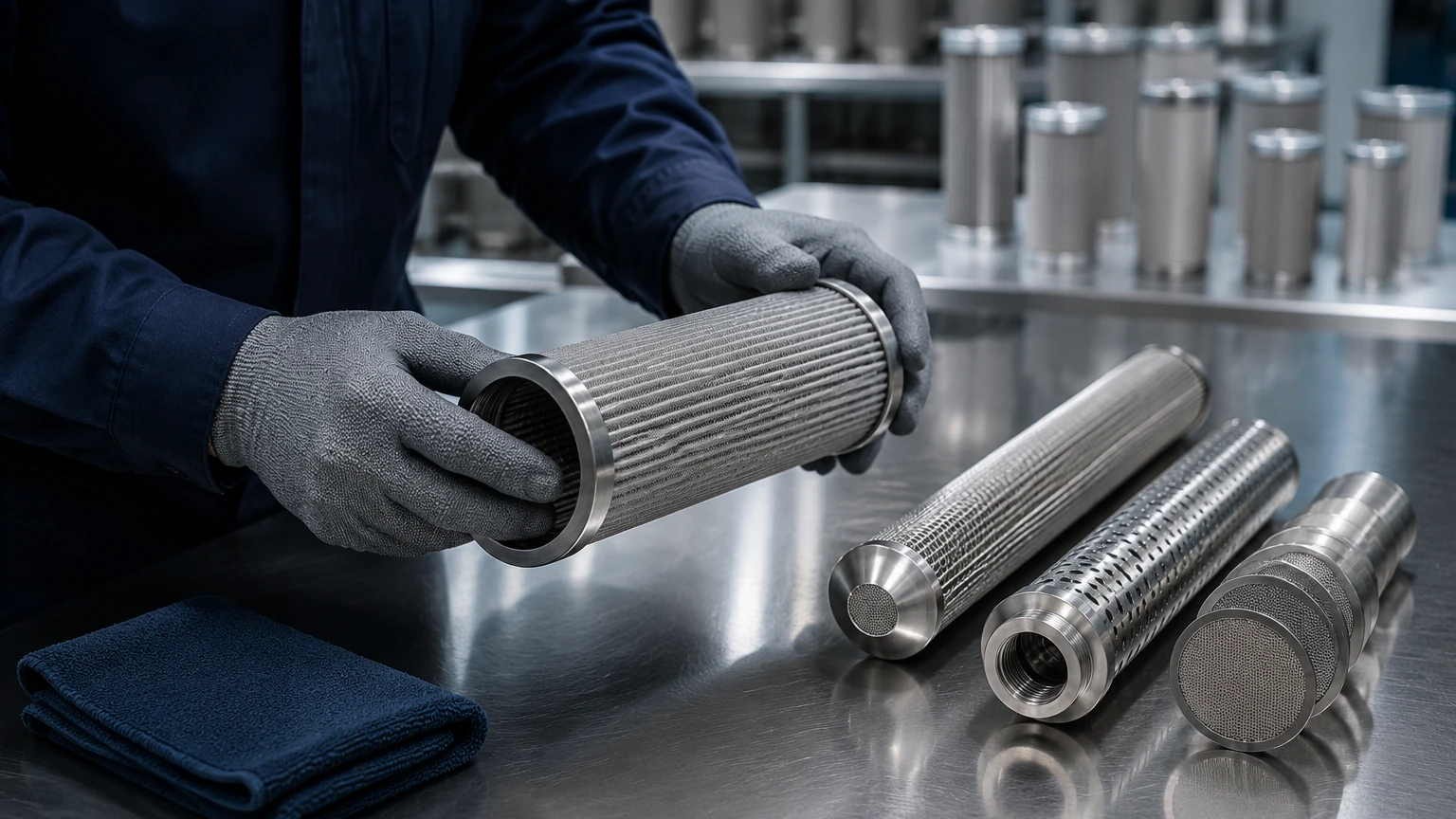
* Filter Element Cleaning: Remove stainless steel mesh filters and inspect them for signs of mechanical fatigue or permanent fouling. Use ultrasonic cleaning if necessary to restore the open area of the mesh.
* Sensor Calibration Check: Compare CIP system temperature and conductivity readings against a calibrated handheld meter.
* Strainer Inspection: Clean the Y-strainers on the water inlet and chemical feed lines.
* CIP system maintenance logs should be reviewed to identify any recurring alarms or cycle time deviations.
Monthly and Quarterly Tasks
* Valve Seat Replacement: Inspect and replace elastomers in pneumatic valves. Aggressive caustic and acid cycles can cause EPDM or Viton seals to swell or crack.
* Spray Ball Verification: Perform a "riboflavin test" or a visual coverage check to ensure that all internal surfaces of the vessels are being reached by the cleaning spray.
* Heat Exchanger Service: If the system is struggling to reach temperature, the heat exchanger may require a dedicated acid descaling cycle or manual cleaning.
Troubleshooting Mechanical and Chemical Performance Issues
When a CIP system fails to meet its validated cleaning parameters, troubleshooting should follow a logical path from mechanical to chemical causes.
Issue: Low Flow Velocity
* Check: Is the return line filter clogged? A blocked filter is the most common cause of reduced flow.
* Check: Is the pump impeller worn? Cavitation caused by restricted suction (often from a dirty filter) can damage the pump.
Issue: Chemical Concentration Instability
* Check: Are the dosing pumps calibrated?
* Check: Is the conductivity probe coated in scale? A probe that cannot accurately "see" the solution will result in incorrect chemical dosing.
Issue: Particulate in the Final Rinse
* Check: Is the filter mesh size appropriate for the soil being removed? If the micron rating is too large, fine particulates will pass through.
* Check: Is there a bypass occurring? Inspect the filter housing gaskets to ensure the solution is not flowing around the filter element rather than through it.
Material Selection and Engineering Specifications for CIP Filters
In the context of cip system maintenance, the materials used for filtration components are critical. Standard plastic or low-grade metal filters cannot withstand the thermal and chemical shocks of a CIP environment.
Stainless Steel 316L
This is the industry standard for CIP applications. It offers superior resistance to corrosion from caustic (Sodium Hydroxide) and acid (Nitric or Phosphoric Acid) cleaning agents. Furthermore, 316L can withstand the high temperatures required for sterilization (SIP).
Surface Finish (Ra)
For hygienic applications, the surface finish of the filter housing and the mesh itself must be smooth. A high Ra (roughness average) provides crevices where bacteria can hide, defeating the purpose of the CIP cycle. High-quality filters are typically electropolished to achieve a smooth, non-reactive surface.
Customization and Sizing
Every CIP system is unique. Engineering considerations must include the total surface area of the filter to ensure that the pressure drop (Delta P) remains low even as the filter accumulates soil. Custom wire mesh configurations allow engineers to balance filtration fineness with the structural strength needed to resist high-pressure surges during pump startup.
Total Cost of Ownership and Replacement Cycles
When evaluating the budget for cip system maintenance, it is important to look beyond the initial purchase price of replacement parts. Lower-quality filters may require more frequent replacement or, worse, may fail during a cycle, allowing debris to damage expensive downstream equipment.
Investing in high-durability stainless steel filtration components reduces the total cost of ownership by:
1. Extending Service Life: Stainless steel elements can be cleaned and reused for years, unlike disposable cartridges.
2. Reducing Chemical Waste: Efficient filtration allows for the "recovery" and reuse of cleaning chemicals in multi-tank CIP systems by removing soils before the chemical is returned to the storage tank.
3. Protecting Assets: Preventing the clogging of spray balls and the erosion of pumps significantly reduces the long-term maintenance costs of the entire production line.
Conclusion: Optimizing CIP Maintenance for the Future
Effective cip system maintenance is a multi-disciplinary task that requires attention to mechanical, chemical, and thermal variables. By implementing a structured schedule of inspections, sensor calibrations, and filter cleanings, manufacturers can ensure that their cleaning cycles are both effective and efficient.
Filtration remains a cornerstone of this process. By selecting the right materials and maintaining the integrity of filter elements, engineers can protect their equipment and ensure the highest levels of product purity. For those seeking to upgrade their current systems or source specialized components, visiting the Main Page offers a range of professional filtration solutions designed to meet the rigorous demands of modern industrial CIP applications.
