


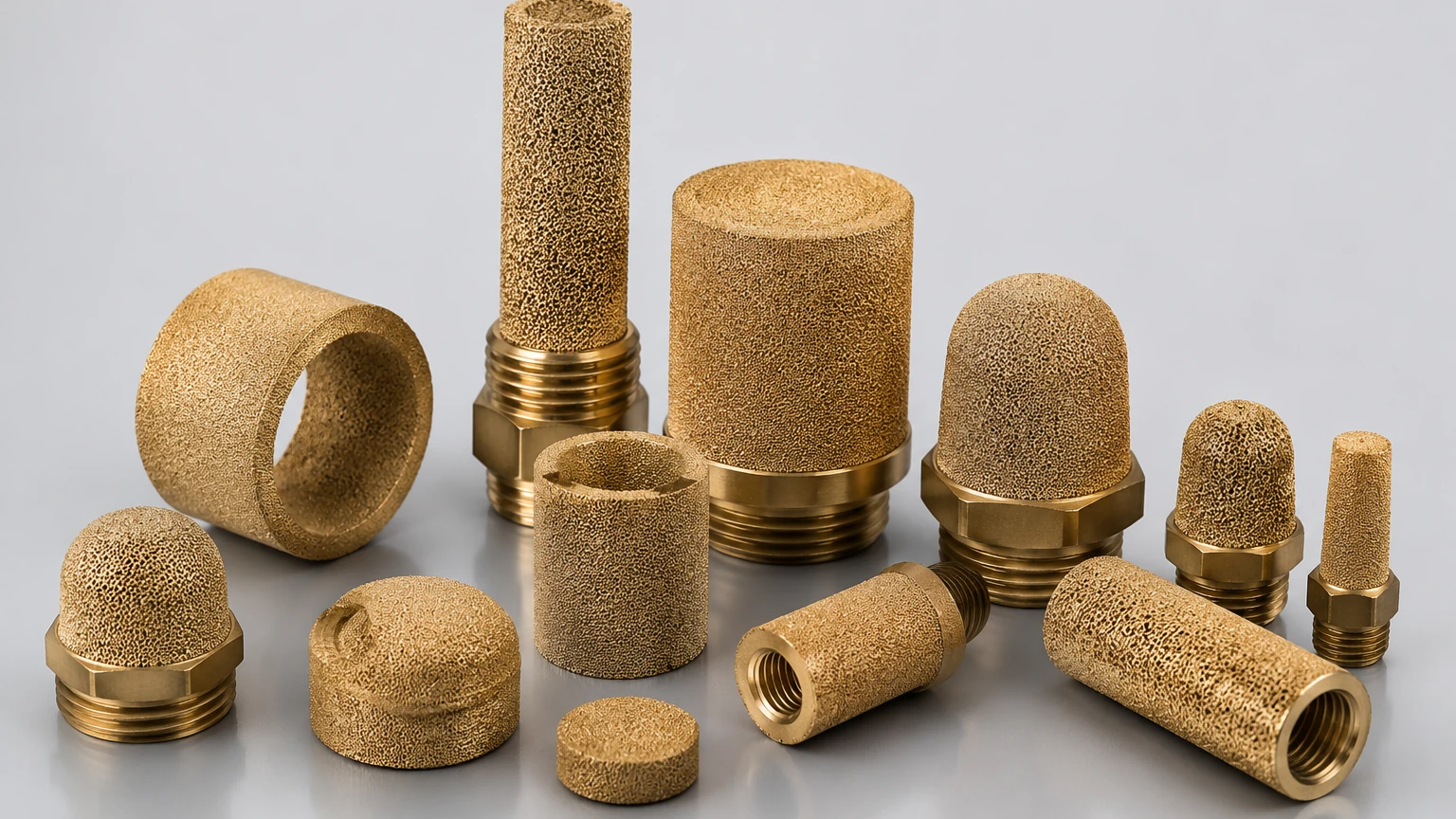
Sintered Brass Filter
In the landscape of industrial filtration, the sintered brass filter represents a critical component for fluid and gas management. These porous metal elements are engineered through powder metallurgy, a process that transforms metallic powders into rigid, permeable structures without reaching the material's melting point. For engineers and procurement professionals, understanding the technical nuances of sintered brass is essential for optimizing system performance, particularly in pneumatic and hydraulic applications where durability and precise flow control are paramount.
As a manufacturer specializing in custom filtration solutions, Kaifil recognizes that selecting the right material—whether brass or stainless steel—depends heavily on the operating environment. While stainless steel is often preferred for high-purity or highly corrosive applications, sintered brass remains a staple in many industrial sectors due to its unique mechanical properties and cost-effectiveness. Detailed information on various metal filtration options can be found on our Main Page.
Understanding Sintered Brass Filtration Technology
The production of a sintered brass filter involves a sophisticated thermal process. Typically, spherical bronze or brass powder is loaded into a mold and heated in a controlled-atmosphere furnace. During this sintering process, the powder particles bond at their contact points through atomic diffusion. This results in a mechanically strong, self-supporting structure characterized by a network of interconnected pores.
The primary advantage of this manufacturing method is the ability to control porosity and pore size distribution with high precision. By selecting specific powder grain sizes and adjusting sintering temperatures and pressures, manufacturers can create filters with micron ratings ranging from 1 to over 100 microns. The resulting "tortuous path" within the filter media ensures that contaminants are trapped throughout the depth of the material, rather than just on the surface, which enhances the dirt-holding capacity of the component.
Key Performance Characteristics of Sintered Brass
When evaluating a sintered brass filter for industrial use, several technical characteristics define its suitability for a given application. These include mechanical strength, thermal stability, and filtration efficiency.
1. Controlled Porosity and Permeability
Sintered brass filters typically exhibit a porosity of 30% to 50%. This high level of porosity allows for significant flow rates with relatively low pressure drops. Permeability is a critical factor for engineers designing pneumatic systems, where excessive resistance can lead to energy loss and reduced tool efficiency.
2. Thermal and Chemical Resistance
Brass is an alloy primarily composed of copper and zinc. It offers excellent thermal conductivity and can operate reliably in temperatures up to 200°C (392°F). While it does not match the extreme temperature resistance of stainless steel, it is more than sufficient for most compressed air and standard hydraulic oil applications. Chemically, brass is resistant to water and many oils, though it may be susceptible to certain acids or ammonia-based compounds.
3. Structural Integrity
Unlike paper or fabric filters, a sintered brass filter is a rigid component. It does not require additional support structures to maintain its shape under high differential pressures. This rigidity prevents media migration—the shedding of filter material into the downstream flow—which is a common failure mode in less robust filtration media.
Common Industrial Applications
Sintered brass filters are utilized across a broad spectrum of industries, primarily where gas or liquid needs to be cleaned, muffled, or regulated. Their versatility makes them a standard choice for several specific functions.
Pneumatic Silencers and Mufflers
One of the most common uses for sintered brass is in pneumatic exhaust ports. The porous structure allows compressed air to escape into the atmosphere while significantly reducing noise levels. By diffusing the air flow, the filter prevents the sharp "pop" associated with rapid decompression, helping facilities comply with occupational noise safety standards.
Flame Arrestors
Due to the high thermal conductivity of the copper-based alloy, sintered brass filters are effective flame arrestors. In systems transporting flammable gases, the porous metal can quench a flame by absorbing and dissipating heat below the ignition temperature of the gas, preventing the propagation of fire through the piping.
Flow Regulation and Pressure Compensation
In precision instruments and sensors, a sintered brass filter acts as a flow restrictor or a breather. It allows for the equalization of pressure between the internal housing of a device and the external environment while preventing the ingress of dust, moisture, and other contaminants that could damage sensitive electronics or mechanical parts.
Sintered Brass vs. Stainless Steel: Selection Engineering
Choosing between a sintered brass filter and a stainless steel alternative is a common challenge for design engineers. While both offer the benefits of sintered metal technology, their application envelopes differ.
* Corrosion Resistance: Stainless steel (such as 316L) offers superior resistance to oxidation and a wider range of chemicals. In marine environments or food processing applications where caustic cleaning agents are used, stainless steel is the standard. Brass is suitable for non-corrosive gases and oils.
* Cost Considerations: Brass is generally more economical than stainless steel, both in terms of raw material costs and ease of machining. For high-volume pneumatic components, brass provides a cost-effective solution without compromising performance.
* Purity Requirements: In pharmaceutical or semiconductor manufacturing, stainless steel is preferred because it is less likely to react with the process fluid and is easier to sterilize. For general industrial machinery, brass is often the more pragmatic choice.
For projects requiring specialized materials or high-precision stainless steel components, reviewing the technical specifications on our Main Page can help in determining the most appropriate material for your specific filtration requirements.
Evaluation Criteria for Procurement and Design
To ensure the longevity and efficiency of a filtration system, purchasing teams and engineers should evaluate sintered brass filters based on the following criteria:
1. Micron Rating (Filtration Grade): This defines the size of particles the filter is intended to remove. It is important to distinguish between "nominal" and "absolute" micron ratings. A nominal rating indicates the filter will trap a majority of particles of that size, while an absolute rating indicates a higher efficiency threshold.
2. Maximum Differential Pressure ($ΔP$): Engineers must calculate the maximum pressure difference the filter will encounter. If the $ΔP$ exceeds the structural limits of the sintered brass, the filter may deform or collapse.
3. Flow Rate Requirements: The filter must be sized to accommodate the required volume of fluid or gas without causing an unacceptable drop in system pressure. This is often determined by the surface area of the filter element.
4. Connection Type: Sintered brass filters are available in various configurations, including threaded fittings (NPT, BSP), press-fit designs, and custom-molded shapes. Ensuring compatibility with existing hardware is vital for ease of installation.
Identifying Risks and Failure Modes
While sintered brass filters are durable, they are not immune to failure. Understanding these risks can inform better maintenance schedules and system designs.
* Clogging and Saturation: Over time, the internal pores will fill with contaminants. Because brass filters often utilize depth filtration, they can hold a significant amount of debris before the pressure drop becomes critical. However, failure to replace or clean the filter will eventually lead to system inefficiency.
* Chemical Degradation: Exposure to incompatible chemicals can lead to "dezincification," where the zinc is leached out of the brass alloy, leaving a brittle, porous copper structure that lacks mechanical strength.
* Ultrasonic Cleaning Limitations: While many sintered metal filters can be cleaned using ultrasonic baths, repeated cleaning cycles can eventually fatigue the bonds between the sintered particles, especially if the filter has been subjected to high-pressure spikes during operation.
Pre-Purchase Checklist for Engineering Teams
Before finalizing a specification for a sintered brass filter, technical teams should confirm the following details with their supplier:
* Fluid Compatibility: Confirm that the specific alloy composition is compatible with the process fluid, including any additives or cleaning agents.
* Operating Temperature Range: Ensure the maximum and minimum operating temperatures fall within the safe limits for brass.
* Customization Options: Many industrial applications require non-standard shapes or specific mounting hardware. Determine if the manufacturer can provide OEM solutions tailored to the equipment housing.
* Cleaning Protocols: Ask for recommended cleaning procedures. Can the filter be backwashed, or does it require solvent cleaning or ultrasonic treatment?
By addressing these factors early in the design or procurement phase, companies can avoid costly downtime and ensure that their filtration systems operate at peak efficiency. For more information on custom metal filtration solutions and engineering support, visit the Kaifil Main Page.
