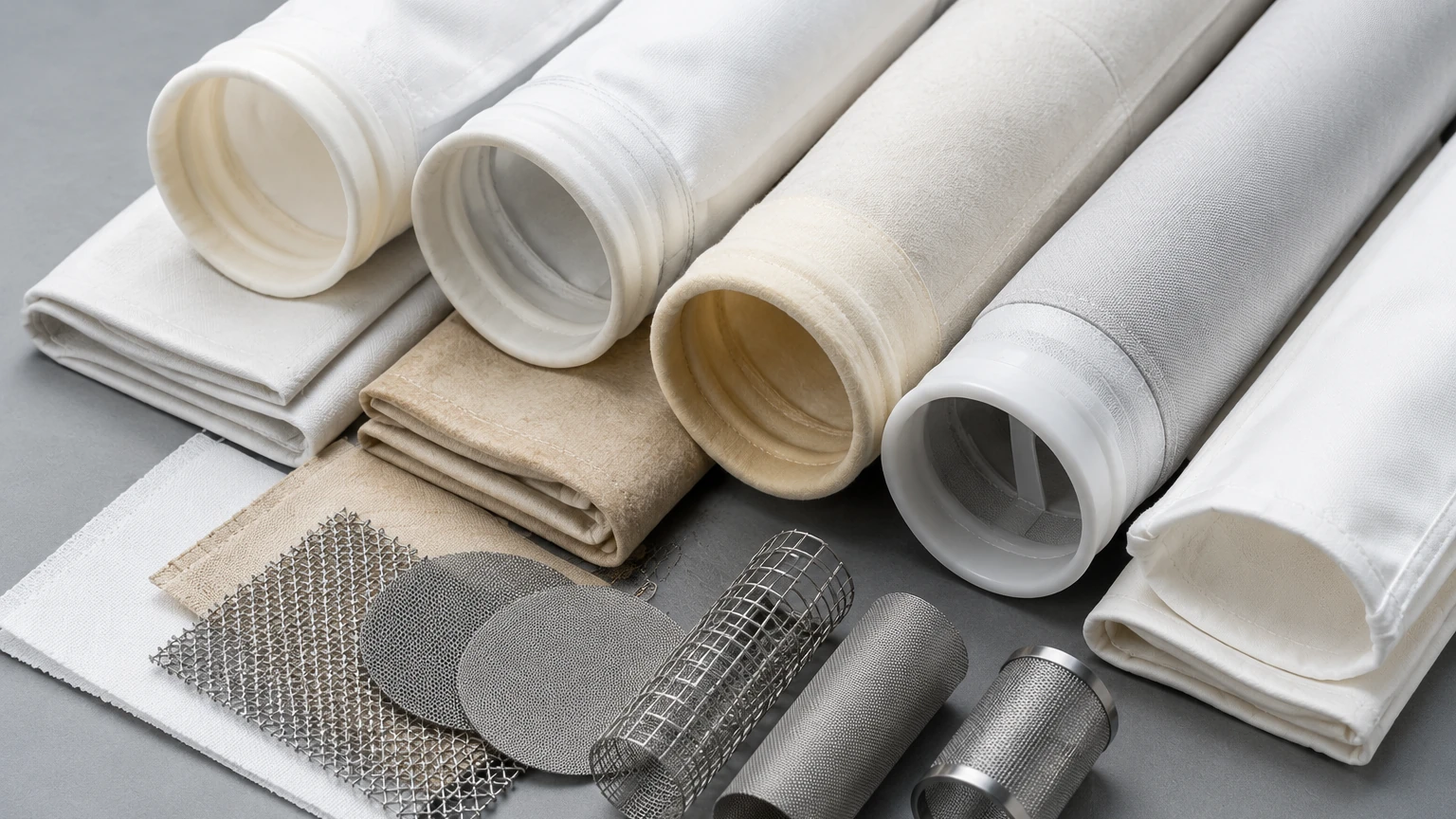
Filter Bag Fabric
In industrial filtration, the selection of filter bag fabric is a critical engineering decision that directly impacts process efficiency, emission compliance, and operational costs. Filter bags serve as the primary barrier in baghouse systems and liquid filtration housings, tasked with capturing particulate matter while allowing the carrier medium—gas or liquid—to pass through with minimal resistance. Understanding the technical nuances of fabric composition, construction, and treatment is essential for engineers and procurement teams seeking to optimize filtration performance in demanding environments such as chemical processing, power generation, and pharmaceutical manufacturing.
Understanding Filter Bag Fabric Materials
The chemical and thermal properties of the fiber are the foundation of any filter bag's performance. Industrial filter bag fabric is typically categorized by its polymer base, each offering distinct advantages and limitations regarding temperature tolerance and chemical resistance.
Polyester (PE)
Polyester is the most widely used fabric in industrial dust collection due to its balance of cost and mechanical strength. It operates effectively at continuous temperatures up to 135°C (275°F). While it offers good resistance to most oxidizing agents and organic solvents, it is highly susceptible to hydrolysis. In environments with high moisture and elevated temperatures, polyester fibers can break down chemically, leading to premature bag failure.
Polypropylene (PP)
Polypropylene is the material of choice for liquid filtration and low-temperature gas applications where chemical inertness is paramount. It features exceptional resistance to both acids and alkalis. However, its thermal limit is relatively low, typically capped at 90°C (194°F). Its hydrophobic nature makes it ideal for moisture-heavy applications where other fabrics might swell or blind.
Aramid (Nomex®)
Aramid fibers are engineered for high-temperature applications, maintaining structural integrity up to 200°C (392°F). They are commonly used in the cement and metal processing industries. While aramid provides excellent abrasion resistance, it is sensitive to high moisture levels and acidic flue gases, which can cause fiber degradation over time.
Polyphenylene Sulfide (PPS/Ryton®)
PPS is a high-performance fabric specifically designed for harsh chemical environments at temperatures up to 190°C (374°F). It is frequently utilized in coal-fired boilers and incinerators because of its excellent resistance to acids and alkalis and its ability to withstand oxygen-rich environments that would degrade other polymers.
Polytetrafluoroethylene (PTFE)
PTFE represents the pinnacle of chemical and thermal resistance. Often referred to as the "universal" filter medium, it can operate continuously at 260°C (500°F) and is virtually immune to chemical attack across the entire pH scale. Due to its high cost, PTFE is typically reserved for the most extreme industrial conditions or used as a membrane laminated onto other fabrics.
Fabric Construction: Woven vs. Non-Woven
The physical structure of the filter bag fabric determines how it captures particles and how easily it can be cleaned. There are two primary construction methods used in industrial filtration: woven and non-woven (needle felt).
Woven Fabrics
Woven fabrics are produced by interlacing yarns in specific patterns (plain, twill, or satin). They primarily rely on surface filtration, where a dust cake builds up on the exterior of the fabric to act as the actual filter medium. Woven fabrics are characterized by high tensile strength and are often used in large-scale baghouses where mechanical shaking or reverse-air cleaning is employed. However, they generally have lower filtration efficiency for fine particulates compared to felted media until a stable dust cake is established.
Non-Woven Needle Felts
Needle felt is the standard for pulse-jet filtration systems. It is manufactured by mechanically interlocking synthetic fibers using barbed needles, creating a dense, three-dimensional matrix. This structure allows for depth filtration, where particles are captured throughout the thickness of the fabric. Needle felts offer higher air-to-cloth ratios and better initial efficiency than woven fabrics. To improve cleaning, the surface of the felt is often singed or glazed to prevent particles from becoming permanently embedded in the fiber matrix.
Engineering Selection Criteria
When specifying filter bag fabric, engineers must evaluate several technical parameters to ensure the medium is compatible with the specific operating window of the facility.
1. Operating Temperature: Both the continuous operating temperature and potential temperature surges must be considered. Operating a fabric above its thermal limit leads to fiber shrinkage, embrittlement, and mechanical failure.
2. Chemical Environment: The presence of SOx, NOx, moisture (hydrolysis), and the pH level of the process stream will dictate the polymer choice. For example, a process with high moisture and acidic bypass gas would disqualify polyester in favor of PPS or PTFE.
3. Gas-to-Cloth Ratio (Air-to-Cloth): This is the volume of gas passing through a square foot of filter media per minute. High ratios require more robust fabrics with lower pressure drop characteristics to prevent "blinding" (permanent clogging of the pores).
4. Particle Characteristics: The size, shape, and abrasiveness of the dust or slurry influence the choice of fabric weight and surface treatment. Abrasive dust like silica requires fabrics with high mechanical durability or specialized coatings.
Surface Treatments and Coatings
To enhance the performance of the base filter bag fabric, various chemical and mechanical treatments are applied. These treatments focus on improving dust cake release, increasing filtration efficiency, or protecting the fibers from chemical attack.
* Singeing: A mechanical process where surface fuzz is burned off using a flame. This creates a smoother surface that facilitates better dust cake release during the cleaning cycle.
* Glazing: The fabric is passed through heated rollers (calendering), which flattens the surface fibers. This reduces the mechanical interlocking of dust particles with the fabric, lowering the stable pressure drop.
* PTFE Membrane Lamination: An expanded PTFE (ePTFE) membrane is thermally bonded to the surface of a needle felt or woven fabric. This membrane captures particles on the very surface, providing near-zero emissions and exceptional cake release. It is particularly effective for sub-micron particulate matter.
* Oleophobic and Hydrophobic Finishes: These chemical coatings repel oil and water, preventing the fabric from becoming "wetted out" in processes where condensation or oily mists are present.
Common Risks and Failure Modes
Failure to match the filter bag fabric to the application leads to several common industrial issues. Blinding occurs when fine particles penetrate deep into the fabric and cannot be removed by the cleaning system, resulting in a high pressure drop and reduced system capacity. Thermal degradation manifests as the fabric becoming brittle or shrinking, which can lead to the bags falling off their cages or tearing. Chemical attack often appears as a loss of tensile strength; for instance, polyester bags in a high-moisture environment may literally fall apart due to hydrolysis.
In many high-pressure or high-temperature liquid applications, traditional fabric bags may reach their physical limits. In such cases, technical teams often look toward precision metal filtration components. For those evaluating advanced filtration systems that require the durability of stainless steel or custom-engineered metal media, visiting the Main Page provides a comprehensive overview of robust alternatives to standard fabric solutions.
Total Cost of Ownership (TCO) Considerations
The initial purchase price of filter bag fabric is only a fraction of the total cost of ownership. Engineers must also account for:
* Energy Consumption: A fabric that maintains a lower differential pressure reduces the load on fans and pumps, leading to significant energy savings.
* Replacement Frequency: Higher-quality materials like PPS or PTFE-lined bags may have a higher upfront cost but can last 3-5 times longer than standard polyester in aggressive environments, reducing labor costs and downtime.
* Product Recovery: In industries like pharmaceuticals or precious metal refining, the efficiency of the fabric in capturing valuable product directly impacts the bottom line.
* Compressed Air Usage: In pulse-jet systems, fabrics that release dust easily require less frequent cleaning pulses, saving on compressed air costs and extending the mechanical life of the bags and cages.
Summary of Technical Confirmation
Before finalizing a filter bag fabric specification, technical professionals should confirm the following data points with their supplier:
* Weight and Thickness: Ensure the fabric meets the specified grams per square meter (gsm) for the required durability.
* Permeability: Verify the CFM (cubic feet per minute) rating at a specific pressure drop (usually 0.5" w.g.) to ensure it matches the system design.
* Tensile and Burst Strength: Confirm the fabric can withstand the mechanical stresses of the cleaning mechanism.
* Dimensional Stability: Check the shrinkage rates at maximum operating temperatures to prevent fitment issues with internal cages.
By carefully aligning the properties of the filter bag fabric with the specific demands of the industrial process, facilities can achieve stable operations, meet environmental regulations, and optimize the lifespan of their filtration equipment.