


Filtro Coalescente Aire Comprimido
In industrial environments, compressed air is often referred to as the "fourth utility." However, unlike electricity or water, the quality of compressed air is highly dependent on the filtration systems integrated into the production line. Among the most critical components for ensuring high-purity air is the filtro coalescente aire comprimido. This specialized filtration technology is designed to remove sub-micron oil aerosols, water mists, and solid particulates that standard centrifugal separators or particulate filters cannot capture.
For engineers and procurement professionals, selecting the right coalescing filter is not merely a matter of matching pipe sizes. It requires a deep understanding of fluid dynamics, material compatibility, and the specific purity requirements of the downstream application. Whether in food processing, pharmaceutical manufacturing, or high-precision electronics, the performance of the coalescing stage directly impacts equipment longevity and product integrity.
The Engineering Principles of Coalescing Filtration
Unlike a standard particulate filter that acts as a simple sieve, a coalescing filter operates on a multi-stage physical process to separate liquid aerosols from the air stream. The term "coalesce" refers to the process of small droplets merging to form larger ones. In a filtro coalescente aire comprimido, this occurs through three primary mechanisms:
1. Direct Impaction
This mechanism typically affects larger particles (usually greater than 1 micron). As the air travels through the dense matrix of the filter media—often composed of borosilicate microfibers or specialized stainless steel mesh—the inertia of the heavier oil and water droplets prevents them from following the air's path around the fibers. They strike the fibers directly and attach to the surface.
2. Interception
Interception occurs when smaller particles follow the air streamlines but pass close enough to a filter fiber to be captured by it. This is a critical stage for mid-sized contaminants that are too light for impaction but too large for effective diffusion.
3. Brownian Diffusion
For the smallest sub-micron particles (often less than 0.1 microns), the gas molecules in the air stream cause the particles to move in a random, erratic pattern. This increased movement increases the probability that these tiny oil aerosols will collide with the filter fibers. This is why high-quality coalescing filters are exceptionally efficient at capturing the smallest contaminants that would otherwise pass through mechanical separators.
As these captured droplets accumulate on the fibers, they migrate toward the intersections of the media, merging into larger drops. Gravity eventually pulls these drops to the bottom of the filter element, where they are collected in a quiet zone and discharged via an automatic drain.
Material Selection and Structural Integrity
In demanding industrial applications, the construction of the filter element is as important as the media itself. At Kaifil, we emphasize the use of high-grade materials to ensure that the filter can withstand pressure fluctuations and chemical exposure.
Stainless Steel Support Cores
While the primary filtration media is often a fibrous mat, it must be supported by internal and external cylinders. Stainless steel (Grade 304 or 316L) is the preferred material for these cores. Unlike plastic or lower-grade metals, stainless steel provides the structural rigidity necessary to prevent element collapse under high differential pressure. Furthermore, it offers superior resistance to the acidic condensates often found in compressed air systems.
End Cap Engineering
The end caps of a filtro coalescente aire comprimido must provide a leak-proof seal. In many custom industrial designs, these are machined from stainless steel or high-performance polymers with integrated O-ring grooves. A failure in the seal allows "bypass," where contaminated air skips the filter media entirely, rendering the filtration system ineffective.
Drainage Layers
High-efficiency coalescing filters often feature an outer drainage layer, sometimes called a "sock." This porous material prevents the collected liquid from being re-entrained (picked up again) by the high-velocity air exiting the filter. Choosing a drainage material that is chemically compatible with synthetic compressor oils is vital for long-term performance.
Evaluating Performance: Pressure Drop vs. Efficiency
One of the most significant challenges for engineers is balancing filtration efficiency with energy consumption. Every filter introduces a restriction in the airflow, known as pressure drop or differential pressure ($ΔP$).
* Initial Dry Pressure Drop: The resistance of a brand-new, clean filter.
* Operating Wet Pressure Drop: The resistance once the filter media is saturated with oil and water. This is the "real-world" figure that engineers must use for system calculations.
High-efficiency filters that capture 99.99% of 0.01-micron particles naturally have a higher pressure drop than general-purpose filters. Over time, as solid particulates clog the media, the pressure drop increases. From a cost perspective, a 1 bar (14.5 psi) increase in pressure drop can result in a 7% to 10% increase in the energy costs of the air compressor. Therefore, monitoring the filtro coalescente aire comprimido via differential pressure gauges is essential for determining the optimal replacement cycle.
Application-Specific Requirements
The choice of a coalescing filter is dictated by the ISO 8573-1 air quality classes. This international standard categorizes air purity based on the concentration of particles, water, and oil.
Food and Beverage Industry
In applications where compressed air comes into direct contact with food products, the air must be free of oil vapors and aerosols. A multi-stage approach is typically used: a general-purpose coalescer followed by a high-efficiency filtro coalescente aire comprimido, and finally an activated carbon filter to remove odors and oil vapors. Using stainless steel housings and components is often a regulatory requirement in these environments to prevent corrosion and bacterial growth.
Pharmaceutical and Medical
Sterile air is a requirement in pharmaceutical packaging and fermentation. Here, the coalescing filter serves as a critical pre-filter to protect expensive membrane filters. By removing the bulk of oil and water aerosols, the coalescer prevents the premature blinding of sterile-grade filters.
Heavy Industrial and Chemical Processing
In chemical plants, the air may contain corrosive gases. Custom filtration solutions using specialized alloys or reinforced wire mesh structures are often necessary to ensure the filter does not degrade prematurely. For those looking for specialized engineering support, you can Review product options and application support to see how custom metal components can be integrated into these harsh environments.
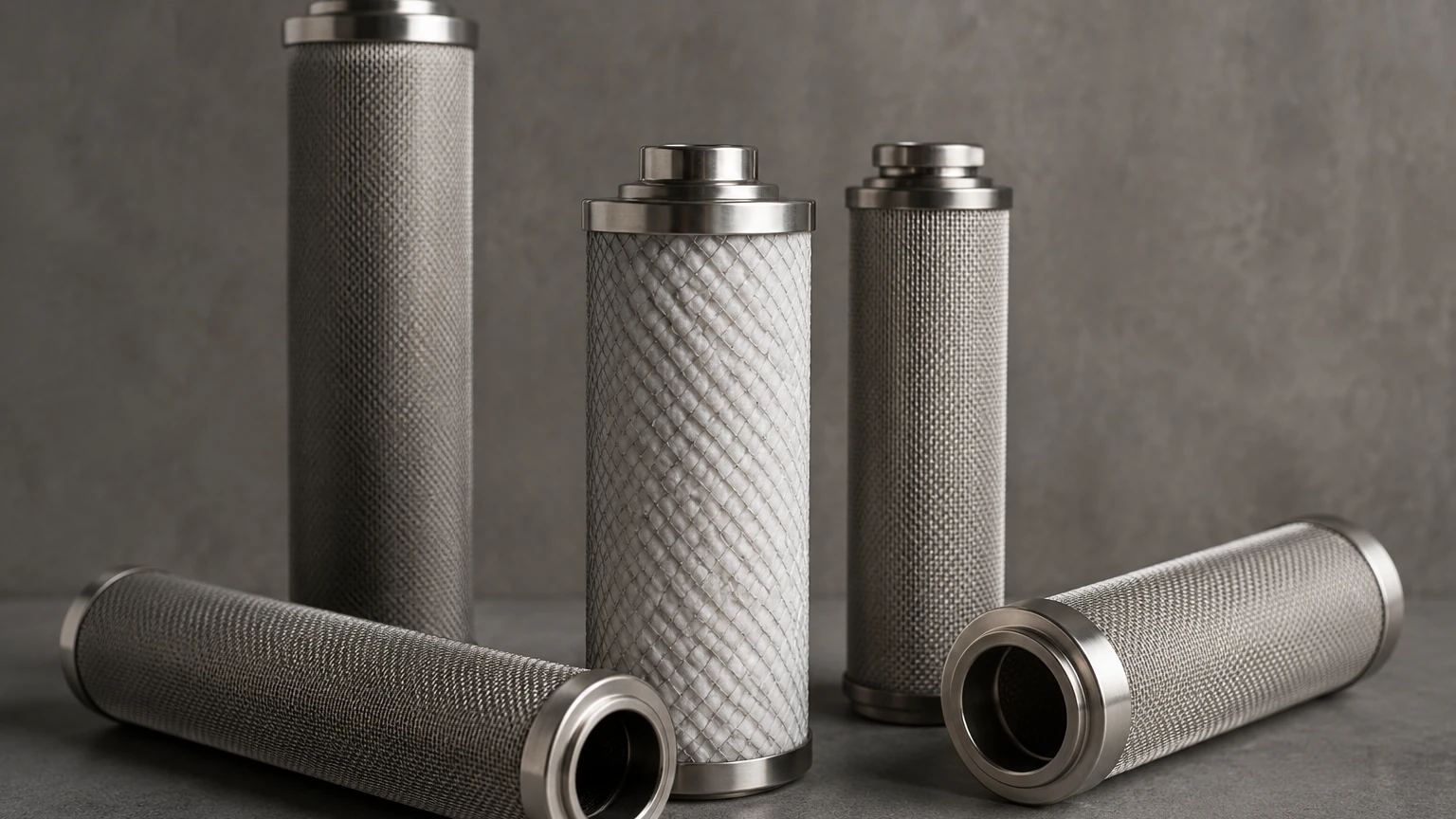
Customization and OEM Solutions
Standard off-the-shelf filters do not always meet the spatial or performance constraints of specialized industrial machinery. This is where OEM (Original Equipment Manufacturer) capabilities become invaluable. Customization options for a filtro coalescente aire comprimido include:
* Bespoke Dimensions: Fitting high-capacity filtration into compact machine footprints.
* Variable Micron Ratings: Tuning the density of the media to achieve a specific balance between air purity and service life.
* High-Pressure Ratings: Designing housings and elements capable of handling pressures exceeding 50 bar, common in PET bottling or nitrogen generation.
* Connection Types: Integrating NPT, BSPP, or flanged connections directly into the filter head to simplify installation.
By working with a manufacturer that understands the nuances of stainless steel fabrication and filtration science, engineering teams can develop proprietary solutions that offer a competitive advantage in terms of reliability and maintenance intervals.
Maintenance and Total Cost of Ownership (TCO)
Buying a filtro coalescente aire comprimido is an investment in the entire compressed air system. Neglecting maintenance leads to higher TCO through:
1. Increased Energy Costs: Running a compressor at higher pressures to compensate for a clogged filter.
2. Downstream Damage: Oil carryover can ruin pneumatic valves, contaminate desiccant in air dryers, and damage sensitive production equipment.
3. Product Spoilage: In industries like painting or food, contaminated air leads to immediate product rejection.
It is generally recommended to replace coalescing elements every 6 to 12 months, or when the differential pressure reaches a specific threshold (typically 0.35 to 0.5 bar). However, in systems with high levels of solid contamination, a pleated stainless steel pre-filter can significantly extend the life of the coalescing element by removing larger particulates before they reach the fine microfiber media.
Conclusion
The filtro coalescente aire comprimido is a sophisticated piece of engineering that performs a vital role in industrial productivity. By understanding the mechanisms of impaction, interception, and diffusion, and by selecting materials like stainless steel that offer durability and chemical resistance, engineers can ensure their systems deliver clean, dry air consistently.
When selecting a filtration partner, it is crucial to look beyond the initial purchase price and consider the technical expertise, customization capabilities, and the long-term energy implications of the filter design. For more information on high-performance filtration components and custom stainless steel solutions, visiting the Main Page of a specialized manufacturer can provide the technical resources needed to optimize your compressed air system.
