


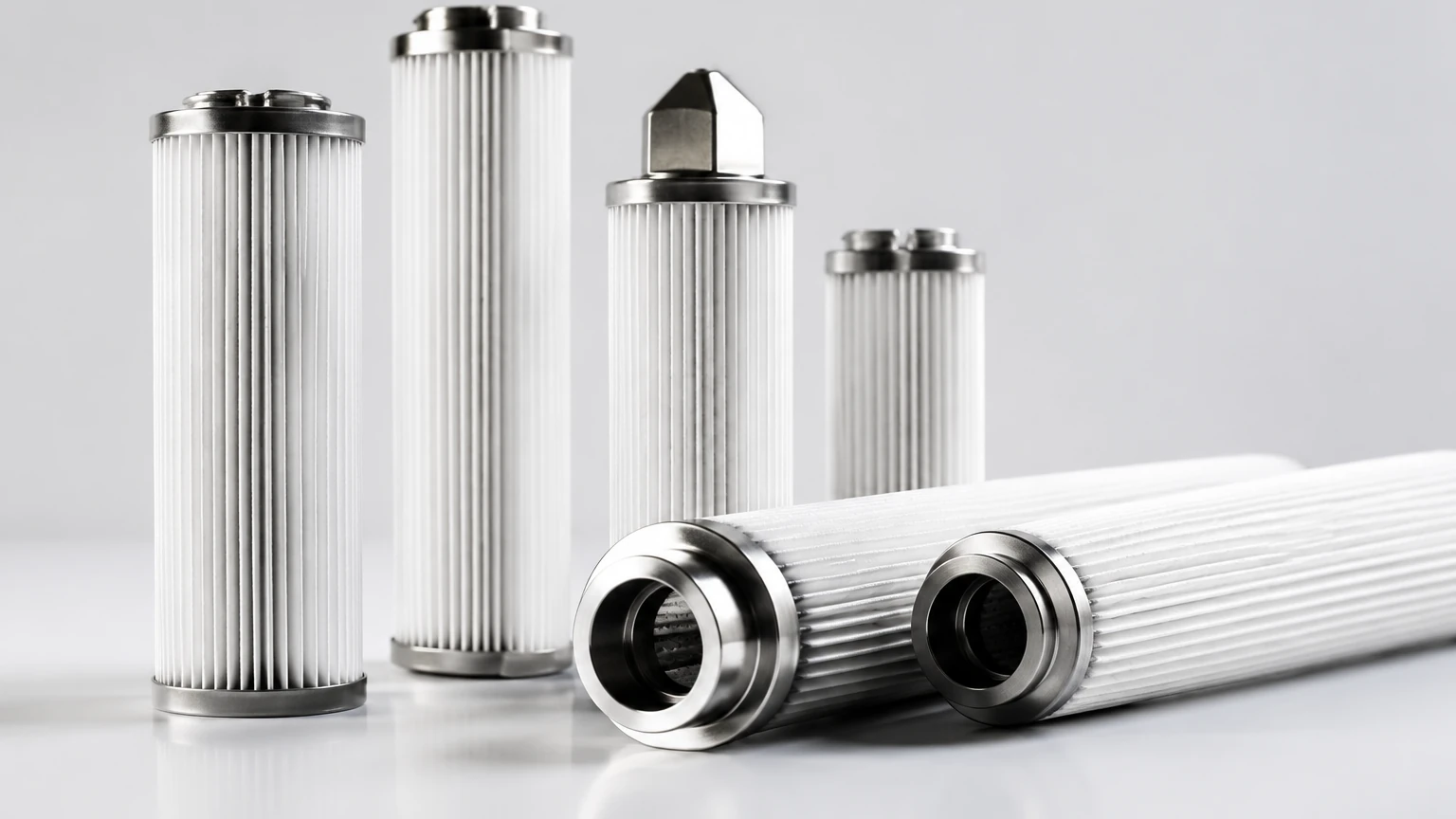
Pleated Water Filter Cartridge
In industrial liquid processing, the efficiency of a filtration system is often determined by the geometry and material composition of the filter element. The pleated water filter cartridge represents a critical engineering solution designed to maximize surface area within a compact footprint. Unlike traditional depth filters, which rely on the thickness of the media to trap particles, pleated cartridges utilize a folded design to provide significantly higher dirt-holding capacity and lower initial pressure drops. For engineers and procurement specialists, understanding the technical nuances of these components is essential for optimizing system performance and reducing long-term operational costs.
As a specialized manufacturer, Kaifil focuses on high-performance stainless steel filtration solutions. While many industries utilize disposable synthetic media, the demand for durable, cleanable, and chemically resistant metal pleated cartridges has grown, particularly in demanding environments such as chemical processing, steam filtration, and high-temperature water treatment. This guide explores the technical specifications, selection criteria, and industrial applications of the pleated water filter cartridge from an engineering perspective.
The Engineering Principle of Pleated Geometry
The primary advantage of a pleated water filter cartridge lies in its surface area. By folding the filtration media—whether it is stainless steel wire mesh, fiber felt, or synthetic membranes—manufacturers can increase the effective filtration area (EFA) by several times compared to a standard cylindrical or depth-style element of the same dimensions.
Surface Filtration vs. Depth Filtration
In a pleated configuration, filtration primarily occurs on the surface of the media. This allows for a more predictable and consistent micron rating. Because the fluid passes through a larger area, the face velocity (the speed at which the fluid hits the media) is reduced. Lower face velocity results in:
* Reduced Pressure Drop: A lower initial differential pressure (ΔP) across the filter, which reduces the load on pumps and lowers energy consumption.
* Increased Dirt-Holding Capacity: More surface area allows the filter to capture a greater volume of contaminants before reaching its terminal pressure drop.
* Longer Service Life: With more space to trap particles, the interval between cleaning or replacement cycles is significantly extended.
Structural Integrity
For industrial applications, the pleats must be mechanically supported to prevent "pleat bunching" or collapse under high differential pressure. High-quality cartridges utilize internal support cores and external cages, often made of stainless steel, to maintain the pleat spacing and ensure uniform flow distribution across the entire surface of the media.
Material Selection: Stainless Steel vs. Polymers
When selecting a pleated water filter cartridge, the choice of material is dictated by the chemical nature of the fluid, the operating temperature, and the required durability. While polypropylene and polyester are common in light industrial and commercial water treatment, stainless steel (typically 304 or 316L) is the standard for heavy industrial applications.
Advantages of Stainless Steel Pleated Media
1. Temperature Resistance: Stainless steel cartridges can operate in environments exceeding 250°C, where synthetic materials would melt or lose structural integrity.
2. Chemical Compatibility: Metal filters are resistant to a wide range of aggressive solvents, acids, and alkalis, making them ideal for chemical processing and pharmaceutical applications.
3. Cleanability and Reusability: Unlike disposable cartridges, stainless steel pleated elements can be cleaned via backwashing, ultrasonic cleaning, or chemical baths. This reusability significantly reduces the total cost of ownership and minimizes industrial waste.
4. No Media Migration: In high-pressure or high-pulsation systems, synthetic fibers can sometimes shed into the filtrate. Stainless steel wire mesh is mechanically stable, ensuring zero media migration and maintaining the purity of the effluent.
Technical Specifications and Performance Metrics
To ensure a pleated water filter cartridge meets the requirements of a specific system, engineers must evaluate several key performance indicators.
Micron Rating: Absolute vs. Nominal
* Nominal Rating: An approximate value indicating the ability of the filter to retain a majority of particles of a certain size (e.g., 90% retention). This is often used for general pre-filtration.
* Absolute Rating: A precise value indicating that 99.9% (or higher) of particles of a specific size will be captured. For critical applications like final-stage water treatment or protecting sensitive downstream equipment, an absolute-rated pleated cartridge is required.
Flow Rate and Differential Pressure
The relationship between flow rate and pressure drop is a critical design consideration. A well-designed pleated water filter cartridge should provide a high flow rate with minimal resistance. Engineers must calculate the "clean pressure drop" and establish a "terminal pressure drop"—the point at which the filter must be cleaned or replaced to prevent system failure or bypass.
Seal and End Cap Configurations
The integrity of the filtration process depends on the seal between the cartridge and the housing. Common configurations include:
* Double Open End (DOE): Requires gaskets on both ends to seal against the housing.
* Single Open End (SOE): Often features a 222 or 226 O-ring configuration with a fin or flat top, providing a more secure, leak-proof seal suitable for high-purity applications.
Industrial Applications for Pleated Filtration
The versatility of the pleated water filter cartridge makes it a staple in various sectors where water quality is paramount.
Chemical and Petrochemical Processing
In these industries, water is often used as a solvent or for cooling. The presence of corrosive chemicals and high temperatures requires the use of stainless steel pleated cartridges. These filters protect expensive catalysts and prevent the clogging of precision nozzles in processing towers.
Food and Beverage Production
Filtration in the food industry requires compliance with FDA and international health standards. Pleated cartridges are used for ingredient water filtration, bottle washing, and steam filtration. The high surface area ensures that high-volume production lines can operate continuously without frequent shutdowns for filter changes.
Pharmaceutical and Biotechnology
In the production of injectables and high-purity reagents, water must be free of both particulate matter and microbial contaminants. Pleated membrane cartridges provide the necessary absolute filtration levels (often down to 0.2 microns or less) to ensure product safety and regulatory compliance.
Hydraulic and Industrial Lubrication
While primarily used for water, the pleated design is also essential for hydraulic fluids. In these systems, capturing fine metallic particles is vital to prevent wear on pumps and valves. The robust construction of a metal pleated cartridge allows it to withstand the high-pressure surges common in hydraulic circuits.
Total Cost of Ownership (TCO) Considerations
When procuring filtration components, the initial purchase price is only one factor. For B2B buyers, the Total Cost of Ownership (TCO) provides a more accurate picture of value. A high-quality stainless steel pleated water filter cartridge may have a higher upfront cost than a disposable polymer version, but it offers several financial advantages over time:
1. Reduced Downtime: Longer intervals between maintenance mean more uptime for the production line.
2. Lower Disposal Costs: Reusable metal filters eliminate the costs associated with disposing of contaminated spent cartridges.
3. Energy Efficiency: Maintaining a lower pressure drop reduces the energy required by the system's pumps.
4. Process Stability: Consistent filtration performance prevents downstream equipment damage, which can lead to catastrophic repair costs.
Customization and OEM Solutions
Every industrial system has unique constraints, from housing dimensions to specific flow requirements. Standard off-the-shelf filters may not always provide the optimal balance of flow and retention. This is where custom manufacturing becomes essential.
Customization options often include:
* Variable Pleat Density: Adjusting the number of pleats to balance dirt-holding capacity with fluid viscosity.
* Specialized Alloys: Using Monel, Hastelloy, or 316Ti for environments with extreme corrosion profiles.
* Bespoke End Fittings: Designing custom adapters to retrofit existing housings without the need for expensive piping modifications.
Kaifil works closely with global customers to develop these tailored solutions, ensuring that each filtration component is engineered for its specific environment. By combining advanced manufacturing capabilities with deep technical expertise, Kaifil provides reliable filtration performance for the most demanding industrial sectors. For more information on specific products and engineering support, visit our Main Page.
Conclusion
The pleated water filter cartridge is a sophisticated tool in the industrial filtration arsenal. By prioritizing surface area and material integrity, these components allow for efficient, high-volume processing while protecting critical infrastructure. Whether the goal is to ensure the purity of ingredient water in a food plant or to protect high-pressure pumps in a chemical refinery, selecting the right pleated cartridge is a decision that impacts the entire operation's efficiency and profitability. Engineers should focus on micron accuracy, material compatibility, and the potential for reusability when evaluating their filtration options to achieve the best long-term results.
