


Heat Exchanger Tube Bundles
In the landscape of industrial thermal management, heat exchanger tube bundles represent the functional core of shell-and-tube systems. These components are responsible for the efficient transfer of thermal energy between two fluids while maintaining a physical barrier to prevent cross-contamination. For engineers and procurement specialists in the chemical, pharmaceutical, and food processing sectors, understanding the technical nuances of tube bundle design, material selection, and maintenance is essential for optimizing system longevity and process efficiency.
Selecting the right heat exchanger tube bundles involves more than just matching dimensions. It requires a deep dive into fluid dynamics, metallurgy, and the integration of protective filtration systems. As industrial processes become more demanding, the reliance on high-precision stainless steel components grows, making the technical evaluation of these bundles a critical task for operational success.
Understanding the Architecture of Heat Exchanger Tube Bundles
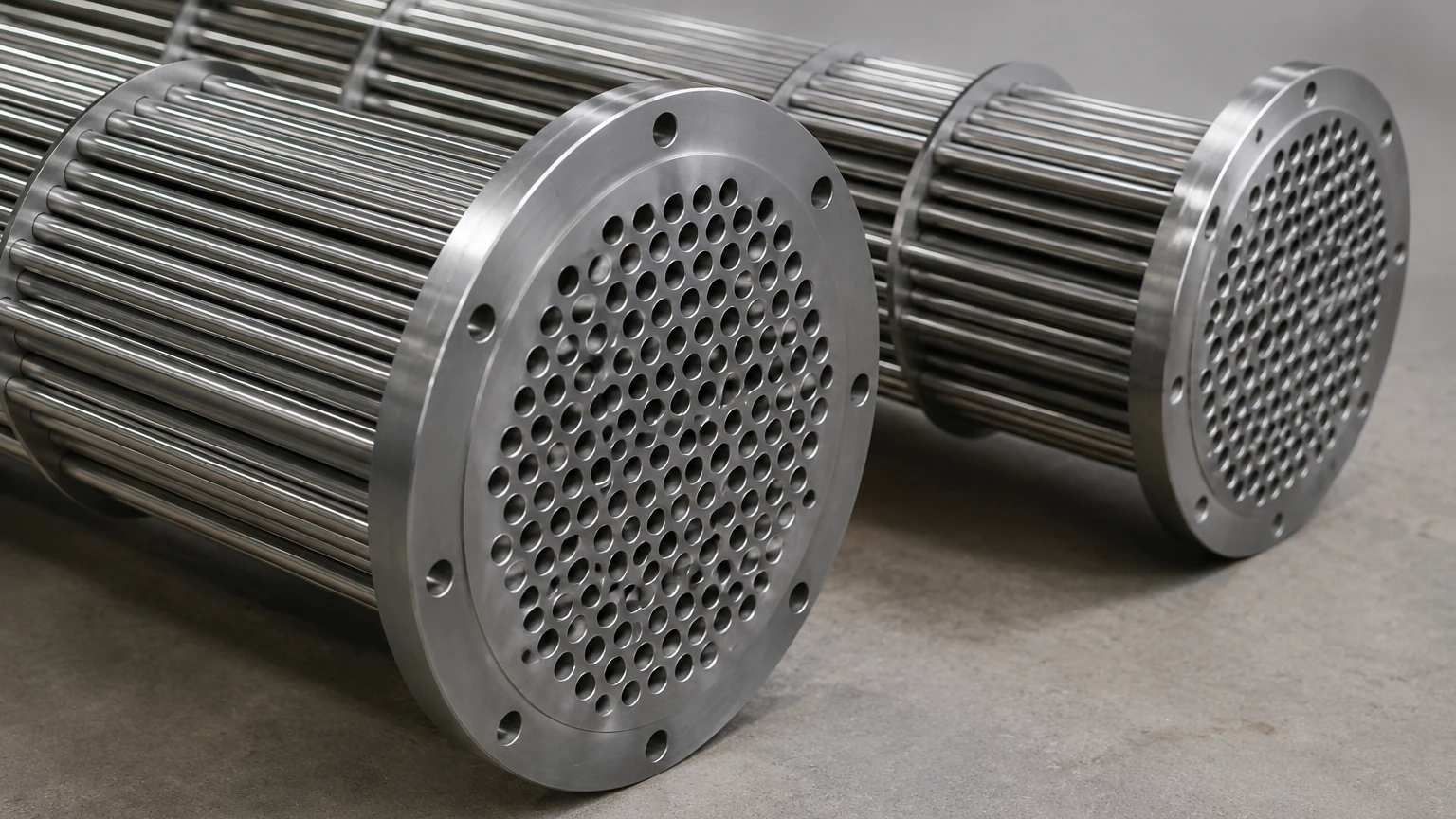
The architecture of a tube bundle is defined by its layout, the type of tubes used, and the supporting structure that holds them in place within the shell. The most common configurations include straight tube bundles and U-tube bundles. Straight tube designs are often preferred when mechanical cleaning of the tube interior is required, as they allow for straight-through access. In contrast, U-tube bundles allow for independent thermal expansion of the tubes and the shell, which is vital in high-temperature applications where thermal stress could otherwise lead to mechanical failure.
Tube Pitch and Layout
The arrangement of tubes—referred to as the tube pitch—significantly impacts both heat transfer efficiency and the ease of maintenance. A triangular pitch (30° or 60°) allows for a higher density of tubes within a given shell diameter, maximizing the heat transfer surface area. However, this configuration can make the external cleaning of the tubes more difficult. A square pitch (45° or 90°) provides clearer lanes for mechanical cleaning tools, which is often a priority in applications involving fluids with high fouling tendencies.
Baffles and Support Plates
Baffles serve a dual purpose within the bundle: they support the tubes to prevent vibration-induced damage and direct the shell-side fluid flow across the tubes to enhance turbulence. Increased turbulence generally improves the heat transfer coefficient but comes at the cost of a higher pressure drop. Engineering the correct baffle spacing and cut is a balancing act between thermal performance and hydraulic efficiency.
Material Engineering: Why Stainless Steel Dominates Industrial Applications
Material selection is perhaps the most critical factor in determining the lifespan of heat exchanger tube bundles. While various metals can be used, stainless steel remains the industry standard for demanding environments due to its unique combination of thermal conductivity, mechanical strength, and corrosion resistance.
Grade 304 vs. 316L Stainless Steel
For most general industrial applications, Grade 304 stainless steel offers sufficient corrosion resistance and structural integrity. However, in environments involving chlorides or high acidity—common in chemical processing and marine applications—Grade 316L is the preferred choice. The addition of molybdenum in 316L provides superior resistance to pitting and crevice corrosion. In the pharmaceutical and food industries, the low carbon content of 316L is also essential for maintaining sanitary standards and preventing intergranular corrosion after welding.
Advanced Alloys for Extreme Conditions
In cases where standard stainless steel grades may fail, such as in highly concentrated sulfuric acid or high-temperature steam service, specialized alloys or duplex stainless steels may be specified. These materials offer enhanced resistance to stress corrosion cracking (SCC), a common failure mode in heat exchanger tube bundles subjected to cyclic thermal loading and corrosive media.
Mitigating Fouling Through Integrated Filtration Solutions
One of the most significant challenges in maintaining the efficiency of heat exchanger tube bundles is fouling. Fouling occurs when unwanted materials—such as scale, suspended solids, biological growth, or chemical deposits—accumulate on the tube surfaces. This layer acts as an insulator, drastically reducing the heat transfer rate and increasing the pressure drop across the system.
To protect the integrity of the tube bundle, integrating high-performance filtration at the inlet is a standard engineering practice. Precision wire mesh filters and stainless steel filter cartridges are frequently employed to remove particulates before they enter the heat exchanger. By capturing solids that would otherwise settle in low-velocity zones or adhere to tube walls, these filtration components extend the interval between cleaning cycles and prevent erosion caused by high-velocity particle impingement.
For engineers looking to optimize their filtration strategy alongside their thermal equipment, reviewing technical specifications on the Main Page of a specialized manufacturer like Kaifil can provide insights into custom-engineered solutions that match specific micron ratings and flow requirements. Effective filtration not only protects the heat exchanger tube bundles but also safeguards downstream equipment from debris released during thermal cycling.
Operational Efficiency: Balancing Heat Transfer and Fluid Dynamics
The performance of heat exchanger tube bundles is measured by the overall heat transfer coefficient (U), which is influenced by the fluid properties, flow velocities, and the cleanliness of the tube surfaces. Engineers must design for a "clean" state while accounting for a "fouled" state to ensure the system meets process requirements throughout its operational cycle.
Flow Velocity and Erosion
While higher fluid velocities increase the heat transfer coefficient and help minimize sedimentation fouling, they also increase the risk of tube erosion and vibration. If the velocity is too high, the protective oxide layer on the stainless steel tubes can be stripped away, leading to rapid thinning of the tube walls. Conversely, if the velocity is too low, suspended solids are more likely to drop out of the fluid and form deposits. Finding the "sweet spot" in flow velocity is essential for maximizing the service life of the bundle.
Pressure Drop Considerations
Every heat exchanger design must account for the allowable pressure drop. An excessive pressure drop requires more pumping power, increasing the total cost of operation. In the context of tube bundles, the pressure drop is affected by the tube length, diameter, and the internal geometry (such as the presence of turbulators or inserts). Precision manufacturing ensures that tube-to-tubesheet joints are smooth, minimizing localized turbulence and pressure losses at the entry and exit points.
Maintenance Strategies and Life Cycle Management
Even with optimal design and filtration, heat exchanger tube bundles require periodic maintenance to sustain performance. The total cost of ownership (TCO) is heavily influenced by how easily a bundle can be serviced and how long it lasts before requiring a full replacement.
Cleaning Methodologies
* Mechanical Cleaning: Involves the use of brushes, scrapers, or high-pressure water jets. This is most effective for straight tube bundles where the interior is accessible.
* Chemical Cleaning (CIP): Uses specialized cleaning agents to dissolve scale and deposits. This is often necessary for U-tube bundles or systems where mechanical access is limited. The chemical compatibility of the cleaning agents with the stainless steel grade must be verified to prevent accidental corrosion.
Inspection and Retubing
Regular inspection via eddy current testing or ultrasonic thickness gauging can identify thinning tube walls before a leak occurs. In many industrial shell-and-tube exchangers, it is possible to "retube" a bundle—replacing individual damaged tubes while retaining the original tubesheets and baffles. This can be a cost-effective alternative to purchasing a completely new bundle, provided the supporting structure remains in good condition.
Custom OEM Fabrication for Demanding Environments
Standardized heat exchanger tube bundles often fall short in specialized industrial applications. Custom OEM fabrication allows for the adjustment of tube wall thickness, finning (to increase surface area), and specialized welding techniques to meet unique process pressures and temperatures.
When sourcing custom bundles, engineers should confirm:
1. Filtration Compatibility: Ensure the bundle design accounts for the specific particulate load and that upstream filtration is sized correctly.
2. Welding Standards: For pharmaceutical or food-grade applications, orbital welding and high-purity finishes are often required to eliminate crevices where bacteria could grow.
3. Dimensional Precision: Accurate tolerances for tube-to-tubesheet joints are vital for preventing leaks and ensuring structural integrity under thermal cycling.
Kaifil’s expertise in manufacturing custom stainless steel filtration and precision metal components translates directly into the high-quality fabrication required for industrial heat exchanger components. By focusing on durability and precise performance, manufacturers can deliver solutions that withstand the rigors of chemical processing and hydraulic systems.
Conclusion
Heat exchanger tube bundles are complex assemblies that require careful engineering to balance thermal performance, hydraulic efficiency, and long-term durability. By selecting the appropriate stainless steel grades, optimizing tube layouts, and implementing robust filtration systems to prevent fouling, industrial operators can significantly enhance the reliability of their thermal management processes.
Whether you are designing a new system or looking to replace an existing bundle, focusing on technical specifications and material quality is the key to minimizing downtime and reducing the total cost of ownership. For further technical guidance on precision components and customized industrial solutions, visiting the Main Page of a dedicated manufacturer can provide the necessary resources to make an informed procurement decision.
