


Dust Collection Manufacturers
In the industrial sector, the selection of dust collection manufacturers is a critical decision that impacts operational safety, regulatory compliance, and process efficiency. Industrial dust collection systems are engineered to remove airborne contaminants and particulates from the air in manufacturing environments, such as chemical processing, food and beverage production, and metalworking. While many providers offer standard off-the-shelf units, high-performance applications often require specialized filtration components that can withstand extreme temperatures, corrosive chemicals, and high-pressure differentials.
For engineers and procurement professionals, evaluating dust collection manufacturers involves looking beyond the external housing of a collector. The true performance of a system is dictated by its internal filtration technology. Manufacturers who specialize in stainless steel and precision metal filtration provide the necessary components that allow these systems to operate in the most demanding industrial conditions. To make an informed decision, it is essential to understand the technical requirements of filtration, the materials used, and the engineering standards that define a reliable manufacturer.
The Role of Metal Filtration in Industrial Dust Collection
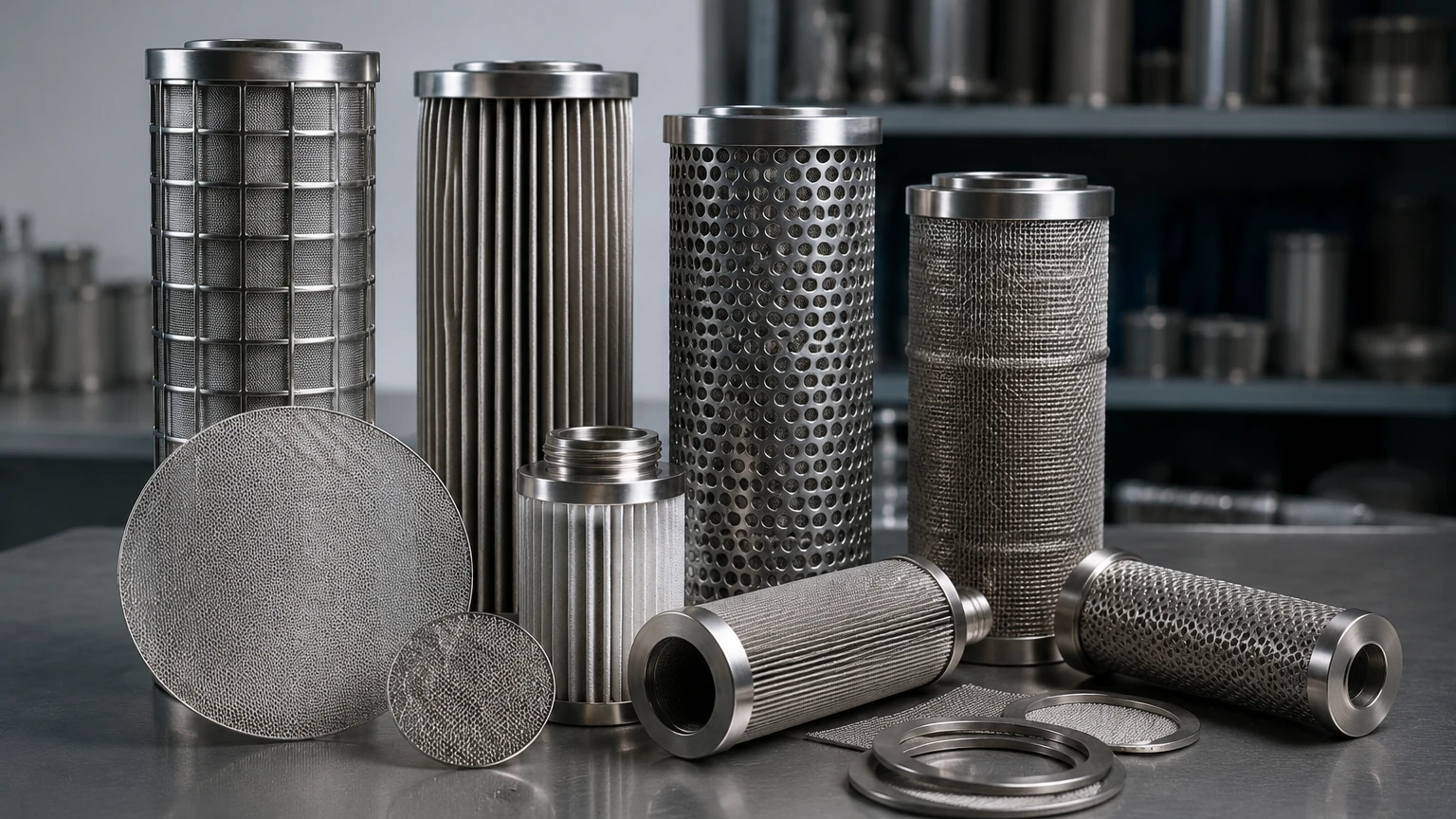
Many standard dust collection systems utilize fabric bags or synthetic cartridges. However, in industries such as pharmaceuticals or chemical processing, these materials often fail due to chemical degradation or thermal stress. This is where specialized dust collection manufacturers and component suppliers distinguish themselves. Stainless steel filter cartridges and wire mesh filters offer a level of durability and precision that polymer-based media cannot match.
Stainless steel filters are particularly valued for their ability to be cleaned and reused, significantly reducing the total cost of ownership over time. When evaluating a manufacturer's capabilities, engineers should look for expertise in various metal filtration structures, including sintered wire mesh and pleated metal fiber felt. These structures provide high porosity and low resistance to airflow, which are essential for maintaining the static pressure balance within a dust collection system. For more information on specialized filtration components, you can visit the Main Page to review product options and application support.
Key Evaluation Criteria for Selecting Dust Collection Manufacturers
When vetting potential dust collection manufacturers, technical specifications must take precedence over marketing claims. The following criteria are essential for determining if a manufacturer can meet the rigorous demands of industrial air quality management:
Filtration Efficiency and Micron Ratings
Filtration efficiency is the primary metric for any dust collection system. Manufacturers should provide detailed data on the micron ratings of their filters. In industrial settings, sub-micron filtration is often required to capture fine hazardous dust. It is important to distinguish between nominal and absolute filtration ratings. An absolute rating ensures that a specific percentage of particles above a certain size are captured, providing a higher level of process security in sensitive environments like pharmaceutical cleanrooms.
Material Compatibility and Corrosion Resistance
Industrial dust is rarely inert. It can be abrasive, corrosive, or chemically reactive. Dust collection manufacturers must demonstrate a deep understanding of metallurgy and material science. For instance, in food and beverage applications, 316L stainless steel is often the standard due to its superior corrosion resistance and ease of sterilization. A manufacturer’s ability to offer customized material selections based on the specific chemical profile of the dust is a hallmark of technical competence.
Structural Integrity and Pressure Ratings
Dust collectors operate under continuous pressure cycles. The internal filter elements must resist collapsing or deforming under high differential pressure. Manufacturers who utilize advanced welding techniques and reinforced support structures in their filter cartridges ensure that the system remains operational even during pulse-jet cleaning cycles, which subject the filter media to sudden bursts of compressed air.
Engineering Considerations for Harsh Industrial Environments
Selecting a manufacturer requires an analysis of how their equipment will perform under the specific stressors of your facility. Engineering teams should focus on several high-level considerations during the selection process:
Temperature Resistance
Standard polyester or cellulose filters typically have a maximum operating temperature of around 200°F to 250°F. In applications like kiln exhaust or metal smelting, temperatures can far exceed these limits. Dust collection manufacturers specializing in metal filtration provide solutions that can operate at temperatures exceeding 500°F or even 1000°F without losing structural integrity or filtration efficiency.
Clean-in-Place (CIP) and Reusability
In many modern industrial processes, minimizing downtime is a priority. Filters that can be cleaned in place (CIP) or easily removed for ultrasonic cleaning offer a significant advantage. Stainless steel wire mesh filters are ideal for these scenarios. Unlike disposable filters, which represent a recurring cost and a waste stream, permanent metal filters can be restored to near-original pressure drop levels through standardized cleaning protocols.
Air-to-Cloth Ratio and Airflow Dynamics
The air-to-cloth ratio (or filtration velocity) is a critical design parameter. If the ratio is too high, the pressure drop across the filter will increase rapidly, leading to frequent cleaning cycles and shortened filter life. Experienced manufacturers will calculate the optimal surface area required for your specific airflow (CFM) to ensure stable operation and energy efficiency.
Customization and OEM Capabilities
One of the most significant challenges in industrial procurement is finding a solution that fits existing infrastructure. Many dust collection manufacturers operate on a high-volume, standardized production model that may not accommodate unique spatial constraints or specialized process connections.
Working with a manufacturer that offers OEM and customized filtration solutions allows for the development of bespoke filter geometries. This might include custom flange designs, specific pleat densities to maximize surface area in a small footprint, or integrated support cores for high-vacuum applications. A manufacturer’s ability to provide technical drawings, prototypes, and material certifications (such as ISO or FDA compliance) is essential for integrating new filtration components into a larger industrial system.
Common Risks and Total Cost Considerations
While the initial purchase price is a major factor in procurement, it often represents only a fraction of the total cost of ownership (TCO). Choosing a manufacturer based solely on the lowest bid can lead to several long-term risks:
1. Frequent Replacement Cycles: Inexpensive synthetic filters may need replacement every few months, whereas a high-quality stainless steel filter may last for years.
2. Energy Inefficiency: Systems with poorly designed filters often suffer from high pressure drops, forcing the system's fans to work harder and consume more electricity.
3. Compliance Failures: If a manufacturer cannot guarantee filtration efficiency, the facility may risk violating environmental regulations or safety standards regarding combustible dust (NFPA standards).
4. Production Downtime: Unexpected filter failure can halt an entire production line. Reliable manufacturers provide components with predictable service lives and robust construction to prevent such incidents.
Engineers should request data on the expected lifespan of the filtration media under specific operating conditions to accurately calculate the TCO. A higher upfront investment in durable, high-precision metal filtration often yields the lowest cost over the life of the equipment.
Navigating the Selection Process with Manufacturers
Before finalizing a partnership with dust collection manufacturers, it is recommended to conduct a thorough technical review. This should include a discussion of the specific dust characteristics—such as particle size distribution, moisture content, and abrasiveness—and the environmental conditions of the installation site.
Professional manufacturers will often provide a consultation phase where they analyze these variables to recommend the most appropriate filtration media and system configuration. They should be able to answer detailed questions regarding the manufacturing process, such as the type of sintering used for wire mesh or the methods used to ensure leak-proof seals in cartridge end caps.
By focusing on engineering excellence and material quality, purchasing teams can ensure they select a partner capable of delivering a dust collection solution that protects both the workforce and the bottom line. Whether you are seeking a complete system or high-performance replacement components, the technical expertise of the manufacturer is the most reliable indicator of long-term success in industrial filtration applications.
