


Water Filter Industrial
In modern industrial manufacturing, the term "water filter industrial" encompasses a broad spectrum of high-performance components designed to remove contaminants from process water, cooling loops, and wastewater streams. Unlike residential filtration, industrial-grade systems must withstand extreme pressure, temperature fluctuations, and aggressive chemical environments. For engineers and procurement managers, selecting the right filtration solution is a balance between achieving the required purity levels and maintaining operational efficiency.
As a professional manufacturer specializing in custom stainless steel filtration solutions, Kaifil provides the technical expertise necessary to navigate these complexities. From wire mesh filters to precision-engineered cartridges, understanding the engineering principles behind industrial water filtration is essential for optimizing system longevity and performance.
Engineering Fundamentals of Industrial Water Filtration
The primary objective of a water filter industrial system is to protect downstream equipment, ensure product quality, and comply with environmental regulations. To achieve this, engineers must evaluate several core technical parameters:
Micron Rating: Absolute vs. Nominal
One of the most critical specifications is the micron rating, which defines the size of particles the filter can capture.
- Nominal Rating: This indicates the filter's ability to retain a majority percentage (typically 60% to 90%) of particles of a specific size. It is often used for pre-filtration stages where total removal is not required.
- Absolute Rating: This refers to the diameter of the largest hard spherical particle that will pass through the filter under specified test conditions. In critical applications like pharmaceutical or food and beverage processing, absolute-rated stainless steel mesh is often preferred to ensure 99.9% retention efficiency.
Pressure Drop (Differential Pressure)
Pressure drop ($Δ$P) is the difference in pressure between the upstream and downstream sides of the filter. A high initial pressure drop indicates that the filter may be undersized for the flow rate, while a rapidly increasing pressure drop suggests high contaminant loading. Engineers must design systems that operate within a specific $Δ$P range to avoid pump strain and potential filter element collapse.
Flow Rate and Flux
In an industrial context, flow rate is typically measured in gallons per minute (GPM) or cubic meters per hour (m³/h). Flux refers to the flow rate per unit of filter area. Maintaining a low flux can extend the life of the filter media by reducing the velocity at which particles impact the mesh, thereby preventing "particle breakthrough" or premature clogging.
Material Selection for Demanding Environments
Material compatibility is a cornerstone of water filter industrial design. While plastic or polymer filters are common in light-duty applications, heavy industrial processes rely on stainless steel for its mechanical strength and thermal resistance. Kaifil specializes in utilizing high-grade alloys to meet these demands.
Stainless Steel 304 vs. 316L
- Type 304: This is the standard industrial grade, offering excellent durability and resistance to oxidation. It is suitable for general water treatment and cooling systems where high levels of chlorides are not present.
- Type 316L: Containing molybdenum, 316L provides superior resistance to pitting and crevice corrosion, particularly in saline or high-chloride environments. The "L" denotes low carbon content, which improves weldability and prevents intergranular corrosion in the heat-affected zones of the filter structure.
Thermal and Chemical Resistance
Industrial water often carries chemical additives for pH adjustment, scale inhibition, or biocidal control. Stainless steel filter elements remain inert in the presence of most industrial chemicals and can operate at temperatures exceeding 500°F (260°C), far surpassing the capabilities of synthetic fiber or paper-based media. This makes them ideal for steam filtration and high-temperature boiler feed water applications.
Comparison of Filter Media Structures
Choosing the right media structure is vital for addressing specific types of contaminants, whether they are hard particulates, organic matter, or deformable solids.
Woven Wire Mesh
Woven wire mesh filters provide precise surface filtration. They are characterized by a uniform pore size and are highly effective for removing rigid particles. Because the filtration occurs on the surface, these filters are easier to clean via backwashing or ultrasonic methods. For a detailed look at custom mesh specifications, you can review product options and application support on our Main Page.
Sintered Metal Media
Sintered metal filters are created by bonding multiple layers of wire mesh or metal fibers through a high-temperature diffusion process. This results in a robust, porous structure that offers depth filtration. Sintered elements are preferred for high-pressure applications where the filter must maintain its structural integrity under significant mechanical stress.
Wedge Wire
Wedge wire screens are constructed from V-shaped profiles welded onto support rods. This design creates a non-clogging surface that is particularly effective for heavy-duty water filter industrial applications, such as intake screens for raw water or primary solids removal in wastewater treatment.
Total Cost of Ownership (TCO) in Industrial Filtration
When evaluating water filter industrial solutions, the initial purchase price is only one component of the total cost. Engineers must look at the long-term economic impact of their choice.
1. Maintenance and Cleaning: Disposable cartridges may have a lower upfront cost but require frequent replacement, leading to high recurring expenses and increased waste. In contrast, stainless steel filters are cleanable and reusable, often lasting for years in the same application.
2. Energy Consumption: A filter that clogs quickly or has an inherently high pressure drop requires the pump to work harder, increasing energy costs. Optimizing the surface area of the filter element can significantly reduce these operational overheads.
3. Downtime: Every time a system is shut down to replace a filter, production is lost. High-capacity industrial filters with longer service intervals directly contribute to better plant uptime.
4. Waste Disposal: In industries with strict environmental regulations, the cost of disposing of contaminated filter cartridges can be substantial. Permanent metal filters eliminate this waste stream.
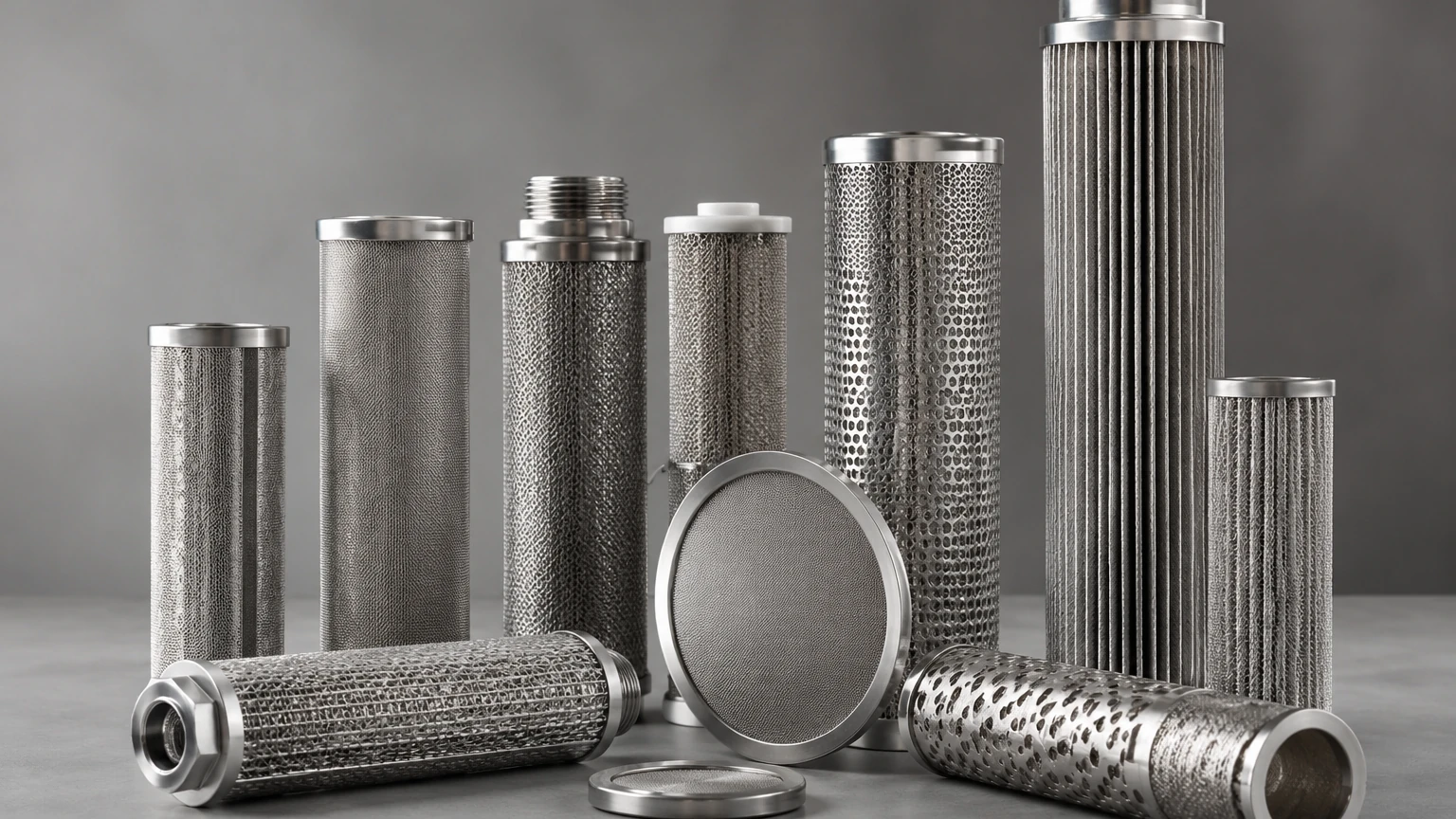
Customization and OEM Capabilities
Standard off-the-shelf filters rarely meet the specific needs of complex industrial systems. Customization is often required to fit existing piping layouts, meet specific flow dynamics, or target unique particle distributions.
Kaifil's manufacturing process allows for the development of bespoke filtration components. This includes:
- Custom End Fittings: Ensuring compatibility with various housing types, including NPT, flange, or sanitary Tri-Clamp connections.
- Reinforced Cores: Adding internal support to prevent collapse in high-viscosity or high-pressure differential scenarios.
- Multi-Layer Laminates: Combining different mesh counts to provide both fine filtration and high mechanical strength in a single element.
By working closely with an OEM partner, engineering teams can ensure that the water filter industrial components are perfectly aligned with the technical requirements of the application, rather than forcing the application to adapt to the limitations of a standard product.
Technical Specification Checklist for Procurement
Before finalizing a purchase for industrial water filtration components, engineers should confirm the following data points with their supplier:
- Fluid Characterization: What is the chemical composition of the water? Are there oils, solvents, or high chloride levels present?
- Particle Analysis: What is the concentration and size distribution of the solids being removed?
- Operating Conditions: What are the maximum and minimum operating pressures and temperatures?
- Housing Compatibility: Does the filter element match the dimensions and sealing mechanism of the existing filter housing?
- Cleaning Protocols: Is the facility equipped for ultrasonic cleaning, chemical soaking, or backpulsing?
Conclusion
Selecting a water filter industrial solution is a technical decision that impacts the reliability of the entire production chain. By focusing on material science, precise micron ratings, and the long-term benefits of reusable stainless steel media, industrial facilities can achieve superior filtration performance while reducing their environmental footprint and operational costs.
Whether you are designing a new water treatment plant or optimizing an existing hydraulic system, the quality of the filtration components is paramount. For further technical guidance and to explore a wide range of custom stainless steel filter cartridges and wire mesh solutions, visit the Kaifil Main Page.
