


Stainless Steel Sintered Filter
In industrial filtration, the demand for components that can withstand extreme temperatures, corrosive environments, and high mechanical stress is constant. The stainless steel sintered filter has emerged as a critical solution for engineers and procurement professionals who require a balance of high-filtration precision and structural durability. Unlike traditional disposable filters, sintered metal media offer a reusable, robust alternative that maintains its integrity under conditions where polymers or simple woven meshes might fail.
Selecting the right filtration media requires an understanding of the sintering process, the various configurations of stainless steel available, and the specific performance metrics that govern their application in sectors ranging from chemical processing to food and beverage production.
Understanding the Sintering Process and Material Composition
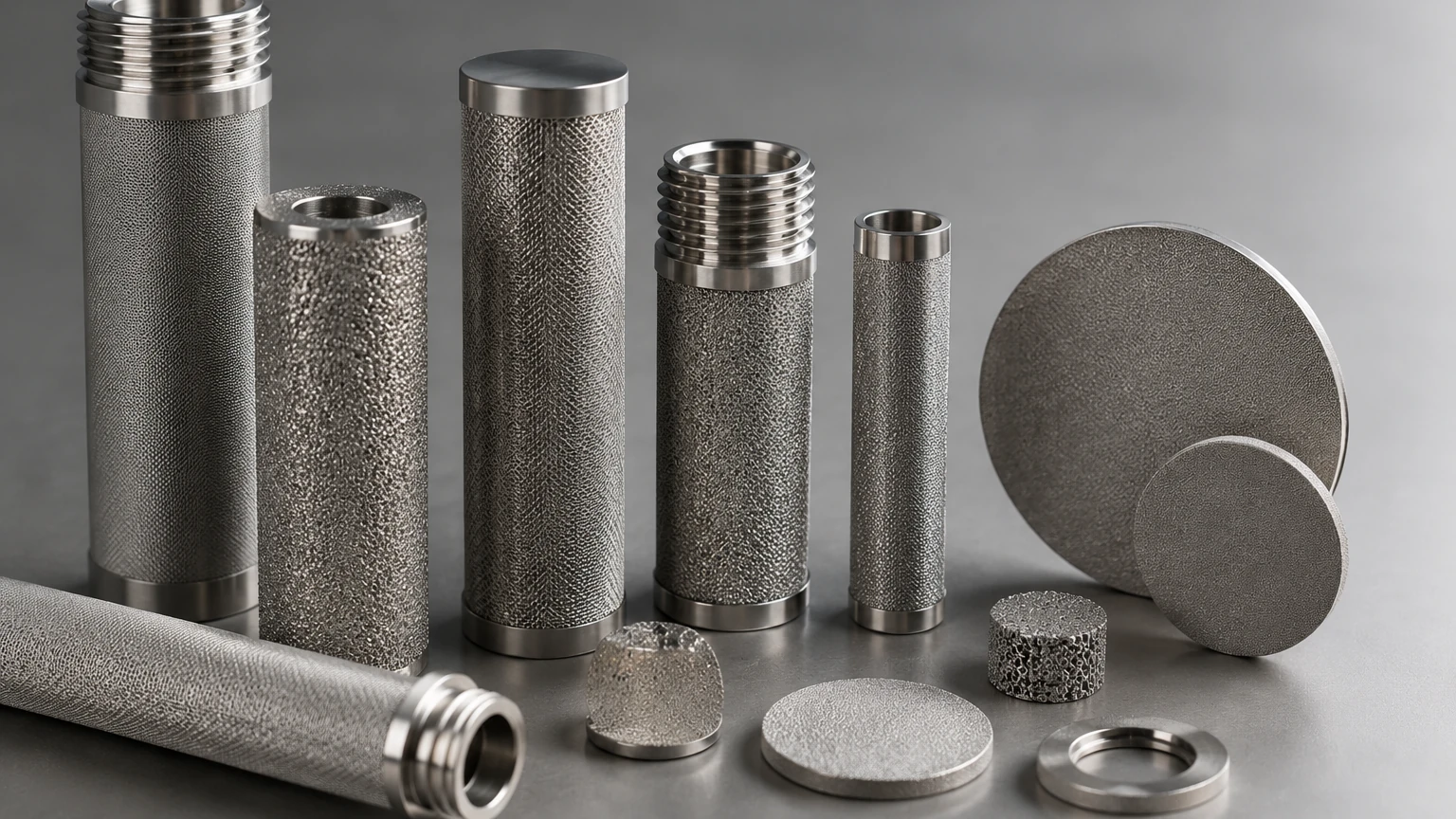
At its core, a stainless steel sintered filter is produced through a process called sintering. This involves taking stainless steel materials—either in the form of woven wire mesh, metal powder, or metal fibers—and heating them in a controlled-atmosphere furnace to a temperature just below their melting point. Under high pressure and heat, the contact points of the metal particles or wires bond together through molecular diffusion.
This process creates a rigid, porous structure that does not require a separate support core in many applications. The resulting media features a fixed pore geometry, meaning the pores will not shift or enlarge under high pressure or flow fluctuations. This stability is a primary reason why engineers specify sintered filters for critical applications where consistent micron ratings are non-negotiable.
Material Grades
The choice of material grade is the first step in ensuring compatibility. While various alloys can be sintered, the most common industrial choices include:
* Grade 304: Suitable for general industrial use where basic corrosion resistance and high strength are required at a lower cost.
* Grade 316/316L: The industry standard for chemical and pharmaceutical applications. The addition of molybdenum provides superior resistance to chlorides and pitting corrosion. The "L" (low carbon) version is preferred for components requiring extensive welding to prevent carbide precipitation.
* Specialty Alloys: For extreme environments involving highly acidic or alkaline fluids, materials like Monel, Hastelloy, or Inconel may be utilized within the sintering process.
Types of Stainless Steel Sintered Filters
Not all sintered filters are constructed the same way. The internal structure dictates the filter’s permeability, dirt-holding capacity, and mechanical strength. There are three primary types used in industrial settings:
1. Sintered Wire Mesh Filters
These are constructed by layering multiple sheets of woven stainless steel wire mesh. A typical configuration might include a fine filtration layer protected by coarser drainage and support layers. By sintering these layers together, the manufacturer creates a composite material that combines the fine filtration of thin mesh with the mechanical ruggedness of heavy mesh. These are ideal for surface filtration and are easily cleaned via backwashing.
2. Sintered Metal Powder Filters
Produced from spherical or irregular stainless steel powder, these filters are molded into shapes—usually cylinders or discs—and then sintered. They are characterized by a tortuous path for the fluid, which provides excellent depth filtration. Powder-sintered components are often used for gas sparging, flame arrestors, and applications requiring very fine micron ratings (down to 0.5 microns).
3. Sintered Metal Fiber Felt
This media is made from non-woven stainless steel fibers that are randomly laid and then sintered. The result is a highly porous structure (up to 80% porosity) that offers significantly lower pressure drops and higher dirt-holding capacity than powder or mesh. It is frequently used in hydraulic systems and polymer melt filtration.
Engineering Evaluation: Key Performance Criteria
When evaluating a stainless steel sintered filter for a specific project, engineers must look beyond the initial micron rating. Several technical factors influence the total cost of ownership and the efficiency of the filtration system.
Filtration Accuracy and Pore Distribution
Filtration accuracy is defined by the largest particle that can pass through the media. However, the distribution of pore sizes is equally important. A narrow pore size distribution ensures that the filter performs predictably. In a sintered filter, the fixed pore structure prevents "unloading," a phenomenon where trapped contaminants are forced through the filter due to pressure surges.
Permeability and Pressure Drop
Every filter introduces a resistance to flow, known as the pressure drop ($ΔP$). High permeability is desirable to minimize energy consumption and pump wear. Sintered fiber felt generally offers the highest permeability, while sintered powder offers the lowest due to its dense structure. Engineers must calculate the clean pressure drop and the terminal pressure drop (the point at which the filter must be cleaned or replaced) to ensure system uptime.
Thermal and Mechanical Stability
Stainless steel sintered filters can typically operate at temperatures ranging from -200°C to 600°C (and even higher in non-oxidizing atmospheres). They also possess high fatigue strength, allowing them to withstand the stresses of high-pressure pulses during backpulsing or ultrasonic cleaning cycles.
Industrial Applications and Selection Logic
The versatility of the stainless steel sintered filter makes it a staple in demanding industrial environments. Understanding where these filters excel helps in making an informed purchasing decision.
* Chemical and Petrochemical Processing: Used for the filtration of corrosive liquids, catalysts recovery, and high-temperature gas filtration. The chemical resistance of 316L stainless steel is often the deciding factor here.
* Food and Beverage: In these industries, cleanability and material safety are paramount. Sintered filters are used for steam filtration (culinary steam), carbonation (sparging), and removing particulates from edible oils.
* Pharmaceutical Manufacturing: Precision is critical in pharmaceutical processes. Sintered filters provide the necessary validation for sterile air filtration and the removal of active pharmaceutical ingredients (APIs) from solvent streams.
* Hydraulic and Lubrication Systems: High-pressure hydraulic systems require filters that will not collapse under sudden flow changes. Sintered mesh elements provide the necessary structural integrity to protect sensitive valves and actuators.
For those looking to explore specific configurations for these industries, it is helpful to Review product options and application support on the Kaifil Main Page to understand how different designs meet these rigorous standards.
Maintenance, Cleaning, and Longevity
One of the most significant B2B advantages of a stainless steel sintered filter is its reusability. While the initial capital expenditure (CAPEX) is higher than that of disposable polymer filters, the long-term operational expenditure (OPEX) is often lower due to the extended service life.
Cleaning Methods
* Backwashing/Backpulsing: Reversing the flow of fluid to dislodge particles from the surface of the filter. This is most effective with sintered wire mesh.
* Ultrasonic Cleaning: Using high-frequency sound waves in a cleaning solution to remove fine particles trapped deep within the pores of sintered powder or fiber felt.
* Chemical Cleaning: Using solvents, acids, or alkalis to dissolve specific contaminants without damaging the stainless steel structure.
* Burn-off/Pyrolysis: For filters used in polymer processing, heating the filter to high temperatures in a controlled oven can carbonize and remove organic buildups.
Proper maintenance cycles are determined by monitoring the pressure differential across the filter. Establishing a baseline for "clean" pressure drop after each cleaning cycle is essential for determining when a filter has reached the end of its functional life.
Common Risks and Procurement Considerations
When sourcing stainless steel sintered filters, there are several risks that purchasing teams should mitigate through careful supplier verification:
1. Material Integrity: Ensure the supplier provides material certifications (MTRs). Lower-grade alloys masquerading as 316L can lead to premature failure in corrosive environments.
2. Sintering Quality: Poorly sintered filters may suffer from "media migration," where small metal particles break off the filter and enter the downstream flow, potentially damaging sensitive equipment.
3. Customization Requirements: Many industrial housings require non-standard dimensions or end-fittings (e.g., 222, 226, or NPT threads). Confirming the manufacturer’s ability to provide custom OEM designs is crucial for seamless integration into existing systems.
4. Bypass Sealing: The filter is only as good as its seal. Engineers should confirm the compatibility of O-ring materials (Viton, EPDM, PTFE) with the process fluid and temperature.
Conclusion: Confirming the Next Steps
Before finalizing a specification for a stainless steel sintered filter, technical teams should have a clear profile of their operating environment. This includes the fluid chemistry, maximum operating temperature, flow rate, and the specific nature of the contaminants (e.g., deformable vs. hard particles).
By focusing on the technical merits of the sintering process and the specific needs of the application, organizations can achieve a filtration solution that offers both high performance and a favorable return on investment. For more detailed technical specifications and to see how these components are manufactured to meet global standards, visiting the Main Page of a specialized manufacturer like Kaifil provides a comprehensive overview of available technologies and customization capabilities.
Selecting a filtration partner who understands the engineering nuances of metal media ensures that the final product will not only meet the required micron rating but also survive the rigors of the industrial environment for years to come.
