


3a Certification
In the landscape of industrial food, beverage, and pharmaceutical processing, the integrity of equipment design is not merely a matter of efficiency but a fundamental requirement for public safety. Among the various regulatory and voluntary standards governing equipment manufacturing, 3-A Sanitary Standards (often referred to as 3-A certification) stand as a critical benchmark for hygienic design. For engineers and procurement professionals sourcing stainless steel filtration solutions, understanding the nuances of 3-A certification is essential to ensuring that components like wire mesh filters and filter cartridges meet the rigorous demands of sanitary environments.
3-A Sanitary Standards Inc. (3-A SSI) is an independent, not-for-profit corporation dedicated to advancing hygienic equipment design. The standards are developed through a collaborative process involving the U.S. Public Health Service (USPHS), the U.S. Department of Agriculture (USDA), and the European Hygienic Engineering & Design Group (EHEDG). When a filtration component is 3-A certified, it signifies that the equipment has been designed and manufactured to be easily cleaned and to prevent the harborage of bacteria.
Understanding the Engineering Principles of 3-A Design
The core objective of 3-A certification is to ensure that equipment can be effectively cleaned, either through manual disassembly or Clean-In-Place (CIP) processes. For manufacturers like Kaifil, adhering to these principles during the production of custom stainless steel filtration solutions involves several specific engineering considerations.
Surface Finish and Roughness (Ra)
One of the most visible requirements of 3-A standards is the specification for surface roughness. For most sanitary applications, metal surfaces must have a maximum roughness average (Ra) of 32 micro-inches (0.8 micrometers). This smooth finish is achieved through mechanical polishing or electropolishing. A smooth surface is critical because microscopic pits or scratches can trap food particles and microorganisms, protecting them from sanitizing agents and allowing biofilms to develop.
Material Selection
3-A standards strictly define the materials allowed for contact surfaces. Generally, 300-series stainless steel is the baseline requirement due to its corrosion resistance and durability. In many high-acid or high-salt environments, Type 316 or 316L stainless steel is preferred over Type 304 because of its superior resistance to pitting and crevice corrosion. Furthermore, any non-metal components, such as gaskets, O-rings, and seals, must be made from FDA-compliant elastomers (e.g., EPDM, Viton, or Silicone) that can withstand repeated exposure to heat and harsh cleaning chemicals.
Geometry and Accessibility
Hygienic design dictates that there should be no "dead legs" or stagnant areas where fluid can collect and remain uncirculated. All internal corners must have a minimum radius—typically 1/8 inch (3.2 mm) or larger—to ensure that cleaning solutions can reach and scrub every surface. Sharp 90-degree angles are prohibited in the product zone because they are notoriously difficult to clean and often serve as breeding grounds for contamination.
The Role of 3-A Certification in Industrial Filtration
Filtration is a high-risk stage in many sanitary processes. Whether it is removing particulates from milk, clarifying fruit juices, or ensuring the purity of pharmaceutical ingredients, the filter itself must not become a source of contamination. This is why 3-A certification is frequently a prerequisite for filter housings and internal elements.
When evaluating a Main Page for stainless steel filter cartridges or wire mesh filters, engineers must distinguish between "3-A compliant" and "3-A certified." Compliance suggests that the manufacturer has followed the design guidelines, whereas certification involves a Third-Party Verification (TPV) inspection. This independent audit confirms that the manufacturing facility and the specific equipment line adhere strictly to the published standards.
For B2B buyers, 3-A certification serves as a risk mitigation tool. It simplifies the validation process during facility audits by the FDA or USDA. It also provides a clear technical framework for OEM manufacturers like Kaifil to follow when developing custom filtration solutions for global clients, ensuring that even bespoke designs maintain the highest levels of hygiene.
Evaluating Filter Construction: Welds and Joints
In industrial filtration, the method of joining components is as important as the materials themselves. 3-A standards require that all permanent joints be welded using specific techniques, such as TIG (Tungsten Inert Gas) welding. These welds must be continuous, smooth, and free of pits, folds, or crevices.
In a standard industrial filter, a weld might be structurally sound but hygienically deficient. For 3-A certification, the weld must be ground and polished until it is flush with the surrounding metal surfaces, maintaining the required Ra value. This level of precision prevents "shadowing" during the CIP cycle, where the geometry of a weld might block the flow of cleaning fluid, leaving a pocket of uncleaned material behind.
Furthermore, threads are generally discouraged in the product zone. If threads must be used, they must be of a specific sanitary design (such as Acme threads) that is easy to clean and inspect. For most filter cartridges, the connection to the housing is achieved through O-ring seals or sanitary tri-clamp fittings, which provide a secure, leak-proof, and hygienic interface.
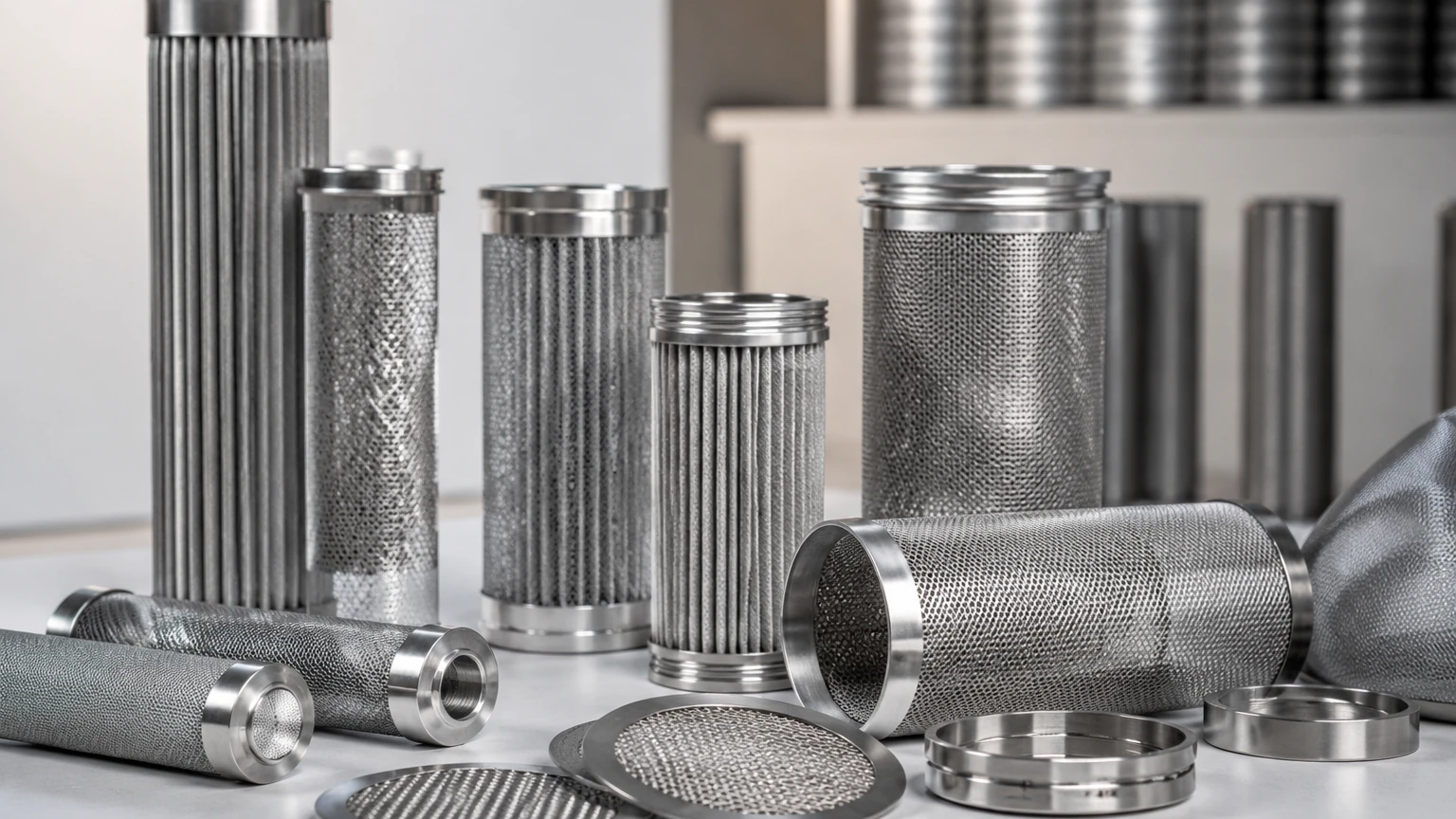
Clean-In-Place (CIP) Compatibility and Performance
A primary benefit of 3-A certified equipment is its compatibility with CIP systems. CIP allows for the cleaning of the interior surfaces of pipes, vessels, and filters without disassembly. This is achieved by circulating water and chemical cleaning agents at high velocities and temperatures.
For a filter to be truly CIP-compatible, it must be designed to withstand:
1. Thermal Shock: The filter media and housing must handle rapid transitions from ambient temperatures to steam sterilization or hot caustic washes (often exceeding 80°C).
2. Chemical Resistance: The stainless steel and elastomers must resist degradation from acids (like nitric acid) and bases (like sodium hydroxide) used in the cleaning cycle.
3. Mechanical Stress: The filter structure must remain stable under the pressure of high-velocity cleaning flows, which may differ from the standard process flow.
If a filter is not designed with these factors in mind, the cleaning process itself can damage the equipment, leading to premature failure or, worse, the release of metal fragments or elastomer particles into the product stream.
Common Risks and Pitfalls in Non-Certified Components
Choosing non-certified or poorly designed filtration components can lead to significant operational risks. In the food and beverage industry, the most immediate risk is microbial contamination. Pathogens like *Listeria* or *Salmonella* can colonize even the smallest crevice in a filter housing, leading to product recalls that can cost millions of dollars and damage a brand’s reputation permanently.
Beyond biological risks, there are mechanical risks. Non-sanitary filters often utilize lower-grade manufacturing processes that may leave burrs or metal slivers on wire mesh elements. In a pharmaceutical context, such particulate contamination is unacceptable and can lead to the rejection of entire batches.
Additionally, non-certified components may not be designed for easy inspection. 3-A standards emphasize that equipment must be "inspectable." This means that an operator should be able to easily verify that the equipment is clean. If a filter housing has complex, hidden internal geometries, verifying cleanliness becomes impossible without destructive testing or advanced borescope inspections.
Selection Criteria for Sanitary Filtration Partners
When sourcing custom stainless steel filtration solutions, engineers should look for manufacturers who demonstrate a deep understanding of sanitary engineering. A reliable partner will be able to provide detailed material certifications (MTRs) for all stainless steel used and certificates of conformance for elastomers.
Key questions to ask a potential supplier include:
* What is the standard Ra value for your polished surfaces? Ensure they can meet or exceed the 32 micro-inch requirement.
* Can you provide documentation for weld procedures? This confirms that welds are performed by qualified personnel using appropriate techniques for sanitary applications.
* How do you handle customization for unique flow requirements? A manufacturer like Kaifil, which specializes in OEM and customized filtration, should be able to adapt a design to fit specific spatial constraints while still adhering to the radius and drainage requirements of 3-A standards.
* What is the expected life cycle and maintenance schedule? Sanitary filters require regular inspection of seals and mesh integrity. A knowledgeable supplier will provide guidance on when to replace components to prevent bypass or contamination.
By prioritizing 3-A principles, companies can ensure that their filtration systems contribute to a safe, efficient, and compliant production environment. Whether for water treatment in a food plant or chemical processing in a pharmaceutical lab, the rigors of 3-A certification provide a roadmap for excellence in metal filter manufacturing.
For more information on high-performance stainless steel filtration components and customized designs for industrial applications, visit the Main Page to explore technical specifications and engineering support options.
