


Water Pp Filter
In the landscape of industrial liquid processing, the water pp filter—or polypropylene filter—serves as a fundamental component for sediment removal and fluid clarification. Polypropylene is a versatile thermoplastic polymer used extensively in the manufacturing of depth and surface filtration media. For engineers and procurement specialists, understanding the technical nuances of polypropylene filtration is essential for optimizing system performance, protecting downstream equipment, and managing the total cost of ownership (TCO).
While high-performance environments often necessitate the durability of stainless steel components, the water pp filter remains a staple for pre-filtration and specific chemical-handling applications. This guide explores the engineering considerations, material properties, and selection criteria necessary for integrating these filters into industrial water treatment and process systems.
Understanding Polypropylene as a Filtration Medium
Polypropylene (PP) is favored in the filtration industry primarily due to its broad chemical compatibility and hydrophobic nature. As a non-polar material, it is highly resistant to many organic solvents, acids, and alkalis, making it suitable for diverse industrial fluids beyond standard water treatment.
Material Properties and Thermal Limits
One of the primary engineering constraints of a water pp filter is its thermal threshold. Unlike stainless steel filters, which can withstand extreme temperatures, PP filters generally operate within a range of 0°C to 80°C. Beyond these temperatures, the structural integrity of the polymer may degrade, leading to pore deformation or media migration. For high-temperature steam sterilization or aggressive thermal processing, technical teams often transition to metallic filtration solutions found on the Main Page to ensure long-term reliability.
Chemical Resistance
PP is inert to most aqueous solutions. It does not leach surfactants, binders, or adhesives into the filtrate, which is a critical requirement for the pharmaceutical and food and beverage industries. However, it is susceptible to strong oxidizing agents and certain aromatic hydrocarbons, which can cause swelling or brittleness. Engineers must verify the specific chemical grade of the PP used in the filter construction to ensure it meets the application's compatibility requirements.
Types of Water PP Filters: Melt-Blown vs. Pleated
Industrial water pp filters are typically categorized by their construction method, which dictates their filtration mechanism: depth filtration or surface filtration.
Melt-Blown Depth Filters
Melt-blown cartridges are produced by extruding molten polypropylene resin through high-velocity air, creating a complex web of microfibers. These fibers are thermally bonded to form a self-supporting structure.
* Gradient Density: High-quality melt-blown filters feature a true gradient density, where the outer layers have larger pores to trap coarse particles, while the inner layers have finer pores for final polishing.
* Contaminant Loading: This structure allows the filter to trap particles throughout its entire thickness, providing a high dirt-holding capacity and preventing premature surface blinding.
Pleated Surface Filters
Pleated water pp filters utilize a thin sheet of polypropylene membrane or micro-fibrous media that is folded to maximize surface area.
* High Flow Rates: Because of the increased surface area, pleated filters offer significantly lower initial pressure drops and higher flow rates compared to melt-blown filters of the same size.
* Absolute Filtration: Pleated designs are more frequently available with "absolute" ratings, meaning they can achieve 99.9% efficiency at a specific micron size, making them ideal for critical final filtration stages.
Key Engineering Specifications for Selection
When specifying a water pp filter for an industrial system, several technical parameters must be evaluated to ensure the filter meets the process requirements without causing system inefficiency.
Micron Rating: Nominal vs. Absolute
* Nominal Rating: An arbitrary value indicating the filter's ability to trap a percentage of solids (usually 60% to 90%) of a specific micron size. Most standard melt-blown PP filters are nominally rated.
* Absolute Rating: A validated value indicating that the filter will remove 99.9% (Beta 5000) of particles at the specified micron size. This is essential for protecting sensitive components like RO membranes or high-pressure nozzles.
Pressure Drop ($ΔP$)
The differential pressure is the difference between the inlet and outlet pressure. A high initial $ΔP$ indicates that the filter is either undersized for the flow rate or the media density is too high. In B2B applications, it is standard practice to size the filtration system so that the initial clean pressure drop does not exceed 2-3 PSI (0.14-0.21 bar).
Dirt-Holding Capacity
This refers to the total mass of contaminants a filter can retain before reaching its terminal pressure drop (usually 20-35 PSI). A water pp filter with high dirt-holding capacity reduces the frequency of system shutdowns for filter changes, thereby lowering labor costs and increasing process uptime.
Industrial Applications and System Compatibility
The water pp filter is utilized across various sectors, often serving as the first line of defense in complex fluid circuits.
Pre-filtration for Reverse Osmosis (RO)
In desalination and boiler feed water systems, PP filters are used to remove silt, sand, and suspended solids before the water reaches the RO membranes. This prevents fouling of the expensive membranes and extends their service life. Typically, a 5-micron melt-blown filter is used for this purpose.
Food and Beverage Processing
Because PP is naturally compliant with FDA regulations for food contact, these filters are used for clarifying ingredients, filtering process water, and protecting bottling lines. The absence of resins and binders ensures that the sensory profile of the product remains untainted.
Chemical and Plating Solutions
In the electronics and metal finishing industries, the chemical resistance of the water pp filter allows it to handle acidic plating baths and chemical wash water. In these aggressive environments, the choice of end-cap gaskets (e.g., EPDM, Viton, or Silicone) is as important as the filter media itself to prevent bypass.
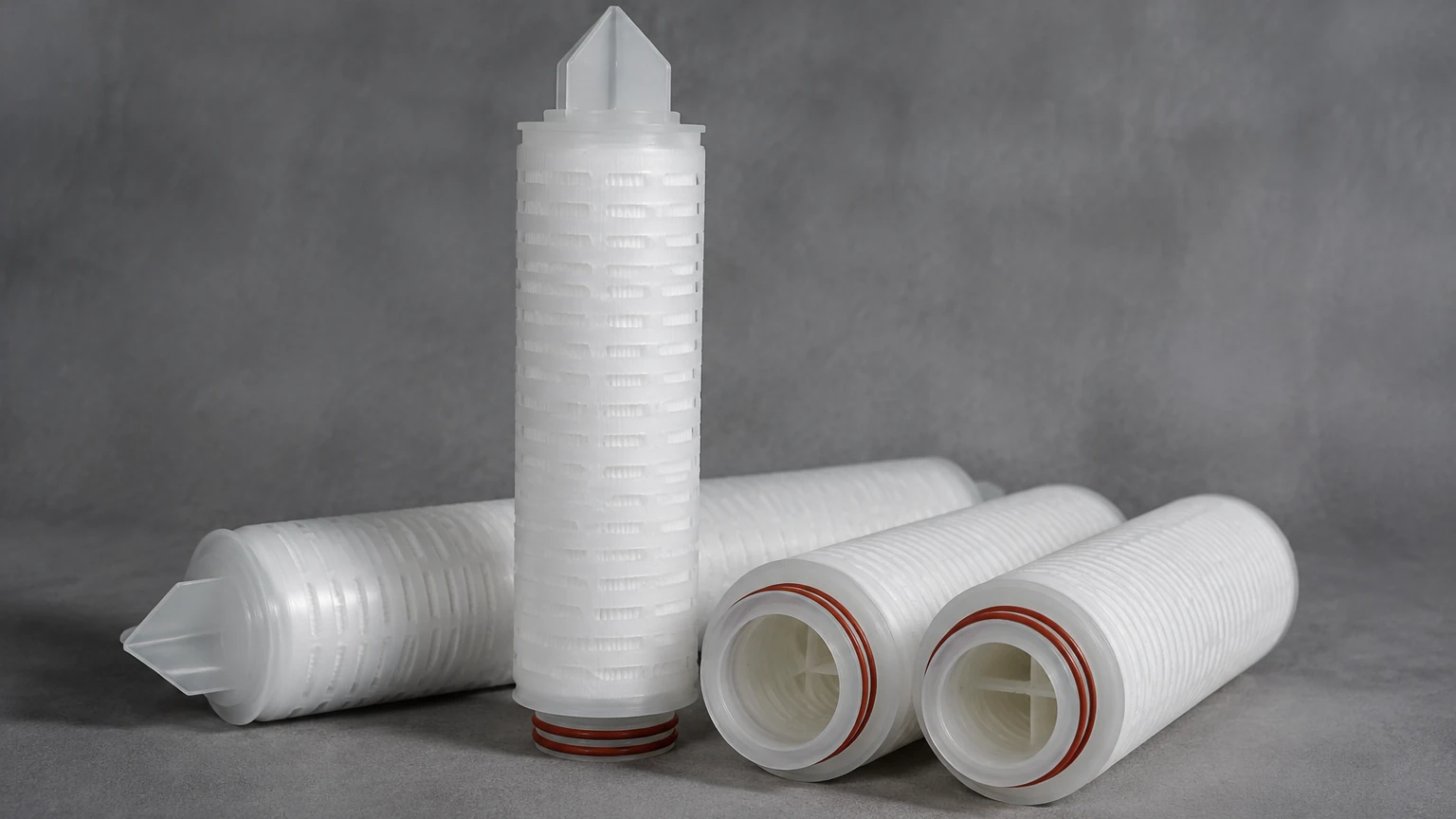
Comparing PP Filters with Stainless Steel Solutions
For many engineering teams, the decision between a disposable water pp filter and a reusable stainless steel filter is a matter of balancing operational expenditure (OPEX) against capital expenditure (CAPEX).
| Feature | Polypropylene (PP) Filter | Stainless Steel Filter |
| :— | :— | :— |
| Initial Cost | Low | High |
| Reusability | Disposable | Cleanable/Reusable |
| Temperature Limit | Up to 80°C | Up to 600°C+ |
| Pressure Resistance | Moderate | Very High |
| Chemical Range | Good (except oxidizers) | Excellent (broad spectrum) |
| Waste Generation | High (spent cartridges) | Low (cleaning effluent) |
In high-demand industrial environments where downtime is costly, or where fluids are chemically aggressive or high-temperature, stainless steel cartridges provide a more robust solution. However, for high-volume water sediment removal where the contaminant load is unpredictable, the disposable nature of the water pp filter often makes it the more practical choice for secondary or tertiary stages. To explore how custom metal components can complement your existing PP filtration setup, you may Review product options and application support.
Maintenance and Replacement Strategies
Effective maintenance of a water pp filter system is not based on time, but on pressure differential. Relying on a fixed schedule can lead to either premature replacement (wasting money) or delayed replacement (risking filter collapse or contaminant bypass).
1. Monitoring ΔP: Industrial housings should always be equipped with upstream and downstream pressure gauges. The filter should be replaced when the differential pressure reaches the manufacturer's recommended change-out point.
2. Bypass Prevention: Ensure that the filter is seated correctly within the housing. For high-purity applications, Code 7 (double O-ring with bayonet lock) or Code 3 (double O-ring) configurations are preferred over standard Double Open End (DOE) gaskets to ensure a positive seal.
3. Sterilization: If the system requires sanitization, ensure the PP filter is compatible with the sanitizing agent (e.g., peracetic acid or hot water). PP filters cannot be autoclaved or steam-sterilized repeatedly without losing structural integrity.
Conclusion: Optimizing Your Filtration Strategy
The water pp filter remains an indispensable tool for industrial fluid management due to its cost-effectiveness and versatile material properties. Whether used as a standalone sediment filter or as a pre-filter for precision stainless steel systems, its performance depends on accurate specification of micron ratings, flow rates, and chemical compatibility.
For engineers looking to optimize their filtration efficiency, it is often beneficial to combine the low-cost sediment removal of PP filters with the precision and durability of custom metal filtration components. By understanding the strengths and limitations of each material, technical teams can design systems that provide superior fluid purity while maintaining operational efficiency. For detailed technical specifications on high-performance filtration components and custom OEM solutions, visit the Kaifil Main Page.
