


Hyd Filter Housing
In the realm of industrial fluid power, the hyd filter housing serves as the primary structural interface between the hydraulic circuit and the filtration media. While the filter element itself performs the task of capturing contaminants, the housing is responsible for maintaining system integrity under high pressure, directing fluid flow efficiently, and ensuring that maintenance can be performed without compromising the system's cleanliness. For engineers and procurement specialists, selecting the correct hyd filter housing is a critical decision that impacts the longevity of pumps, valves, and actuators.
As a specialized manufacturer of stainless steel filtration solutions, Kaifil emphasizes the importance of housing design in demanding environments. Whether used in chemical processing, food production, or heavy industrial hydraulics, the housing must be engineered to withstand mechanical fatigue, chemical corrosion, and thermal fluctuations.
The Fundamental Role of the Hyd Filter Housing
A hydraulic filter housing is much more than a simple container. It is a pressure vessel designed to house a replaceable or cleanable filter element. Its primary functions include:
1. Pressure Containment: Hydraulic systems often operate at pressures ranging from 10 bar to over 400 bar. The housing must be rated for these pressures, including safety factors for pressure spikes and surges.
2. Flow Management: The internal geometry of the housing is designed to minimize turbulence and pressure drop (Delta P). Efficient flow paths ensure that the energy consumed by the hydraulic pump is used for work rather than overcoming resistance within the filter assembly.
3. Contaminant Isolation: By providing a sealed environment, the housing ensures that all fluid passing through the circuit is forced through the filter media, preventing bypass of unfiltered oil except when specifically intended via a bypass valve.
4. Environmental Protection: In harsh environments, such as offshore platforms or chemical plants, the housing protects the delicate filter media from external mechanical damage and corrosive atmospheres.
Engineering Specifications and Material Selection
When specifying a hyd filter housing, material selection is the first line of defense against premature failure. While aluminum and cast iron are common in standard mobile hydraulics, industrial applications often require more robust materials.
Stainless Steel vs. Carbon Steel
In industries such as pharmaceutical or food and beverage, stainless steel (typically 304 or 316L) is the standard. Stainless steel housings offer superior corrosion resistance, which is vital when the hydraulic fluid is water-glycol or when the exterior of the housing is subjected to frequent wash-downs with caustic chemicals. Furthermore, stainless steel does not contribute metallic ions to the fluid, maintaining the purity required in sensitive processes.
Pressure Ratings and Fatigue Strength
Hydraulic systems are dynamic. Every time a valve shifts or a cylinder reaches its stroke limit, a pressure wave ripples through the system. A hyd filter housing must be rated for "fatigue pressure," which is often lower than its static burst pressure. Engineers must confirm that the housing can withstand millions of pressure cycles over its operational life without developing stress cracks, particularly around the port connections and head-to-bowl interface.
Types of Hydraulic Filter Housings by System Placement
The location of the filter within the hydraulic circuit dictates the design requirements of the housing. There are four primary configurations:
1. Suction Side Housings
Located between the reservoir and the pump, suction housings are designed for low pressure but high flow. The primary challenge here is preventing cavitation. The housing must have a very low internal pressure drop to ensure the pump is not starved of fluid. These are often larger in physical size relative to their flow rate.
2. Pressure Side Housings
These are installed downstream of the pump and are the most robust of all hyd filter housing types. They must handle the full system pressure and are designed to protect sensitive components like servo valves. High-pressure housings are usually machined from solid bar stock or heavy-duty castings to ensure maximum wall thickness and thread strength.
3. Return Line Housings
As fluid returns to the reservoir, it passes through the return line filter. These housings operate at moderate pressures but must handle high flow surges. They are often designed with an integrated bypass valve that opens if the filter element becomes clogged, preventing the housing from bursting due to backpressure.
4. Offline (Kidney Loop) Housings
Offline filtration systems operate independently of the main hydraulic circuit. The hyd filter housing in these systems is often optimized for high-efficiency, multi-pass filtration, allowing for the use of very fine micron ratings without affecting the main system's performance.
Technical Evaluation Criteria for Procurement
When evaluating a hyd filter housing for a specific project, technical professionals should focus on several key performance indicators:
Porting and Connection Options
The housing must integrate seamlessly into existing piping. Common porting options include NPT (National Pipe Thread), SAE O-ring threads, and flanged connections (such as SAE Code 61 or 62). For high-pressure applications, O-ring seals are preferred over tapered threads to prevent leaks caused by vibration.
Bypass Valve Settings
Most housings include an internal bypass valve. This valve is set to open at a specific differential pressure (e.g., 3 bar or 6 bar). It is essential to ensure that the bypass setting is compatible with the collapse pressure of the filter element being used. If the bypass setting is too high, the element may collapse; if it is too low, the system may operate in bypass mode prematurely, allowing dirty fluid to circulate.
Differential Pressure Indicators
To optimize maintenance cycles, a hyd filter housing should be equipped with a differential pressure indicator. These can be visual (a pop-up button or gauge) or electrical (a switch that sends a signal to a PLC). These indicators tell operators exactly when the filter element is loaded with contaminants and needs replacement, preventing unnecessary downtime or premature element changes.
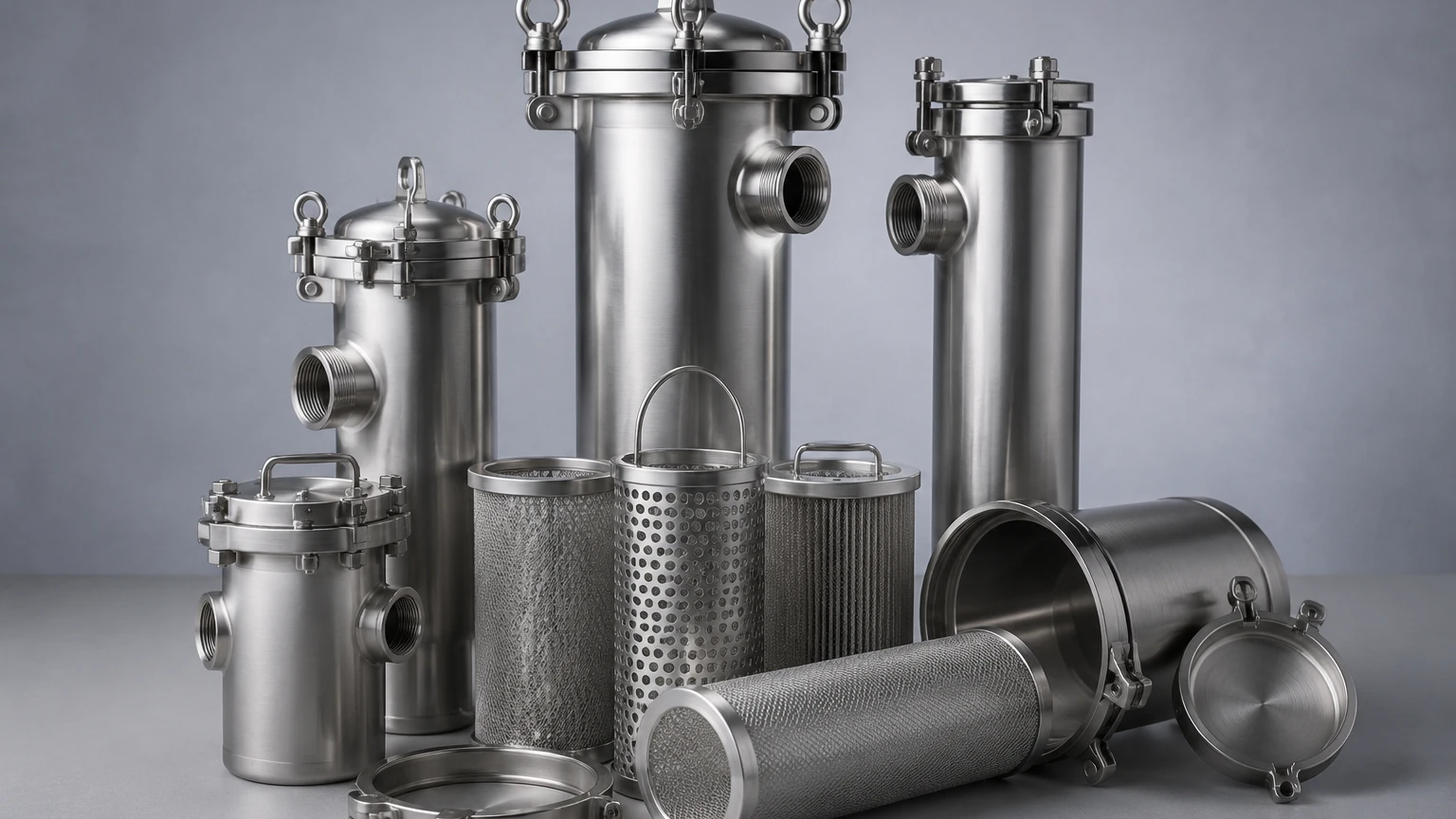
Customization and OEM Capabilities
In many industrial applications, a standard off-the-shelf housing does not meet the specific spatial or functional requirements of the machine. This is where custom manufacturing becomes essential. Customization options often include:
* Custom Port Orientations: Adjusting the inlet and outlet positions to fit tight envelopes.
* Specialized Seals: Utilizing Viton (FKM) or EPDM seals for compatibility with synthetic fire-resistant fluids or high temperatures.
* Multi-Element Designs: For very high flow rates, a single large housing containing multiple filter cartridges can reduce the footprint and simplify maintenance.
* Integrated Manifolds: Combining the filter housing with other hydraulic components like check valves or pressure sensors into a single block to reduce leak points.
Kaifil specializes in these types of tailored solutions, providing high-performance stainless steel components that meet the exact specifications of global industrial clients. For more information on our range of filtration products, you can visit our Main Page.
Common Risks and Mitigation Strategies
Failure to properly specify or maintain a hyd filter housing can lead to catastrophic system failure. One common risk is "element bunching" or collapse, which occurs when the differential pressure exceeds the structural limits of the filter media. This is often a result of using an undersized housing for the fluid's viscosity, especially during cold starts when oil is thick.
Another risk is seal failure. In systems that experience high-frequency pressure pulsations, the O-rings within the housing head can undergo "explosive decompression" or nibbling. Selecting the correct durometer (hardness) for the seal and ensuring the housing has proper seal grooves can mitigate this risk.
Finally, corrosion remains a significant threat in chemical and marine environments. Using a carbon steel housing in a corrosive atmosphere will eventually lead to external pitting and potential wall thinning. In these scenarios, the total cost of ownership favors a stainless steel hyd filter housing, which requires no painting and offers a much longer service life.
Maintenance and Replacement Cycles
The hyd filter housing itself is designed for a long service life, often lasting as long as the machine it serves. However, the internal components require regular attention. Maintenance protocols should include:
1. Regular Inspection of Seals: Every time a filter element is changed, the housing seals should be inspected for nicks, compression set, or chemical degradation. It is generally recommended to replace the seals during every element change.
2. Cleaning the Housing Bowl: Contaminants can settle at the bottom of the housing bowl. During an element change, the bowl should be thoroughly cleaned with a compatible solvent to prevent the re-introduction of particles.
3. Venting the System: After changing an element, air trapped in the housing must be vented. Many housings include a bleed screw for this purpose. Trapped air can cause sponginess in the hydraulic system and lead to oxidative degradation of the oil.
Conclusion
The hyd filter housing is a cornerstone of hydraulic system reliability. By understanding the nuances of pressure ratings, material compatibility, and flow dynamics, engineers can select a housing that not only protects the system but also lowers the total cost of operation. Whether you are designing a new hydraulic power unit or upgrading an existing process line, prioritizing high-quality, precision-engineered housings is an investment in system uptime.
As industrial requirements become more stringent, the move toward customized, durable stainless steel filtration solutions continues to grow. For technical teams seeking reliable OEM support and high-performance filtration components, reviewing the available options and engineering capabilities is the first step toward optimized performance. To explore our full suite of industrial filtration solutions, please refer to our Main Page.
