


Column Frits
In the specialized fields of chromatography, solid-phase extraction, and industrial fluid processing, the efficiency of a column is often determined by its smallest components. Among these, column frits serve as the critical interface between the fluid stream and the stationary phase. These porous discs are engineered to perform two primary functions: retaining the packing material within the column housing and ensuring a uniform distribution of the mobile phase across the column's cross-section.
For engineers and technical procurement teams, selecting the appropriate column frits is not merely a matter of dimensions. It requires a deep understanding of material science, fluid dynamics, and the mechanical stresses of high-pressure environments. As a manufacturer specializing in custom stainless steel filtration solutions, Kaifil provides the technical expertise necessary to navigate these variables, ensuring that filtration components meet the rigorous demands of chemical processing, pharmaceutical production, and laboratory analysis.
The Engineering Role of Column Frits in Fluid Systems
The primary mechanical purpose of a column frit is to act as a barrier. In a chromatography column, the stationary phase—often consisting of fine silica beads or polymer resins—must remain stationary while the mobile phase flows through it. If the frit fails, the packing material can migrate into the system tubing, leading to downstream contamination, pump damage, and the total failure of the analytical or production process.
Beyond simple retention, the frit plays a vital role in flow distribution. An ideal frit provides a uniform resistance to flow across its entire surface area. If a frit has inconsistent porosity or localized clogging, it creates "channeling," where fluid takes the path of least resistance. In analytical applications, this leads to peak broadening and a loss of resolution. In industrial scale-up, it results in inefficient use of the media bed and inconsistent product purity.
Engineers must also consider the "dead volume" introduced by the frit. In high-performance liquid chromatography (HPLC) and ultra-high-performance liquid chromatography (UHPLC), minimizing extra-column volume is essential to maintaining separation efficiency. This necessitates frits with high porosity but minimal thickness, a balance that requires precision manufacturing through sintering techniques.
Material Selection and Chemical Compatibility
Material selection is the first technical hurdle in specifying column frits. The material must be chemically inert relative to both the mobile phase and the analytes being processed.
Stainless Steel (316L)
316L stainless steel is the industry standard for most industrial and laboratory applications. Its low carbon content provides excellent resistance to corrosion, particularly in the presence of organic solvents and many aqueous buffers. Sintered 316L stainless steel frits offer high mechanical strength, allowing them to withstand the extreme pressures (often exceeding 10,000 psi) found in modern UHPLC systems without deforming.
Titanium and Specialized Alloys
In applications involving highly corrosive mobile phases, such as those with high halide concentrations or extreme pH levels, titanium frits are often preferred. Titanium offers superior biocompatibility, making it a staple in protein purification and other life science applications where metal ion leaching from stainless steel could interfere with sensitive biological molecules. For even more aggressive environments, alloys like Hastelloy® may be utilized to ensure long-term structural integrity.
Porous Polymers
While metal frits dominate high-pressure applications, porous polymers like PEEK (polyetheretherketone) or PTFE (polytetrafluoroethylene) are used in low-pressure or metal-free systems. However, these materials lack the mechanical rigidity of metal and are prone to "creeping" or deforming under high pressure, which can alter the flow characteristics over time.
Sintered Metal Technology: Powder vs. Wire Mesh
Most high-performance column frits are manufactured using sintering, a process where metal particles or wires are heated below their melting point until they bond together. There are two primary types of sintered metal frits used in industrial columns:
Sintered Metal Powder Frits
These are created by compressing spherical or irregular metal powders into a die and then sintering them. The result is a tortuous path for the fluid, which provides excellent filtration efficiency and high mechanical stability. The pore size in powder frits is controlled by the size of the initial powder particles. These are the most common choice for analytical chromatography because they can achieve very fine micron ratings (down to 0.2 microns or less) with high uniformity.
Sintered Wire Mesh Frits
Sintered wire mesh consists of multiple layers of stainless steel woven wire cloth that are laminated and sintered together. This structure provides a more predictable pore structure and higher permeability compared to powder frits. In large-scale industrial columns, sintered wire mesh is often preferred because it is easier to clean and offers lower pressure drops at high flow rates. It is also more resistant to mechanical shock and vibration.
Key Performance Metrics for Selection
When evaluating column frits for a specific application, engineers should focus on several quantifiable metrics to ensure performance and longevity.
1. Micron Rating (Pore Size): The rule of thumb is that the frit's pore size should be significantly smaller than the smallest particle size of the column packing material. For example, if a column is packed with 5-micron beads, a 0.5-micron or 2-micron frit is typically used. Selecting a pore size that is too large will result in media migration, while a pore size that is too small will cause unnecessary backpressure and premature clogging.
2. Porosity (Void Volume): This refers to the percentage of the frit's volume that is open space. Higher porosity generally leads to lower pressure drops and better flow characteristics. Sintered metal frits typically range from 30% to 50% porosity.
3. Permeability: This measures how easily a fluid can pass through the frit. It is a function of both pore size and porosity. Engineers must calculate the expected pressure drop across the frit at the system's operating flow rate to ensure it does not exceed the pump's capabilities.
4. Mechanical Strength: The frit must be able to withstand the differential pressure across it without bowing or cracking. This is especially critical in large-diameter industrial columns where the total force exerted on the frit can be substantial.
Customization and OEM Integration
In many industrial designs, standard off-the-shelf frits do not meet the specific requirements of a unique column geometry or specialized fluid chemistry. Customization is often necessary to optimize performance. For more information on tailored filtration components, engineers can visit the Main Page to explore manufacturing capabilities.
Customization options typically include:
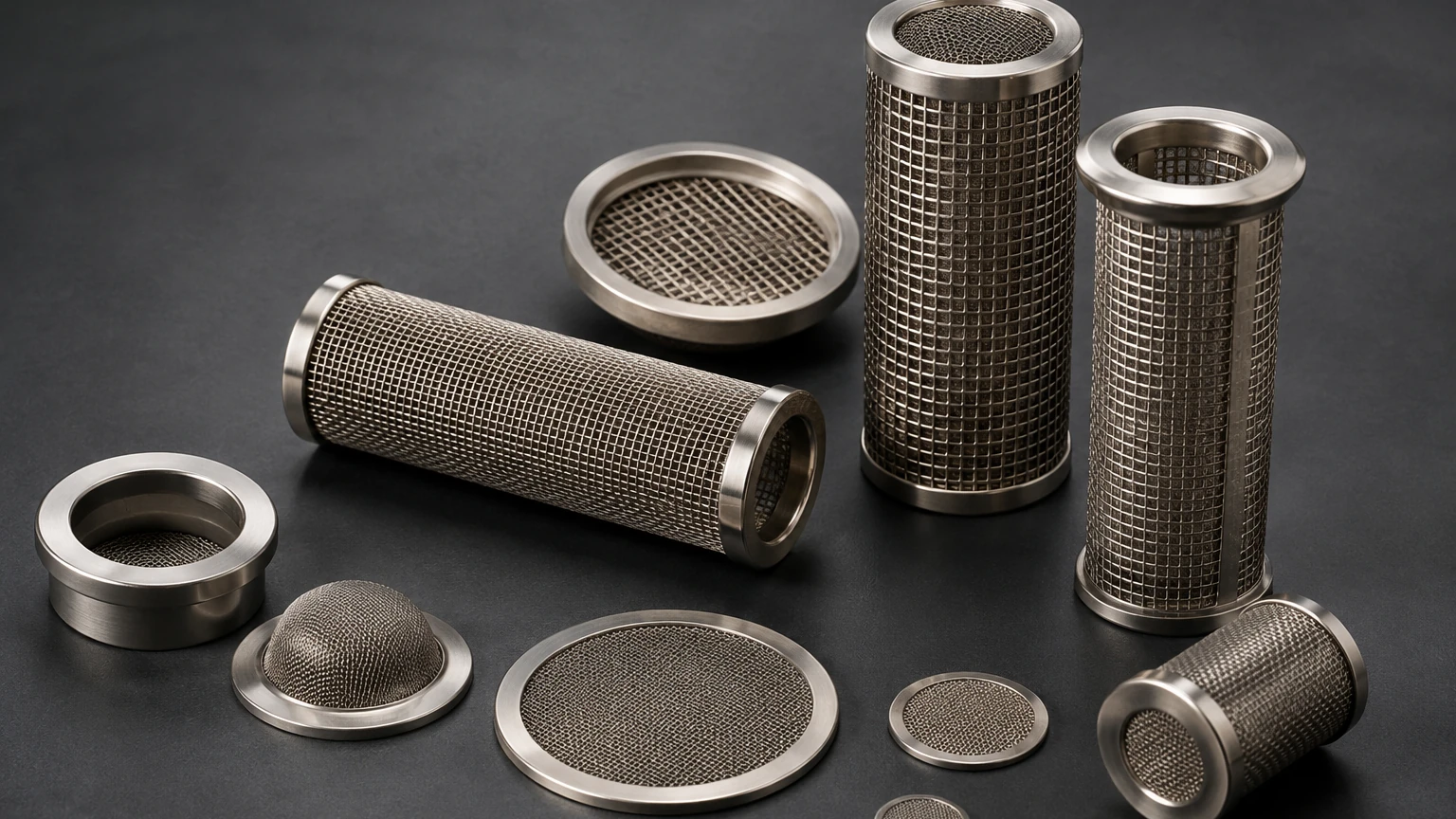
* Edge Sealing: To prevent fluid from bypassing the frit (the "wall effect"), frits can be manufactured with solid metal rims or encapsulated in polymer rings (such as PEEK or PCTFE). This ensures a leak-tight seal against the column wall.
* Geometric Variations: Beyond simple discs, frits can be produced in conical, cup, or flanged shapes to integrate seamlessly with specific end-fitting designs.
* Multi-Layer Composites: For industrial applications, a frit may consist of a fine filtration layer sintered to a coarser support layer. This provides the necessary filtration accuracy while maintaining the structural integrity required for high-flow processes.
Common Risks and Failure Modes
Understanding why column frits fail is essential for establishing effective maintenance protocols. The most common issue is clogging. This can occur due to particulates in the sample, microbial growth in aqueous buffers, or the gradual breakdown of the stationary phase (fines). Clogging manifests as a steady increase in system backpressure and a decrease in flow consistency.
Another risk is chemical degradation. While 316L is robust, certain acidic or halogenated environments can cause pitting corrosion. If a frit begins to corrode, it can release metal ions into the fluid stream, which may act as catalysts in unwanted side reactions or interfere with sensitive analytical detections.
Finally, mechanical deformation can occur if the frit is subjected to pressures beyond its design limit. This can lead to "blow-by," where the packing material escapes around the edges of the deformed frit, or it can compress the pore structure, leading to a permanent increase in flow resistance.
Maintenance and Total Cost Considerations
From a total cost of ownership (TCO) perspective, the price of the frit itself is usually negligible compared to the cost of the column packing material and the downtime required for replacement. Therefore, investing in high-quality, precision-manufactured frits is a strategy for long-term cost reduction.
Cleaning vs. Replacement
In analytical laboratory settings, frits are typically treated as consumables and replaced whenever the column is repacked or when backpressure becomes excessive. However, in large-scale industrial columns, cleaning may be more economical. Sintered stainless steel frits can often be cleaned using ultrasonic baths, back-flushing with strong solvents, or even thermal cleaning (burning off organic contaminants). The choice between cleaning and replacement should be based on a validation of the frit's performance post-cleaning.
Preventative Measures
To extend the life of column frits, engineers often implement "guard columns" or pre-filters upstream of the main column. These sacrificial components capture the majority of particulates and highly-retained contaminants, protecting both the expensive stationary phase and the column frits from premature fouling.
Conclusion: Selecting a Manufacturing Partner
The selection of column frits is a technical decision that impacts the reliability and accuracy of fluid processing systems. Whether you are designing a high-pressure analytical column or a large-scale industrial separation unit, the quality of the porous media is paramount. By focusing on material integrity, precise pore size control, and robust mechanical design, engineers can ensure consistent performance even in the most demanding environments.
As a professional manufacturer of custom stainless steel filtration solutions, Kaifil supports global customers with engineering-led filtration components. From material selection and filtration accuracy to customized designs for OEM applications, we provide the technical support needed to optimize your filtration processes. For detailed product specifications and application guidance, please refer to our Main Page to review our full range of industrial filtration capabilities.
