


Compressed Air Mufflers
In industrial pneumatic systems, the rapid exhaust of compressed air creates high-velocity turbulence that results in significant noise pollution. Compressed air mufflers, also known as pneumatic silencers, are essential components designed to reduce this noise to levels that comply with occupational safety standards while maintaining the efficiency of the pneumatic circuit. For engineers and maintenance professionals, selecting the right muffler involves a balance between noise attenuation, backpressure management, and material durability.
As a manufacturer specializing in precision metal filtration, Kaifil provides high-performance stainless steel mufflers designed to withstand the rigors of demanding industrial environments. Understanding the technical nuances of these components is critical for optimizing system performance and ensuring long-term reliability. You can explore our full range of technical capabilities and filtration solutions on our Main Page.
The Engineering Principles of Compressed Air Mufflers
Compressed air mufflers function by diffusing the exhaust air over a larger surface area, which reduces the velocity and turbulence of the air as it exits the system. When a pneumatic valve shifts, it releases a burst of pressurized air. Without a muffler, this air expands rapidly into the atmosphere, creating a sharp, high-decibel "crack" or continuous hissing sound.
Diffusion and Expansion
The core of a muffler typically consists of a porous medium—often sintered bronze, plastic, or stainless steel wire mesh. As the air passes through these microscopic pores, it is forced to take a convoluted path. This process, known as diffusion, breaks the single high-pressure stream into thousands of tiny streams. This significantly lowers the kinetic energy of the air, resulting in a quieter exhaust.
Furthermore, the internal chamber of many mufflers allows for controlled expansion. By providing a volume where the air can expand slightly before reaching the atmosphere, the pressure differential is managed more effectively, further dampening the sound waves.
Material Selection: The Case for Stainless Steel
While compressed air mufflers are available in various materials, the choice of material is dictated by the operating environment and the specific requirements of the application. For many industrial sectors, stainless steel is the preferred choice due to its superior mechanical and chemical properties.
Corrosion Resistance and Longevity
In industries such as chemical processing or marine applications, the ambient air or the compressed air itself may contain corrosive elements. Standard brass or plastic mufflers can degrade quickly in these conditions. Stainless steel (typically 304 or 316L) offers exceptional resistance to oxidation and chemical attack. This ensures that the muffler does not corrode internally, which could lead to structural failure or the release of metallic debris into the environment.
Temperature and Pressure Extremes
High-temperature pneumatic systems or those located near heat-generating machinery require components that maintain structural integrity under thermal stress. Plastic mufflers are prone to softening or becoming brittle at high temperatures, while stainless steel remains stable. Additionally, in high-pressure exhaust scenarios, the high tensile strength of stainless steel wire mesh or sintered structures prevents the muffler from bursting or deforming under the sudden load of the exhaust cycle.
Hygiene and Cleanliness
In the food, beverage, and pharmaceutical industries, equipment must be easy to clean and resistant to bacterial growth. Stainless steel mufflers are non-porous (at the macro level) and can withstand aggressive wash-down procedures involving steam or chemical sanitizers. This makes them the standard for "clean" pneumatic applications where contamination must be avoided at all costs.
Key Performance Metrics for Selection
When specifying compressed air mufflers, engineers must look beyond simple noise reduction. Several technical factors influence how a muffler will impact the overall pneumatic circuit.
Noise Attenuation (dB Reduction)
The primary goal of a muffler is to reduce noise levels to meet OSHA (Occupational Safety and Health Administration) or similar regional standards. Most high-quality mufflers can reduce exhaust noise by 20 to 35 decibels (dB). It is important to note that the decibel scale is logarithmic; a 10 dB reduction represents a tenfold decrease in sound intensity. Engineers should confirm the noise reduction rating at the specific operating pressure of their system, as attenuation performance can vary with flow velocity.
Backpressure and Flow Capacity
Every muffler introduces some level of restriction to the airflow, known as backpressure. If the backpressure is too high, it can negatively affect the performance of pneumatic actuators. For example, a cylinder may move more slowly, or a valve may fail to shift properly because the air cannot exhaust quickly enough.
When selecting a muffler, engineers must check the flow rate (often measured in Standard Cubic Feet per Minute, or SCFM) and ensure it matches or exceeds the exhaust capacity of the valve. A well-designed stainless steel wire mesh muffler provides high porosity, allowing for maximum airflow with minimal pressure drop, thereby preserving the cycle time of the machinery.
Filtration Efficiency
In some applications, mufflers serve a dual purpose: noise reduction and filtration. Exhaust air from pneumatic systems often carries oil mist (from lubricated air lines) and fine particulates. Sintered or wire mesh mufflers can trap these contaminants, preventing them from being atomized into the workspace. If the application requires high-purity exhaust, engineers should look for mufflers with specific micron ratings to ensure effective particulate capture.
Integration and Customization in Pneumatic Systems
Standard off-the-shelf mufflers meet many needs, but complex industrial machinery often requires customized solutions. Customization can involve specific dimensions, thread types, or specialized filtration media.
Threading and Mounting
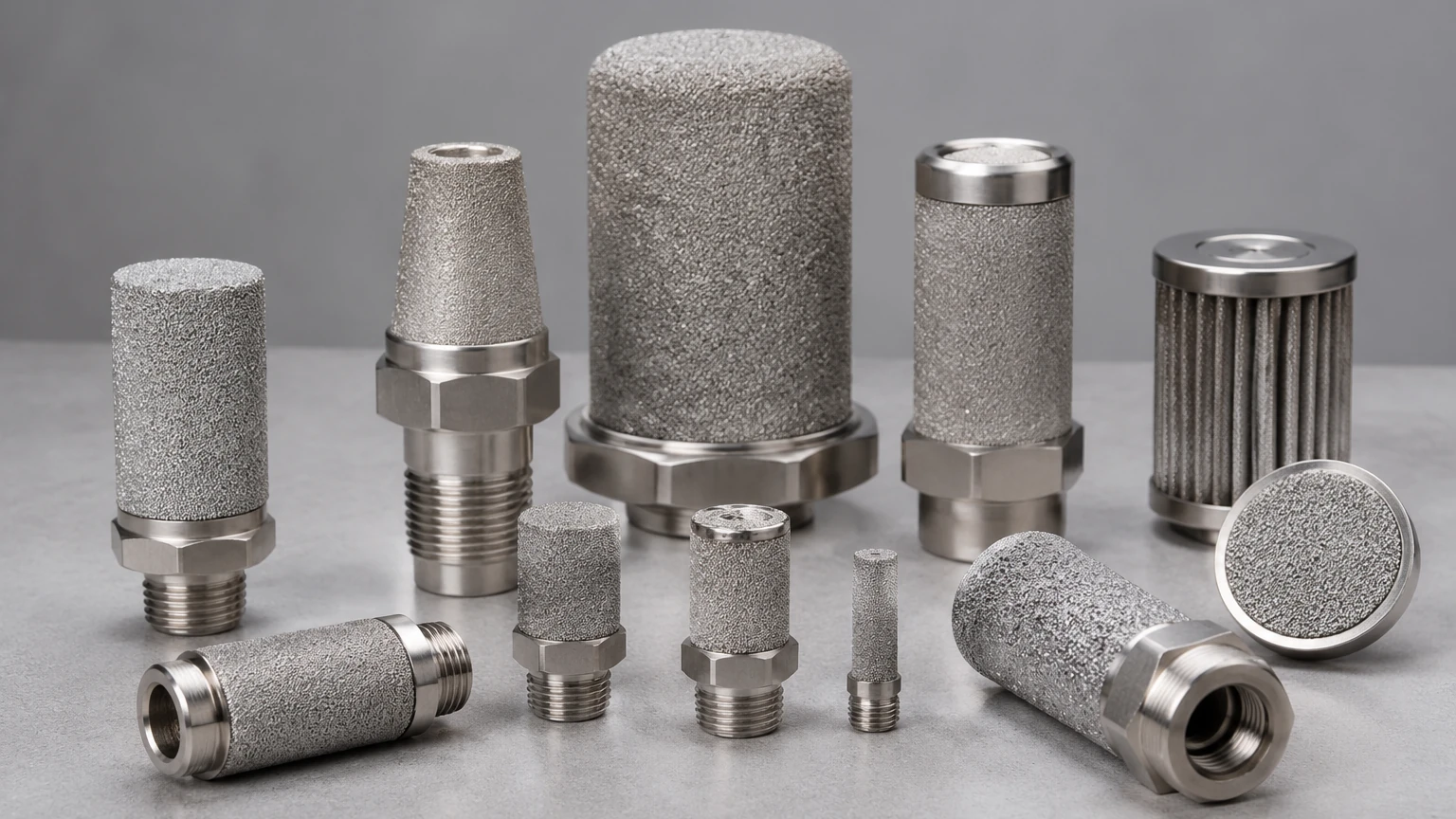
Compressed air mufflers are typically mounted directly to the exhaust ports of directional control valves. Common thread standards include NPT (National Pipe Thread), BSPP (British Standard Parallel Pipe), and BSPT (British Standard Tapered Pipe). Ensuring a leak-free, secure fit is essential for safety and performance. In some cases, mufflers may require integrated hexagonal bases for easy installation with standard wrenches, especially in tight manifolds where space is limited.
Space Constraints and Form Factors
In modern, compact machine designs, there may not be sufficient clearance for a standard cylindrical muffler. Custom-engineered mufflers can be designed in low-profile or flat configurations using pleated wire mesh to maintain surface area while reducing the physical footprint. Kaifil specializes in these types of custom metal filtration components, ensuring that even the most space-restricted systems can operate quietly and efficiently.
Maintenance and Troubleshooting
Like any filtration-based component, compressed air mufflers require regular inspection and maintenance. Over time, the porous media can become clogged with oil, dust, and debris from the air supply or the environment.
Identifying a Clogged Muffler
The most common symptom of a clogged muffler is a noticeable decrease in the speed of pneumatic actuators. If a cylinder that previously moved quickly now operates sluggishly, the exhaust muffler is often the culprit. In extreme cases, a completely blocked muffler can cause a valve to stall or lead to a pressure buildup that could damage internal seals.
Cleaning vs. Replacement
One of the advantages of stainless steel compressed air mufflers is their cleanability. Unlike plastic or bronze mufflers, which are often considered disposable, stainless steel versions can often be cleaned using ultrasonic baths or solvent degreasers. This extends the service life of the component and reduces the total cost of ownership. However, if the mesh is physically damaged or if the clogging is due to carbonized oil that cannot be removed, replacement is necessary to restore system performance.
Total Cost of Ownership and Value Analysis
When evaluating the cost of compressed air mufflers, purchasing teams should look beyond the initial unit price. The total cost of ownership (TCO) includes the frequency of replacement, the impact on machine productivity (cycle times), and the potential for downtime caused by component failure.
Investing in high-quality stainless steel mufflers from a specialist manufacturer like Kaifil provides several long-term benefits:
1. Reduced Downtime: Durable materials prevent premature failure in harsh environments.
2. Optimized Performance: Precision-engineered porosity ensures low backpressure, maintaining high machine speeds.
3. Compliance: Consistent noise attenuation helps maintain a safe working environment and ensures regulatory compliance.
4. Sustainability: Cleanable stainless steel components reduce waste compared to single-use plastic alternatives.
For engineers looking to optimize their pneumatic systems, the selection of an exhaust muffler is a critical decision that impacts safety, efficiency, and maintenance schedules. By choosing components designed for the specific demands of the application, companies can ensure their operations remain productive and compliant. For more information on our custom manufacturing capabilities and to view our full product catalog, please visit our Main Page.
Conclusion
Compressed air mufflers are more than just simple accessories; they are precision-engineered components that play a vital role in industrial acoustics and pneumatic efficiency. By focusing on material quality—specifically the advantages of stainless steel—and carefully evaluating flow and attenuation metrics, engineers can select mufflers that provide reliable service for years. Whether you are dealing with high-pressure wash-downs in a food plant or corrosive vapors in a chemical facility, the right filtration and silencing solution is essential for operational excellence.
