


Coalescer and Separator
In industrial fluid processing, the efficient removal of immiscible liquids—such as water from hydrocarbon fuels or oil from aqueous solutions—is a critical requirement for equipment longevity and product quality. This process is primarily achieved through the combined action of a coalescer and separator. While these two components work in tandem, they utilize distinct physical principles to achieve phase separation. For engineers and procurement teams, understanding the mechanics of liquid-liquid and liquid-gas separation is essential for selecting the right filtration hardware and ensuring system reliability.
Industrial filtration systems often rely on custom-engineered components to handle high pressures, corrosive environments, and specific flow rates. As a specialized manufacturer, Kaifil provides the technical expertise and precision stainless steel components necessary to build robust separation systems that meet stringent industrial standards.
The Fundamental Principles of Coalescing and Separation
To understand the relationship between a coalescer and separator, one must first distinguish between the two stages of the process. Coalescence is the physical process by which small droplets of a dispersed phase (the contaminant) are brought together to form larger droplets. Separation is the subsequent stage where these enlarged droplets are removed from the continuous phase (the primary fluid) based on density differences or surface tension.
The Coalescing Stage
In a typical coalescing element, the fluid flows from the inside to the outside. The media, often consisting of specialized glass fibers or layered stainless steel wire mesh, captures microscopic droplets. As the fluid passes through the tortuous path of the media, these droplets collide and merge. This process is governed by three main mechanisms:
1. Direct Interception: Large droplets hit the media fibers directly.
2. Inertial Impaction: Droplets with higher density cannot follow the fluid streamlines and strike the fibers.
3. Brownian Movement: Extremely small sub-micron droplets move erratically, increasing the probability of contact with the media.
The Separation Stage
Once the droplets have coalesced into larger masses, they exit the coalescer element. However, they are still suspended in the fluid stream. The separator element, usually positioned downstream or as a second stage, acts as a barrier. In many liquid-liquid applications, the separator is treated with a hydrophobic coating or constructed from materials like Teflon-coated stainless steel mesh. This material allows the continuous phase (e.g., fuel) to pass through while repelling the enlarged droplets (e.g., water), which then settle to the bottom of the vessel due to gravity.
Engineering Considerations for Coalescer and Separator Systems
Designing an effective coalescer and separator system requires more than just selecting a standard filter. Engineers must evaluate several variables to ensure the system performs under varying operational loads.
Fluid Chemistry and Compatibility
The chemical nature of both the continuous and dispersed phases dictates material selection. For example, in chemical processing or high-temperature steam applications, synthetic media may degrade. In such cases, stainless steel 304 or 316L wire mesh is preferred due to its thermal stability and resistance to oxidation. Kaifil specializes in manufacturing these durable metal components, ensuring that the internal structures of the Main Page products can withstand aggressive industrial environments.
Interfacial Tension (IFT)
Interfacial tension is a measure of the force between the surfaces of two immiscible liquids. A high IFT makes separation easier because the droplets naturally resist breaking into smaller particles. Conversely, a low IFT (often caused by surfactants or additives) makes coalescence difficult, as the droplets do not merge easily. In systems with low IFT, the coalescer media must have a finer pore structure and a higher surface area to force contact between droplets.
Flow Velocity and Residence Time
Separation is a time-dependent process. If the fluid velocity is too high, the shear forces can break apart coalesced droplets before they can be separated. Proper vessel sizing ensures that the fluid spends enough time within the media to allow for maximum coalescence. Engineers typically calculate the "flux rate" (flow per unit area) to optimize the balance between throughput and separation efficiency.
The Role of Stainless Steel in High-Performance Separation
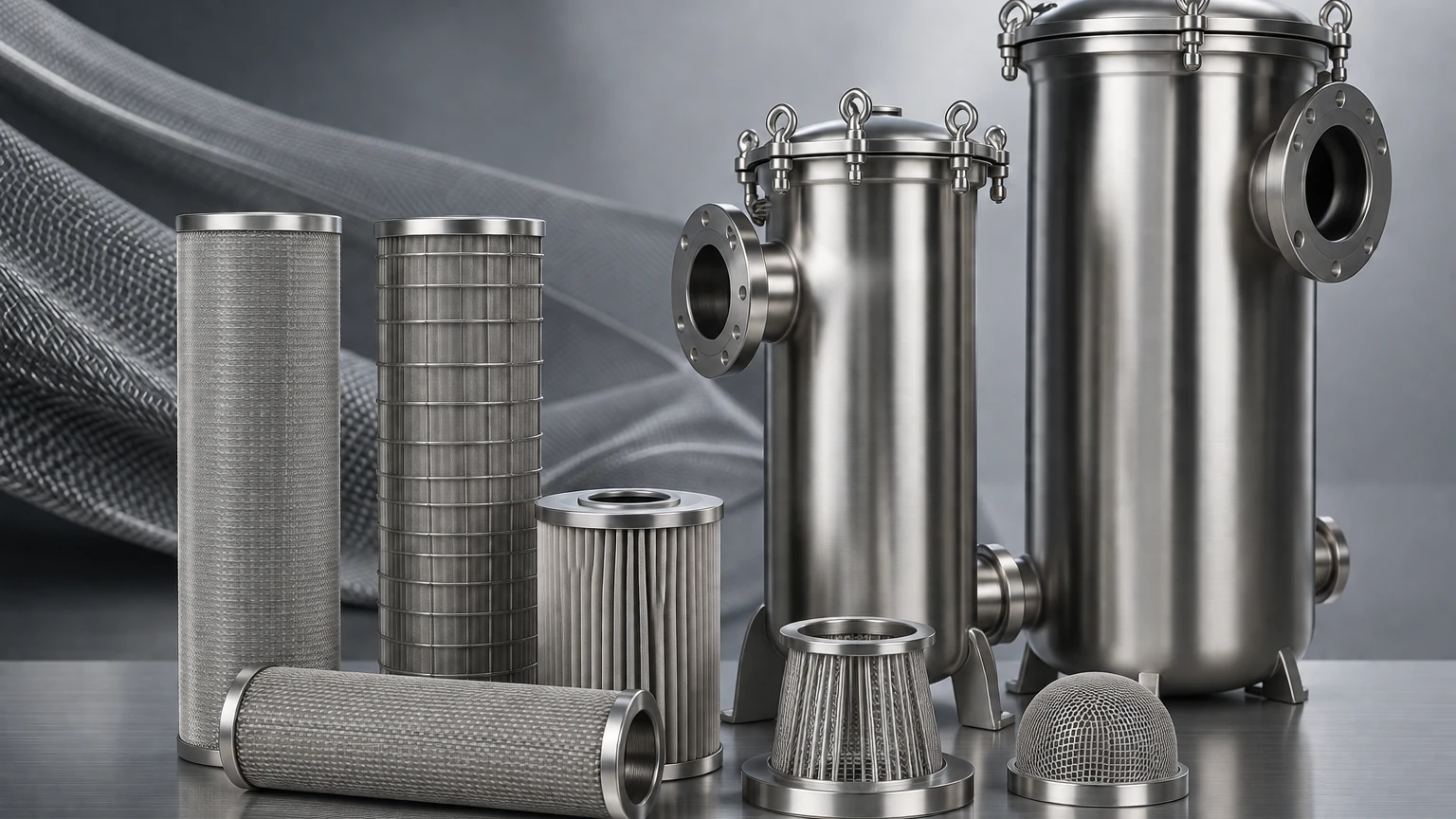
While disposable fiber-based coalescers are common in light-duty applications, industrial-grade systems often require the structural integrity of stainless steel. Precision-engineered wire mesh and perforated metal cores serve several roles in a coalescer and separator assembly:
* Support Structures: Coalescing media is often fragile. Stainless steel inner and outer cages provide the mechanical strength to prevent media migration or collapse under high differential pressure (ΔP).
* Pre-filtration: Before a fluid reaches the coalescing stage, solid particulates must be removed. Using a stainless steel mesh pre-filter prevents the coalescer from clogging prematurely, extending the service life of the more expensive coalescing elements.
* Separator Screens: In many separators, a fine stainless steel mesh with a hydrophobic coating is used. The precision of the mesh weave is critical; if the pore size is inconsistent, water droplets may "bypass" the separator, leading to downstream contamination.
Common Applications Across Industries
The need for a reliable coalescer and separator is found in nearly every sector involving fluid management.
Oil and Gas Refineries
In refinery operations, water must be removed from hydrocarbons to prevent corrosion in pipelines and to protect downstream catalysts. Coalescers are used to treat diesel, jet fuel, and LPG. The durability of stainless steel components is vital here, as these systems often operate continuously under high pressure.
Hydraulic and Lube Oil Systems
Water contamination in hydraulic fluid leads to reduced lubricity, component wear, and oil oxidation. A coalescer and separator system integrated into the oil reservoir or a kidney-loop filtration system can maintain water levels below the saturation point, significantly extending the life of pumps and valves.
Compressed Air and Gas Processing
In gas streams, coalescers remove liquid aerosols (oil or water) that could damage compressors or foul pneumatic tools. These gas-liquid coalescers often utilize multi-stage filtration, where a stainless steel mesh mist eliminator serves as the primary separation stage before the gas enters a fine coalescing element.
Maintenance and Performance Monitoring
To ensure the long-term efficiency of a coalescer and separator system, technical teams must implement a robust monitoring strategy. The primary indicator of filter health is the differential pressure.
1. Clean ΔP: The pressure drop when the elements are new. A higher-than-expected clean ΔP may indicate that the system is undersized for the flow rate.
2. Terminal ΔP: The point at which the elements are considered fouled and must be replaced or cleaned. For stainless steel components, cleaning via ultrasonic baths or backwashing may be possible, whereas synthetic media must be replaced.
3. Water Detection: Downstream sensors (such as hygrometers or turbidity meters) are used to verify that the separator is functioning correctly. If water is detected despite a low ΔP, it may indicate a "breakthrough" where the coalescer media has been damaged or bypassed.
Selecting a Custom Filtration Partner
When standard off-the-shelf solutions fail to meet specific technical requirements—such as non-standard dimensions, extreme temperature ratings, or specific micron requirements—custom manufacturing becomes necessary. A manufacturer like Kaifil understands the nuances of metal filtration and can provide tailored solutions that integrate seamlessly into existing coalescer and separator housings.
When consulting with a manufacturer, engineers should confirm the following data points:
* Fluid Properties: Viscosity, density, and operating temperature.
* Contaminant Characteristics: Type of liquid to be removed and expected concentration (PPM).
* Flow Requirements: Minimum, normal, and maximum flow rates.
* Housing Constraints: Connection types, seal materials, and physical space limitations.
By focusing on these technical boundaries, purchasing teams can ensure they receive a filtration solution that offers the lowest total cost of ownership through durability and consistent performance. For more information on custom metal filter components and industrial filtration support, visit the Kaifil Main Page.
Conclusion
The coalescer and separator are indispensable tools in the pursuit of fluid purity. By leveraging the principles of coalescence and surface-tension-based separation, these systems protect multi-million dollar assets from the damaging effects of liquid contamination. Whether utilizing disposable media or permanent stainless steel components, the effectiveness of the system relies on precise engineering, quality manufacturing, and a deep understanding of the fluid dynamics at play. As industrial requirements become more demanding, the role of high-quality, custom-engineered filtration components will only continue to grow in importance.
