


Reduce Cip Time and Cost
In industrial processing environments—ranging from food and beverage production to pharmaceutical manufacturing and chemical processing—Clean-in-Place (CIP) systems are essential for maintaining hygiene and preventing cross-contamination. However, CIP cycles often represent a significant portion of operational downtime and utility consumption. For engineers and facility managers, the ability to reduce cip time and cost is not merely a matter of operational convenience; it is a critical factor in improving the Total Cost of Ownership (TCO) and increasing overall equipment effectiveness (OEE).
The efficiency of a CIP process is heavily influenced by the design and material properties of the filtration components within the system. Stainless steel filter cartridges and wire mesh elements, such as those produced by Kaifil, play a pivotal role in how quickly and effectively a system can be sanitized. By understanding the intersection of fluid dynamics, material science, and mechanical design, technical teams can implement strategies that streamline cleaning protocols without compromising safety or product quality.
The Role of Filtration Components in CIP Cycles
Filtration systems are often the most challenging components to clean within a processing line. Because their primary function is to capture and retain particulates, they naturally become the focal point for soil accumulation. If a filter is poorly designed or improperly matched to the process fluid, it can become a bottleneck during the cleaning cycle.
To effectively reduce cip time and cost, engineers must first evaluate how the filter media interacts with cleaning agents. Traditional disposable filters are often removed and replaced, which incurs high consumable costs and labor. In contrast, permanent stainless steel filtration solutions are designed to be cleaned in situ. The success of this cleaning depends on the accessibility of the filter’s surface area to the CIP fluids. If the filter structure contains "dead zones" or tight crevices where bacteria and debris can hide, the cleaning cycle must be extended, increasing the consumption of water, chemicals, and energy.
Engineering Strategies to Optimize Cleaning Efficiency
Reducing the duration of a CIP cycle requires a multi-faceted approach that addresses the physical and chemical requirements of sanitation. The industry standard for cleaning effectiveness is often categorized by the TACT principles: Time, Action (mechanical force), Chemical (concentration), and Temperature. Filtration design directly impacts the "Action" and "Time" components.
1. Minimizing Differential Pressure and Flow Resistance
A filter that is heavily loaded with contaminants requires higher pressure to flush. By selecting a wire mesh with an optimized weave—such as a plain square weave or a specific Dutch weave—engineers can ensure that the filter provides the necessary micron rating while maintaining a high open area. A higher open area reduces the resistance to the flow of cleaning chemicals, allowing for higher turbulence at the mesh surface. This turbulence provides the mechanical action necessary to dislodge stubborn biofilms and particulates more rapidly.
2. Eliminating Dead Spaces
In custom filter manufacturing, the method of assembly is as important as the media itself. Welded joints should be smooth and continuous to prevent the formation of pockets where fluids can stagnate. For instance, in the production of stainless steel filter cartridges, using plasma or TIG welding instead of mechanical crimping ensures a sanitary interface. Eliminating these areas allows cleaning solutions to reach every surface, significantly shortening the time required to achieve a validated "clean" state.
Material Selection and Surface Integrity
The material of construction is a primary determinant of how a filter responds to aggressive CIP chemicals. Stainless steel, particularly grades 304 and 316L, is the industry standard due to its corrosion resistance and ability to withstand high temperatures. However, the surface finish of the metal is what truly dictates cleaning speed.
The Importance of Surface Roughness (Ra)
Surface roughness, measured as Ra, defines the microscopic peaks and valleys on the metal surface. A rougher surface provides more "anchor points" for contaminants, making them harder to remove. To reduce cip time and cost, many high-purity applications utilize electropolished stainless steel filters. Electropolishing removes the outer layer of the metal, leveling the microscopic peaks and creating a mirror-like finish. This smooth surface prevents soil adhesion and allows cleaning fluids to rinse away contaminants with minimal effort.
Chemical Compatibility and Durability
CIP cycles often involve caustic washes (sodium hydroxide) followed by acid rinses (nitric or phosphoric acid) at temperatures exceeding 80°C. Lower-quality materials or non-metallic filters may degrade under these conditions, leading to fiber shedding or structural failure. Stainless steel wire mesh filters are engineered to withstand these harsh environments repeatedly. This durability eliminates the need for frequent filter replacements, which is a major component of the overall cost reduction strategy.
Hydraulic Considerations for Efficient Rinsing
The physics of the CIP fluid flow through the filter housing and the element itself must be carefully managed. If the cleaning fluid follows the path of least resistance, certain areas of the filter media may receive insufficient flow, leading to incomplete cleaning.
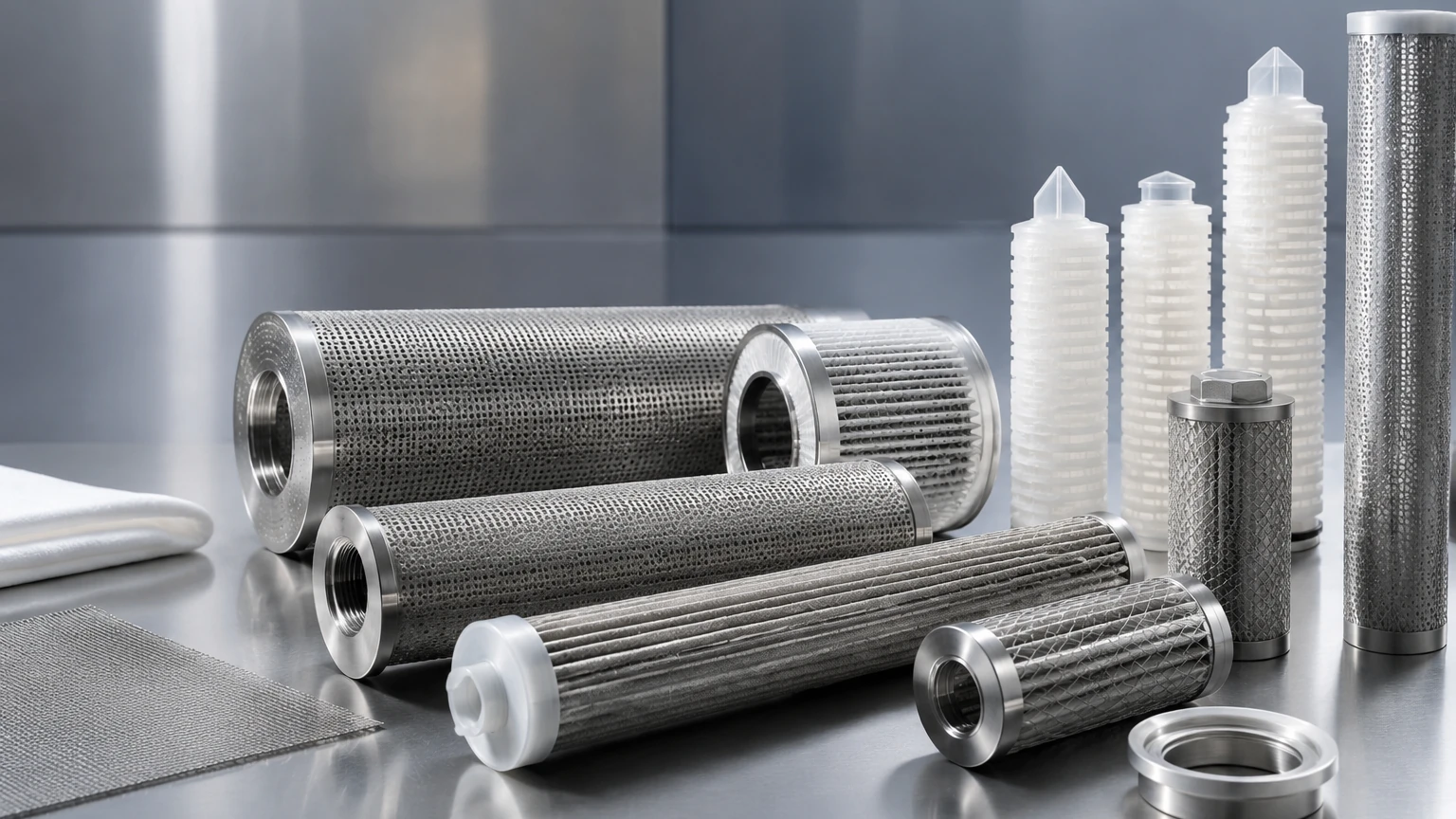
Engineers should look for filter designs that promote uniform distribution of the cleaning media. In pleated stainless steel cartridges, the pleat density must be calculated to prevent "pleat blinding," where the folds are so tight that the cleaning fluid cannot penetrate to the root of the pleat. By optimizing the geometry of the pleats, manufacturers can maximize the effective filtration area while ensuring that the entire surface is exposed to the high-velocity flow of the CIP cycle. This uniformity is a prerequisite for shortening the rinse phases and reducing water consumption.
Analyzing the Economic Impact of CIP Optimization
When calculating the return on investment (ROI) for high-performance filtration solutions, it is essential to look beyond the initial purchase price. The true cost of a CIP cycle includes:
* Water Usage: Reducing rinse times by even 10% can save thousands of gallons of treated water annually.
* Chemical Consumption: Faster cleaning requires lower volumes of expensive detergents and sanitizers.
* Energy Costs: Heating large volumes of water for CIP is energy-intensive. Shorter cycles directly lower utility bills.
* Wastewater Treatment: Less chemical and water usage results in lower volumes of effluent that must be neutralized and treated before disposal.
* Production Up-time: The most significant saving is often the recovery of production time. In high-volume facilities, an extra 30 minutes of production per day can result in substantial revenue increases.
By investing in precision-engineered filtration components that are designed for cleanability, companies can achieve a significant reduction in these recurring operational expenses.
Customization and Technical Support
No two industrial processes are identical, and a one-size-fits-all approach to filtration often leads to inefficiencies in the CIP process. Customization is key to ensuring that a filter meets the specific demands of the application, whether it involves high-viscosity fluids, extreme temperatures, or unique particulate characteristics.
Working with a specialized manufacturer like Kaifil allows engineers to specify exact micron ratings, dimensions, and connection types that integrate seamlessly into existing CIP infrastructures. For those looking to optimize their systems, visiting the Main Page provides access to a wide range of stainless steel filtration solutions and technical expertise. Professional guidance in the selection of wire mesh types and cartridge designs can help identify the specific variables that will most effectively reduce cip time and cost for a given facility.
Conclusion
Reducing the time and cost associated with Clean-in-Place operations is a vital objective for modern industrial facilities. While many factors contribute to CIP efficiency, the role of the filtration media cannot be overstated. By selecting high-quality stainless steel filters with optimized geometries, superior surface finishes, and robust construction, engineers can ensure that their cleaning cycles are as fast and cost-effective as possible.
Focusing on technical parameters such as surface roughness, pleat design, and material durability allows for a data-driven approach to sanitation. As industries continue to face pressure to improve sustainability and reduce waste, the implementation of advanced filtration solutions remains one of the most effective ways to streamline operations and protect the bottom line. For more information on custom filtration engineering and product specifications, visit the Kaifil Main Page to explore how precision metal filters can enhance your process efficiency.
