


Coalescing Element
In industrial fluid processing, the separation of immiscible liquids or the removal of liquid aerosols from gas streams is a critical requirement for protecting downstream equipment and ensuring product purity. The coalescing element serves as the primary functional component in this process. Unlike standard particulate filters that simply trap solid contaminants, a coalescing element utilizes specific physical properties to merge small droplets into larger ones, facilitating their removal through gravity or specialized drainage mechanisms.
For engineers and procurement teams, understanding the mechanics, material constraints, and performance variables of coalescing technology is essential for optimizing system reliability. This guide examines the technical foundations of coalescing elements and provides a framework for selection in demanding industrial environments.
The Principles of Coalescence in Industrial Filtration
Coalescence is a multi-stage process that relies on the interaction between the dispersed phase (the droplets to be removed) and the filter media. The effectiveness of a coalescing element is determined by how efficiently it can capture microscopic droplets and encourage them to grow in size until they can no longer be entrained by the continuous phase (the fluid or gas flow).
The Three Stages of Coalescence
1. Interception and Attachment: As the contaminated fluid passes through the depth of the coalescing media, tiny droplets collide with the fibers or mesh. Due to surface tension and molecular attraction, these droplets attach to the media surface.
2. Growth (Coalescence): As more droplets are intercepted, they travel along the fibers and merge with existing droplets. This process continues until the droplets reach a critical mass.
3. Release and Separation: Once the droplets are sufficiently large, the force of the fluid flow or gravity overcomes the adhesive forces holding them to the media. In gas-liquid applications, the large droplets fall to the bottom of the housing (gravity separation). In liquid-liquid applications, the difference in density between the two liquids allows the coalesced phase to settle or rise for removal.
Engineering Considerations for Coalescing Element Design
The performance of a coalescing element is not solely dependent on its micron rating. Instead, it is a balance of surface chemistry, media structure, and mechanical integrity.
Media Selection and Surface Energy
The choice of media is the most critical factor in coalescer design. The media must be "wettable" by the dispersed phase. For example, in an oil-from-water separation process, the media should be oleophilic (oil-attracting). Conversely, in water-from-fuel applications, the media is typically hydrophilic.
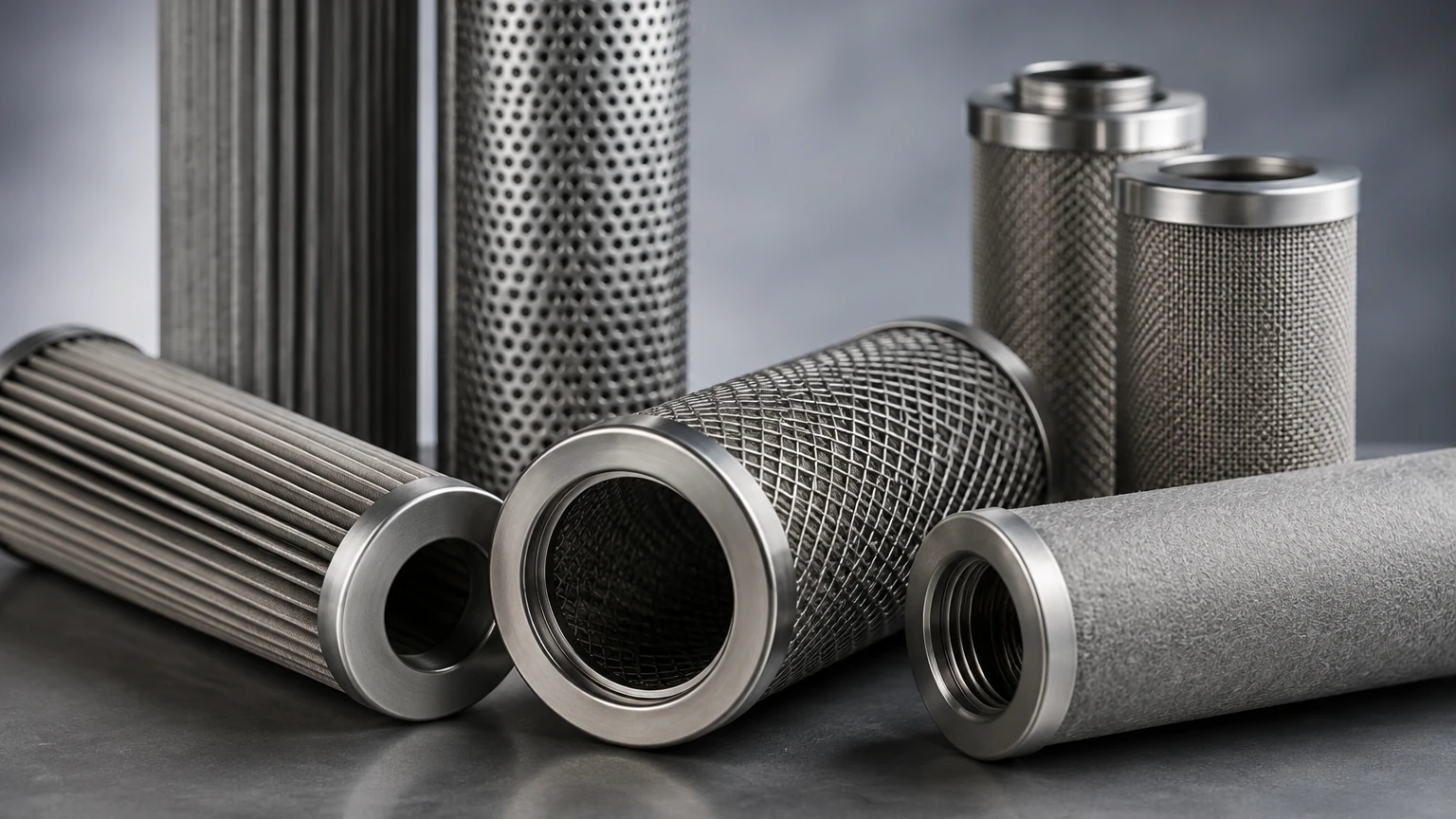
Stainless steel wire mesh and sintered metal fibers are frequently used in high-temperature or corrosive environments where synthetic fibers would fail. Kaifil specializes in these robust metallic solutions, providing the mechanical strength required to withstand high differential pressures while maintaining precise pore structures for consistent coalescence.
Multi-Layered Structures
High-efficiency coalescing elements often feature a graded density structure. The inner layers may consist of fine fibers for initial droplet capture, while the outer layers consist of coarser materials designed to facilitate the drainage of the coalesced liquid. This prevents the element from becoming saturated and ensures that the separated liquid does not re-entrain into the clean fluid stream.
Applications Across Key Industrial Sectors
Coalescing elements are utilized across a broad spectrum of industries where fluid purity is paramount. Each application presents unique challenges regarding chemical compatibility and temperature.
Chemical and Petrochemical Processing
In chemical manufacturing, coalescing elements are used to separate water from hydrocarbons or to recover expensive catalysts from liquid streams. Because these processes often involve aggressive solvents or high temperatures, stainless steel coalescing components are preferred for their chemical resistance and ability to be cleaned and reused.
Hydraulic and Lubrication Systems
Water contamination in hydraulic oil can lead to oxidation, additive depletion, and component corrosion. A coalescing element integrated into the filtration loop continuously removes moisture, extending the life of the oil and reducing the risk of pump failure. Engineers must ensure the element is compatible with the specific base oils and additives used in the system.
Compressed Air and Gas Treatment
In compressed air systems, oil aerosols from the compressor can contaminate pneumatic tools and end-products. Coalescing elements remove these aerosols, often reaching efficiencies of 99.9% or higher. For natural gas processing, these elements protect turbines and compressors by removing liquid condensates and water vapor.
Selection Criteria for Engineers and Purchasing Teams
When specifying a coalescing element for a new or existing system, several technical parameters must be confirmed to ensure performance and longevity.
Fluid Properties: Viscosity and Surface Tension
The viscosity of the continuous phase significantly impacts the speed at which droplets can move through the media and settle. Higher viscosity fluids require larger coalescing surfaces and slower flow velocities. Additionally, the interfacial tension (IFT) between the two liquids must be considered; low IFT (often caused by surfactants) makes coalescence much more difficult and may require specialized media treatments.
Flow Velocity and Flux Rates
Coalescence is a velocity-sensitive process. If the fluid velocity is too high, the droplets may be sheared back into smaller particles or forced through the media before they have time to merge. Engineers should calculate the flux rate (flow per unit area) to ensure it stays within the manufacturer’s recommended limits for optimal separation efficiency.
Pressure Drop and Structural Integrity
A coalescing element introduces a pressure drop ($ΔP$) into the system. While a clean element should have a low initial $ΔP$, it will increase as the media captures solid contaminants along with liquid droplets. It is vital to select an element with sufficient structural strength to resist collapsing if the differential pressure spikes.
Maintenance, Replacement, and Total Cost of Ownership
While coalescing elements are designed for liquid separation, they also act as particulate filters. This dual role means they will eventually clog with solid debris. Monitoring the differential pressure across the filter housing is the most reliable way to determine the replacement cycle.
Signs of Element Failure
* Increased Downstream Contamination: If the separated liquid appears in the "clean" outlet, the element may be saturated (flooded) or the media may have bypassed.
* Rapid Pressure Spikes: This usually indicates a high load of solid particulates, suggesting that a pre-filter may be necessary to protect the coalescing element.
* Structural Deformation: In high-pressure hydraulic systems, an element that has exceeded its collapse pressure will fail to provide any filtration or coalescence.
* Chemical Degradation: If the media is not compatible with the fluid, it may soften or dissolve, leading to media migration into the process stream.
Optimizing the Replacement Cycle
To minimize the total cost of ownership, many facilities implement a multi-stage filtration strategy. By placing a dedicated particulate filter upstream of the coalescing element, the life of the more expensive coalescer can be significantly extended. For more information on optimizing your filtration setup, you can visit the Main Page to review product options and application support.
Customization and OEM Solutions
Standard off-the-shelf coalescing elements do not always meet the rigorous demands of specialized industrial processes. Customization allows for the adjustment of media thickness, pore size distribution, and end-cap configurations to fit specific housing designs or unique chemical environments.
As a manufacturer specializing in stainless steel filtration, Kaifil provides OEM services that allow for the development of bespoke coalescing elements. Whether the requirement is for high-pressure hydraulic systems or precision chemical separation, custom metal-based coalescers offer a level of durability and temperature resistance that synthetic alternatives cannot match.
When ordering custom elements, engineers should provide the following data:
* Specific gravity and viscosity of both the continuous and dispersed phases.
* Operating temperature and pressure ranges.
* Target efficiency (e.g., reducing water content from 5000 ppm to less than 10 ppm).
* Dimensional constraints of the existing filter housing.
Conclusion
The coalescing element is a sophisticated component that requires careful engineering to function effectively. By focusing on the physical principles of droplet growth, selecting appropriate materials like stainless steel for demanding conditions, and adhering to strict flow and pressure parameters, industrial operators can achieve superior fluid purity. Understanding these technical boundaries ensures that the chosen filtration solution provides reliable performance, protects critical machinery, and maintains the integrity of the industrial process.
