


Pond Drum Filter
In the field of large-scale aquatic management, aquaculture, and industrial water treatment, the pond drum filter—often referred to as a Rotary Drum Filter (RDF)—represents the pinnacle of mechanical filtration technology. Unlike traditional static filtration methods that rely on manual cleaning or periodic backwashing, an automated drum filter provides continuous, high-efficiency removal of suspended solids. For engineers and facility managers, understanding the technical nuances of these systems is essential for ensuring water clarity, biological health, and operational longevity.
Kaifil, as a specialist in custom stainless steel filtration solutions, provides the critical components that define the performance of these systems. By focusing on precision-engineered wire mesh and durable stainless steel cartridges, the Main Page of industrial filtration design emphasizes that the efficiency of a pond drum filter is fundamentally tied to its material composition and mechanical design.
The Engineering Principles of Rotary Drum Filtration
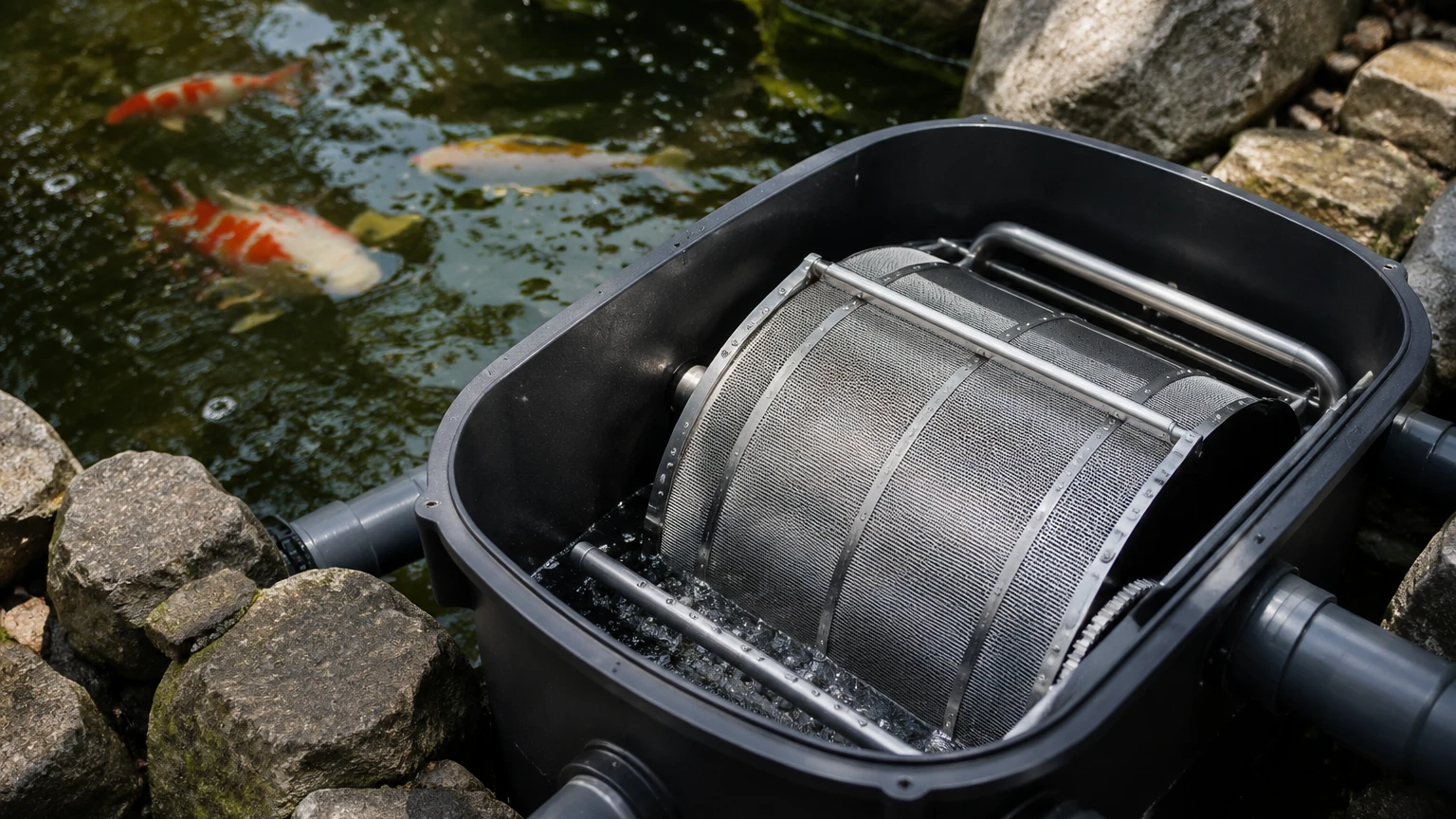
A pond drum filter operates on a relatively simple yet highly effective mechanical principle. The system consists of a rotating drum covered in a fine stainless steel filter mesh. As water enters the interior of the drum, it is forced outward through the mesh, which captures debris, uneaten feed, and organic waste.
Gravity vs. Pump-Fed Configurations
In industrial and large-scale pond applications, two primary configurations are utilized:
1. Gravity-Fed Systems: In this setup, the filter is placed at the same water level as the pond. Water flows into the drum via gravity. This is often preferred for its energy efficiency and the fact that solids are not "pureed" by a pump before reaching the filter mesh.
2. Pump-Fed Systems: Here, a pump delivers water into the drum, which is positioned above the water level. While easier to install in existing setups, the mechanical action of the pump can break down organic solids into smaller particles, potentially requiring a finer mesh to achieve the same clarity.
The Self-Cleaning Cycle
As the mesh captures particles, the water level inside the drum rises (in gravity systems) or the flow rate decreases. Sensors detect this change and trigger an automated cleaning cycle. The drum rotates while high-pressure nozzles spray the exterior of the mesh, washing the trapped waste into a collection gutter for disposal. This automation ensures that the system maintains a consistent flow rate without the manual intervention required by sand or bead filters.
The Critical Role of Stainless Steel Wire Mesh
The performance of any pond drum filter is dictated by the quality and specifications of its filter media. While some entry-level models use plastic or nylon mesh, industrial-grade systems almost exclusively utilize stainless steel wire mesh for several technical reasons.
Material Selection: 304 vs. 316L
For most freshwater applications, Grade 304 stainless steel offers sufficient corrosion resistance. However, in environments involving salt treatments, brackish water, or specific chemical additives, Grade 316L is the industry standard. The addition of molybdenum in 316L provides superior resistance to pitting and crevice corrosion, which is vital for the long-term structural integrity of the drum.
Micron Ratings and Filtration Accuracy
Selecting the correct micron rating is a balance between water clarity and the frequency of the cleaning cycle. Common ratings for a pond drum filter include:
* 40 Microns: Provides exceptional clarity, often used in high-end koi ponds or research facilities. However, it requires more frequent cleaning cycles and higher water pressure for the spray nozzles.
* 60 to 70 Microns: The industrial standard for aquaculture and large water features. This range captures the majority of suspended solids while allowing for a higher flow-through rate and reduced wear on the drive motor.
* 100+ Microns: Used as a pre-filter in systems where heavy debris loading is expected, or where a secondary biological stage handles finer particulates.
Kaifil’s expertise in manufacturing precision metal filter components ensures that the mesh tension remains consistent across the drum’s surface, preventing bypass and extending the life of the filter media.
Technical Evaluation Criteria for B2B Procurement
When specifying a pond drum filter for an industrial project or a large-scale facility, engineers must look beyond basic flow rates. Several engineering considerations impact the total cost of ownership (TCO) and system reliability.
Drum Structural Integrity
The drum itself must withstand the torque of the drive motor and the pressure of the cleaning nozzles. A drum that flexes during rotation will eventually lead to seal failure. Professionals should look for reinforced stainless steel frames that maintain perfect concentricity over years of operation.
Seal Design and Bypass Prevention
The seal between the rotating drum and the stationary housing is a common point of failure. If this seal is compromised, unfiltered water can bypass the mesh, rendering the system ineffective. High-quality systems use EPDM or silicone gaskets designed for constant friction and exposure to aquatic environments.
Drive System and Motor Specifications
The motor and gearbox must be rated for high-humidity environments (IP65 or higher). In large-scale applications, variable speed drives allow the operator to adjust the rotation speed based on the seasonal waste load, optimizing energy consumption and reducing mechanical wear.
Common Risks and Mitigation in Drum Filtration
While highly efficient, a pond drum filter is a mechanical system subject to specific risks that must be addressed during the design phase.
1. Biofilm Accumulation: Over time, a bacterial biofilm can develop on the mesh, reducing its effective open area. This is particularly common in systems where the cleaning nozzles do not provide sufficient pressure. Incorporating high-pressure pumps (typically 4-5 bar) for the cleaning cycle is essential.
2. Mechanical Fatigue: The constant starting and stopping of the drum can lead to fatigue in the drive chain or gear assembly. Selecting components with high service factors is critical for 24/7 industrial operations.
3. Nozzle Clogging: If the cleaning water is not pre-filtered, the spray nozzles can clog, leading to "blind spots" on the drum mesh. Many advanced systems use a portion of the filtered water for the cleaning cycle, but this must be supported by an auxiliary fine-particle filter to protect the nozzles.
Customization and Integration
In many B2B scenarios, a standard off-the-shelf pond drum filter may not meet the specific spatial or hydraulic requirements of a facility. Customization becomes necessary, particularly regarding the filter’s footprint and connection points.
Tailored Filtration Solutions
Kaifil works with global customers to develop customized filtration components that fit specific drum designs. This includes:
* Custom Mesh Panels: Designed for easy replacement and specific tensioning requirements.
* Sintered Mesh Options: For applications requiring extreme durability and high-pressure resistance, multi-layer sintered stainless steel mesh provides a rigid filter medium that resists deformation better than single-layer woven wire.
* Inlet/Outlet Modification: Engineering the housing to accommodate specific pipe diameters and flow velocities to minimize turbulence.
Maintenance and Replacement Cycles
A well-engineered pond drum filter is designed for low maintenance, but it is not maintenance-free. Technical teams should establish a schedule for the following:
* Mesh Inspection: Every 6 to 12 months, the stainless steel mesh should be inspected for signs of wear, tearing, or mineral scaling. In hard water environments, an acid wash may be required to remove calcium deposits.
* Seal Lubrication: If applicable, mechanical seals should be checked for wear and lubricated to prevent friction-induced heat.
* Sensor Calibration: Level sensors (ultrasonic or float-based) must be cleaned to ensure they accurately trigger the wash cycle.
The replacement cycle for the stainless steel mesh depends heavily on the waste load and water chemistry. In most industrial applications, a high-quality stainless steel mesh from a manufacturer like Kaifil can last 3 to 5 years before requiring replacement, provided the cleaning system is functioning correctly.
Conclusion: Selecting the Right Partner for Filtration Components
The efficiency of a pond drum filter is only as good as its weakest component. For engineers and purchasing managers, the focus must remain on the quality of the filtration media and the structural integrity of the metal components. By selecting high-performance stainless steel wire mesh and precision-engineered filter elements, facilities can achieve superior water clarity while minimizing downtime and maintenance costs.
For those seeking to optimize their industrial filtration systems or develop custom OEM solutions, reviewing the technical capabilities and product options at the Main Page is a critical step. Understanding the interplay between micron ratings, material grades, and mechanical design ensures that the chosen filtration solution meets the demanding requirements of modern aquatic and industrial environments.
