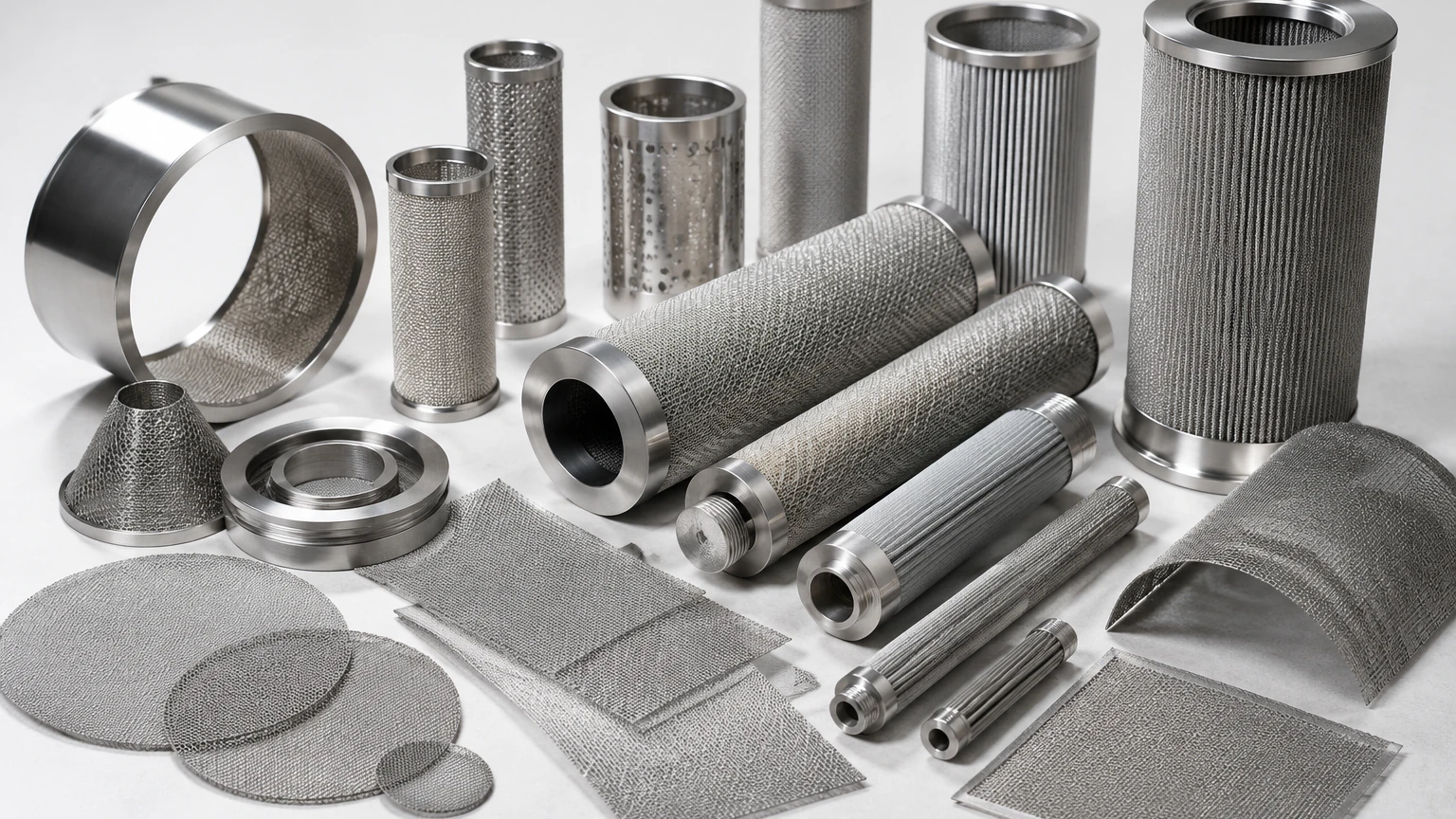
Filter Stainless
In industrial processing, the selection of filtration media is a critical engineering decision that directly impacts operational efficiency, product purity, and equipment longevity. Among the various materials available, stainless steel remains the gold standard for demanding environments. A filter stainless solution offers a unique combination of mechanical strength, thermal stability, and chemical resistance that polymer-based or disposable media cannot match. For engineers and procurement specialists, understanding the technical nuances of stainless steel filtration is essential for optimizing system performance and reducing the total cost of ownership.
Engineering Advantages of Stainless Steel Filtration
The primary reason for specifying a filter stainless component in industrial systems is its inherent durability. Unlike synthetic fibers or paper media, stainless steel can withstand high differential pressures without deforming or shedding fibers into the process stream. This structural integrity is vital in high-pressure hydraulic systems, chemical reactors, and high-temperature steam applications.
Furthermore, stainless steel is non-reactive with a vast majority of industrial fluids. This inert nature prevents contamination of the filtrate, making it the preferred choice for the pharmaceutical and food and beverage industries. The material's ability to operate in temperatures ranging from cryogenic levels to over 500°C (depending on the alloy and seal type) allows for consistent performance in extreme thermal environments where other materials would fail or degrade.
Material Grades and Chemical Compatibility
Selecting the correct grade of stainless steel is the first step in filter design. While many grades exist, the industrial filtration sector primarily utilizes 304 and 316L alloys.
* Type 304 Stainless Steel: This is the most common grade, offering excellent strength and basic corrosion resistance. It is suitable for water treatment, food processing, and general industrial applications where high concentrations of chlorides or acids are not present.
* Type 316L Stainless Steel: The "L" stands for low carbon, which improves weldability and prevents intergranular corrosion. The addition of molybdenum provides superior resistance to pitting and crevice corrosion, particularly in chloride-rich environments or acidic chemical processing.
* Specialty Alloys: In highly aggressive environments, such as seawater filtration or concentrated acid handling, engineers may specify Duplex stainless steel or high-nickel alloys like Hastelloy. These materials provide enhanced resistance to stress corrosion cracking and extreme chemical attack.
When evaluating a filter stainless option, engineers must confirm the chemical composition of the process fluid, including trace elements and temperature fluctuations, to ensure the alloy's passive layer remains intact during operation.
Structural Variations: Wire Mesh vs. Sintered Metal
The physical structure of the filter determines its micron rating, flow capacity, and cleaning characteristics. There are several primary constructions used in stainless steel filters:
Woven Wire Mesh
Wire mesh filters are created by weaving stainless steel wires in various patterns. The weave type dictates the precision and strength of the mesh:
* Plain Weave: A simple over-under pattern providing high flow rates but limited to coarser filtration (typically above 50 microns).
* Twill Weave: Allows for thicker wires and finer filtration by passing wires over and under two wires at a time.
* Dutch Weave (Plain and Twill): Features a high density of smaller diameter wires in the shute direction, creating a tortuous path for particles. This results in high strength and precise filtration down to the 5–10 micron range.
Sintered Metal Mesh
Sintering involves diffusion-bonding multiple layers of wire mesh under high heat and pressure. This process creates a rigid, porous plate or tube that does not require a support core. Sintered filters offer exceptional mechanical strength and are ideal for high-pressure backwashing applications.
Pleated Filter Cartridges
To increase the effective filtration area within a compact footprint, stainless steel mesh can be pleated. Pleating significantly reduces the face velocity of the fluid passing through the media, which lowers the pressure drop and extends the time between cleaning cycles. This is a common configuration for stainless steel filter cartridges used in gas and liquid processing.
Key Performance Metrics for Industrial Selection
Engineers must look beyond the initial price and focus on technical specifications that define the filter's performance in the field.
1. Micron Rating (Absolute vs. Nominal): A nominal rating indicates the filter can trap a percentage of particles of a certain size. In contrast, an absolute rating (often achieved through high-precision Dutch weaves or sintered media) guarantees that 99.9% of particles above the specified size will be captured. For critical pharmaceutical or semiconductor applications, absolute ratings are mandatory.
2. Clean Pressure Drop (ΔP): This is the resistance to flow through a clean filter. A high initial pressure drop limits the available "dirt-holding capacity" before the filter reaches its terminal pressure drop and requires cleaning.
3. Permeability: This relates to how easily fluid passes through the media. Higher permeability allows for smaller housing sizes and lower energy consumption for pumps and compressors.
4. Dirt Holding Capacity: This measures the total mass of contaminants a filter can retain before reaching the maximum allowable pressure drop. It is a primary driver of the replacement or cleaning cycle frequency.
Customization and OEM Considerations
Off-the-shelf filtration products often fail to meet the specific spatial or performance requirements of specialized industrial machinery. This is where custom OEM solutions become necessary. When working with a manufacturer like Kaifil, engineers can specify exact dimensions, end-cap configurations (such as DOE, 222, or 226 O-rings), and reinforced support cores for high-viscosity fluids.
Customization also extends to the filtration media itself. By layering different mesh counts, manufacturers can create a "graded porosity" effect, where outer layers catch large debris and inner layers perform the final polishing. This multi-stage approach within a single filter stainless component significantly improves service life and protects sensitive downstream equipment.
Maintenance, Cleaning, and Service Life
One of the most significant advantages of stainless steel filters is their reusability. Unlike disposable depth filters made of polypropylene or glass fiber, stainless steel components can be cleaned and returned to service multiple times. Common cleaning methods include:
* Backwashing/Backpulsing: Using a reverse flow of clean fluid or gas to dislodge particles from the surface of the filter.
* Ultrasonic Cleaning: Utilizing high-frequency sound waves in a cleaning solvent to remove fine particles embedded deep within the mesh or sintered pores.
* Chemical Cleaning: Using acids, alkalis, or surfactants to dissolve organic or inorganic scaling. Because of the material's robustness, stainless steel filters can withstand aggressive cleaning agents that would destroy polymer filters.
Engineers should establish a cleaning protocol based on the specific contaminants in their process. Over time, repeated cleaning may eventually lead to "permanent fouling," but a well-maintained stainless filter can often last for several years, whereas a disposable equivalent might be replaced weekly.
Economic Evaluation: Disposable vs. Stainless Steel
While the initial purchase price of a filter stainless cartridge is higher than a disposable one, the Total Cost of Ownership (TCO) is often much lower. The TCO calculation should include:
* Purchase Price: The upfront cost of the filter element.
* Disposal Costs: The cost of disposing of contaminated waste (especially significant if the filtrate is hazardous).
* Labor Costs: The time required for maintenance staff to change out filters.
* Downtime: The lost production value during filter changeovers.
* Energy Costs: The pump energy required to overcome pressure drops.
In high-volume industrial processes, the reduction in waste and the elimination of frequent purchase orders make stainless steel the more sustainable and cost-effective choice in the long run.
Conclusion
Selecting the right filtration solution requires a deep understanding of material science, fluid dynamics, and the specific constraints of the industrial application. A filter stainless system provides the reliability and precision required for modern manufacturing, ensuring that processes remain efficient and products meet the highest quality standards. For those seeking technical guidance or customized filtration components, visiting the Main Page of an experienced manufacturer can provide the necessary data sheets and engineering support to finalize a selection. By focusing on material grade, structural integrity, and long-term reusability, technical professionals can implement filtration strategies that deliver consistent performance under the most demanding conditions.