


Industrial Dust Collector Filter Manufacturer
In the landscape of modern industrial processing, the management of airborne particulates is a critical requirement for both operational efficiency and environmental compliance. Selecting a competent industrial dust collector filter manufacturer is not merely a procurement decision but a strategic engineering choice that impacts the longevity of machinery, the safety of the workspace, and the purity of the final product. For engineers and facility managers, understanding the technical nuances of filter construction, material science, and customization capabilities is essential to optimizing filtration systems.
Industrial dust collection systems are used across a wide array of sectors, from chemical processing and metalworking to food production and pharmaceuticals. While the housings and blowers provide the mechanical force, the filter media serves as the functional heart of the system. High-performance filtration components, particularly those constructed from stainless steel and specialized alloys, offer durability and precision that standard disposable options cannot match.
Understanding the Role of Industrial Dust Collector Filters
The primary function of an industrial dust collector filter is to separate particulate matter from a gas stream. This process is vital for protecting downstream equipment from abrasion, preventing product cross-contamination, and ensuring that exhaust air meets regulatory standards. Unlike standard HVAC filters, industrial dust collector filters must withstand high differential pressures, varying temperatures, and often corrosive chemical environments.
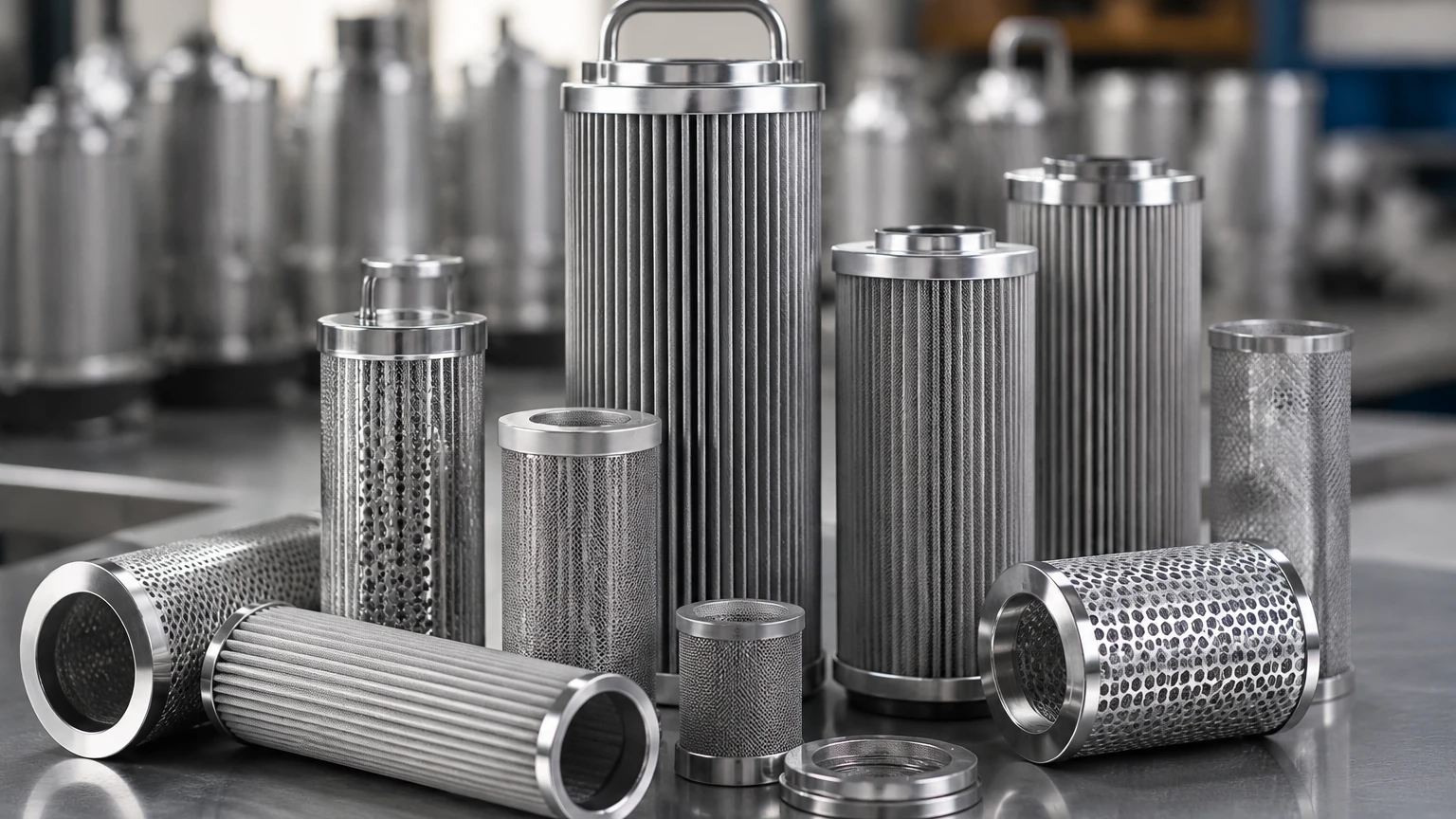
When evaluating options from an industrial dust collector filter manufacturer, the choice of media is paramount. While fabric bags and pleated paper cartridges are common in light-duty applications, heavy-duty industrial processes often require the robustness of stainless steel wire mesh or sintered metal components. These materials provide superior structural integrity, allowing the filter to maintain its shape and filtration accuracy even under pulsating loads or high-velocity airflow.
Key Engineering Considerations for Filter Selection
Engineers must look beyond the initial purchase price and focus on technical specifications that align with their specific application requirements. Several factors determine the effectiveness of a filtration component:
Filtration Efficiency and Micron Ratings
Filtration efficiency is defined by the ability of the media to capture particles of a specific size. In industrial dust collection, the "micron rating" indicates the smallest particle size the filter can reliably intercept. Manufacturers like Kaifil specialize in precision wire mesh that provides consistent pore sizes, ensuring that fine dust is captured without prematurely blinding the filter surface.
Pressure Drop and Permeability
Pressure drop, or the resistance to airflow, directly affects the energy consumption of the dust collection system. A filter with high permeability allows for greater airflow at lower pressures, reducing the load on the system's fan. An experienced industrial dust collector filter manufacturer designs components that balance high capture rates with optimal permeability to maximize energy efficiency.
Temperature and Chemical Compatibility
Many industrial processes involve high-temperature exhaust or the presence of volatile organic compounds (VOCs). Standard polyester or cellulose filters may degrade rapidly in these conditions. Stainless steel (such as 304 or 316L grades) offers excellent resistance to thermal stress and chemical corrosion, making it the preferred choice for demanding environments in the chemical and pharmaceutical industries.
Evaluating an Industrial Dust Collector Filter Manufacturer
Selecting the right partner involves assessing more than just their product catalog. A reliable industrial dust collector filter manufacturer should demonstrate a deep understanding of fluid dynamics and material engineering. When vetting potential suppliers, consider the following criteria:
Advanced Manufacturing Capabilities
The quality of a filter is a direct result of the manufacturing process. Precision welding, accurate pleating, and rigorous assembly standards are necessary to ensure that there are no bypass paths for dust to escape. For those looking to optimize their systems, reviewing the Main Page of a specialist manufacturer can provide insights into the range of available technologies and manufacturing standards.
Material Traceability and Quality Control
In regulated industries like food and beverage or pharmaceuticals, material traceability is non-negotiable. A professional manufacturer must provide documentation for the alloys used and ensure that the manufacturing environment prevents contamination. Quality control protocols, including bubble point testing or pressure testing, verify that every component meets the specified filtration accuracy before it leaves the factory.
OEM and Customization Expertise
Industrial dust collectors are rarely one-size-fits-all. Variations in housing dimensions, mounting flanges, and airflow patterns often necessitate customized filter designs. A manufacturer with strong OEM (Original Equipment Manufacturer) capabilities can adapt existing designs or develop entirely new filtration components to fit specific machinery, ensuring a perfect seal and optimal performance.
Customization and Technical Support in Filtration Solutions
The ability to customize filtration components is a significant advantage for engineers dealing with legacy systems or proprietary equipment. A specialized industrial dust collector filter manufacturer works closely with clients to understand the specific dust characteristics—such as particle shape, abrasiveness, and moisture content—to recommend the most effective filter structure.
Customization options often include:
- Variable Mesh Layers: Combining different grades of wire mesh to create a multi-stage filtration effect within a single cartridge.
- Reinforced Structures: Adding internal cores or external cages to withstand high-pressure cleaning cycles (such as pulse-jet cleaning).
- Custom End Caps: Engineering specific mounting interfaces to ensure tool-free installation and leak-proof seals.
Technical support is equally important. Engineers require data-driven advice on replacement cycles and maintenance procedures to prevent unplanned downtime. A manufacturer that provides comprehensive technical documentation and engineering consultations helps facilities transition from reactive maintenance to a more predictable, proactive approach.
Total Cost of Ownership and Maintenance Cycles
While stainless steel filters often carry a higher upfront cost than disposable fabric or paper media, the Total Cost of Ownership (TCO) is frequently lower in industrial settings. The durability of metal filters allows them to be cleaned and reused multiple times, significantly reducing the frequency of replacement and the associated waste disposal costs.
Cleaning vs. Replacement
In many dust collection applications, filters are subjected to pulse-jet cleaning to dislodge accumulated dust cake. Over time, disposable media can develop "pinholes" or structural fatigue from these pulses. Stainless steel filters are engineered to withstand thousands of cleaning cycles without compromising filtration integrity. When the filter eventually reaches its terminal pressure drop, it can often be ultrasonically cleaned or chemically washed to restore its original permeability.
System Uptime
Every time a dust collector is shut down for a filter change, production stops. By using high-durability components from a reputable industrial dust collector filter manufacturer, facilities can extend the intervals between maintenance windows, thereby increasing overall plant productivity and reducing labor costs associated with filter handling.
Applications Across Demanding Industries
Different industries present unique challenges that require specialized filtration solutions. Understanding these applications helps in selecting the right filter configuration:
- Chemical Processing: Filters must resist aggressive solvents and acidic or alkaline vapors. Stainless steel wire mesh filters are ideal here due to their inert nature and high mechanical strength.
- Food and Beverage: Filtration components must be easy to clean and comply with food safety standards. Smooth-surface metal filters prevent the buildup of organic matter and support CIP (Clean-In-Place) processes.
- Pharmaceuticals: Precision is the priority. Capturing active pharmaceutical ingredients (APIs) requires high-efficiency filters that can be validated for specific micron retention levels.
- Hydraulic and Power Generation: In these sectors, filters often protect sensitive valves and pumps from fine metallic dust. Precision metal cartridges ensure that the fluid or air remains within the required cleanliness codes.
Conclusion: Selecting a Strategic Filtration Partner
The performance of an industrial dust collection system is only as good as the filters installed within it. Choosing a specialized industrial dust collector filter manufacturer allows engineers to leverage material expertise and advanced manufacturing techniques to solve complex filtration challenges. Whether the goal is to improve air quality, protect expensive machinery, or reduce long-term operational costs, the transition to high-quality, customized metal filtration components offers a clear path to improved efficiency.
By focusing on technical specifications, material durability, and the manufacturer's ability to provide tailored engineering support, purchasing teams can ensure they are investing in a solution that will perform reliably in the most demanding industrial environments. For those seeking to explore specific product options and technical application support, visiting the manufacturer's Main Page is an essential step in the selection process. In the world of industrial filtration, precision engineering and quality manufacturing are the foundations of long-term success.
Download Industrial Dust Collector Filter Manufacturer as a PDF
