


Housing Bag Filter
In industrial liquid processing, the housing bag filter serves as a critical component for removing particulate matter from fluid streams. These systems are engineered to handle high flow rates and high dirt-loading capacities, making them a staple in chemical processing, water treatment, food and beverage production, and pharmaceutical manufacturing. Selecting the correct housing bag filter requires a deep understanding of fluid dynamics, material compatibility, and the specific mechanical requirements of the application.
At Kaifil, we specialize in the manufacturing of precision stainless steel filtration components. Understanding the nuances of filter housing design is essential for engineers and procurement teams who must balance operational efficiency with long-term durability. This guide explores the technical considerations, engineering standards, and selection criteria necessary for implementing an effective bag filtration system.
The Fundamental Design of a Housing Bag Filter
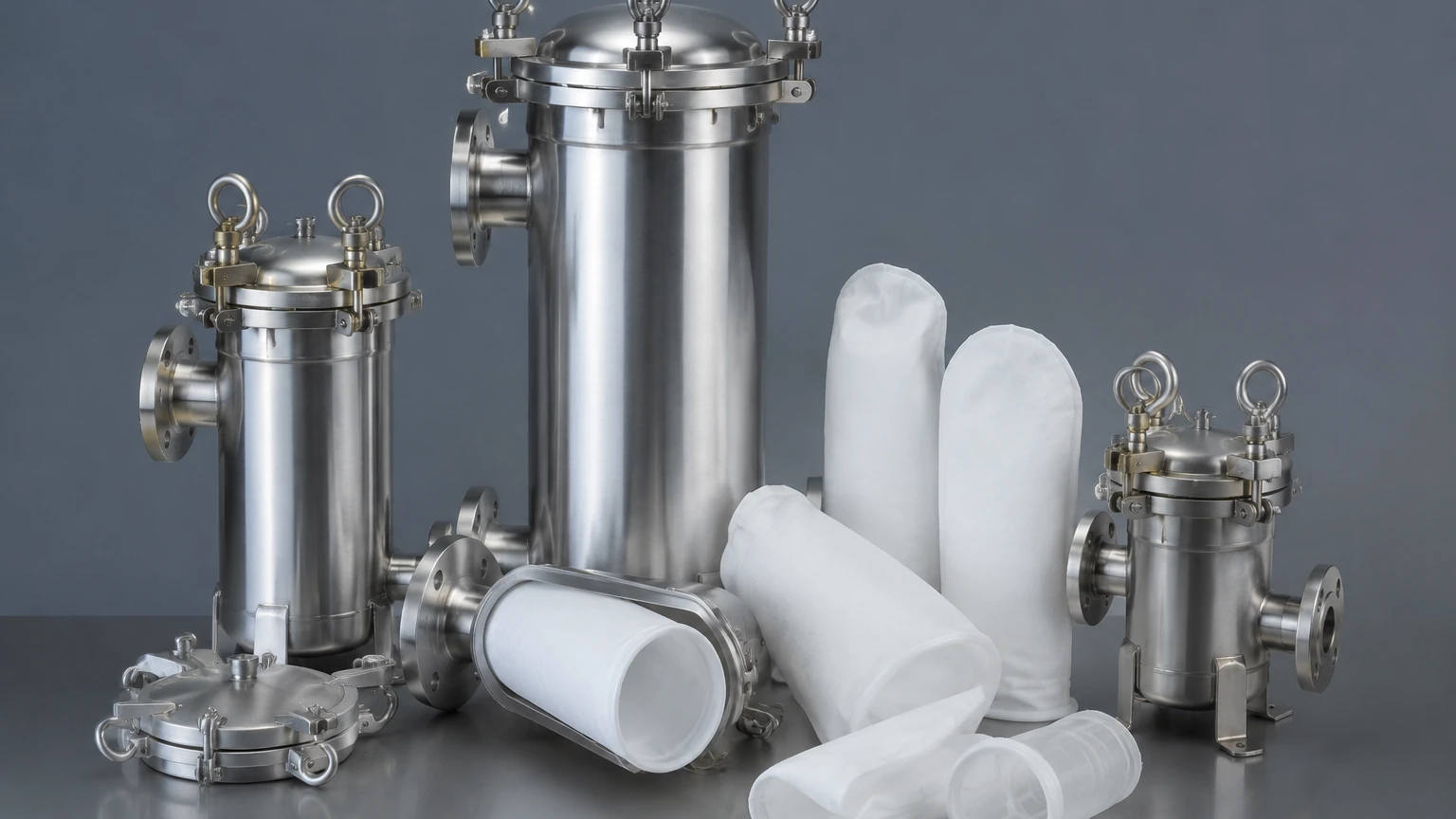
A housing bag filter is essentially a pressure vessel designed to hold a filter bag internally. The system consists of three primary components: the outer pressure housing, an internal perforated support basket (usually made of stainless steel), and the replaceable filter bag itself.
The fluid enters the housing through an inlet nozzle, typically located at the top or side of the vessel. It then flows into the filter bag, which is supported by the internal basket to prevent bursting under pressure. As the liquid passes through the bag from the inside out, contaminants are trapped within the bag, and the clean filtrate exits through the bottom or side outlet. This "inside-to-outside" flow pattern ensures that all captured debris remains contained within the bag, preventing downstream contamination during the bag change-out process.
Single-Bag vs. Multi-Bag Housings
Depending on the required flow rate, engineers must choose between single-bag and multi-bag configurations:
1. Single-Bag Housings: These are used for lower flow rates or batch processes. They are compact and easier to maintain in smaller installations.
2. Multi-Bag Housings: For high-volume industrial applications, multi-bag housings can accommodate anywhere from 2 to 24 or more bags in a single vessel. This design allows for massive flow capacities and reduces the frequency of system shutdowns by distributing the particulate load across a larger surface area.
Engineering Materials and Chemical Compatibility
The choice of material for a housing bag filter is governed by the chemical nature of the fluid and the environmental conditions of the facility. Stainless steel is the industry standard due to its corrosion resistance and structural integrity.
Stainless Steel 304 vs. 316L
* SS304: Suitable for general industrial applications, including water treatment and mildly corrosive environments. It offers excellent mechanical properties and cost-effectiveness.
* SS316L: The preferred choice for pharmaceutical, food and beverage, and aggressive chemical applications. The addition of molybdenum provides superior resistance to chlorides and pitting corrosion. For high-purity applications, 316L is often electropolished to achieve a smooth surface finish that prevents bacterial growth and eases the cleaning process.
Sealing and Gasket Selection
The integrity of a housing bag filter depends heavily on the seals used at the lid and the bag interface. Common seal materials include:
* Buna-N (Nitrile): Standard for water and oil-based fluids.
* EPDM: Excellent for steam, water, and some acids/alkalis, but not suitable for petroleum oils.
* Viton (FKM): High-temperature resistance and broad chemical compatibility, particularly with oils and solvents.
* PTFE (Teflon): Used in the most aggressive chemical environments where elastomeric seals might fail.
Technical Evaluation Criteria for Filter Selection
When specifying a housing bag filter, engineers must evaluate several performance parameters to ensure the system meets the operational demands without premature failure or excessive maintenance.
Flow Rate and Viscosity
The maximum flow rate of a housing is determined by the nozzle size and the internal volume. However, the actual flow rate is heavily influenced by the viscosity of the fluid. Higher viscosity liquids (such as oils or resins) require larger housings or a reduction in flow speed to maintain a manageable pressure drop. If the flow velocity is too high, it can cause turbulence that damages the filter bag or forces particles through the media.
Design Pressure and Temperature
Most industrial filter housings are designed to meet ASME Section VIII standards or equivalent international codes. Standard housings are typically rated for 150 PSI (10 bar), but high-pressure applications may require reinforced vessels rated for 300 PSI or higher. Temperature also plays a role; as temperature increases, the allowable working pressure of the stainless steel decreases. It is vital to confirm that the housing, seals, and filter bags are all rated for the maximum operating temperature of the process.
Particle Loading and Micron Rating
The micron rating of the filter bag determines the size of the particles removed. However, the housing must be sized to handle the total volume of solids expected between change-outs. If a process involves high particle loading, a larger housing (or a multi-bag system) is necessary to provide enough internal volume for the accumulated sludge without causing a rapid increase in differential pressure.
Comparing Bag Filters and Cartridge Filters
A common question for purchasing teams is whether to use a housing bag filter or a cartridge filter system. Both have distinct advantages depending on the application.
| Feature | Housing Bag Filter | Cartridge Filter |
| :— | :— | :— |
| Flow Capacity | Very High | Moderate to High |
| Dirt-Holding Capacity | High (Internal volume) | Lower (Surface/Depth area) |
| Filtration Precision | 1 to 1000+ Microns | Sub-micron to 100 Microns |
| Operating Cost | Lower (Inexpensive bags) | Higher (Cartridge replacement) |
| Application | Pre-filtration, high solids | Final filtration, high precision |
Bag filters are generally the preferred choice for "roughing" or pre-filtration where large amounts of debris must be removed cost-effectively. Cartridge filters are better suited for critical polishing stages where sub-micron retention is required.
Installation and Operational Best Practices
Proper installation and maintenance are essential to the longevity of the housing bag filter and the quality of the filtrate.
Preventing Bypass
One of the most significant risks in bag filtration is "bypass," where fluid leaks around the top of the bag rather than passing through the media. This is often caused by improper seating of the bag or the use of low-quality bags that do not match the housing's sealing ring. High-quality housings utilize a compression-style lid or a specialized hold-down device to ensure the bag remains firmly seated against the internal basket flange.
Monitoring Differential Pressure
Every housing bag filter should be equipped with pressure gauges on both the inlet and outlet. The difference between these two readings—the differential pressure (Delta P)—indicates how much the bag is blinded by contaminants.
* Initial Delta P: Usually 1-2 PSI for a clean bag.
* Change-out Delta P: Typically between 15-25 PSI.
Exceeding the recommended change-out pressure can lead to bag rupture or the "unloading" of trapped contaminants back into the process stream.
Safety Considerations
Because these are pressure vessels, safety is paramount. Before opening the housing for a bag change, the system must be fully depressurized and drained. Many modern housings include safety vent valves and interlock systems to prevent the lid from being opened while under pressure.
Customization and OEM Solutions from Kaifil
Standard off-the-shelf housings may not always meet the specific spatial or mechanical requirements of a complex industrial skid. As a specialized manufacturer, Kaifil provides customized stainless steel filtration solutions tailored to unique engineering specifications. Whether you require specific inlet/outlet configurations (such as flanged, NPT, or sanitary tri-clamp), specialized surface finishes, or custom internal support structures, our team works closely with global partners to deliver reliable components.
Our expertise extends beyond the housing itself to the precision metal filter components that ensure the system operates at peak efficiency. By integrating advanced manufacturing techniques with a deep understanding of industrial filtration, we help our clients achieve lower total cost of ownership through durable, high-performance equipment.
For more information on our full range of stainless steel filtration products and custom manufacturing capabilities, please visit our Main Page.
Total Cost of Ownership (TCO) in Bag Filtration
When evaluating a housing bag filter, the initial purchase price is only one part of the equation. Technical professionals should also consider:
1. Labor Costs: How quickly can a bag be changed? Quick-opening covers (such as V-clamp or swing-bolt designs) can significantly reduce downtime.
2. Disposal Costs: Larger bags hold more waste, potentially reducing the frequency of disposal, but the weight and volume of the waste must be managed.
3. Energy Consumption: A poorly sized housing with a high initial pressure drop will require more pump energy to maintain the required flow rate.
4. Durability: A high-quality stainless steel housing can last for decades if maintained properly, whereas lower-grade materials may succumb to corrosion or mechanical fatigue.
Conclusion
The housing bag filter remains one of the most versatile and efficient tools in the industrial filtration arsenal. By carefully considering material selection, flow dynamics, and operational safety, engineers can implement a system that provides consistent performance and protects downstream equipment. Whether you are designing a new water treatment plant or upgrading a chemical processing line, the right housing is the foundation of a successful filtration strategy.
At Kaifil, we are committed to supporting engineers and purchasing teams with the technical data and high-quality manufacturing needed for demanding applications. From material selection to customized designs, we provide the filtration components that keep industrial processes running smoothly.
