


Hygienic Filters Strainer
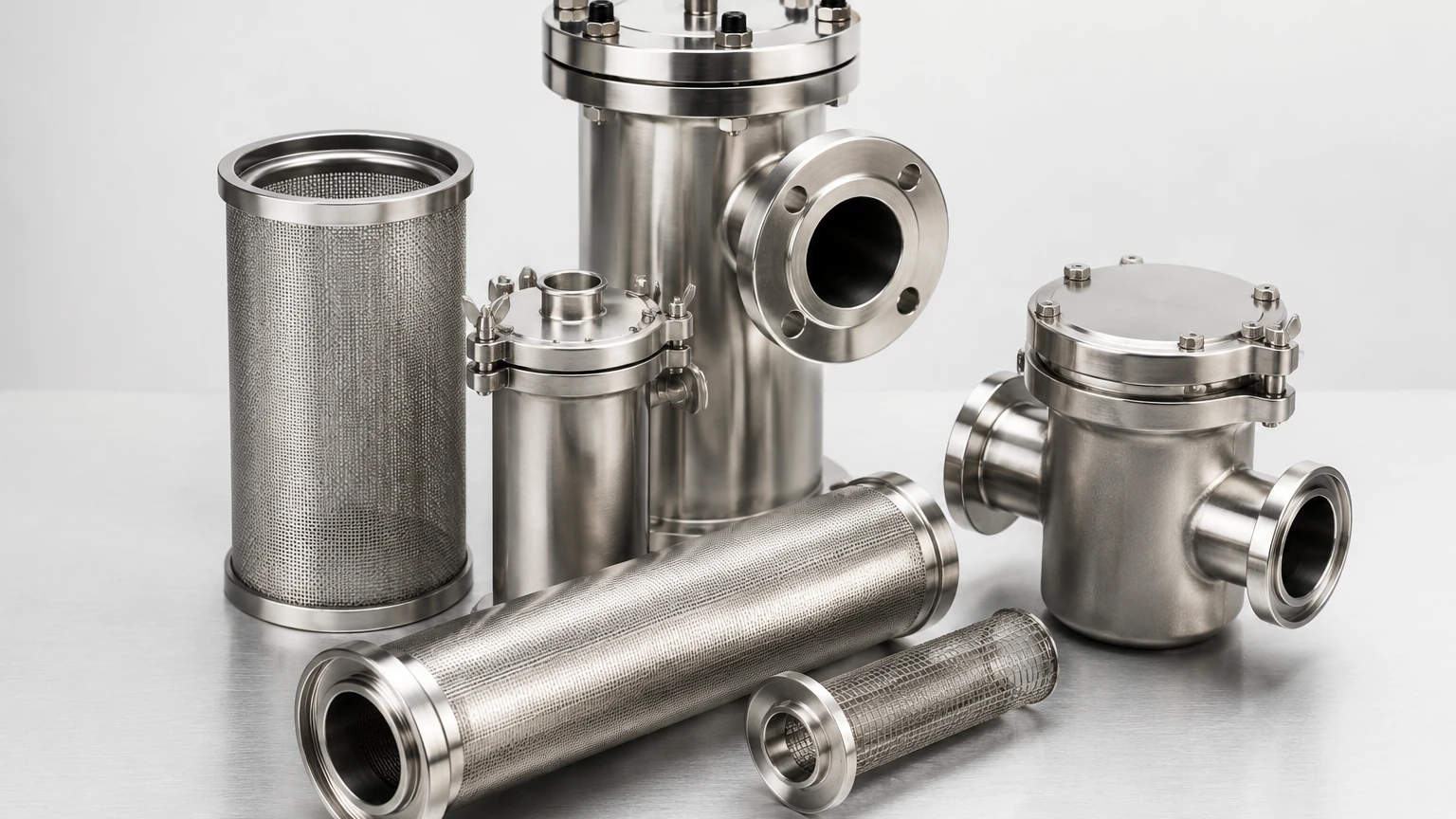
In the landscape of industrial processing—specifically within the food, beverage, pharmaceutical, and chemical sectors—maintaining the integrity of the process stream is a non-negotiable requirement. A hygienic filters strainer serves as the primary line of defense against particulate contamination, ensuring that final products meet stringent safety standards while protecting downstream equipment like pumps, heat exchangers, and homogenizers from mechanical damage. Unlike standard industrial strainers, hygienic variants are engineered with specific geometries and surface finishes to prevent bacterial growth and facilitate complete sterilization.
For engineers and procurement professionals, selecting the correct filtration component involves more than just matching pipe sizes. It requires a deep understanding of fluid dynamics, material science, and sanitary design principles. As a specialized manufacturer, Kaifil provides precision-engineered stainless steel filtration solutions designed to meet these demanding technical specifications.
The Engineering Distinction: Filters vs. Strainers
While the terms are often used interchangeably in casual conversation, there is a technical distinction between a filter and a strainer that dictates their application in a sanitary processing line.
Strainers
A strainer is typically used for the removal of larger, macro-sized particles (usually 75 microns and above). In a hygienic context, a hygienic filters strainer often utilizes perforated metal or heavy-duty wedge wire to trap debris such as fruit seeds, gasket fragments, or scale. They are designed for low pressure drop and high flow rates, often serving as a "police" filter to protect expensive machinery.
Filters
Filters are utilized for finer separation, often targeting particles in the sub-micron to 50-micron range. These components frequently employ multi-layered wire mesh or sintered metal media. In hygienic applications, the filtration media must be robust enough to withstand high-pressure differentials without shedding fibers or bypass, ensuring that the purity of the pharmaceutical or food-grade liquid is maintained.
Material Selection and Surface Integrity
The choice of material is the foundation of any hygienic filtration system. Stainless steel is the industry standard due to its inherent corrosion resistance and ability to withstand aggressive cleaning chemicals.
1. AISI 316L Stainless Steel: This is the preferred material for most hygienic applications. The "L" denotes low carbon content, which minimizes carbide precipitation during welding, thereby enhancing corrosion resistance at the weld joints. It is particularly resistant to pitting and crevice corrosion in chloride-rich environments, common in food processing.
2. AISI 304 Stainless Steel: While suitable for less corrosive environments or non-product contact surfaces, 304 is generally reserved for external components or applications where chemical exposure is minimal.
Surface Finish and Ra Values
In a sanitary environment, the smoothness of the internal surface is critical. Rough surfaces provide "harbors" where bacteria can colonize and resist cleaning. Hygienic filters are typically polished to a specific Roughness Average (Ra).
* Mechanical Polishing: Often achieves an Ra of <0.8 μm.
* Electropolishing: This electrochemical process removes a microscopic layer of the stainless steel, rounding off peaks and valleys to achieve an ultra-smooth finish (often <0.4 μm) and enhancing the protective chromium oxide layer.
Key Design Features of Hygienic Filters
To be classified as truly hygienic, a filter or strainer must adhere to specific design criteria that eliminate "dead legs" or areas where fluid can stagnate.
Sanitary Connections
Standard NPT or BSP threads are avoided in the product stream because the thread gaps are impossible to clean effectively. Instead, hygienic systems utilize:
* Tri-Clamp (Tri-Clover) Fittings: These use a gasket and a heavy-duty clamp to create a flush, crevice-free joint.
* DIN/SMS Unions: Common in European and international dairy applications, these utilize a threaded nut and a captive gasket to ensure a sanitary seal.
Housing Configurations
* Inline (Straight-Through): Ideal for high-flow applications where space is limited and a straight flow path is required.
* L-Type (90-Degree): Often used at the corners of piping systems, allowing for easy access to the filter element without dismantling the entire line.
* Y-Strainers: While common, specialized hygienic Y-strainers must be designed with specific angles to ensure they are fully self-draining when installed in the correct orientation.
Gasket and Seal Compatibility
The seals within a hygienic filter must be chemically compatible with both the process fluid and the cleaning agents (CIP solutions). Common materials include EPDM, Silicone, PTFE (Teflon), and Viton. Each has different temperature and chemical resistance profiles that must be evaluated during the design phase.
Performance Evaluation and Sizing
Selecting a hygienic filters strainer requires a calculated approach to ensure it does not become a bottleneck in the production process. Engineers should focus on the following parameters:
Micron Rating and Open Area
The micron rating defines the size of the particles the filter will retain. However, the "open area" of the filter element is equally important. A higher open area percentage reduces the initial pressure drop and extends the time between cleaning cycles. For example, a wedge wire element might offer superior structural strength for high-viscosity fluids like honey or syrups, whereas a fine wire mesh provides higher precision for water-thin liquids.
Flow Rate vs. Pressure Drop (ΔP)
Every filter introduces resistance to the flow. It is essential to calculate the clean pressure drop to ensure the system pump can handle the load. As the filter accumulates debris, the pressure drop increases. A common engineering rule is to size the filter so that the initial clean pressure drop does not exceed 2-3 psi (0.14-0.2 bar).
Viscosity Considerations
Fluid viscosity significantly impacts filtration performance. High-viscosity fluids require larger surface areas and potentially coarser filtration media to prevent rapid blinding of the filter element. Kaifil's engineering team works with clients to determine the optimal mesh-to-surface-area ratio based on the specific rheological properties of the fluid.
Operational Efficiency: CIP and SIP Compatibility
In modern B2B manufacturing, downtime is a significant cost driver. Therefore, hygienic filtration systems must be compatible with automated cleaning protocols.
* Clean-in-Place (CIP): The filter must be designed so that cleaning chemicals (caustics and acids) can reach every internal surface at sufficient velocity to remove biofilms and debris without manual disassembly.
* Sterilize-in-Place (SIP): For pharmaceutical and aseptic food applications, the filter housing and element must withstand saturated steam at temperatures typically ranging from 121°C to 134°C for extended periods.
Customization and OEM Solutions
Off-the-shelf solutions often fail to meet the unique constraints of specialized industrial processes. Customization is where technical expertise becomes a value-add. Whether it is a unique housing geometry to fit into a tight skid-mounted system or a specialized reinforced filter element for high-pressure hydraulic applications, custom manufacturing ensures the component integrates seamlessly into the existing infrastructure.
Kaifil specializes in these custom stainless steel filtration solutions. By controlling the manufacturing process—from material selection to the final weld—we ensure that every component meets the specific filtration accuracy and durability requirements of our global partners. For more detailed technical specifications and to explore our full range of capabilities, you can visit our Main Page.
Total Cost of Ownership (TCO)
When procuring a hygienic filters strainer, the initial purchase price is only one component of the total cost. Procurement teams should also evaluate:
* Replacement Frequency: How durable is the filter element? Sintered or wedge wire elements often have a much longer service life than standard wire mesh.
* Cleaning Time: Does the design allow for rapid manual cleaning or efficient CIP?
* Product Loss: Does the filter housing design minimize the volume of product retained within the unit during changeovers?
* Seal Longevity: High-quality gaskets may have a higher upfront cost but prevent expensive leaks and contamination events.
Conclusion
The implementation of a high-quality hygienic filters strainer is a critical step in optimizing industrial process performance. By focusing on material integrity, sanitary design, and precise performance metrics, engineers can ensure long-term reliability and product safety. As industries move toward higher levels of automation and more stringent regulatory requirements, the role of precision-manufactured filtration components becomes even more central to operational success.
Kaifil remains committed to providing the engineering support and manufacturing quality necessary to solve complex filtration challenges. Whether you are designing a new processing line or upgrading an existing system, selecting a partner with deep technical knowledge in stainless steel filtration is essential for achieving efficient, durable, and cost-effective results. To review product options and application support, please refer to the resources available on our Main Page.
