


Filter for Vacuum Pump
In industrial vacuum systems, the integrity of the vacuum pump is paramount to the efficiency of the entire process. Whether utilized in chemical processing, pharmaceutical manufacturing, or food packaging, vacuum pumps are susceptible to damage from particulate matter, liquid slugs, and chemical vapors. A high-quality filter for vacuum pump applications serves as the primary defense mechanism, ensuring that contaminants do not reach the internal components of the pump or escape into the workplace environment. Selecting the correct filtration solution requires a deep understanding of flow dynamics, material compatibility, and the specific demands of the industrial application.
The Critical Role of Filtration in Vacuum Systems
Vacuum pumps operate by removing gas molecules from a sealed volume to create a partial vacuum. During this process, the pump often encounters various forms of contamination. Without an effective filter for vacuum pump protection, these contaminants can lead to catastrophic mechanical failure, increased maintenance costs, and significant downtime.
Filtration in vacuum systems generally falls into two categories: inlet filtration and exhaust filtration. Inlet filters are installed on the suction side of the pump to prevent dust, debris, and process-side particulates from entering the pump chamber. This is especially critical for rotary vane and screw vacuum pumps, where tight tolerances between moving parts can be compromised by even microscopic particles. Exhaust filters, on the other hand, are designed to capture oil mist or smoke generated by oil-sealed pumps, ensuring that the air discharged into the facility meets environmental and safety standards.
Engineering Considerations for Material Selection
When specifying a filter for vacuum pump use, material selection is perhaps the most critical engineering decision. The material must withstand the chemical nature of the process gas, the operating temperature, and the physical stresses of the vacuum environment.
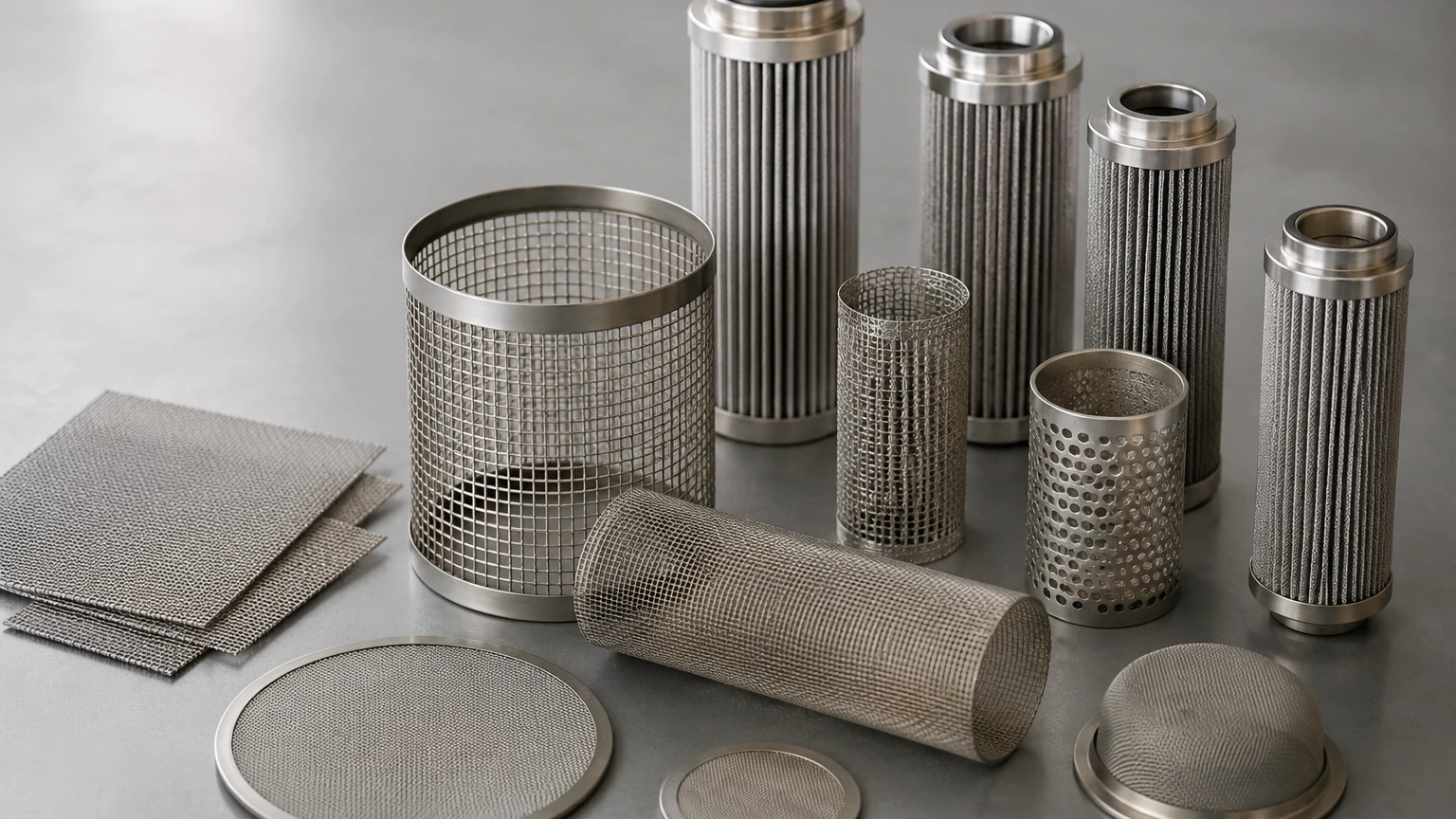
Stainless steel is often the preferred material for industrial filtration components due to its exceptional durability and resistance to corrosion. Kaifil specializes in manufacturing stainless steel wire mesh and sintered metal filters that provide high mechanical strength under pressure differentials. Unlike paper or synthetic media, stainless steel filters do not outgas significantly in high-vacuum applications and can be engineered to withstand aggressive solvents or acidic vapors commonly found in chemical processing.
Key material benefits include:
- Thermal Stability: Stainless steel maintains its structural integrity at elevated temperatures where plastic-based media might soften or fail.
- Corrosion Resistance: Grades like 304 and 316L offer protection against a wide range of industrial chemicals.
- Reusability: Many metal filters can be cleaned and returned to service, reducing the total cost of ownership compared to disposable alternatives.
Evaluating Micron Ratings and Filtration Efficiency
To choose the right filter for vacuum pump protection, engineers must evaluate the micron rating and the efficiency required for their specific process. The micron rating indicates the size of particles the filter is capable of capturing. However, it is important to distinguish between nominal and absolute ratings.
- Nominal Micron Rating: This represents an approximate value, indicating that the filter can trap a large percentage of particles of a certain size. It is often sufficient for general-purpose inlet protection where the goal is to stop large debris.
- Absolute Micron Rating: This is a more precise measurement, indicating the diameter of the largest spherical particle that can pass through the filter under specified test conditions. For high-precision vacuum pumps or processes involving sensitive downstream equipment, an absolute-rated filter is often necessary.
In vacuum applications, the challenge is to balance filtration efficiency with conductance. A filter that is too restrictive (i.e., having a very low micron rating with insufficient surface area) will cause a significant pressure drop, reducing the effective pumping speed of the vacuum system. Engineers must calculate the required surface area to ensure that the filter does not become a bottleneck in the system.
Types of Vacuum Pump Filters and Their Applications
Different vacuum technologies and processes require specialized filter designs. Understanding these variations is essential for optimizing system performance.
Particulate Inlet Filters
These are the most common filters used to protect the pump from solid contaminants. In industries like woodworking or powder handling, large volumes of dust are generated. An inlet filter with a pleated stainless steel element provides a high surface area, allowing for high flow rates while maintaining a compact footprint.
Oil Mist Eliminators (Exhaust Filters)
Oil-sealed vacuum pumps naturally discharge a small amount of oil mist during operation. Exhaust filters use coalescing media to capture these fine droplets and return the oil to the pump reservoir. For demanding industrial environments, stainless steel housings and high-efficiency elements are used to ensure long-term reliability and compliance with air quality regulations.
Chemical Traps and Cold Traps
In some cases, a standard particulate filter is insufficient. If the process involves condensable vapors or corrosive gases, a trap may be used. Cold traps use low temperatures to condense vapors before they reach the pump, while chemical traps use adsorbent materials to neutralize reactive gases. These components often incorporate metal mesh structures to support the adsorbent media or to facilitate heat transfer.
Performance Impact: Pressure Drop and Conductance
In any vacuum system, every component added to the inlet line reduces the effective pumping speed at the chamber. This reduction is known as a loss in conductance. When selecting a filter for vacuum pump installation, engineers must consider the "clean pressure drop"—the resistance offered by the filter when it is new—and the "terminal pressure drop"—the point at which the filter is considered blinded and must be replaced or cleaned.
To minimize the impact on vacuum performance, it is often advisable to oversize the filter housing and element. By increasing the filtration surface area, the velocity of the gas passing through the media is reduced, which lowers the pressure drop and extends the service life of the element. Stainless steel pleated elements are particularly effective here, as they offer significantly more surface area than a standard cylindrical mesh in the same volume.
Customization and OEM Solutions for Industrial Needs
Standard off-the-shelf filters do not always meet the unique requirements of specialized industrial equipment. Factors such as non-standard flange connections (KF, ISO, or CF), specific space constraints, or extreme chemical environments necessitate customized filtration solutions.
Kaifil provides extensive OEM capabilities, working with engineers to develop bespoke filtration components. This includes custom-designed wire mesh cartridges, sintered metal elements, and specialized housings. When designing a custom filter for vacuum pump integration, technical teams should confirm:
1. Connection Sizes: Ensuring compatibility with existing vacuum plumbing.
2. Seal Materials: Selecting O-rings (Viton, EPDM, Nitrile) that are compatible with the process gases.
3. Structural Reinforcement: For high-pressure differential applications, internal support cores may be required to prevent element collapse.
For more detailed technical specifications and to explore the full range of customization options, engineers can visit the Main Page of our site to review product options and application support.
Maintenance Protocols and Replacement Cycles
The longevity of a vacuum pump is directly tied to the maintenance of its filtration system. A neglected filter can lead to a variety of issues, including reduced vacuum levels, overheating of the pump motor, and increased oil contamination.
Monitoring Differential Pressure
The most effective way to monitor filter health is through differential pressure gauges. As the filter for vacuum pump use accumulates debris, the resistance to flow increases. Establishing a baseline pressure drop when the filter is clean allows operators to identify when the element is reaching its capacity. Typically, a filter should be serviced when the pressure drop exceeds a pre-defined limit set by the pump manufacturer.
Cleaning Stainless Steel Elements
One of the primary advantages of using stainless steel filtration media is the ability to clean and reuse the elements. Depending on the contaminant, cleaning methods may include:
- Ultrasonic Cleaning: Highly effective for removing fine particles trapped within the mesh pores.
- Backwashing: Using clean gas or liquid to flush contaminants out in the opposite direction of normal flow.
- Chemical Cleaning: Using compatible solvents to dissolve resins or chemical deposits.
It is important to inspect the mesh for any signs of mechanical damage or thinning after cleaning to ensure it still meets the required micron rating.
Common Risks of Improper Filtration
Failure to implement or maintain an adequate filter for vacuum pump protection introduces several risks to an industrial operation:
- Internal Abrasion: Hard particulates entering a rotary pump can score the cylinder walls and vanes, leading to a loss of compression and expensive repairs.
- Oil Degradation: In oil-sealed pumps, contaminants that pass through the inlet can mix with the pump oil, altering its viscosity and lubricating properties. This necessitates more frequent oil changes.
- Environmental Hazards: Inadequate exhaust filtration can lead to oil mist accumulation in the factory, creating slip hazards and respiratory concerns for personnel.
- Process Contamination: In some applications, such as semiconductor manufacturing or thin-film deposition, back-streaming of pump oil or particles can ruin the product being processed.
Conclusion: Selecting the Right Partner for Filtration
Choosing a filter for vacuum pump applications is an engineering decision that impacts the reliability and efficiency of industrial processes. By focusing on high-quality materials like stainless steel and considering the technical requirements of micron ratings, flow rates, and pressure drops, purchasing teams can ensure long-term performance. Kaifil remains committed to providing the technical expertise and manufacturing precision required to meet these demanding industrial standards. From standard wire mesh filters to fully customized OEM components, the focus is always on durability and precise filtration performance in the most challenging vacuum environments.
