


Engine Air Filter Foam Sheet
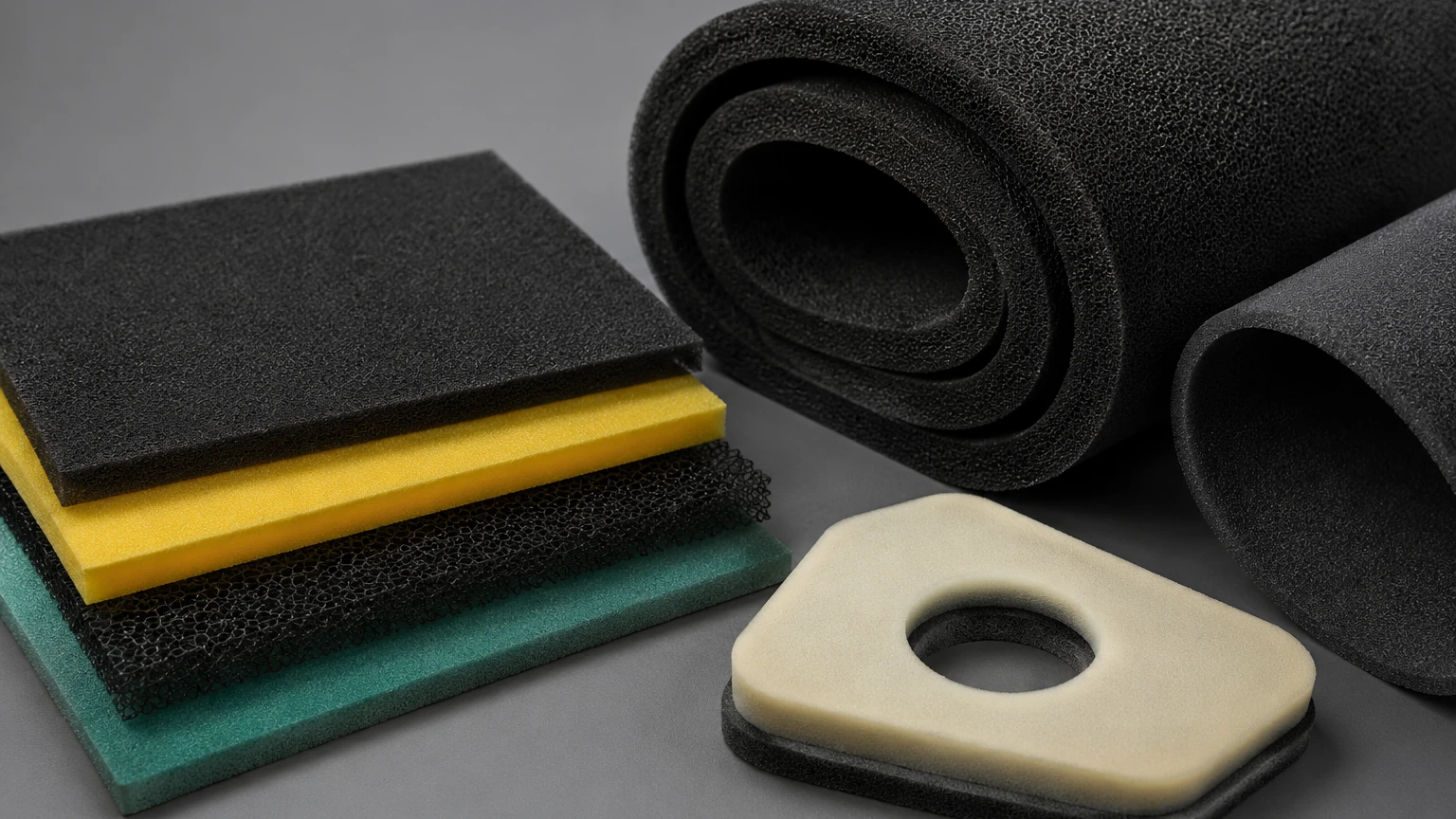
In the landscape of industrial engine protection, the engine air filter foam sheet serves as a critical primary or secondary barrier against airborne contaminants. While often viewed as a simple component, the engineering behind reticulated foam involves complex considerations of airflow dynamics, particulate capture efficiency, and material durability. For engineers and procurement teams managing heavy machinery, power generation units, or specialized industrial equipment, selecting the correct foam specification is essential to maintaining engine longevity and optimizing fuel efficiency.
As a manufacturer specializing in high-precision filtration solutions, Kaifil understands that filtration is rarely a single-stage process. Often, an engine air filter foam sheet works in tandem with stainless steel wire mesh or pleated cartridges to provide a comprehensive defense system. This guide examines the technical specifications, application logic, and selection criteria necessary for integrating foam filtration into industrial engine systems.
Understanding the Role of Foam Sheets in Engine Air Filtration
The primary function of an engine air filter foam sheet is to intercept large-diameter particulates—such as dust, sand, and organic debris—before they can reach the high-efficiency secondary filter or the engine’s intake manifold. In many industrial environments, such as construction sites or mining operations, the ambient air is heavily saturated with coarse matter that would quickly clog a fine-micron stainless steel or paper filter.
Foam sheets operate on the principle of depth filtration. Unlike surface filters that trap particles on a single plane, the open-cell structure of reticulated foam allows particles to penetrate the medium and become trapped within the complex web of polyurethane strands. This "tortuous path" ensures that the filter can hold a significant volume of contaminants before the pressure drop becomes critical. In many heavy-duty applications, these sheets act as a "pre-filter," significantly extending the service life of more expensive, permanent filtration components found on the Main Page of industrial filtration catalogs.
Technical Parameters: PPI, Density, and Material Composition
When specifying an engine air filter foam sheet, engineers must look beyond basic dimensions. The performance of the foam is dictated by several key technical metrics:
Pores Per Inch (PPI)
This is the most critical metric for foam filtration. PPI refers to the number of open cells per linear inch.
- Low PPI (10–30): These are coarse foams used for high-velocity airflow where only large debris needs to be stopped. They offer very low resistance to air but lower filtration efficiency for fine dust.
- Medium PPI (40–60): The industry standard for many industrial engine pre-filters. This range strikes a balance between capturing medium-sized particulates and maintaining a manageable pressure drop.
- High PPI (80–100): Used for fine filtration. While highly efficient, these sheets require frequent cleaning or replacement as they can restrict airflow quickly if the environment is dusty.
Reticulation Process
Standard foam often contains "windows" or membranes between the cell strands. For filtration, the foam must undergo a reticulation process—usually via a controlled combustion or chemical etch—that removes these membranes. This creates a 100% open-cell structure, which is mandatory for air filter applications to ensure maximum permeability.
Material Stability
Most engine air filter foam sheets are manufactured from polyester or polyether polyurethane. Polyester-based foams generally offer better resistance to hydrocarbons and oils, making them ideal for engine environments where oil mist or fuel vapors may be present. Polyether foams, conversely, offer superior resistance to moisture and hydrolysis, which is beneficial in humid or marine environments.
Evaluating Filtration Efficiency vs. Pressure Drop
In engine design, the "pressure drop" (the reduction in air pressure as it passes through the filter) is a vital KPI. A high pressure drop forces the engine to work harder to pull in air, leading to increased fuel consumption and potential overheating.
An engine air filter foam sheet must be engineered to provide the highest possible filtration efficiency with the lowest possible initial pressure drop. This is achieved by optimizing the thickness of the sheet. A thicker sheet increases the "depth" of the filtration, allowing for more dust-holding capacity, but it also increases the resistance.
Engineers must calculate the Face Velocity—the speed of the air at the surface of the foam—to ensure it does not exceed the material's structural limits. If the velocity is too high, the foam may deform or "blow through," allowing contaminants to bypass the filter entirely. When integrated with rigid components like those found in Kaifil’s custom stainless steel cartridges, the foam is often supported by a metal mesh to prevent such deformation under high vacuum loads.
The Synergy Between Foam Sheets and Stainless Steel Mesh Filters
In high-performance industrial filtration, a hybrid approach is often the most cost-effective. While an engine air filter foam sheet is excellent at handling high volumes of coarse dust, it lacks the absolute micron rating and structural permanence of stainless steel wire mesh.
Many OEMs design systems where a washable foam sheet wraps around a permanent stainless steel filter core. This configuration offers several advantages:
1. Cost Efficiency: The foam sheet, which is relatively inexpensive, takes the brunt of the environmental load.
2. Durability: The stainless steel core provides the final stage of precision filtration (down to 5–10 microns) and ensures the structural integrity of the filter assembly.
3. Ease of Maintenance: Operators can quickly swap or clean the outer foam layer during routine field maintenance without needing to replace the entire high-precision filter element.
For custom industrial projects, sourcing these components from a unified manufacturer ensures that the tolerances between the foam wrap and the metal housing are tight, preventing "air bypassing" which is a common cause of premature engine wear. Explore specialized metal support structures on our Main Page to understand how these hybrid systems are engineered.
Common Risks and Failure Modes in Industrial Applications
Failure to correctly specify or maintain an engine air filter foam sheet can lead to catastrophic engine failure. Technical teams should be aware of the following risks:
Chemical Degradation
If a foam sheet is not rated for chemical resistance, exposure to cleaning solvents, degreasers, or even certain engine oils can cause the polyurethane structure to crumble. These foam particles can then be sucked into the engine, causing internal damage.
Thermal Breakdown
Engine compartments are high-heat environments. Standard foams may become brittle or lose their elasticity if exposed to continuous temperatures exceeding 90°C (194°F). Specifying high-temperature resistant foam is necessary for engines operating in enclosed spaces or heavy-load cycles.
Dust Loading and "Surface Cake"
In extremely oily environments, dust can mix with oil mist on the surface of the foam, creating an impermeable "cake." Unlike dry dust which can penetrate the foam depth, this cake blocks the surface almost instantly, leading to a sudden and sharp increase in pressure drop.
Customization and Sourcing: What Engineers Need to Confirm
Before finalizing a procurement order for engine air filter foam sheets, technical professionals should confirm the following data points with their supplier:
* Environmental Exposure: Will the filter be exposed to UV light, salt spray, or specific chemical fumes?
* Airflow Requirements: What is the maximum CFM (Cubic Feet per Minute) the engine requires at peak load?
* Micron Rating vs. PPI: Does the PPI of the foam align with the particulate size distribution of the operating environment?
* Dimensional Tolerances: For gaskets and wrap-around filters, precision cutting is required to ensure no gaps exist at the seams.
Kaifil provides comprehensive customization for filtration components, ensuring that every element—from the foam pre-filter to the stainless steel mesh core—is optimized for the specific machinery it protects. By focusing on material science and engineering precision, we help B2B clients reduce the total cost of ownership through extended filter life and improved engine protection.
Maintenance Protocols for Reusable Foam Filter Elements
One of the primary benefits of using an engine air filter foam sheet in industrial settings is its reusability. However, the cleaning process must be standardized to prevent damage to the cell structure.
1. Inspection: Check for any signs of "pinholing" or crumbling. If the foam loses its rebound elasticity, it must be replaced.
2. Cleaning: Use a mild detergent or a manufacturer-approved solvent. Harsh chemicals can break down the polyester bonds in the foam.
3. Drying: Foam must be completely dry before re-installation. Moisture trapped in the cells can lead to mold growth or, more critically, can be pulled into the engine intake.
4. Oiling (Optional): Some foam filters are designed to be "tackified" with a specific filter oil to improve the capture of ultra-fine dust. If this is the case, the oil must be applied evenly to avoid creating "dead spots" that restrict airflow.
By following these technical guidelines and selecting high-quality materials, industrial operators can ensure their engines remain protected against the harshest environmental contaminants. For more information on custom filtration assemblies and precision metal components, review our product options and application support on the Main Page.
