


Coalescing Systems
In industrial process engineering, the separation of immiscible liquids or the removal of liquid aerosols from gas streams is a fundamental requirement for protecting downstream equipment, ensuring product purity, and meeting environmental regulations. Coalescing systems represent the primary technology used to achieve these separations efficiently. Unlike standard particulate filtration, which relies on mechanical sieving to remove solid contaminants, coalescing systems utilize the physical properties of fluids to merge small droplets into larger ones, facilitating separation through gravity or centrifugal force.
For engineers and procurement teams, understanding the mechanical and chemical principles behind coalescing systems is essential for selecting the right components. This guide examines the engineering considerations, material selection, and operational parameters that define high-performance coalescing technology.
Fundamental Principles of Industrial Coalescence
Coalescence is a multi-stage physical process. In a typical two-phase system—such as oil in water, water in fuel, or liquid droplets in a gas stream—the dispersed phase exists as microscopic droplets. These droplets are often too small to settle out of the continuous phase within a reasonable timeframe due to Brownian motion and fluid turbulence.
Coalescing systems work by passing the mixture through a specialized medium, often comprised of layers of stainless steel wire mesh or synthetic fibers. The process follows three distinct stages:
1. Interception and Attachment: As the fluid passes through the coalescing media, the small droplets collide with the fibers or mesh. Due to the high surface energy of the media or specific chemical treatments, the droplets attach to the surface.
2. Droplet Growth (Coalescence): As more fluid passes through, additional droplets are captured. These droplets travel along the fibers and merge with one another at the intersections of the media. This transformation from micro-droplets to macro-droplets is the core of the coalescing function.
3. Separation and Release: Once the droplets reach a sufficient size, the drag force of the fluid stream overcomes the adhesive force holding them to the media. The enlarged droplets are released. Because their mass has increased significantly, they either sink to the bottom (if they are denser than the continuous phase) or rise to the top (if they are less dense), where they can be mechanically collected and drained.
From an engineering perspective, the efficiency of this process is governed by Stokes' Law, which dictates that the settling velocity of a droplet is proportional to the square of its diameter. By increasing the droplet size through coalescing systems, the separation velocity increases exponentially, allowing for smaller vessel sizes and higher flow rates.
Key Components and System Architecture
A robust industrial coalescing system is rarely a single-stage component. To ensure longevity and efficiency, these systems are typically designed with a specific architecture:
The Pre-filtration Stage
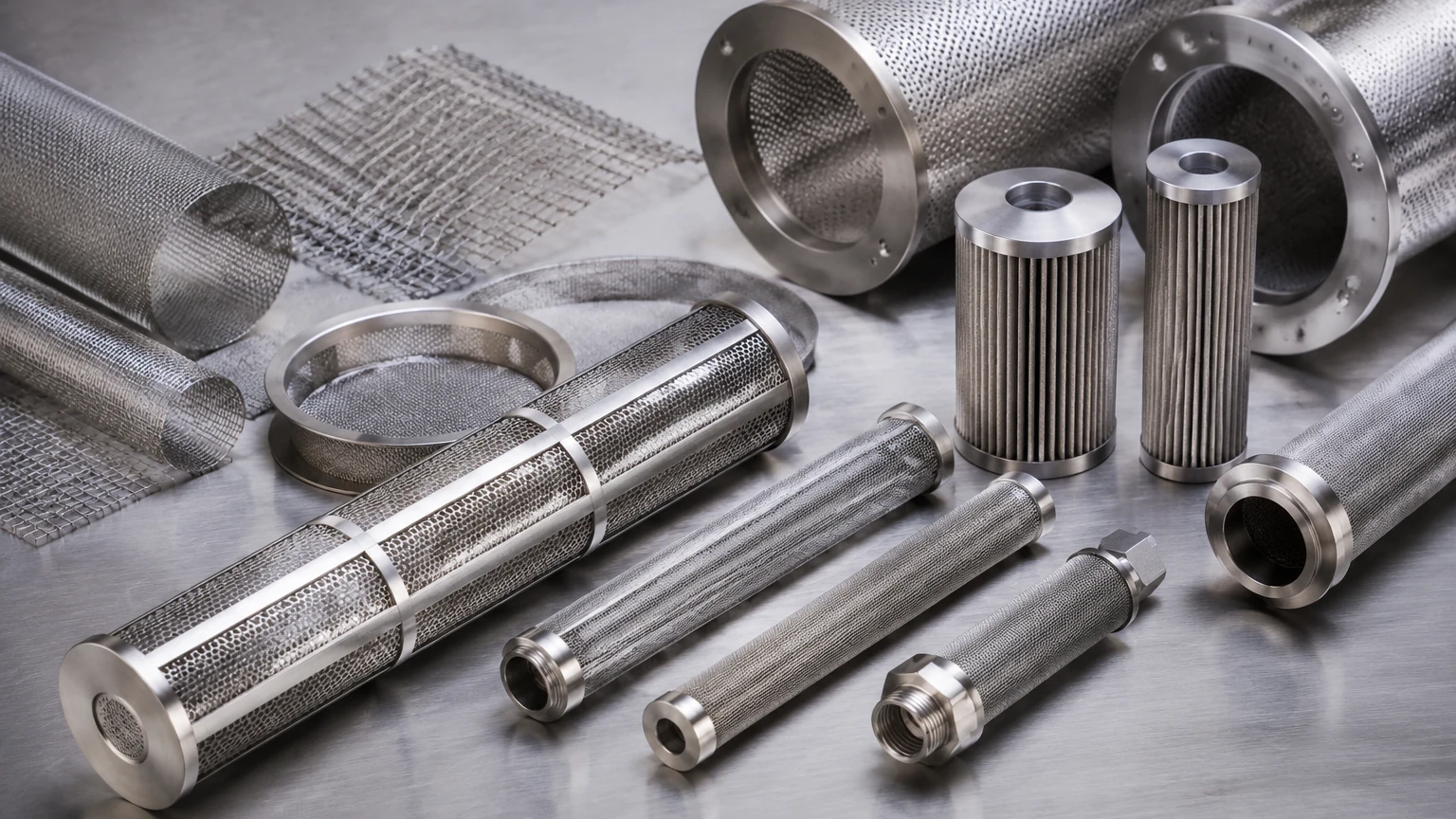
Coalescing media are highly sensitive to solid particulate contamination. If solids enter the coalescing element, they can plug the pore structure, lead to premature pressure drop, and interfere with the droplet-to-fiber attachment process. Therefore, a high-efficiency particulate filter—often a stainless steel filter cartridge—is installed upstream to remove solids before the fluid reaches the coalescer.
The Coalescer Element
This is the primary stage where droplet growth occurs. In demanding industrial environments, these elements often utilize stainless steel wire mesh or multi-layered metal felts. Stainless steel is preferred for its structural rigidity and resistance to the high differential pressures that can occur during process upsets.
The Separator Element
In liquid-liquid separation, a second stage known as the separator is often used. This element is typically made of a hydrophobic material (such as Teflon-coated stainless steel mesh) that allows the continuous phase (e.g., fuel) to pass through while repelling the enlarged water droplets, forcing them to settle into a collection sump.
Material Selection and Engineering for Durability
The choice of material for coalescing systems is dictated by the chemical compatibility of the fluids and the operating temperature. While polymer-based media are common in light-duty applications, industrial-grade systems frequently rely on stainless steel components.
Stainless Steel Wire Mesh
Stainless steel 304 and 316L are the industry standards for coalescing media in chemical processing and steam applications. The precision of the weave in wire mesh filters allows engineers to calculate the exact void volume and surface area available for coalescence. This predictability is vital for sizing systems in high-pressure hydraulic or gas processing environments.
Corrosion and Temperature Resistance
In applications involving aggressive solvents, high-temperature gases, or acidic refined products, synthetic media may degrade or lose their surface properties. Stainless steel maintains its mechanical integrity across a wide temperature range and resists chemical attack, ensuring that the coalescing efficiency does not diminish over time.
For engineers seeking high-performance components for industrial filtration, consulting a specialist manufacturer like Kaifil is essential. You can Review product options and application support on their Main Page to understand how custom stainless steel solutions integrate into modern coalescing systems.
Performance Evaluation and Sizing Criteria
Sizing coalescing systems requires more than just matching a pipe diameter. Engineers must evaluate several fluid dynamic variables to prevent "re-entrainment," a phenomenon where high fluid velocity breaks the enlarged droplets apart before they can be separated.
* Flux Rate: This is the flow rate per unit area of the media. If the flux is too high, the velocity of the fluid will strip droplets off the media before they have grown sufficiently.
* Interfacial Tension (IFT): This is a measure of the molecular force at the boundary between the two phases. Fluids with low IFT (often caused by the presence of surfactants) are much harder to coalesce because the droplets do not want to merge. In such cases, specialized media with high surface energy are required.
* Viscosity: Higher viscosity in the continuous phase slows down the movement of droplets toward the media and their subsequent settling. Systems handling high-viscosity oils require larger housings and more surface area to achieve the same efficiency as low-viscosity systems.
* Density Differential: The greater the difference in density between the two phases, the easier the separation. Coalescing systems are most critical when the densities are closely matched, as they provide the necessary droplet growth to overcome the lack of a strong buoyancy gradient.
Industrial Applications of Coalescing Systems
Coalescing technology is ubiquitous across sectors where fluid purity is a prerequisite for operational stability.
Oil and Gas Processing
In the midstream and downstream sectors, coalescing systems are used to remove water from hydrocarbons (dehydration) and to recover liquid glycols or amines from gas streams. Removing water is critical to prevent corrosion in pipelines and to protect downstream catalytic reactors.
Compressed Air and Gas
Compressed air systems often contain oil aerosols from the compressor lubrication. Coalescing filters remove these aerosols to prevent the contamination of pneumatic tools, paint spray systems, and food-grade packaging lines.
Chemical and Pharmaceutical Production
In solvent extraction processes, coalescing systems are used to separate organic and aqueous phases. The use of precision metal filter components ensures that no fiber migration occurs, which is a strict requirement in pharmaceutical manufacturing to maintain product sterility and purity.
Power Generation and Hydraulics
Water contamination in turbine oil or hydraulic fluid leads to loss of lubricity, component wear, and oil oxidation. Coalescing systems integrated into kidney-loop filtration units allow for the continuous removal of water, extending the life of both the fluid and the machinery.
Operational Maintenance and Troubleshooting
To maintain the effectiveness of coalescing systems, technical teams must implement a rigorous monitoring protocol. The most important metric is the differential pressure ($\Delta P$) across the coalescer element.
* Pressure Drop Monitoring: A gradual increase in $\Delta P$ usually indicates the buildup of solid particulates. If the $\Delta P$ exceeds the manufacturer's recommended limit (typically 15-25 psi for many industrial elements), the media may deform, leading to "channeling" where the fluid bypasses the media entirely.
* Effluent Quality Testing: Regular sampling of the downstream fluid is necessary to confirm that the system is meeting the required parts-per-million (PPM) target. A sudden spike in downstream water or oil concentration may indicate that the coalescing media has been blinded by surfactants or that the flow rate has exceeded the design capacity.
* Cleaning vs. Replacement: While many synthetic coalescing cartridges are disposable, stainless steel wire mesh filters can often be cleaned using ultrasonic baths or backflushing, depending on the nature of the contaminant. This capability significantly reduces the total cost of ownership in high-volume industrial applications.
Technical Checklist for Procurement
Before finalizing a specification for a coalescing system or replacement elements, engineers should confirm the following data points with their manufacturer:
1. Fluid Compatibility: Confirm that the housing and media (304 vs 316L stainless steel) are compatible with all chemicals in the process stream, including trace additives.
2. Target Efficiency: Define the required outlet purity (e.g., "remove water down to 10 ppm free water").
3. Operating Envelope: Provide the minimum, normal, and maximum flow rates, as well as the operating temperature and pressure.
4. Surfactant Presence: Identify if any soaps, detergents, or dispersants are present in the fluid, as these will drastically alter the required media surface treatment.
5. Customization Requirements: Determine if standard sizes fit the existing footprint or if custom-engineered cartridges are needed to optimize the flow path within an existing vessel.
By focusing on these technical boundaries, purchasing teams can ensure they invest in coalescing systems that provide long-term reliability and precise separation performance. As industrial processes become more complex, the role of high-quality metal filtration components continues to grow, providing the durability needed for the most demanding separation challenges.
