


Self Cleaning Screen
In industrial filtration, the efficiency of a process is often dictated by the ability to maintain consistent flow rates while removing particulate matter. A self cleaning screen is a specialized filtration component designed to remove solids from liquids automatically, without requiring manual intervention or process downtime. For engineers and facility managers, these systems represent a critical investment in operational continuity, particularly in high-volume or high-load applications where manual filter replacement would be cost-prohibitive.
Unlike static filters that must be removed and cleaned or replaced once they reach a specific pressure drop, a self cleaning screen utilizes an integrated mechanism to clear the filter surface while the system remains online. This capability is essential in industries such as chemical processing, water treatment, and food production, where even brief interruptions can lead to significant production losses.
Understanding the Mechanics of Self-Cleaning Screens
The fundamental purpose of a self cleaning screen is to manage the accumulation of "filter cake" or debris on the mesh or wedge wire surface. As particles are trapped, the differential pressure across the screen increases. Once a predetermined threshold is reached, the cleaning mechanism is activated. There are several primary methods used to achieve this:
Mechanical Scraper Systems
Mechanical cleaning involves a scraper blade or brush that moves across the surface of the screen. In an internally fed system, the scraper rotates or moves linearly to dislodge solids, which then fall into a collection chamber at the bottom of the housing. This method is particularly effective for viscous fluids or sticky contaminants that do not easily wash away with fluid pressure alone.
Backwash and Backflushing
Backwash systems use a portion of the filtered fluid (or an external clean fluid source) to flow in the reverse direction through the screen. This reverse flow lifts the accumulated debris off the screen surface and flushes it out through a waste valve. This is a common choice for water treatment applications where the particulate matter is relatively loose and non-adhesive.
Suction Scanning
High-precision self cleaning screens often employ a suction scanner. A nozzle moves in a spiral or linear path across the screen surface, creating a localized high-velocity vacuum effect. This pulls the debris off the screen and into a waste line. Suction scanning is highly efficient because it uses a minimal amount of flush water compared to traditional backwashing.
Material Selection and Structural Integrity
The performance of a self cleaning screen is heavily dependent on the materials used in its construction. Because these components are subject to constant mechanical movement and varying pressure differentials, durability is paramount. Stainless steel is the industry standard due to its corrosion resistance and mechanical strength.
1. Stainless Steel 304/316L: These are the most common grades. 316L is preferred for applications involving chlorides or acidic environments, such as seawater filtration or chemical processing, due to its superior pitting resistance.
2. Duplex Stainless Steel: For extreme environments where high pressure and highly corrosive fluids are present, duplex alloys provide the necessary tensile strength and chemical stability.
3. Wedge Wire vs. Wire Mesh:
* Wedge Wire: Known for its non-clogging V-shaped profile, wedge wire is ideal for heavy-duty self-cleaning applications. The widening gap ensures that once a particle passes the initial surface, it moves freely through the screen.
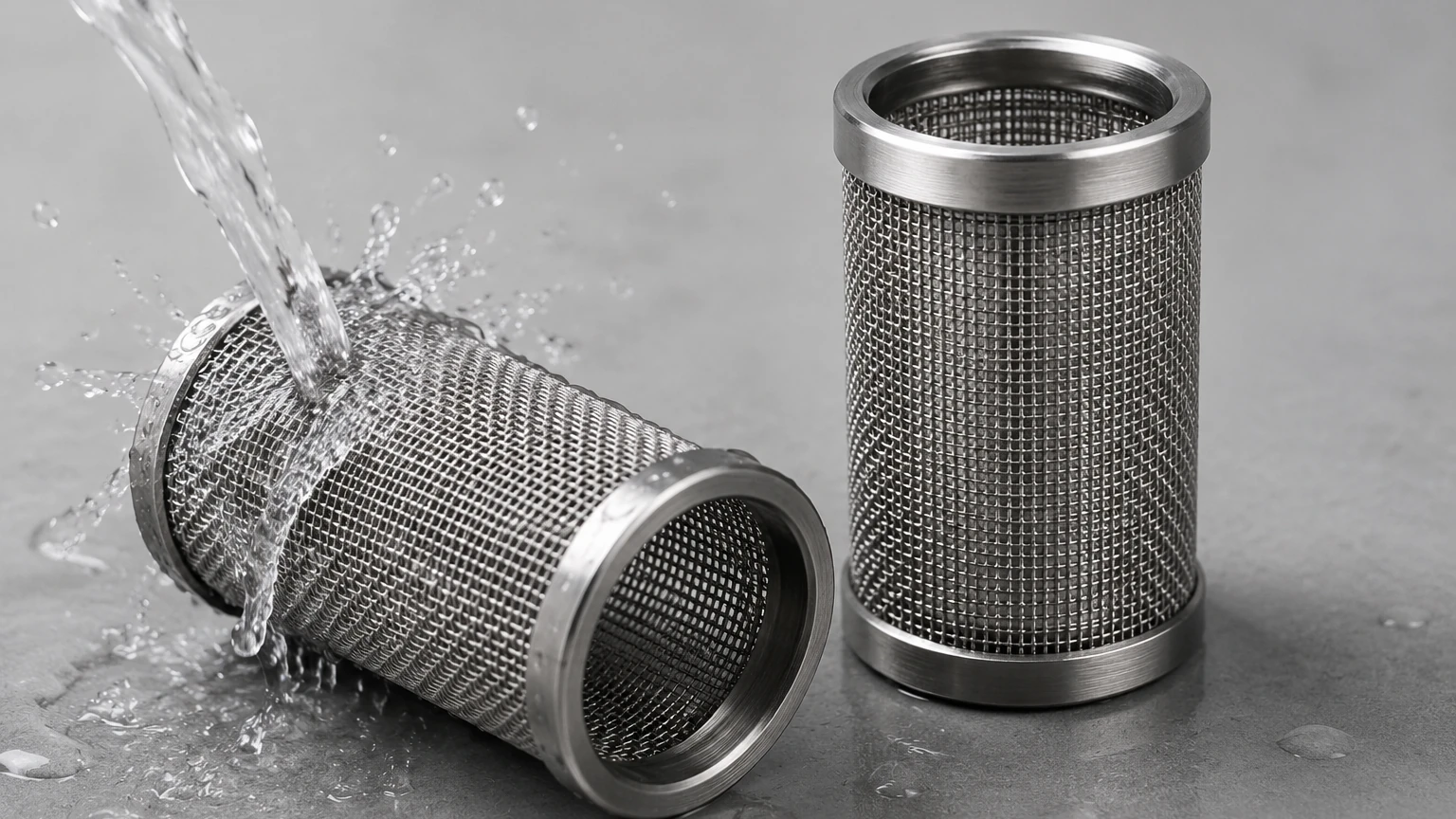
* Sintered Wire Mesh: For applications requiring finer filtration (down to 1-5 microns), multi-layer sintered mesh provides the necessary precision while maintaining the structural rigidity required to withstand cleaning cycles.
Engineering Parameters for System Integration
When specifying a self cleaning screen for an industrial system, engineers must evaluate several technical variables to ensure the component meets the application's demands. Failure to account for these factors can lead to premature wear of the cleaning mechanism or insufficient filtration.
Flow Rate and Flux
The flux, or the volume of fluid passing through a unit area of the screen, must be optimized. If the flux is too high, particles may be forced into the mesh openings so deeply that the cleaning mechanism cannot dislodge them. Conversely, a flux that is too low may result in an oversized and unnecessarily expensive system.
Differential Pressure ($ΔP$)
The trigger for the cleaning cycle is typically the differential pressure. In a well-designed system, the "clean" pressure drop should be minimal. The "dirty" setpoint—the point at which cleaning begins—must be balanced to ensure the screen is cleaned frequently enough to prevent blinding, but not so frequently that the cleaning mechanism undergoes excessive wear.
Particulate Characteristics
The nature of the solids being removed—whether they are hard, soft, fibrous, or abrasive—dictates the choice of cleaning mechanism. For example, fibrous debris often requires a mechanical scraper to prevent the fibers from "stapling" themselves into the mesh openings.
Comparative Analysis: Manual vs. Automatic Systems
While the initial capital expenditure for a self cleaning screen is higher than that of a manual basket strainer or bag filter, the total cost of ownership (TCO) is often significantly lower in B2B industrial environments.
| Feature | Manual Filtration | Self-Cleaning Screen |
| :— | :— | :— |
| Labor Costs | High (requires manual cleaning/replacement) | Low (automated operation) |
| Process Downtime | Required for filter changes | Zero (continuous operation) |
| Waste Generation | High (spent bags/cartridges) | Low (concentrated waste stream) |
| Safety Risk | Potential exposure to process fluids | Minimal (enclosed system) |
| Consistency | Variable (depends on cleaning frequency) | Constant (automated ΔP triggers) |
For facilities looking to optimize their filtration processes, reviewing specialized product options and application support on our Main Page can provide deeper insights into how these systems integrate into existing infrastructures.
Application-Specific Considerations
Chemical and Petrochemical Processing
In these sectors, self-cleaning screens are used to protect downstream equipment like heat exchangers and reactors. The screens must be capable of handling high temperatures and aggressive solvents. Precision-engineered stainless steel components ensure that the filtration integrity is maintained even under fluctuating thermal loads.
Food and Beverage Production
Hygiene is the primary concern in F&B. Self-cleaning screens used here must feature sanitary designs, often requiring 3A or EHEDG compliance. The ability to clean the screen in place (CIP) without dismantling the housing is a major advantage, reducing the risk of contamination and ensuring the system meets strict safety standards.
Cooling Water and Intake Systems
Large-scale industrial cooling systems often draw water from rivers or lakes. These sources contain varying levels of organic matter and silt. A self cleaning screen prevents these contaminants from fouling cooling towers and chillers, maintaining the thermal efficiency of the entire plant.
Maintenance and Lifecycle Management
While a self cleaning screen is designed to operate with minimal intervention, a proactive maintenance schedule is necessary to ensure long-term reliability. Engineers should focus on the following areas:
* Seal and Gasket Inspection: In mechanical scraper systems, the seals around the drive shaft must be checked for leaks to prevent fluid loss and environmental contamination.
* Wear Component Replacement: Scraper blades and brushes are sacrificial components. Depending on the abrasiveness of the fluid, these may need replacement every 6 to 24 months.
* Control System Calibration: The sensors that measure differential pressure must be calibrated regularly to ensure the cleaning cycle triggers at the correct intervals. If the sensors drift, the system may clean too often (wasting energy) or too late (risking screen damage).
Selecting a Custom Filtration Partner
Industrial filtration is rarely a one-size-fits-all solution. Factors such as unique flow dynamics, space constraints, and specific chemical compatibilities require a customized approach. When selecting a manufacturer for a self cleaning screen, it is essential to partner with a provider that understands the nuances of stainless steel fabrication and the mechanical stresses of automated filtration.
Kaifil specializes in the production of high-performance stainless steel filtration components, including wire mesh and wedge wire screens designed for automated systems. By focusing on precision engineering and material durability, we help industrial operators reduce downtime and improve the efficiency of their filtration processes. Whether you are designing a new system or retrofitting an existing one, the choice of screen material and structure will define the success of your filtration strategy.
For technical specifications, material data sheets, and customized engineering support, please visit our Main Page to explore how our filtration solutions can be tailored to your specific industrial requirements.
