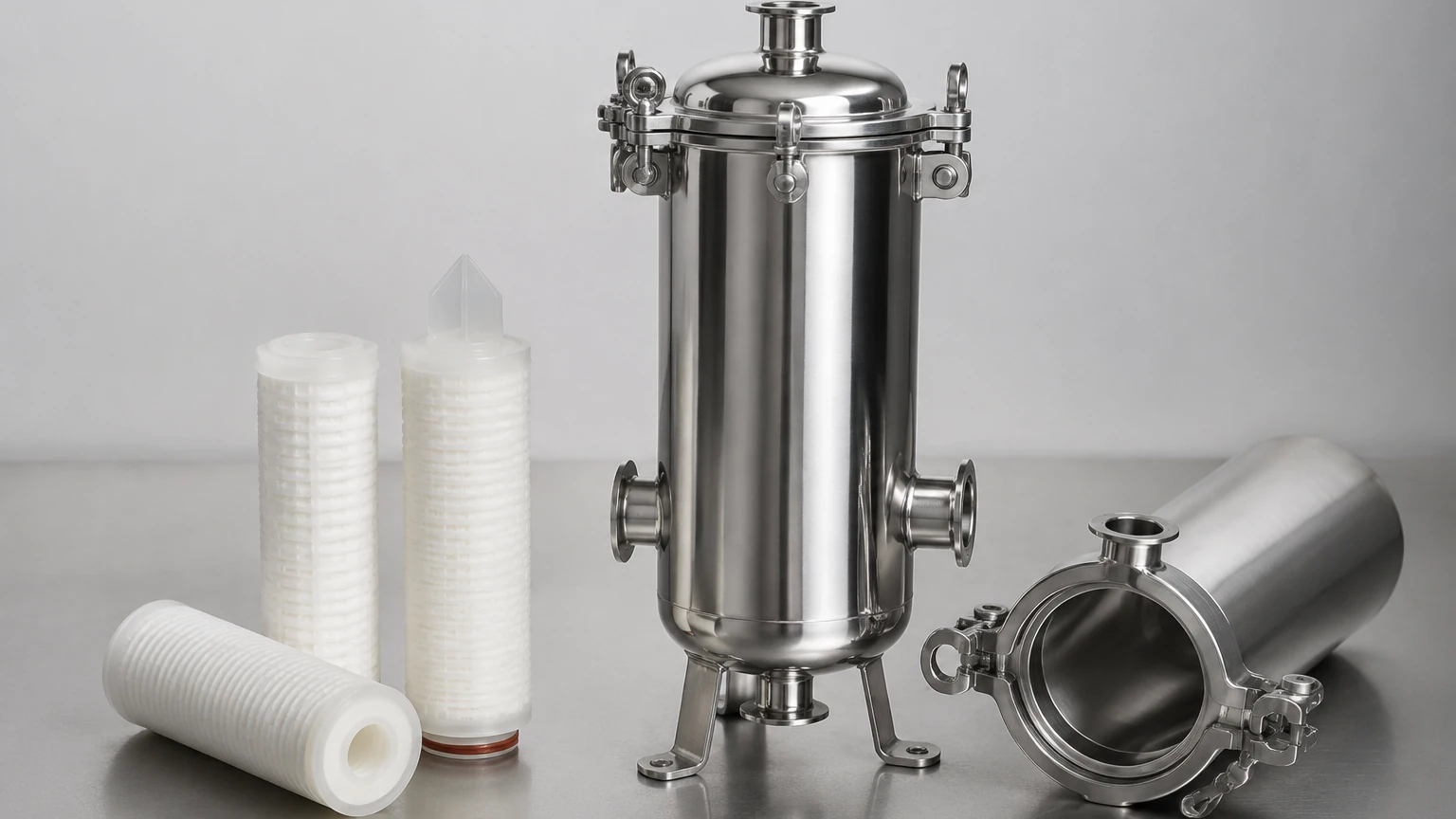
Sanitary Cartridge Filter Housing
In high-purity industrial sectors such as pharmaceuticals, biotechnology, and food and beverage processing, the integrity of the filtration system is paramount. A sanitary cartridge filter housing serves as the critical interface between the process fluid and the filtration media. Unlike standard industrial housings, sanitary versions are engineered specifically to prevent microbial growth, facilitate complete sterilization, and ensure that no contaminants are introduced during the filtration process. Selecting the correct housing requires a deep understanding of material science, surface finishes, and mechanical design principles to meet stringent regulatory and operational standards.
The Engineering Principles of Sanitary Design
The primary distinction of a sanitary cartridge filter housing lies in its internal geometry and surface characteristics. In sterile environments, any crevice, thread, or sharp corner can become a "dead leg"—an area where fluid stagnates, allowing bacteria to colonize or cross-contamination to occur between batches.
Engineering a sanitary housing involves eliminating these risks through several design features:
* Surface Finish (Ra Value): The internal surfaces of a sanitary housing must be exceptionally smooth. This is typically measured in Roughness Average (Ra). Standard sanitary requirements often specify an internal Ra of less than 0.8 μm (32 micro-inches), while high-purity pharmaceutical applications may require electropolishing to achieve an Ra of less than 0.4 μm (15 micro-inches). Electropolishing not only smooths the surface but also enhances the chromium-to-iron ratio on the surface, significantly improving corrosion resistance.
* Total Drainability: To comply with Clean-in-Place (CIP) and Steam-in-Place (SIP) protocols, the housing must be designed for 100% drainability. This is achieved through sloped internal surfaces and the placement of the drain port at the lowest possible point. This prevents residual fluids from remaining in the system after a cycle.
* Threadless Connections: Traditional NPT threads are forbidden in the process stream of a sanitary housing because they are impossible to clean effectively. Instead, sanitary housings utilize Tri-Clamp (TC) or hygienic flange connections, which use a gasket and a mechanical clamp to create a flush, crevice-free seal.
Material Selection and Chemical Compatibility
Material selection is a non-negotiable aspect of sanitary filtration. Stainless steel is the industry standard due to its durability, temperature resistance, and ability to withstand aggressive cleaning agents.
1. 316L Stainless Steel: This is the preferred material for most sanitary cartridge filter housing applications. The "L" stands for low carbon, which makes the alloy more resistant to intergranular corrosion after welding. It offers excellent resistance to organic chemicals and many corrosive salts.
2. Specialty Alloys: In environments involving high concentrations of chlorides or extremely low pH levels, even 316L may be susceptible to pitting. In such cases, engineers may specify high-nickel alloys like Hastelloy, though these are significantly more expensive and reserved for highly specialized chemical processing.
3. Elastomers and Seals: The performance of the housing is only as reliable as its seals. Common materials include EPDM, Silicone, Viton (FKM), and PTFE-encapsulated O-rings. These must be FDA-compliant and, in many cases, meet USP Class VI standards for biocompatibility. Engineers must verify that the chosen elastomer can withstand the repeated thermal stress of SIP cycles without losing its sealing properties.
Structural Configurations and Porting Options
Choosing the right configuration for a sanitary cartridge filter housing depends on the flow rate, space constraints, and the frequency of cartridge replacement. For a detailed look at various configurations and technical specifications, engineers often refer to the Main Page of specialized manufacturers to compare structural dimensions.
* Single-Round vs. Multi-Round: Single-round housings are used for lower flow rates or pilot-scale operations. For high-volume industrial processing, multi-round housings can accommodate dozens of cartridges in a single vessel, reducing the footprint and simplifying the piping required for high-throughput lines.
* T-Style vs. Inline: In a T-style housing, the inlet and outlet ports are located on the same horizontal plane at the bottom, allowing the bowl to be removed without disturbing the piping. This is ideal for applications where frequent cartridge changes are necessary. Inline housings are more compact but may require more clearance for maintenance.
* Closure Types: For sanitary applications, the closure mechanism must be secure yet easy to operate. Tri-clamp closures are common for smaller, single-round housings. For larger, high-pressure vessels, swing-bolt closures provide the necessary mechanical strength while remaining relatively quick to open for servicing.
Integration with CIP and SIP Protocols
A sanitary cartridge filter housing must be capable of being cleaned and sterilized without disassembly. This is where the engineering of the housing meets the reality of plant operations.
Clean-in-Place (CIP): During CIP, cleaning solutions (often caustic or acidic) are circulated through the housing at high velocities. The housing's design must ensure that the fluid reaches every internal surface, including the area behind the cartridge adapters.
Steam-in-Place (SIP): Sterilization usually involves the introduction of saturated steam at temperatures typically ranging from 121°C to 135°C. The housing must be rated for these temperatures and the resulting pressures. Furthermore, the design must account for condensate management; if steam condensate is allowed to pool in the housing, it can create a cold spot where sterilization is incomplete. High-quality housings include dedicated steam condensate drains to mitigate this risk.
Technical Selection Criteria for Engineers
When specifying a sanitary cartridge filter housing, procurement and engineering teams should evaluate several technical parameters to ensure long-term reliability and compliance:
* Design Pressure and Temperature: The housing must be rated for the maximum operating pressure of the system, plus a safety margin. It is also vital to check the vacuum rating, especially if the system will be subjected to vacuum drying or if pump failure could cause a sudden pressure drop.
* Cartridge Adapter Compatibility: Most sanitary housings are designed to accept "Code 7" cartridges (226 O-rings with a locking tab) or "Code 3" (222 O-rings). The adapter base must provide a secure, leak-proof seat to ensure that no fluid bypasses the filter media.
* Compliance and Certification: Depending on the region and industry, housings may need to comply with ASME Section VIII (Pressure Vessel Code), PED (Pressure Equipment Directive in Europe), or 3-A Sanitary Standards. Requesting Material Test Reports (MTRs) for all wetted parts is standard practice to verify the traceablity of the stainless steel.
* Vent and Drain Ports: Ensure the housing has appropriately sized vent ports to bleed air during startup and drain ports for fluid removal. These ports should also feature sanitary connections.
Common Risks and Mitigation Strategies
Even with a high-quality sanitary cartridge filter housing, operational errors can lead to system failure. One common risk is "O-ring roll," where the cartridge O-rings are displaced during installation, leading to bypass. This can be mitigated by choosing housings with precision-machined seats and using food-grade lubricants where permitted.
Another risk is corrosion from stagnant cleaning agents. If the housing is not properly rinsed and dried after a CIP cycle, residual chemicals can concentrate and attack the passive layer of the stainless steel. Proper training on flushing protocols and the use of high-quality 316L material are the best defenses against this issue.
Total Cost of Ownership (TCO) Considerations
While the initial purchase price of a sanitary cartridge filter housing is a significant factor, engineers should look at the total cost of ownership. A cheaper housing with a poor internal finish may require longer CIP cycles, increasing water and chemical usage. A housing that is difficult to disassemble will lead to higher labor costs and longer downtime during cartridge change-outs.
Investing in a housing with superior surface finishes and robust mechanical design often pays for itself through reduced contamination risks and extended equipment lifespan. Manufacturers like Kaifil emphasize the importance of precision manufacturing in reducing these long-term operational costs.
Conclusion
The selection of a sanitary cartridge filter housing is a foundational decision in the design of any high-purity process. By focusing on surface roughness, material integrity, and the elimination of dead legs, engineers can ensure that their filtration system remains a barrier against contamination rather than a source of it. Before finalizing a purchase, it is essential to confirm the specific Ra requirements of the application, the chemical compatibility of the seals, and the regulatory certifications required for the target market. For those in the planning stages of a project, reviewing technical drawings and material options from a trusted manufacturer is the recommended next step to ensure the chosen housing meets the rigorous demands of modern industrial filtration.