


What Is the Purpose of an Oil Water Separator
In industrial fluid management, the separation of immiscible liquids is a critical process requirement. Understanding what is the purpose of an oil water separator (OWS) is essential for engineers and plant managers who must balance operational efficiency with strict environmental compliance. At its core, an oil-water separator is a device designed to separate gross amounts of oil and suspended solids from wastewater or process fluids, ensuring that the resulting effluent meets discharge standards or is suitable for downstream treatment.
For many industrial facilities, the presence of oil in water streams is an unavoidable byproduct of operations. Whether it is runoff from a refinery, cooling water in a manufacturing plant, or bilge water in maritime applications, the effective removal of hydrocarbons is a technical necessity. By utilizing the physical differences between oil and water, these systems provide a reliable method for maintaining fluid purity and protecting both environmental and mechanical assets.
The Primary Functions of Oil Water Separators
To answer the question of what is the purpose of an oil water separator comprehensively, one must look at the three primary pillars of its utility: environmental protection, equipment longevity, and resource recovery.
Environmental Regulatory Compliance
Most industrial jurisdictions enforce strict limits on the concentration of oil and grease that can be discharged into municipal sewers or natural water bodies. These limits often range from 5 ppm to 100 ppm, depending on the local regulations and the sensitivity of the ecosystem. An OWS serves as the primary defense mechanism, stripping out free oil and dispersed droplets before they can contaminate the environment. Failure to meet these standards can result in significant fines, legal liabilities, and reputational damage.
Protection of Downstream Equipment
In many process loops, water is recycled or sent to secondary treatment phases, such as membrane filtration or biological treatment. High concentrations of oil can foul sensitive membranes, coat biological media, and clog precision nozzles. By installing an oil-water separator upstream, engineers can significantly extend the service life of more expensive filtration components and reduce the frequency of unscheduled maintenance. This is particularly relevant when using high-performance components found on the Main Page of specialized filtration suppliers, where precision is paramount.
Economic Resource Recovery
In some sectors, the "waste" oil removed by the separator has significant value. For instance, in food processing or petrochemical refining, the captured oil can often be reprocessed or sold as a byproduct. By efficiently separating these phases, companies can turn a waste management cost into a potential revenue stream or, at the very least, reduce the volume of hazardous waste that requires expensive off-site disposal.
The Technical Principles of Separation
Understanding what is the purpose of an oil water separator also requires a grasp of the physics involved. Most industrial separators rely on Stokes' Law, which governs the settling or rising velocity of a droplet through a continuous liquid phase. Since oil is generally less dense than water, oil droplets naturally tend to rise to the surface.
Gravity Separation
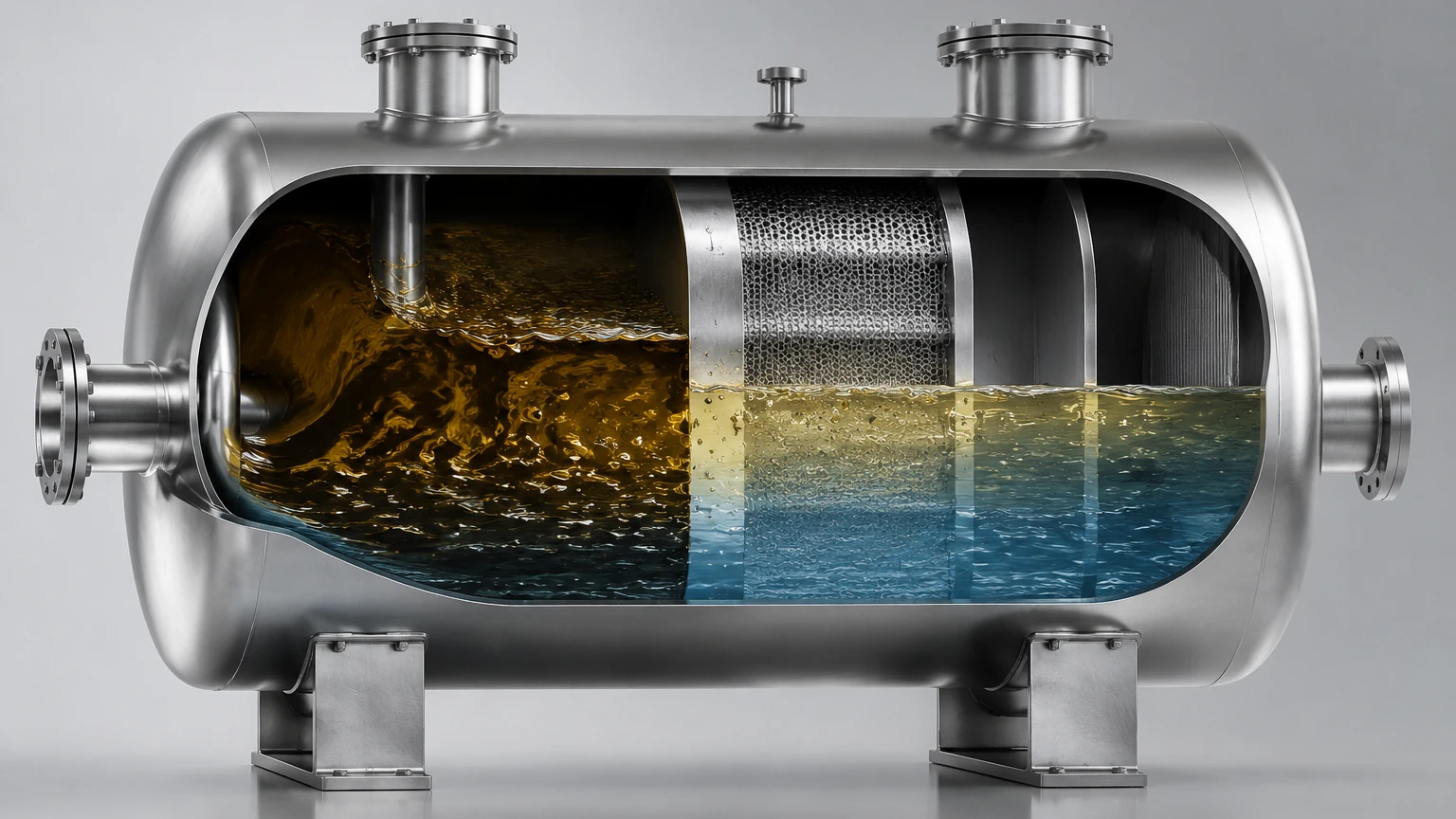
In a basic gravity separator, the fluid velocity is slowed down sufficiently to allow the oil droplets to rise to the top of the tank while heavier solids settle to the bottom. However, gravity separation alone is often insufficient for modern industrial flow rates, as it would require massive tanks to provide enough residence time for small droplets to reach the surface.
Enhanced Coalescence
To improve efficiency without increasing the physical footprint of the system, many modern separators use coalescing media. This is where technical filtration components, such as stainless steel wire mesh or structured packing, play a vital role. As the oil-water mixture passes through the media, small oil droplets collide with the surface of the media and with each other. These smaller droplets merge (coalesce) into larger ones. According to Stokes' Law, doubling the diameter of a droplet increases its rise velocity by a factor of four, significantly accelerating the separation process.
The Role of Stainless Steel Filtration Media
When discussing what is the purpose of an oil water separator in heavy-duty industrial contexts, the choice of internal components is critical. Stainless steel wire mesh and sintered metal filters are frequently specified for these systems due to their unique material properties.
1. Chemical Compatibility: Industrial wastewater often contains aggressive chemicals, surfactants, or varying pH levels. Stainless steel (typically 304 or 316L grades) provides the corrosion resistance necessary to withstand these environments without degrading.
2. Temperature Resistance: Many oil-water separation processes occur at elevated temperatures to reduce the viscosity of the oil and aid separation. Unlike plastic or synthetic media, metal filtration components maintain their structural integrity at high temperatures.
3. Cleanability and Durability: Unlike disposable filter cartridges, stainless steel mesh can be cleaned via backwashing or chemical soaking. This durability reduces the total cost of ownership and ensures that the separator maintains consistent pressure drop characteristics over long operational cycles.
Engineering Considerations for Selection
When engineers evaluate what is the purpose of an oil water separator for a specific project, they must confirm several technical parameters to ensure the system performs as intended. A "one size fits all" approach rarely succeeds in industrial filtration.
Influent Characteristics
The ratio of oil to water, the type of oil (e.g., hydraulic oil vs. vegetable oil), and the presence of solids all dictate the design of the separator. If the oil is chemically emulsified (where droplets are so small they are held in suspension by surfactants), a standard OWS may require additional chemical flocculation or ultrafiltration steps.
Droplet Size Distribution
Separators are typically rated by the micron size of the droplets they can effectively remove. A high-efficiency coalescing separator might be designed to remove 99% of free oil droplets down to 20 microns. Identifying the target micron rating is essential for selecting the correct internal wire mesh density or cartridge configuration.
Flow Rate and Turbulence
Separation requires laminar flow. If the fluid enters the separator at too high a velocity or with too much turbulence, the oil droplets will be broken into smaller pieces rather than coalescing. Proper internal baffling and flow distribution plates are necessary to maintain the quiet zone required for effective separation.
Common Applications Across Industries
The purpose of an oil water separator varies slightly depending on the specific industrial context. However, the requirement for reliable phase separation remains constant.
* Chemical Processing: Separating hydrocarbons from process water to prevent contamination of chemical batches and protect heat exchangers from fouling.
* Food and Beverage: Removing fats, oils, and greases (FOG) from wash water before it enters the municipal sewer system, preventing "fatbergs" and ensuring compliance with local wastewater codes.
* Hydraulic Systems: In large-scale hydraulic machinery, moisture can infiltrate the oil. A separator or specialized filter cartridge is used to remove water from the hydraulic fluid to prevent cavitation and component corrosion.
* Power Generation: Managing turbine oil and transformer oil runoff to prevent environmental spills in the event of equipment failure.
Maintenance and Performance Optimization
Even the most well-engineered oil-water separator will fail to meet its purpose if it is not maintained correctly. Over time, the coalescing media can become blinded by heavy solids or biological growth. Regular inspection of the internal filtration elements is necessary.
For systems utilizing stainless steel components, maintenance typically involves monitoring the differential pressure across the media. An increase in pressure indicates that the media is becoming clogged. Because stainless steel is robust, these elements can often be removed and cleaned using high-pressure water or specialized solvents, returning the system to its original efficiency without the need for replacement parts.
Furthermore, the accumulation of sludge at the bottom of the separator must be managed. If solids are allowed to build up, they can reduce the effective volume of the tank, decreasing residence time and allowing oil to bypass the separation zone.
Conclusion: Selecting the Right Solution
In summary, what is the purpose of an oil water separator? It is a critical engineering tool for environmental compliance, asset protection, and process efficiency. By understanding the mechanics of coalescence and the importance of high-quality material selection, such as stainless steel filtration media, industries can ensure long-term reliability in their fluid management systems.
When designing or upgrading a filtration system, it is vital to work with manufacturers who understand the nuances of metal filtration and custom design. Factors such as micron rating, material grade, and structural design of the filter elements will ultimately determine the success of the oil-water separation process. For those seeking technical specifications on precision components that support these systems, reviewing professional manufacturing capabilities is the next logical step in the procurement process.
Download What Is the Purpose of an Oil Water Separator as a PDF
