


Food-grade Compressed Air Filters Fda Approved
In the food and beverage industry, compressed air is often referred to as the "fourth utility." It is as essential as electricity, water, and natural gas, yet it carries a unique set of risks regarding product safety and regulatory compliance. When compressed air comes into direct or indirect contact with food products, the quality of that air is paramount. Utilizing food-grade compressed air filters fda approved is not merely a best practice; it is a critical component of a Hazard Analysis and Critical Control Point (HACCP) plan designed to prevent chemical and biological contamination.
For engineers and facility managers, selecting the right filtration solution requires a deep understanding of material science, filtration efficiency, and the specific regulatory landscape that governs food-contact materials. This guide examines the technical requirements and engineering considerations for implementing high-performance filtration in food-grade environments.
The Regulatory Framework for Food-Grade Filtration
When searching for food-grade compressed air filters fda approved, it is important to clarify what "FDA approved" means in an industrial context. The U.S. Food and Drug Administration (FDA) does not typically issue a "seal of approval" for a specific piece of machinery. Instead, it regulates the materials that come into contact with food under the Code of Federal Regulations (CFR) Title 21.
CFR Title 21 Compliance
For a filter assembly to be considered food-grade, all components that may interact with the air stream (and subsequently the food) must be manufactured from materials listed as safe in 21 CFR. This includes:
* Stainless Steel (21 CFR 178.3910): Generally recognized as safe (GRAS), stainless steel—particularly 304 and 316L grades—is the standard for housings and filter media due to its corrosion resistance and cleanability.
* Elastomers and Seals (21 CFR 177.2600): O-rings and gaskets must be made from food-grade materials like Viton, EPDM, or Silicone that do not leach harmful chemicals into the air stream.
* Filter Media (21 CFR 177): If polymer-based media are used, they must comply with specific sections regarding indirect food additives.
Understanding these boundaries ensures that the filtration system supports Global Food Safety Initiative (GFSI) standards, such as SQF or BRC, which often require documentation of material compliance for all process-critical components.
Identifying Contaminants in Compressed Air
Compressed air is inherently "dirty." As ambient air is sucked into a compressor, it brings with it water vapor, atmospheric dust, and microorganisms. Inside the compressor, additional contaminants like oil aerosols and wear particles are introduced. In food processing, these contaminants are categorized into three main types:
1. Particulates
Solid particles can originate from pipe scale, rust, or atmospheric dust. In a food-grade environment, these particles can become physical contaminants in the final product. High-efficiency stainless steel wire mesh filters are often employed as pre-filters to remove larger particulates before the air reaches more sensitive downstream components.
2. Water and Oil Aerosols
Liquid oil and water are the most common contaminants. Water promotes the growth of bacteria and mold within the piping system, while oil (even food-grade lubricants) can alter the taste and odor of the food product. Coalescing filters are required to merge small droplets into larger ones that can be drained away.
3. Microorganisms
Bacteria, spores, and viruses can thrive in the warm, moist environment of a compressed air system. For applications where air is used for packaging, aeration, or product movement, sterile-grade filtration is necessary to ensure the air is biologically pure.
Material Selection: The Case for Stainless Steel
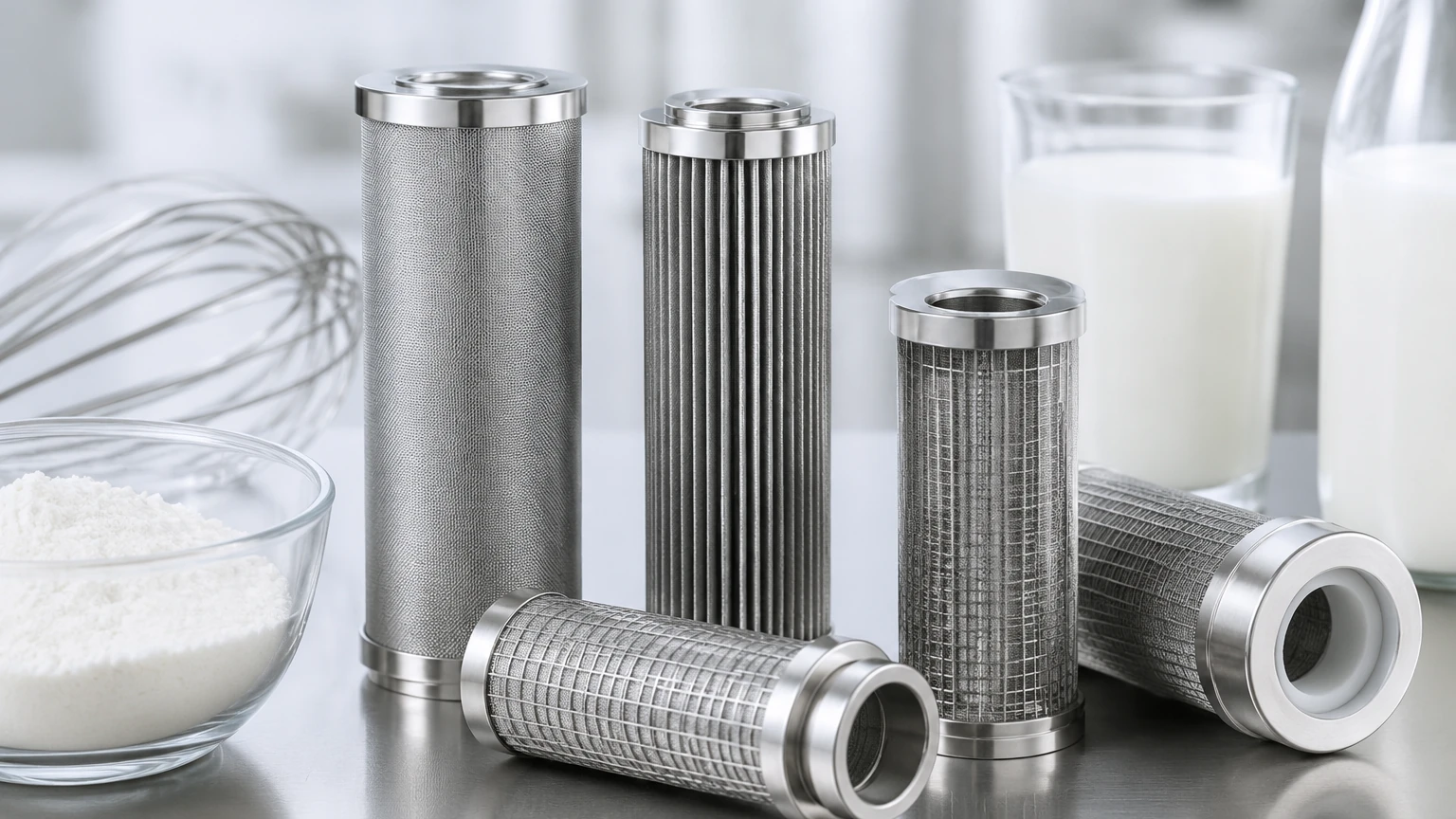
In the realm of food-grade compressed air filters fda approved, stainless steel stands out as the superior material for both housings and filter elements. Kaifil specializes in custom stainless steel filtration solutions that address the specific rigors of food processing. You can Review product options and application support to see how different stainless steel configurations meet these needs.
Advantages of Stainless Steel Filter Elements
* Durability and Longevity: Unlike disposable polymer or paper cartridges, stainless steel wire mesh and sintered metal filters can withstand high pressure differentials and mechanical stress without the risk of media migration (shedding fibers into the air stream).
* Thermal Resistance: Food processing often involves high-temperature sterilization processes, such as Steam-in-Place (SIP). Stainless steel filters can endure these temperatures without losing structural integrity.
* Chemical Compatibility: Stainless steel is resistant to the aggressive cleaning agents used in Clean-in-Place (CIP) cycles, ensuring that the filter does not degrade or corrode over time.
* Sustainability: Because they are cleanable and reusable, stainless steel filters significantly reduce the total cost of ownership and environmental waste compared to single-use alternatives.
Engineering Considerations for Sanitary Design
Simply using FDA-compliant materials is not enough; the physical design of the filter must also adhere to sanitary engineering principles. This prevents "dead zones" where moisture and bacteria can accumulate.
Surface Finish and Ra Values
The internal surfaces of a food-grade filter housing should be polished to a specific roughness average (Ra). A lower Ra value indicates a smoother surface, which is less likely to harbor microbial growth. For most food-grade applications, a surface finish of Ra < 0.8 μm (32 micro-inches) is recommended.
Sanitary Connections
Filters should utilize sanitary fittings, such as Tri-Clamp or DIN 11851 connections. These fittings are designed to be easily disassembled for inspection and cleaning, and they utilize gaskets that provide a flush, crevice-free seal.
Drainage Mechanisms
Effective moisture removal is critical. Food-grade filters should be equipped with high-quality automatic drains that prevent the re-entrainment of collected liquids into the air stream. In a sanitary setup, these drains must also be maintainable and made of compliant materials.
Selecting the Correct Micron Rating
Filtration efficiency is measured by the micron rating, which indicates the size of particles the filter can reliably capture. In food-grade compressed air systems, filtration is usually achieved in stages:
1. General Purpose (5 to 40 microns): Removes bulk liquids and large solids. Often uses a robust stainless steel mesh.
2. Fine Coalescing (0.1 to 1 micron): Removes oil aerosols and smaller particulates. This stage is vital for protecting downstream sterile filters.
3. Sterile/Final Stage (0.01 micron): Designed to remove 99.9999% of bacteria and viruses. At this stage, the integrity of the filter housing and the seal becomes the most critical factor in preventing bypass.
Engineers must balance the need for high filtration efficiency with the resulting pressure drop. A higher pressure drop increases energy consumption at the compressor. Therefore, sizing the filter correctly for the intended flow rate is essential for operational efficiency.
Maintenance and Validation Protocols
To maintain the status of food-grade compressed air filters fda approved, a rigorous maintenance schedule must be followed. Over time, even the best filters will become blinded by contaminants, leading to an increased pressure drop and potential failure.
Integrity Testing
For sterile air applications, regular integrity testing (such as the aerosol challenge or bubble point test) is necessary to ensure that the filter element has not been damaged during operation or sterilization. This provides the documented proof required during food safety audits.
Cleaning and Regeneration
One of the primary benefits of stainless steel filters is the ability to regenerate the media. Ultrasonic cleaning, backwashing, or chemical baths can remove embedded contaminants, restoring the filter to near-original performance levels. This process must be performed using approved cleaning agents and followed by a thorough rinse with deionized or distilled water to ensure no residues remain.
Customization and OEM Solutions
Every food processing facility has unique constraints, from space limitations to specific flow requirements. Standard off-the-shelf filters may not always provide the optimal solution. Working with a manufacturer like Kaifil allows for the development of custom filter cartridges and housings tailored to specific machinery.
Customization options often include:
* Specific Alloy Selection: Choosing between 304, 316, or 316L based on the acidity or salinity of the environment.
* Custom End-Cap Configurations: Ensuring the filter fits perfectly into existing OEM housings without bypass risks.
* Variable Mesh Layers: Designing multi-layered sintered mesh to provide depth filtration with the strength of a surface filter.
Conclusion
Implementing food-grade compressed air filters fda approved is a fundamental step in safeguarding product quality and consumer health. By focusing on high-quality materials like 316L stainless steel, adhering to sanitary design principles, and selecting the appropriate filtration stages, engineers can create a robust system that meets the strictest regulatory requirements.
When evaluating filtration partners, look for those who understand the technical nuances of the food and beverage industry and can provide the necessary material certifications. For more information on precision-engineered filtration components, visit the Main Page to explore how advanced manufacturing supports industrial food safety.
Download Food-grade Compressed Air Filters Fda Approved as a PDF
