


Automatic Backwashing Filter
In high-volume industrial processes, downtime for filter maintenance can lead to significant operational losses and system inefficiencies. The automatic backwashing filter represents a critical engineering solution designed to provide continuous filtration without the need for manual intervention or process interruption. By utilizing a self-cleaning mechanism triggered by pressure differentials or timed intervals, these systems ensure that fluid streams—ranging from cooling water to chemical process fluids—remain free of contaminants while maintaining steady flow rates. For technical professionals and procurement teams, understanding the mechanical nuances and material requirements of these systems is essential for optimizing system longevity and performance.
As a specialist in precision metal filtration, Kaifil provides the foundational components required for these sophisticated systems, ensuring that the internal filter elements meet the rigorous demands of industrial environments. To explore specific component options and technical support, engineers can refer to the Main Page for detailed specifications.
The Mechanical Principle of Self-Cleaning Filtration
The core functionality of an automatic backwashing filter rests on its ability to detect when the filter medium has reached its contaminant loading capacity and to initiate a cleaning cycle while the system remains online. This is typically achieved through a differential pressure (DP) sensor that monitors the pressure drop between the inlet and outlet ports.
When the accumulated debris on the internal filter element increases the flow resistance, the DP sensor sends a signal to the system’s PLC (Programmable Logic Controller). Once a pre-set threshold is reached—commonly between 0.5 to 1.0 bar, depending on the application—the backwash cycle begins. During this cycle, a small portion of the filtered fluid is redirected in a reverse flow direction through the filter medium. This reverse flow dislodges the particles from the surface of the screen or mesh, which are then flushed out through a dedicated drain or blow-down valve.
There are several mechanical configurations for this process:
1. Suction Scanner Technology: A rotating scanner inside the filter element creates a localized low-pressure zone, vacuuming debris off the screen.
2. Backflow Arm Systems: A rotating arm directs the high-pressure reverse flow through specific segments of the filter element sequentially.
3. Spring-Loaded Disc Filtration: While different in media, the principle remains the same—using fluid pressure to separate and clean the filtration surface.
Engineering Considerations for Filter Element Selection
The performance of an automatic backwashing filter is largely determined by the quality and design of the internal filter element. Because these elements are subjected to frequent pressure reversals and mechanical cleaning, they must exhibit high structural integrity.
Material Compatibility
Stainless steel is the industry standard for these applications due to its mechanical strength and corrosion resistance. Engineers must choose between various grades based on the chemical composition of the process fluid:
* 304 Stainless Steel: Suitable for general water treatment and non-corrosive industrial fluids.
* 316L Stainless Steel: Preferred for pharmaceutical, food and beverage, and chemical applications where resistance to pitting and chloride-induced corrosion is vital.
* Super Duplex or Monel: Reserved for highly aggressive environments, such as seawater filtration or concentrated acid processing.
Filtration Media Structures
In an automatic backwashing filter, the choice of media structure affects both cleaning efficiency and the "Beta ratio" (filtration efficiency).
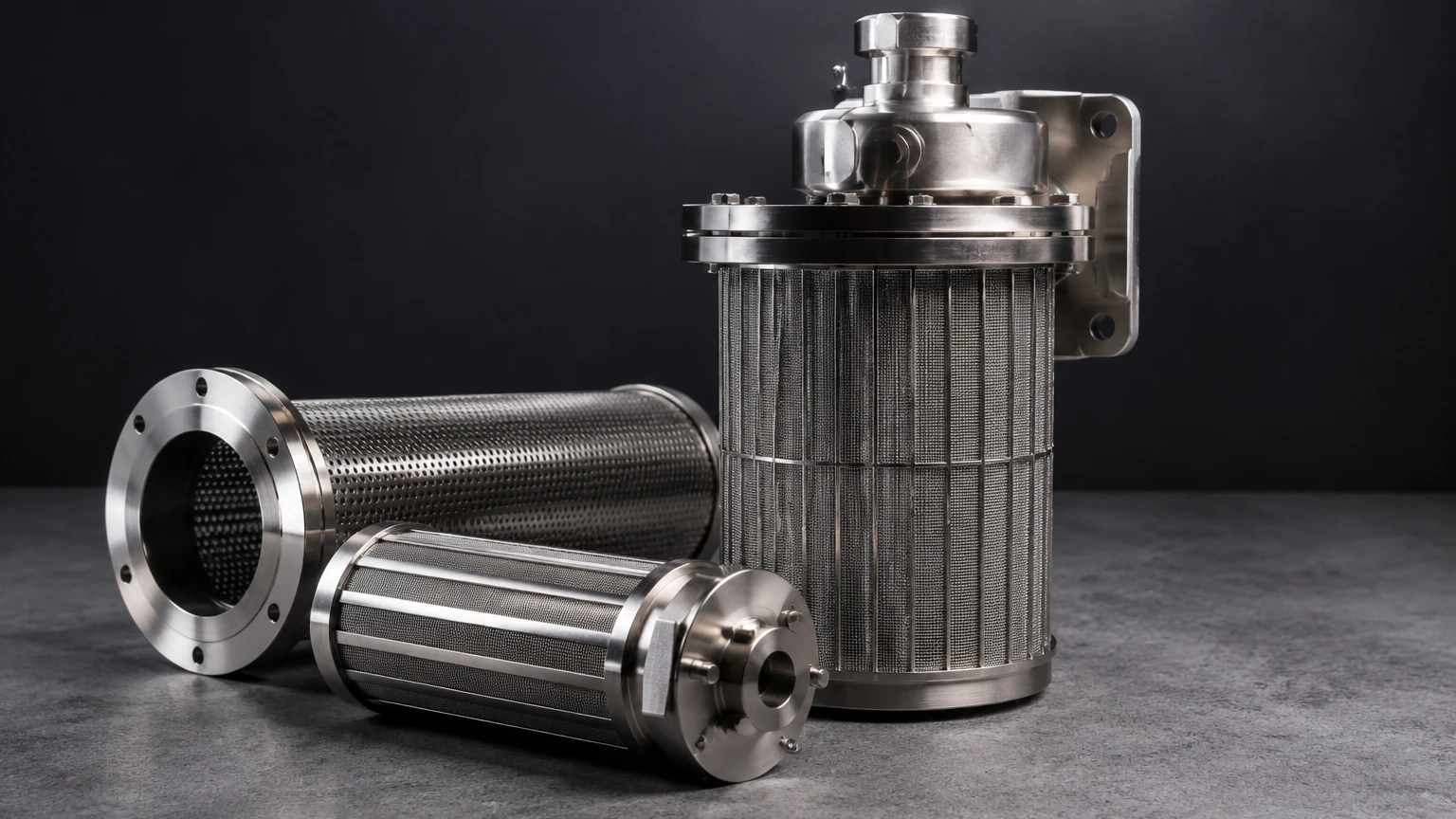
* Wedge Wire Screens: These are highly effective for backwashing because the V-shaped profile of the wire creates a widening gap in the reverse flow direction, preventing particles from becoming wedged or "blinded" in the screen.
* Sintered Multi-Layer Mesh: For finer filtration requirements (down to 1–5 microns), sintered mesh provides a rigid, porous structure that can withstand high differential pressures without deforming.
* Perforated Plate Reinforcement: In high-pressure hydraulic or water treatment systems, the primary mesh is often supported by a perforated metal core to prevent collapse during the backwash surge.
Sizing and Flow Rate Optimization
One of the most common mistakes in specifying an automatic backwashing filter is improper sizing. An undersized filter will lead to frequent backwashing cycles, resulting in excessive fluid loss and accelerated wear on the moving parts. Conversely, an oversized filter may not generate sufficient velocity for effective cleaning.
Engineers must calculate the Flux Rate, which is the flow rate per unit of filter area (typically expressed in m³/h per m²). For fluids with high suspended solids (TSS), the flux rate must be lowered to prevent the filter from clogging faster than the backwash mechanism can clean it.
Another critical metric is the Backwash Fluid Loss. During the cleaning cycle, a percentage of the process fluid is used for flushing. In high-value chemical processing, this loss must be minimized. High-efficiency automatic backwashing filters typically limit this loss to less than 1% of the total flow. If the fluid loss is a concern, engineers should look for designs that utilize external high-pressure air or a secondary clean fluid source for the backwashing phase.
Integration into Industrial Control Systems
Modern industrial filtration is rarely a standalone process. The automatic backwashing filter must be integrated into the facility's broader automation architecture. This involves several technical interfaces:
* PLC Integration: The filter's control box should support standard protocols such as Modbus, Profibus, or 4-20mA signals. This allows operators to monitor the frequency of backwash cycles from a central control room, which serves as a diagnostic tool for upstream process health.
* Fail-Safe Mechanisms: In the event of a power failure or a mechanical jam in the cleaning arm, the system should have a bypass valve or a manual override to prevent total process shutdown.
* Variable Frequency Drives (VFDs): If the system flow rate varies significantly, a VFD-controlled pump may be required to maintain the minimum pressure necessary to drive the backwash cycle effectively.
Maintenance and Total Cost of Ownership (TCO)
While the primary appeal of an automatic backwashing filter is the reduction in manual labor, it is not a "fit and forget" solution. A comprehensive TCO analysis must include the following factors:
1. Wear Parts: Seals, gaskets, and bearings in the rotating cleaning mechanism will eventually require replacement. Selecting a manufacturer that uses standard, high-quality industrial components reduces lead times for these parts.
2. Filter Element Longevity: The lifespan of the stainless steel element depends on the abrasiveness of the particles. In mining or sand filtration, the element may need periodic ultrasonic cleaning to remove deep-seated contaminants that the backwash cycle cannot reach.
3. Energy Consumption: The power required for the PLC, the drive motor for the cleaning arm, and the potential pressure drop across the system contributes to the operational cost.
By investing in high-quality precision components, such as those found on the Main Page, facilities can significantly extend the interval between major overhauls and ensure that the filtration system does not become a bottleneck in production.
Common Challenges in Backwashing Applications
Certain fluid characteristics can pose challenges to standard automatic backwashing filter designs. Engineers should confirm the following before finalizing a purchase:
* Fibrous Contaminants: Long fibers can wrap around rotating scanners or become entangled in mesh screens. In these cases, a specialized "scraper" type automatic filter might be more appropriate than a backwash type.
* High Viscosity: As viscosity increases, the pressure required to force fluid through the filter media rises exponentially. For fluids over 1000 cP, the backwash mechanism may require heating jackets or higher-pressure pump assistance.
* Sticky or Gelatinous Solids: These particles can adhere to the stainless steel surface, resisting the reverse flow of a standard backwash. Surface treatments like electropolishing or specialized coatings can help reduce adhesion.
Conclusion: Selecting the Right Filtration Partner
The implementation of an automatic backwashing filter is a strategic decision that impacts the efficiency, safety, and profitability of an industrial operation. For engineers, the focus should remain on the technical specifications of the filter media, the robustness of the mechanical drive, and the ease of integration into existing systems.
Kaifil specializes in the engineering and manufacturing of the custom stainless steel components that drive these systems. Whether you are designing a new water treatment plant or upgrading a chemical processing line, selecting the correct filtration accuracy and material grade is paramount. For more information on custom filtration solutions and engineering support, visit the Kaifil Main Page to consult with our technical team and review our full range of industrial filtration capabilities.
