


Filter Bags for Dust Collector
In the landscape of industrial air quality management, the selection and implementation of filter bags for dust collector systems represent a critical engineering decision. These components are the primary barrier between contaminated process air and the atmosphere, ensuring that particulate matter is captured efficiently to protect both personnel and equipment. For engineers and facility managers, understanding the technical nuances of filter media, structural integrity, and application-specific requirements is essential for maintaining operational uptime and regulatory compliance.
While traditional fabric bags are ubiquitous in many standard applications, demanding industrial environments often require a transition toward more robust filtration media. Kaifil specializes in high-performance stainless steel filtration solutions, providing the technical expertise necessary to optimize systems where standard materials fail. This guide explores the engineering considerations, material science, and performance metrics associated with industrial dust collection.
Understanding the Role of Filter Bags in Industrial Dust Collection
A dust collector is more than just a vacuum; it is a sophisticated separation system designed to handle high volumes of air laden with various types of particulate. The filter bags—often referred to as the "heart" of the baghouse—perform the heavy lifting of gas-solid separation. As dust-laden air enters the collector, it passes through the filter media. The dust is retained on the surface or within the depth of the media, while the cleaned air is exhausted.
Efficiency in these systems is measured by the ability of the filter bags for dust collector to maintain a low pressure drop while achieving high capture rates for specific micron sizes. In industries such as chemical processing, pharmaceuticals, and food production, the filtration requirements are exceptionally stringent. Here, the choice of filter media must account for not only particle size but also the physical and chemical characteristics of the dust, such as its abrasiveness, moisture content, and explosive potential.
Material Selection and Engineering Properties
The performance of any dust collection system is fundamentally limited by its filter media. Standard industrial applications typically utilize synthetic fibers, but the specific environment dictates the necessary polymer or alloy.
Synthetic Fiber Options
1. Polyester: The most common material for dry, ambient temperature applications. It offers good abrasion resistance but is susceptible to hydrolysis in moist environments.
2. Aramid (Nomex): Utilized for high-temperature applications (up to 400°F). It provides excellent stability but has limited resistance to acids.
3. PPS (Polyphenylene Sulfide): Ideal for coal-fired boilers and incinerators due to its superior resistance to acids and alkalis at elevated temperatures.
4. PTFE (Teflon): The gold standard for chemical resistance and high-temperature performance, often used as a membrane to enhance surface filtration and dust cake release.
The Shift to Stainless Steel Media
In environments characterized by extreme temperatures, high pressure, or highly corrosive gases, synthetic fibers often reach their mechanical limits. This is where precision-engineered metal filtration components become indispensable. Stainless steel wire mesh and sintered metal filters offer structural rigidity and thermal stability that polymers cannot match.
For facilities looking to upgrade their filtration efficiency or durability, reviewing the Main Page of a specialized manufacturer like Kaifil provides insight into how custom stainless steel cartridges and mesh components can replace or supplement traditional bag systems in harsh process conditions.
Engineering Considerations: Air-to-Cloth Ratio and Velocity
One of the most critical calculations in dust collector design is the Air-to-Cloth (A/C) ratio, also known as the filtration velocity. This ratio represents the volume of air (CFM) passing through one square foot of filter media.
An improperly calculated A/C ratio leads to several operational failures:
* High Pressure Drop: If the velocity is too high, dust particles are forced deep into the media (blinding), increasing the resistance to airflow and requiring more fan power.
* Reduced Filter Life: Excessive velocity causes mechanical stress on the fibers or mesh, leading to premature tearing or structural failure.
* Inadequate Cleaning: Pulse-jet or shaker mechanisms may fail to dislodge the dust cake if the interstitial velocity is too high, preventing the dust from falling into the hopper.
For engineers, the goal is to balance the A/C ratio with the footprint of the baghouse. In specialized chemical or hydraulic applications, using stainless steel filter cartridges can significantly increase the available surface area within the same physical footprint, allowing for a more conservative A/C ratio and longer service intervals.
Cleaning Mechanisms and Their Impact on Filter Longevity
Filter bags for dust collector systems are classified by how they are cleaned. The cleaning method places unique mechanical stresses on the filter media, which must be factored into the selection process.
Pulse-Jet Cleaning
This is the most common modern cleaning method. A high-pressure blast of compressed air is sent down the length of the bag, causing it to expand rapidly and shatter the dust cake. This requires media with high tensile strength and a support cage to prevent the bag from collapsing during normal operation. Stainless steel mesh filters are particularly well-suited for pulse cleaning in high-pressure environments because they do not flex or fatigue as easily as fabric.
Shaker and Reverse Air
Shaker systems mechanically agitate the top of the bags to dislodge dust, while reverse air systems use a low-pressure fan to blow air in the opposite direction. These methods are gentler on the media but generally require a lower A/C ratio and a larger baghouse footprint.
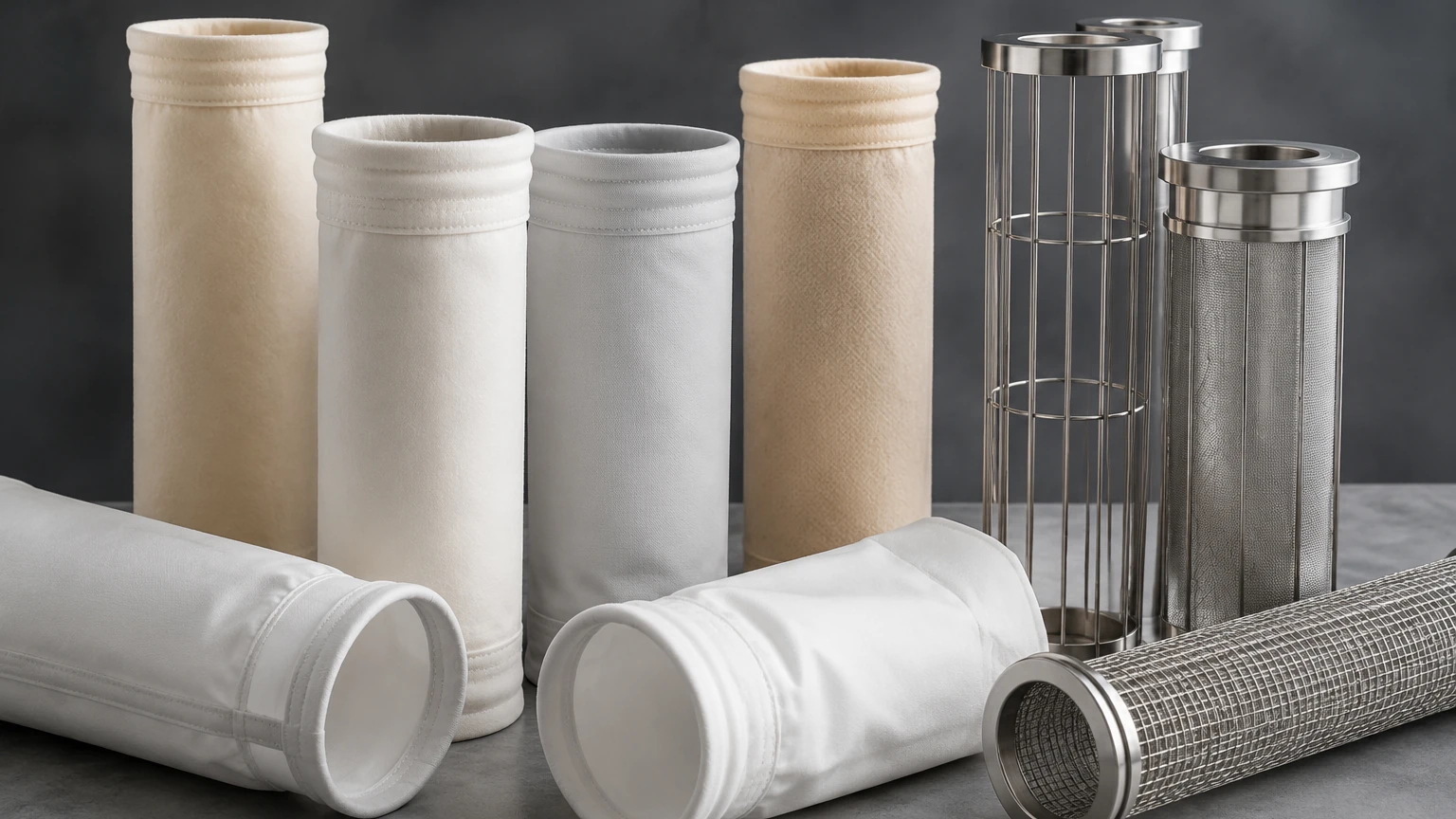
When to Choose Stainless Steel Over Fabric Bags
While fabric filter bags for dust collector systems are cost-effective for many, there are specific technical triggers that necessitate a move to stainless steel filtration components.
1. Temperature Extremes: If process temperatures consistently exceed 500°F (260°C), most synthetic fibers will degrade. Stainless steel (304, 316L) maintains its integrity at much higher thresholds.
2. Chemical Compatibility: In the presence of strong solvents or highly acidic/basic gasses, even PTFE may face limitations. Stainless steel provides a predictable, non-reactive surface.
3. Clean-in-Place (CIP) Requirements: In food and pharmaceutical applications, the ability to sanitize filtration media without removing it is vital. Metal filters can withstand aggressive steam cleaning and chemical sterilization that would destroy fabric bags.
4. High Differential Pressure: In liquid-solid separation or high-pressure gas streams, fabric bags may burst. The mechanical strength of a pleated stainless steel cartridge ensures consistent performance under pressure.
Kaifil’s manufacturing capabilities allow for the customization of these metal components to fit existing baghouse structures, providing a bridge between traditional dust collection and advanced process filtration.
Troubleshooting Common Filtration Failures
Engineers must be able to diagnose issues within the dust collection circuit to prevent unplanned downtime. Common failure modes include:
* Blinding: This occurs when moisture or oils in the gas stream mix with dust to create a "mud" that clogs the pores of the filter bags for dust collector. If this happens, the pressure drop will rise and remain high even after cleaning cycles. Selecting a media with a specialized coating or moving to a smooth stainless steel mesh can mitigate this.
* Bleeding: If fine particles are visible in the exhaust stack, the media may have holes, or the micron rating may be too coarse for the particle size distribution. This often requires a move to a membrane-coated fabric or a finer precision-woven wire mesh.
* Abrasion: In industries handling silica, cement, or metal fines, the constant impact of particles can wear through fabric bags. Using a heavier weight felt or a reinforced metal mesh at the inlet sections can extend the system's life.
Total Cost of Ownership (TCO) Analysis
When evaluating filter bags for dust collector systems, the initial purchase price is often a misleading metric. A comprehensive TCO analysis should include:
* Replacement Frequency: How often must the bags be changed? Labor costs and disposal fees for contaminated filters can be significant.
* Energy Consumption: A system running at a higher average pressure drop requires more electricity for the fan motor.
* Compressed Air Usage: Frequent pulse cleaning consumes expensive compressed air and puts wear on valves and compressors.
* Production Downtime: The cost of halting a production line to replace failed filters often dwarfs the cost of the filters themselves.
By investing in higher-quality, customized filtration solutions—such as those found on the Kaifil Main Page—companies can often achieve a lower TCO through extended service life and improved energy efficiency.
Conclusion for Engineering and Purchasing Teams
Selecting the right filter bags for dust collector systems requires a deep dive into the specific variables of the industrial process. Whether the application calls for standard polyester felt or high-precision stainless steel mesh, the focus must remain on filtration efficiency, mechanical durability, and chemical compatibility.
As industrial standards for air purity and process efficiency continue to tighten, the role of the filtration partner becomes more significant. Working with a manufacturer that understands the transition from traditional fabrics to advanced metal media ensures that your dust collection system is not just a utility, but a high-performing asset in your production chain. Before proceeding with a bulk purchase, technical teams should confirm the particle size distribution, gas chemistry, and peak operating temperatures to ensure the chosen media is engineered for the task at hand.
