


High Purity Gas Filter
In industrial environments where even sub-micron contaminants can compromise the integrity of a production run, the role of a high purity gas filter is critical. These specialized filtration components are designed to remove particulates, moisture, and chemical impurities from process gases, ensuring that the gas reaching the point of use meets stringent cleanliness standards. For industries such as semiconductor manufacturing, pharmaceuticals, and specialty chemical processing, the selection of a gas filter is not merely a maintenance decision but a fundamental engineering requirement for system reliability and product yield.
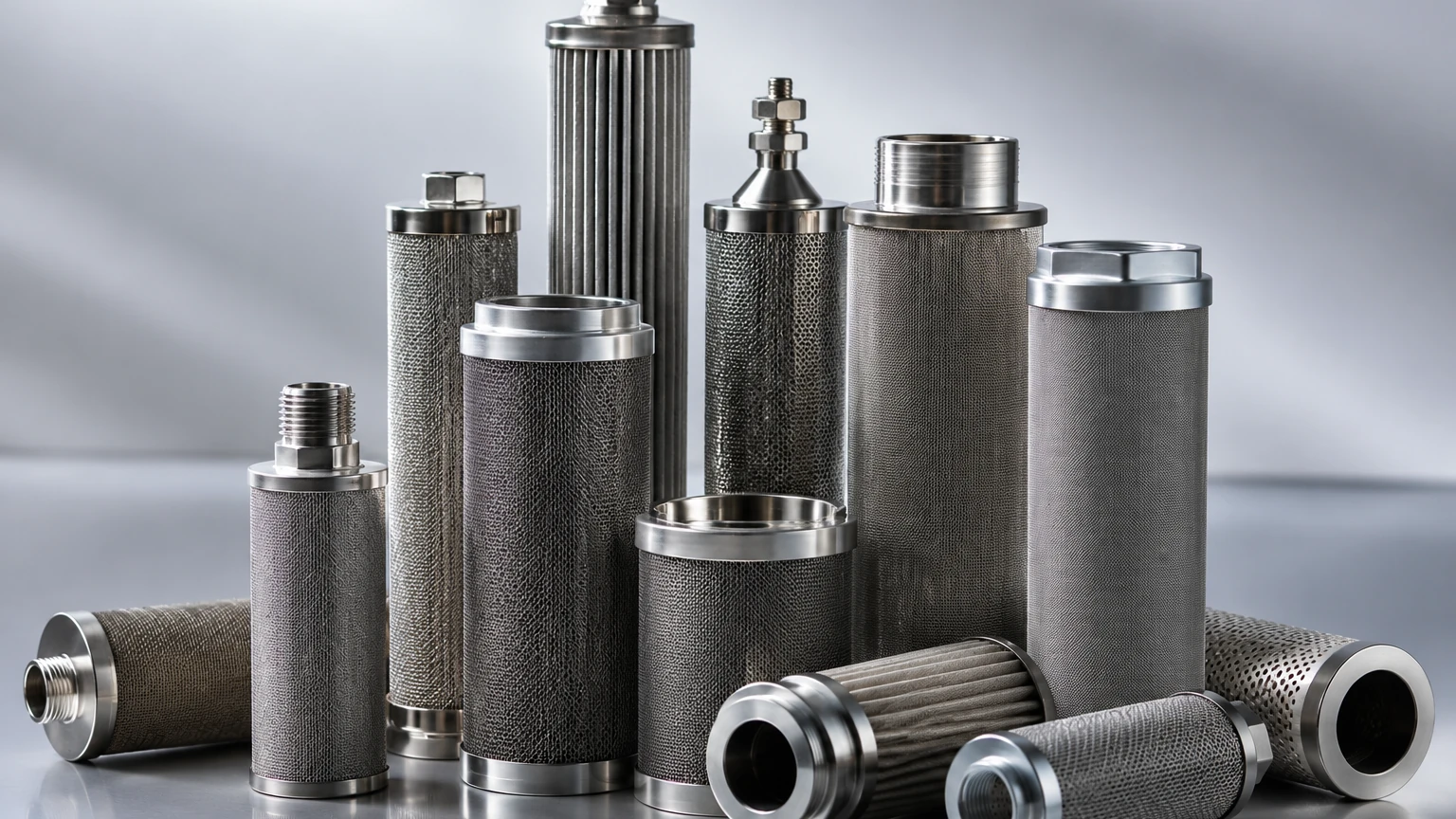
High purity filtration systems typically utilize stainless steel components due to their inherent resistance to corrosion, high-temperature stability, and low outgassing characteristics. As a manufacturer specializing in custom stainless steel filtration solutions, Kaifil provides the technical expertise required to develop filter cartridges and elements that meet the demanding specifications of modern gas distribution systems.
Material Science and Construction in Gas Filtration
The effectiveness of a high purity gas filter begins with its material composition. In high-purity applications, 316L stainless steel is the industry standard. This material is preferred for its excellent corrosion resistance and its ability to withstand the aggressive cleaning protocols often required in sterile or chemically sensitive environments.
Sintered Metal Media
Unlike polymer-based filters, sintered metal media—formed by bonding metal powders or fibers through heat and pressure without melting the material—offers a rigid structure that prevents media migration. In gas streams, high velocities can cause traditional fiber filters to shed particles, which would defeat the purpose of a high purity system. Sintered stainless steel ensures that the filter itself does not become a source of contamination.
Surface Finish and Electropolishing
For high purity gas filters, the internal surface finish of the filter housing and the element is paramount. A high Ra (Roughness Average) value provides microscopic crevices where moisture and particulates can become trapped, leading to "virtual leaks" or microbial growth in pharmaceutical applications. Electropolishing is often employed to achieve a mirror-like finish, reducing the surface area and ensuring that the filter can be purged and cleaned effectively.
Performance Metrics: Efficiency and Retention
When evaluating a high purity gas filter, engineers must look beyond simple micron ratings. The performance of these filters is defined by their ability to retain particles at specific flow rates while maintaining system pressure.
1. Filtration Rating: High purity gas filters are often rated for particle retention down to 0.003 µm. In the semiconductor industry, for example, filters must achieve a Log Reduction Value (LRV) that guarantees the removal of 99.9999999% (9-nines) of all particles at the most penetrating particle size (MPPS).
2. Differential Pressure (ΔP): Every filter introduces a restriction in the flow path. Engineers must balance the need for high filtration efficiency with the requirement for a low pressure drop. A high ΔP can lead to inconsistent gas delivery and may require higher upstream pressures, increasing the overall energy consumption of the system.
3. Outgassing Characteristics: In vacuum or ultra-high purity (UHP) gas lines, the release of volatile compounds from the filter material (outgassing) can contaminate the process. Stainless steel filters are baked and vacuum-dried during manufacturing to ensure they meet the low outgassing requirements of UHP environments.
Engineering Considerations for System Integration
Integrating a high purity gas filter into an existing or new gas distribution system requires a thorough understanding of the system's operational parameters. For comprehensive technical data and to explore specific engineering support, professionals can visit the Main Page to review product options and application support.
Flow Rate and Velocity
Gas flow dynamics differ significantly from liquid filtration. As gas is compressible, the flow rate is heavily influenced by the operating pressure. Filters must be sized to handle the peak flow requirements without reaching a velocity that could cause turbulence or structural stress on the filter media. Sizing a filter too small leads to excessive pressure drop, while sizing it too large may result in unnecessary costs and increased dead volume within the system.
Connection Types and Seal Integrity
To maintain high purity, the connections between the filter and the piping must be leak-tight. Common connection types include:
* VCR (Vacuum Coupling Radiation) Fittings: These use a metal gasket to provide a high-integrity, metal-to-metal seal, ideal for UHP gas applications.
* Compression Fittings: Suitable for general industrial high-purity applications where frequent disassembly is not required.
* NPT or Flanged Connections: Used in larger scale industrial gas filtration where flow volumes are higher, and the purity requirements are slightly less stringent than in semiconductor cleanrooms.
Critical Applications for High Purity Gas Filters
The demand for precise filtration spans several high-tech and industrial sectors, each with its own set of regulatory and performance standards.
Semiconductor and Electronics
In the fabrication of microelectronics, gases like nitrogen, argon, and various specialty process gases are used in deposition and etching phases. A single particle can ruin a wafer, making the high purity gas filter the last line of defense. These filters are often installed at the "Point of Use" (POU) to ensure that any contaminants picked up during transit through the piping are captured before reaching the process chamber.
Pharmaceutical and Biotechnology
Sterile air and nitrogen are used for tank blanketing, product transfer, and aeration in bioreactors. In these applications, the filter must not only remove particulates but also act as a microbial barrier. Stainless steel filters are advantageous here because they can be sterilized in place (SIP) using high-pressure steam without losing structural integrity.
Specialty Gas Production
Companies that produce and bottle high-purity gases (such as 5.0 or 6.0 grade gases) utilize bulk filtration systems to ensure their product meets the advertised purity levels. These systems often involve multi-stage filtration, starting with a coarse pre-filter and ending with a high purity gas filter for final polishing.
Selection Criteria: Choosing the Right Filter
Selecting a filter involves more than just matching a part number. Engineering teams should confirm several factors before finalizing a purchase:
* Chemical Compatibility: While 316L stainless steel is highly versatile, certain corrosive gases (like dry chlorine or fluorine) may require specialized alloys like Hastelloy. It is essential to verify that both the filter media and the housing seals are compatible with the specific gas and any potential trace impurities.
* Temperature and Pressure Limits: High purity gas filters must be rated for the maximum expected system pressure and temperature. Sintered metal filters excel in high-temperature applications where polymer membranes would melt or degrade.
* Total Cost of Ownership (TCO): While the initial cost of a high-quality stainless steel filter may be higher than disposable alternatives, the durability and cleanability of metal filters often result in a lower TCO over the life of the equipment. The ability to clean and reuse certain metal filter elements reduces waste and downtime.
Maintenance and Lifecycle Management
Even the most robust high purity gas filter will eventually require attention. Monitoring the differential pressure across the filter is the most effective way to determine when a filter element is reaching the end of its service life. A sudden increase in ΔP indicates that the filter is loaded with contaminants, while a sudden decrease could indicate a breach in the filter media.
In many high-purity systems, filters are replaced on a preventative maintenance schedule based on the volume of gas processed or the elapsed time. This approach minimizes the risk of unexpected failure and ensures that the gas quality remains within the required specifications. For systems using cleanable stainless steel elements, specialized ultrasonic cleaning and vacuum drying processes can restore the filter to its original performance levels, provided the integrity of the media is verified through bubble point testing or other non-destructive methods.
Customization and OEM Capabilities
Every industrial facility has unique constraints, from space limitations in a gas cabinet to specific flow requirements in a large-scale chemical plant. Customization is often necessary to achieve optimal filtration performance. Kaifil specializes in designing and manufacturing bespoke stainless steel filter components that fit specific OEM requirements. This includes custom dimensions, specialized end-fittings, and tailored filtration ratings to meet the exact needs of a particular gas stream.
By working closely with an experienced manufacturer, engineers can ensure that their high purity gas filter is optimized for their specific application, balancing efficiency, flow, and durability. Whether it is a single POU filter or a complex bulk filtration assembly, the quality of the filtration component is a direct reflection of the quality of the final product.
