


Casing K55
In the complex landscape of industrial well construction and fluid management, selecting the appropriate casing material is a fundamental engineering decision that dictates the longevity, safety, and efficiency of the entire system. Among the various grades specified by the American Petroleum Institute (API) under the 5CT standard, casing K55 remains a primary choice for a wide range of applications, particularly in shallow to medium-depth wells. While the casing provides the structural integrity of the borehole, its performance is inextricably linked to the filtration systems integrated within it. For engineers and procurement specialists, understanding the technical nuances of casing K55 and its compatibility with high-performance filtration components is essential for optimizing total cost of ownership and operational reliability.
Understanding the Technical Specifications of API 5CT K55 Casing
Casing K55 is a general-purpose carbon steel grade widely utilized in the oil, gas, and water well industries. It is often grouped with the J55 grade due to their similar chemical compositions and yield strengths; however, K55 is distinguished by its higher minimum tensile strength. This distinction is critical when calculating the safety margins for string design in environments where axial loading is a significant factor.
Mechanical Properties and Chemical Composition
The mechanical performance of casing K55 is defined by specific parameters that engineers must verify during the procurement process:
* Yield Strength: K55 features a yield strength ranging from 379 MPa (55,000 psi) to 552 MPa (80,000 psi). This range allows for predictable deformation under load, which is vital for maintaining borehole stability.
* Tensile Strength: The minimum tensile strength for K55 is 655 MPa (95,000 psi). This is notably higher than the 517 MPa (75,000 psi) required for J55, providing K55 with superior resistance to pulling apart under its own weight or during installation.
* Elongation: The material must exhibit sufficient ductility to withstand the stresses of downhole environments without brittle failure.
Chemically, K55 is primarily composed of iron with controlled levels of carbon, manganese, phosphorus, and sulfur. The absence of significant alloying elements like chromium or molybdenum makes it more susceptible to corrosion than stainless steel, but also more cost-effective for non-corrosive or inhibited environments.
The Role of Casing K55 in Industrial Well Construction
Casing K55 serves as the primary structural conduit in many industrial settings. Its role extends beyond merely preventing the borehole from collapsing; it acts as a pressure-containing vessel and a foundation for the installation of completion equipment, including filtration screens and pumps.
In water treatment and geothermal applications, K55 is frequently used because it offers a balanced ratio of strength to cost. For engineers, the selection of K55 is often driven by the depth of the well and the anticipated hydrostatic pressures. While it may not possess the collapse resistance of higher grades like P110, it is more than adequate for many terrestrial and shallow offshore applications where extreme pressures are not encountered.
Furthermore, the weldability and threadability of K55 make it a versatile choice for custom configurations. Whether using API 8rd (round thread) or BTC (buttress thread) connections, K55 provides a reliable seal that prevents fluid migration between geological strata, ensuring that the filtered media remains uncontaminated.
Integrating Filtration Systems with K55 Casing
A casing string is only as effective as the filtration solution it houses. In industrial processes such as chemical processing or sand control in water wells, the interface between the casing K55 and the filtration media is a critical point of failure or success. This is where the expertise of a professional manufacturer becomes indispensable.
When designing a completion string, engineers often transition from the carbon steel casing to specialized stainless steel filtration components. These components, such as those found on the Main Page of leading filtration manufacturers, are designed to fit within the internal diameter (ID) of the K55 casing.
Sand Control and Precision Filtration
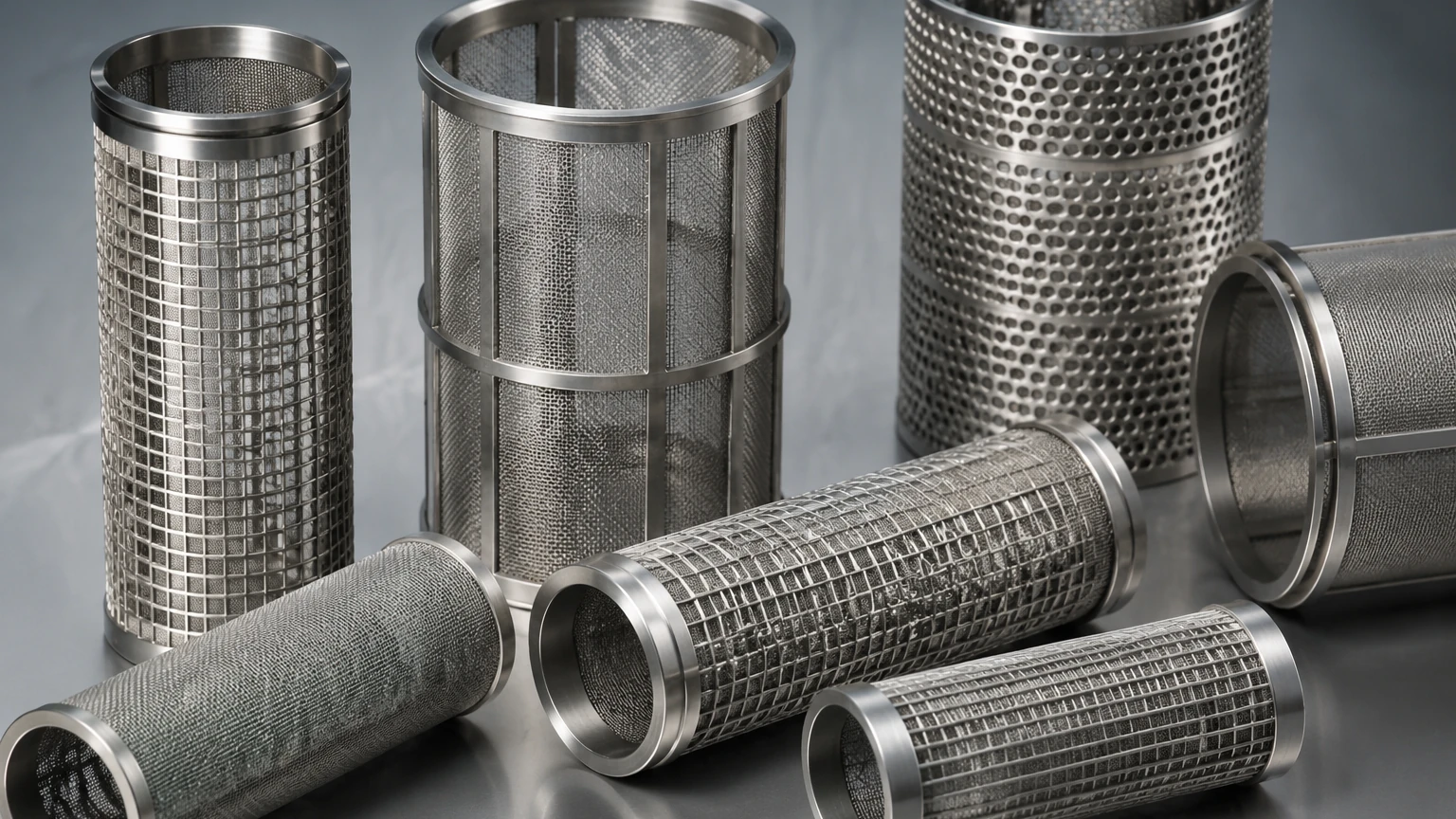
In many wells, the primary challenge is the infiltration of fine particulates or sand, which can erode pumps and clog downstream equipment. To combat this, precision-engineered wire mesh filters or stainless steel filter cartridges are deployed. These filters must be sized accurately to the casing K55 dimensions to ensure a secure fit and to prevent "bypass," where unfiltered fluid moves around the filter rather than through it.
Kaifil specializes in manufacturing these custom stainless steel filtration solutions, providing the necessary precision to complement the structural robustness of K55 casing. By utilizing advanced manufacturing capabilities, it is possible to develop filtration components that match the specific flow rates and micron ratings required for a given K55-cased well.
Corrosion Challenges and Material Compatibility
One of the most significant engineering considerations when using casing K55 in conjunction with stainless steel filtration components is galvanic corrosion. Because K55 is a carbon steel and many high-performance filters are made from 304 or 316L stainless steel, an electrochemical potential difference exists between the two materials.
Managing the Interface
In the presence of an electrolyte (such as saline groundwater or chemical process fluids), the carbon steel casing can act as an anode and corrode preferentially at the point of contact with the stainless steel filter. To mitigate this risk, engineers often employ several strategies:
1. Dielectric Isolators: Using non-conductive centralizers or couplings to physically separate the two metals.
2. Material Transitions: Utilizing specialized crossover subs that provide a controlled transition between the carbon steel threads of the K55 and the stainless steel housing of the filter.
3. Chemical Inhibition: Implementing corrosion inhibitors in the fluid stream to reduce the reactivity of the environment.
Understanding these compatibility issues is vital for purchasing teams. Selecting a filter based solely on its filtration accuracy without considering how it will interact with the casing K55 can lead to premature structural failure of the casing string.
Selection Criteria for Engineers and Purchasing Teams
When procuring casing K55 and its associated filtration components, several factors must be evaluated to ensure long-term performance and cost-efficiency.
Performance Expectations vs. Environment
Engineers must first determine if the environment is "sweet" (containing CO2 but no H2S) or "sour" (containing H2S). While K55 is generally suitable for sweet environments, it is not specifically designed for high-H2S environments where sulfide stress cracking (SSC) is a concern. In such cases, a restricted-yield grade or a stainless steel alternative might be required.
Total Cost of Ownership (TCO)
The initial purchase price of casing K55 is lower than that of high-alloy alternatives, but the TCO includes installation, maintenance, and the potential cost of well intervention. By pairing K55 with high-quality, durable filtration components from Kaifil, operators can extend the maintenance cycle of the well. A filter that resists clogging and mechanical deformation reduces the frequency of workovers, which are often the most significant expense in well management.
Customization and OEM Solutions
Standard off-the-shelf components rarely meet the exact needs of specialized industrial applications. Whether the requirement is for a specific length of wire mesh filter to be integrated into a K55 string or a custom micron rating for a pharmaceutical-grade water well, OEM capabilities are essential. Customization allows for the optimization of flow dynamics, ensuring that the pressure drop across the filter is minimized while maintaining high filtration efficiency.
Engineering Considerations for Installation and Replacement
The installation of filtration components within a casing K55 string requires careful handling to prevent damage to the precision mesh or cartridges. Unlike the rugged casing, filtration media is sensitive to mechanical impact and torque.
Installation Best Practices
* Clearance Ratios: Engineers must calculate the "drift" diameter of the K55 casing to ensure the filtration assembly can pass through safely, especially in deviated or horizontal wells.
* Centralization: Proper centralization of the filter within the casing ensures uniform flow distribution and prevents localized erosion of the K55 wall.
* Torque Management: When threading filter assemblies onto the casing string, adherence to manufacturer-specified torque limits is essential to prevent stripping threads or deforming the filter housing.
Replacement Cycles
The replacement cycle of the filtration component is typically much shorter than the design life of the casing K55. Therefore, the completion design should ideally allow for the retrieval of the filter without necessitating the removal of the entire casing string. This is often achieved through the use of packers and seal assemblies that allow the internal filtration string to be pulled and serviced independently.
Conclusion: Achieving Synergistic Filtration Performance
Casing K55 provides the essential backbone for many industrial and resource-extraction wells, offering a reliable and cost-effective structural solution. However, the true success of a well project depends on the seamless integration of this casing with high-performance filtration technology.
By understanding the mechanical properties of K55 and addressing the technical challenges of material compatibility and sand control, engineers can design systems that are both robust and efficient. Partnering with a manufacturer like Kaifil, which offers deep expertise in custom stainless steel filtration, allows for the development of tailored components that maximize the potential of the K55 casing. Whether for chemical processing, water treatment, or industrial hydraulics, the synergy between quality casing and precision filtration is the key to operational excellence and long-term durability.
